Misano Corner Analysis - Bentley Continental GT3 2018 (ACC)

February 9th, 2024

Misano Corner Analysis - Bentley Continental GT3 2018 (ACC)

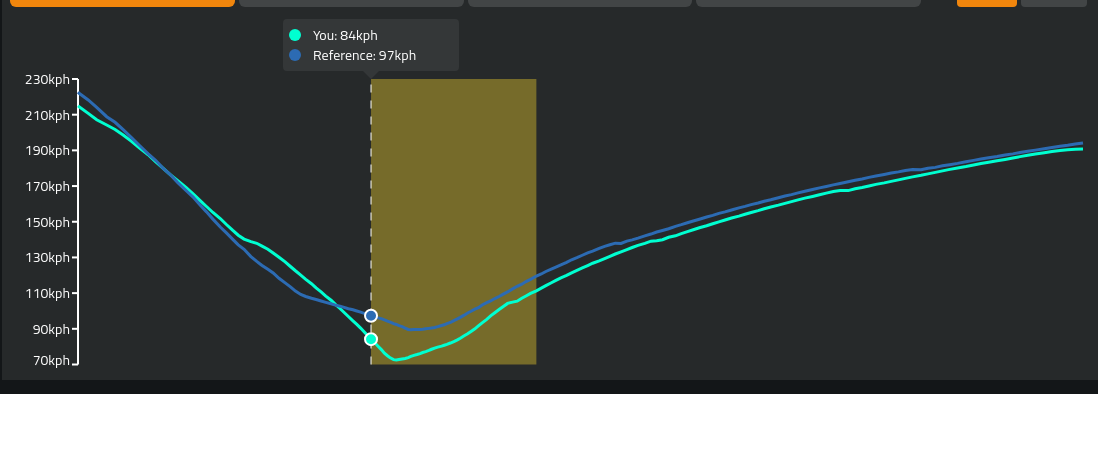
The speed chart analysis reveals that driverB starts the corner at a lower speed than driverA, which results in a compounded time loss throughout the corner. DriverB's minimum speed occurs later than driverA's, indicating a delay in throttle application and leading to slower acceleration out of the corner. To improve lap times, driverB should focus on carrying more speed from the previous corner and timing their throttle application to maximize exit speed. The throttle control analysis shows that driverA applies the throttle prematurely and sharply, which may lead to suboptimal traction and slower exit speeds. In contrast, driverB's gradual throttle application suggests better traction control and potentially faster exit speeds. DriverA's erratic throttle input towards the end of the corner could cause instability and wheelspin, while driverB maintains a smooth acceleration pattern. If driverA were to adopt a smoother acceleration approach like driverB's, they could reduce wheelspin and enhance their corner exit speed, potentially improving their overall lap time performance on track.

Analyzing the speed chart, it's evident that driverB is entering the corner with a lower speed compared to driverA. This suggests that driverB did not carry as much momentum out of the previous corner, which is immediately putting them at a disadvantage. The impact here is significant as starting the section at a lower speed compounds time loss throughout the corner. As we progress through the corner, we see that driverB's minimum speed occurs later than driverA's, indicating a delay in throttle application. This results in driverB getting on the throttle later, which leads to slower acceleration and consequently a time loss on corner exit. The gradient of driverB's speed increase post-apex is less steep compared to driverA's, confirming this delayed acceleration. To improve lap times, driverB should focus on carrying more speed through the previous corner and timing their throttle application better to maximize exit speed.

Speed

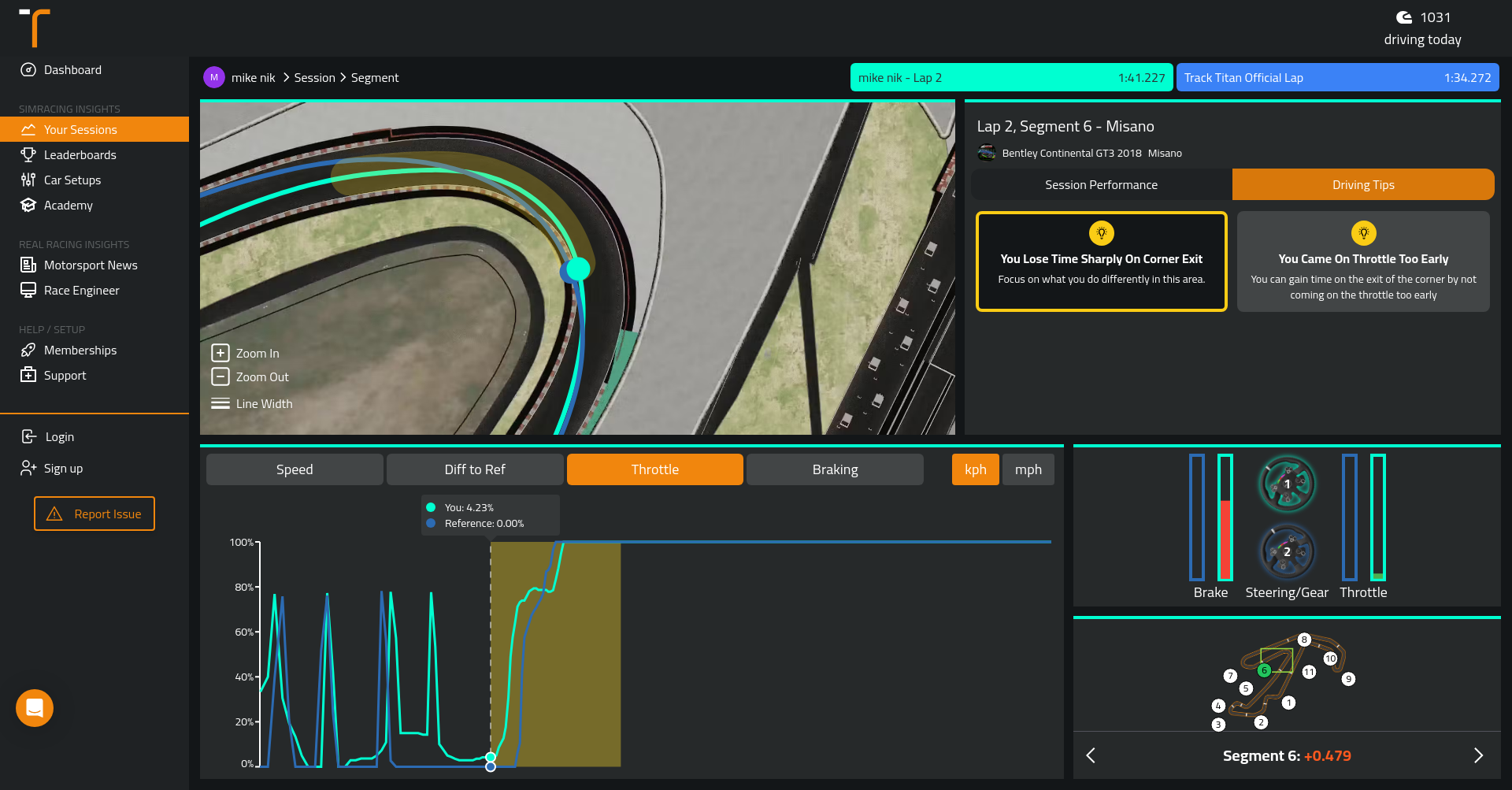
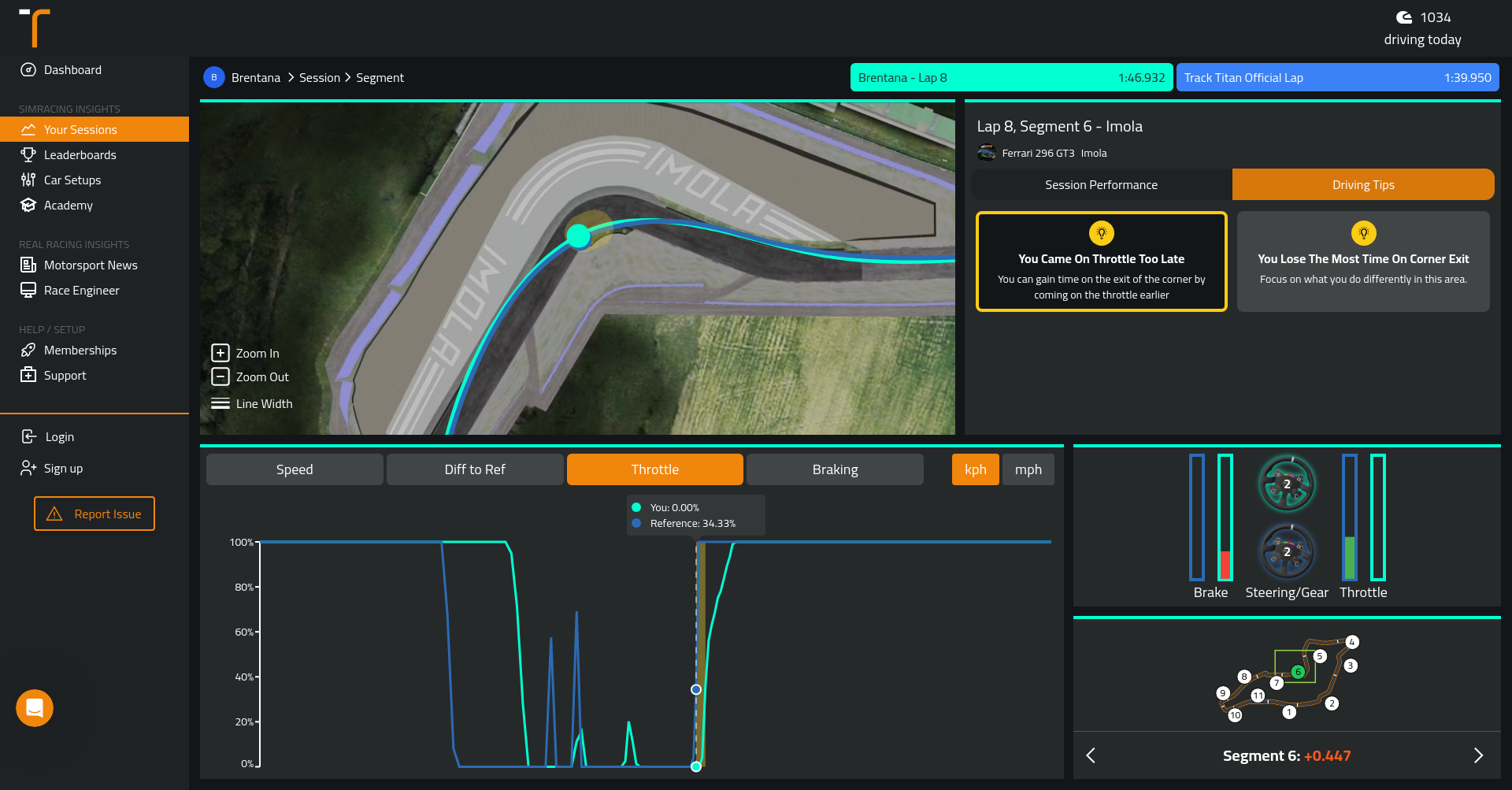
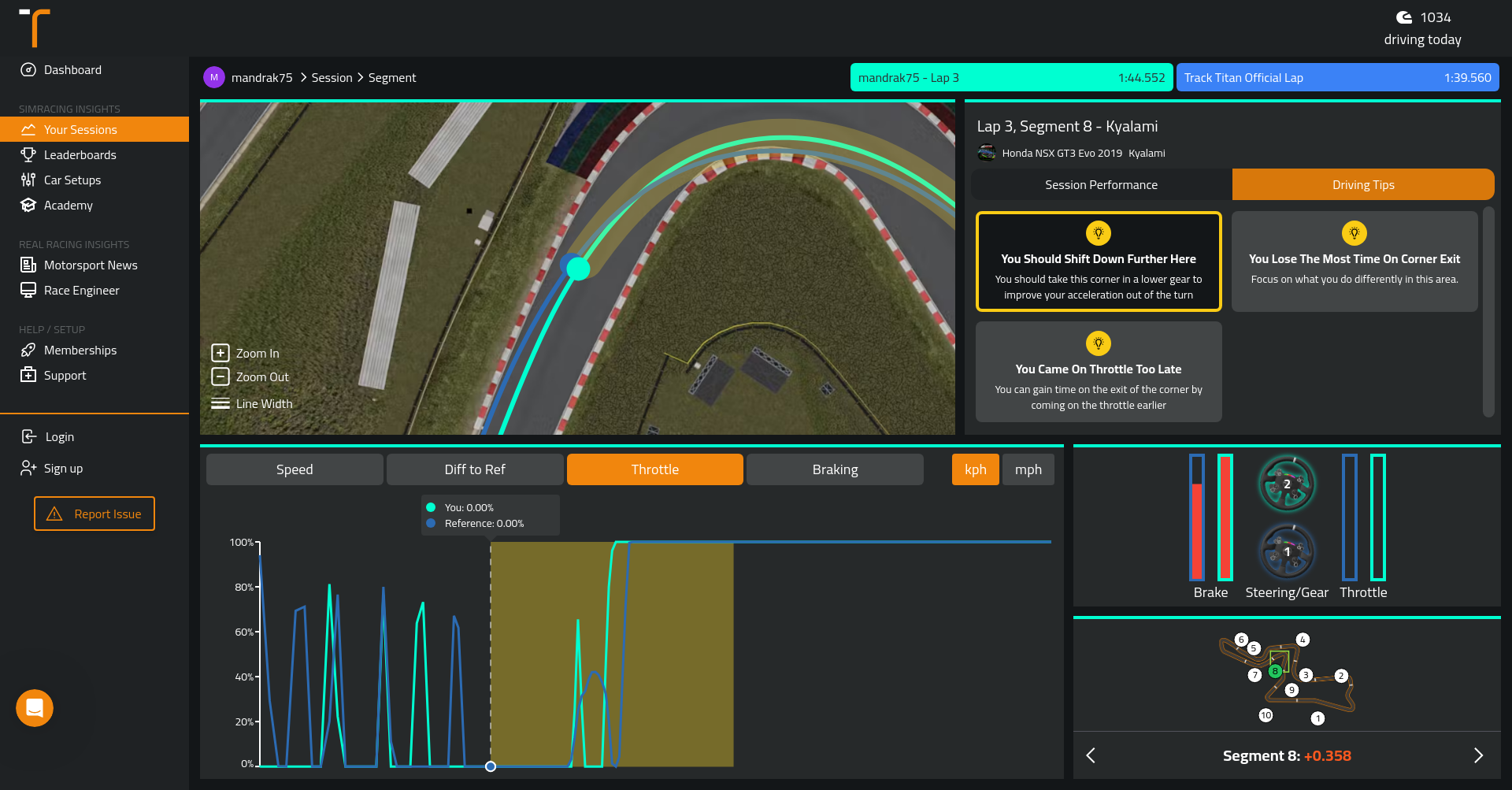
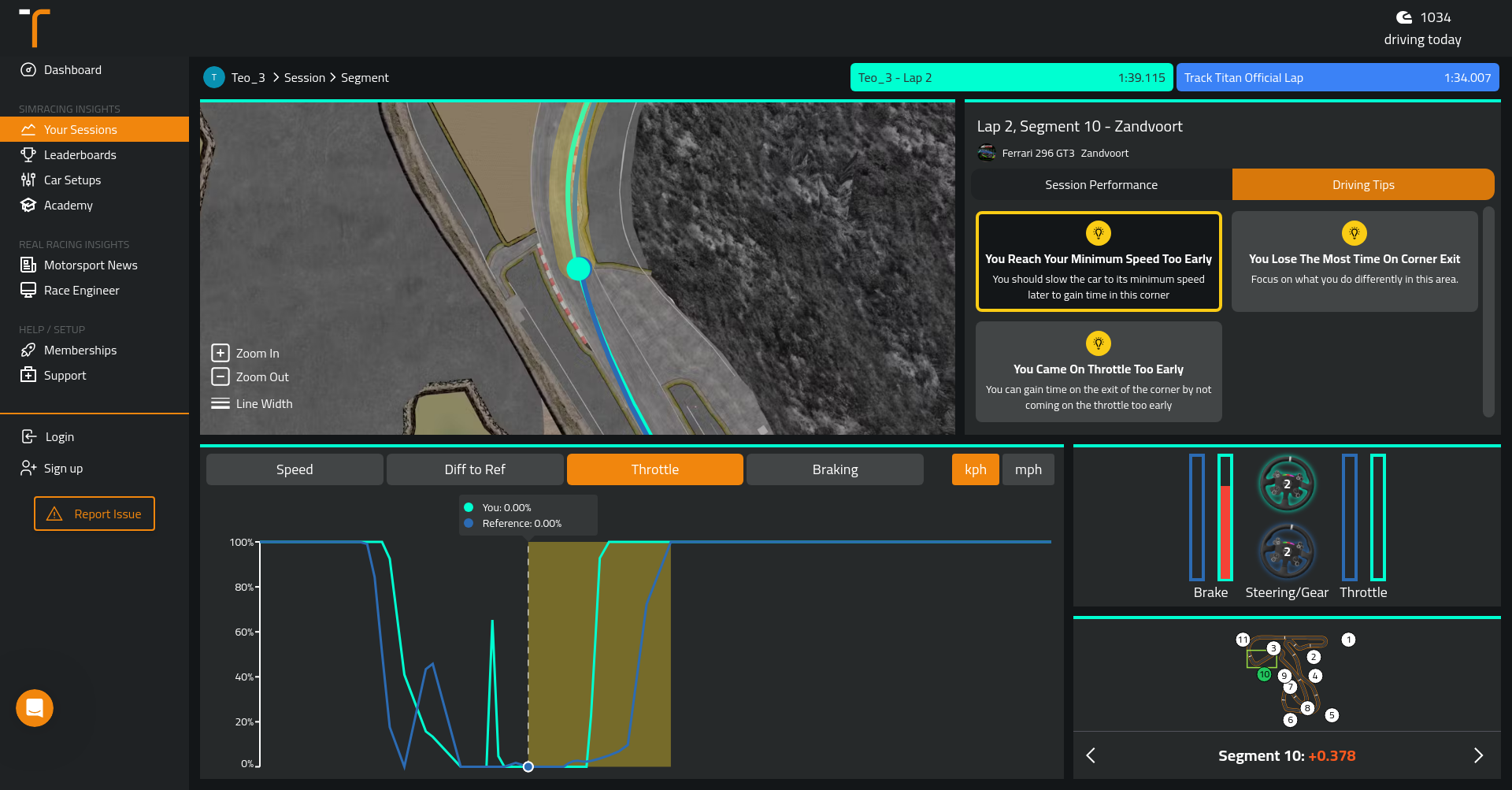
In the provided throttle control analysis, there is a clear distinction between the inputs of driverA and driverB. DriverA exhibits a premature and sharp increase in throttle application, as indicated by the steep curve in the chart. This suggests that driverA is accelerating too early, which could lead to suboptimal traction and potentially slower corner exit speeds. In contrast, driverB's graph shows a more gradual application of throttle, indicating a controlled and measured increase in speed that likely contributes to maintaining better traction and ultimately achieving faster exit speeds. Furthermore, towards the end of the corner exit phase, driverA's throttle application becomes erratic with fluctuations in intensity. This inconsistency can result in time loss due to instability and wheelspin. On the other hand, driverB maintains a smooth and steady increase in throttle application through corner exit. The data suggests that if driverA were to replicate this smoother acceleration pattern, they could minimize wheelspin and improve their overall corner exit speed, leading to potential time gains on track.

Throttle