122,247
122K
Laps driven today

iRacing

Le Mans Ultimate

Assetto Corsa Competizione

Assetto Corsa

F1 25

Assetto Corsa EVO

Automobilista 2

Forza Motorsport

F1 24

F1 2021

F1 23

F1 2020


Lap 1
Segment 4
1:48.554
6th Feb 2024
Assetto Corsa
Brands Hatch - GP - BMW M3 GT2

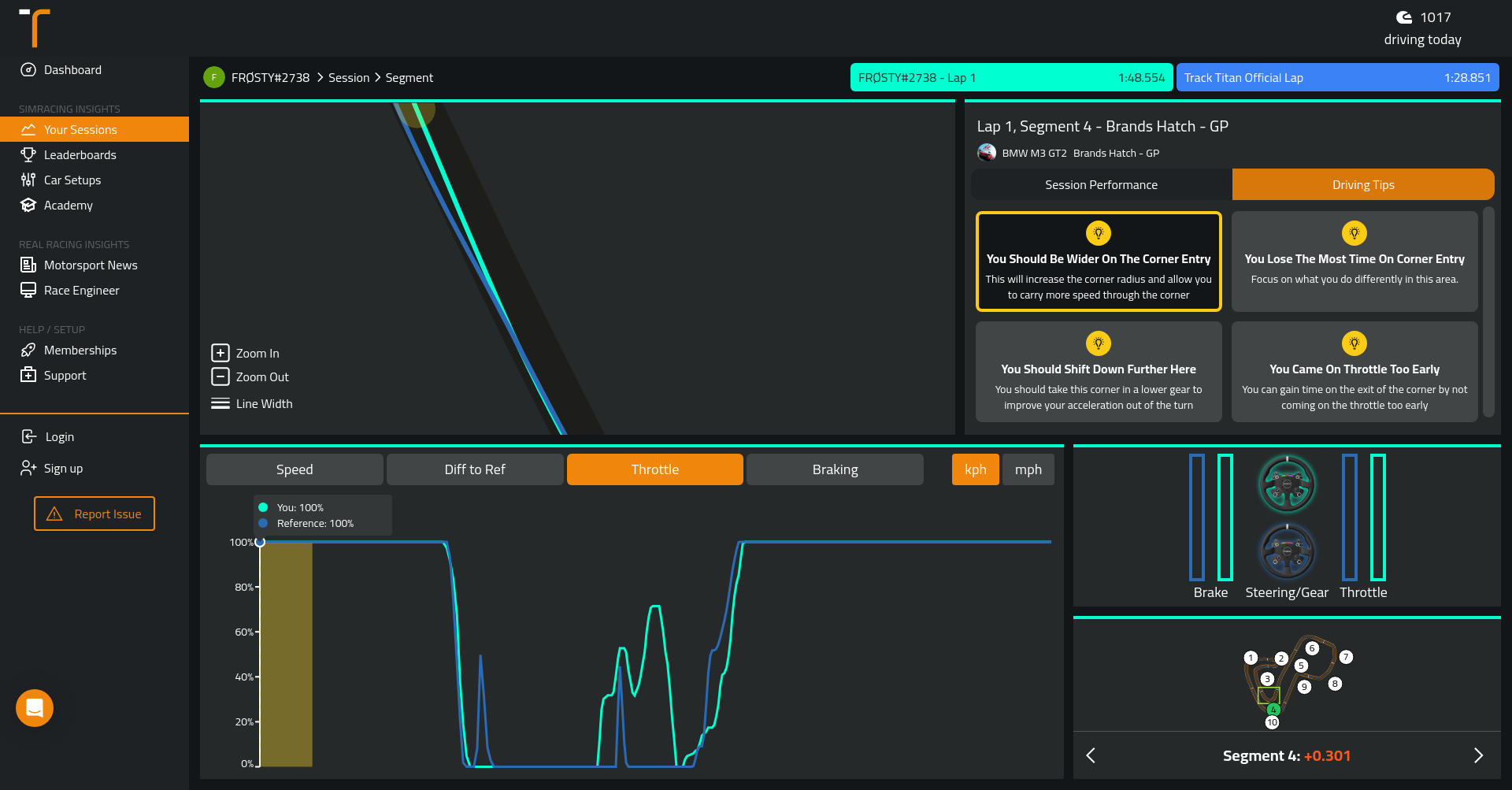
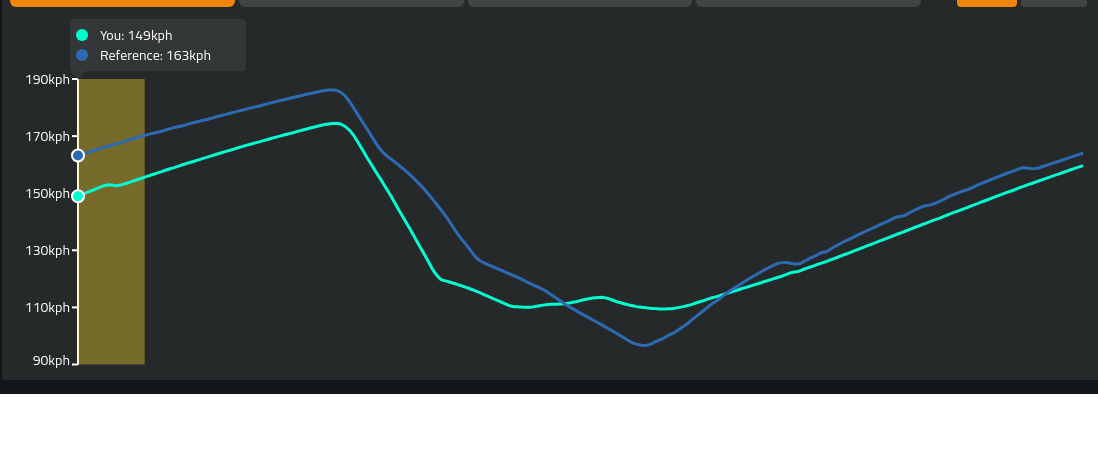
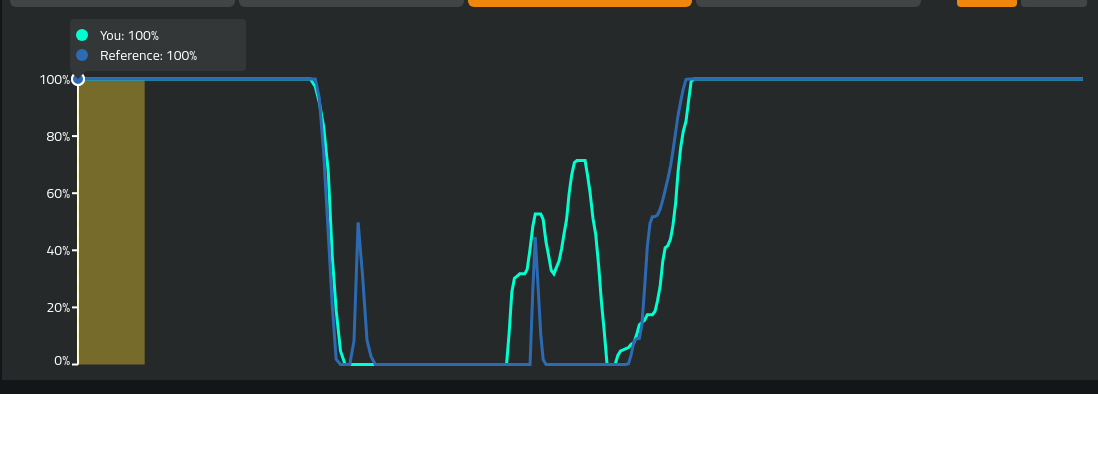
The speed chart analysis reveals that driverB enters the corner at a lower speed than driverA, likely due to less momentum from the previous corner. This affects their entire cornering sequence, as driverB's minimum speed point is lower and occurs later, indicating an early throttle application that compromises their exit speed and acceleration. To improve, driverB should carry more entry speed by widening their approach and delay throttle application to enhance exit velocity. The throttle control chart shows that driverA gradually increases throttle, while driverB applies it sharply and aggressively. This suggests that driverB downshifts further to boost acceleration out of the corner. DriverA's earlier but less intense throttle application may be hindering their exit speed by not fully utilizing the car's acceleration potential. By delaying and intensifying throttle application at the right moment, similar to driverB's approach, driverA could improve their corner exit speed and overall lap performance.
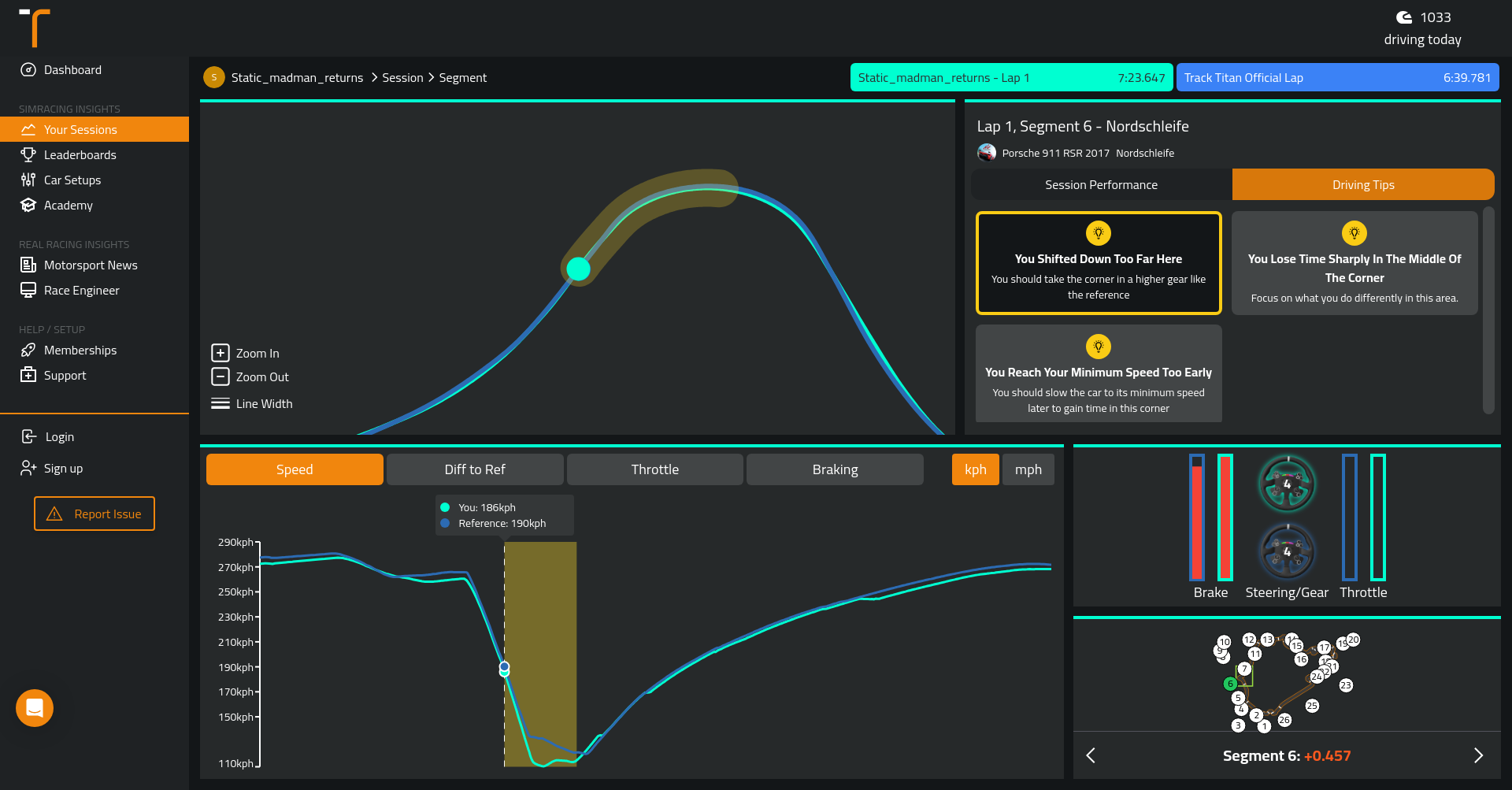
Analyzing the speed chart, it's evident that driverB enters the corner with a lower speed compared to driverA. This is noticeable at the very start of the chart, where driverB's speed is already trailing before reaching the braking zone. This suggests that driverB could be exiting the previous corner with less momentum, which cascades into a slower entry into the subsequent corner. The impact here is significant as it sets up driverB for a slower approach and potentially affects their entire cornering sequence. Furthermore, at the minimum speed point in the corner, driverB's speed dips lower than that of driverA and occurs later in time. This indicates that driverB is on throttle earlier than ideal, which hampers their ability to accelerate out efficiently. The consequence of this early throttle application is visible as driverB's exit speed is lower, and their acceleration gradient post-corner is less steep compared to driverA. To optimize performance, focusing on carrying more entry speed by widening the approach and delaying throttle application until a later point would benefit driverB's overall corner exit velocity.

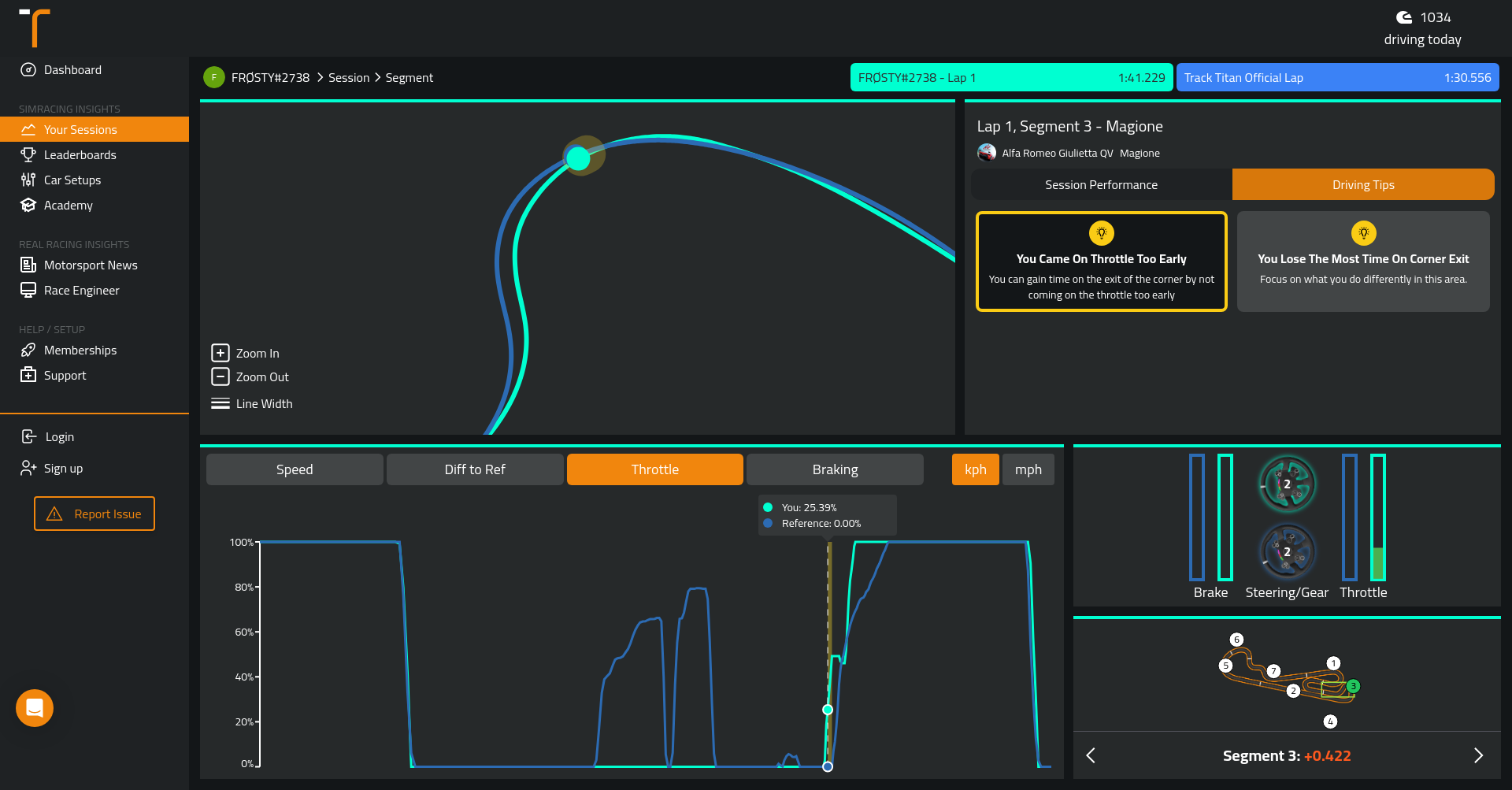
Analyzing the throttle control chart, driverA exhibits a more gradual increase in throttle application compared to driverB, who shows a sharper and more immediate application. This indicates that driverB is accelerating more aggressively out of the corner, which aligns with the technique of shifting down further to improve acceleration. DriverA's smoother curve suggests a delayed and possibly more cautious approach to throttle application, potentially coming on the throttle too early and not maximizing acceleration. Furthermore, driverA's initial throttle application occurs earlier than driverB's but with less intensity. This early application could be compromising their exit speed, as they are not utilizing the full potential of the car's acceleration capabilities. By delaying the onset of throttle and applying it more forcefully at the correct moment, as demonstrated by driverB, driverA could improve their speed on corner exit and overall lap time.