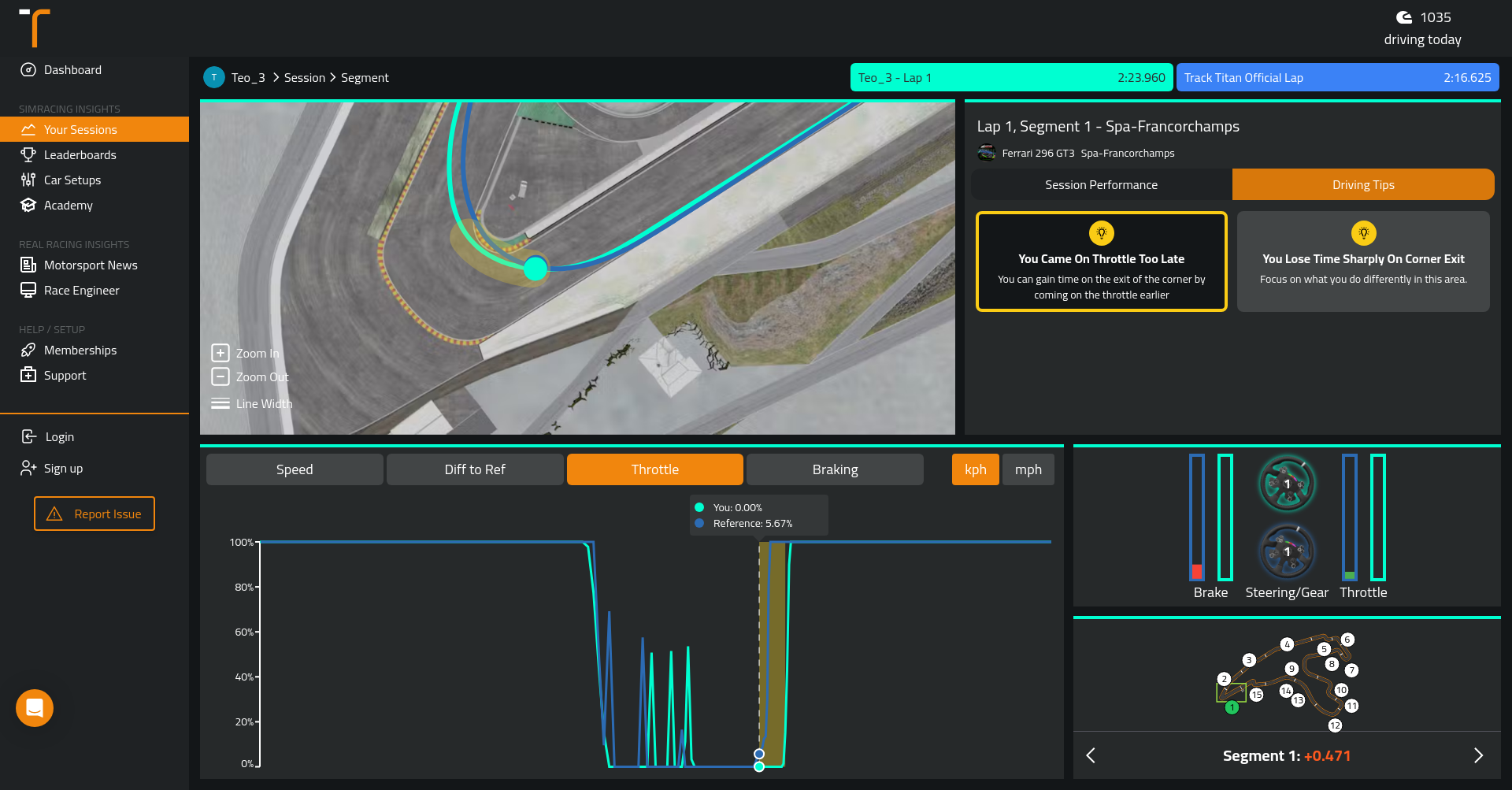
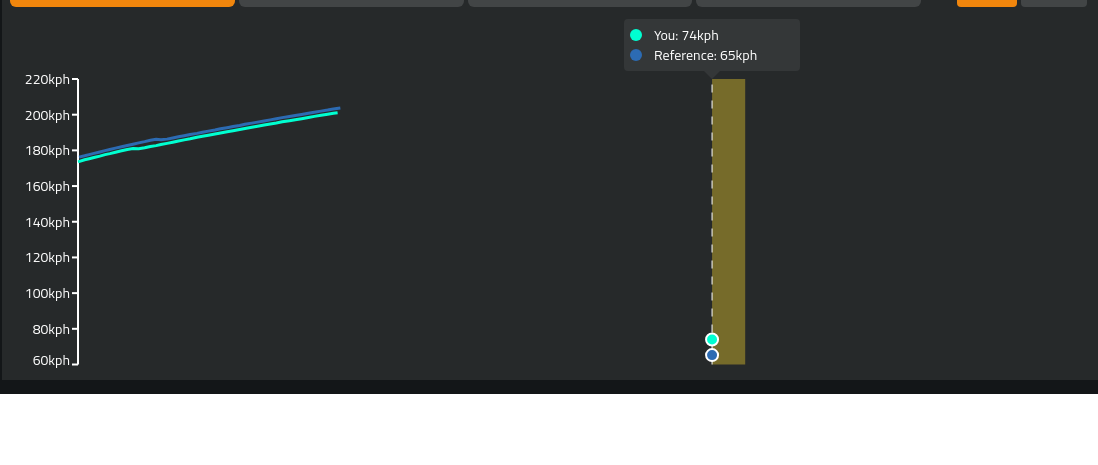
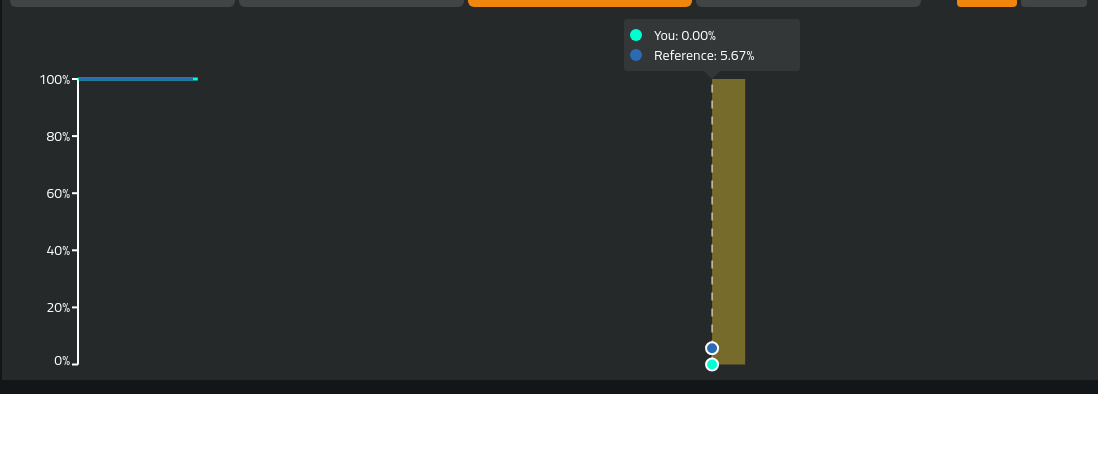
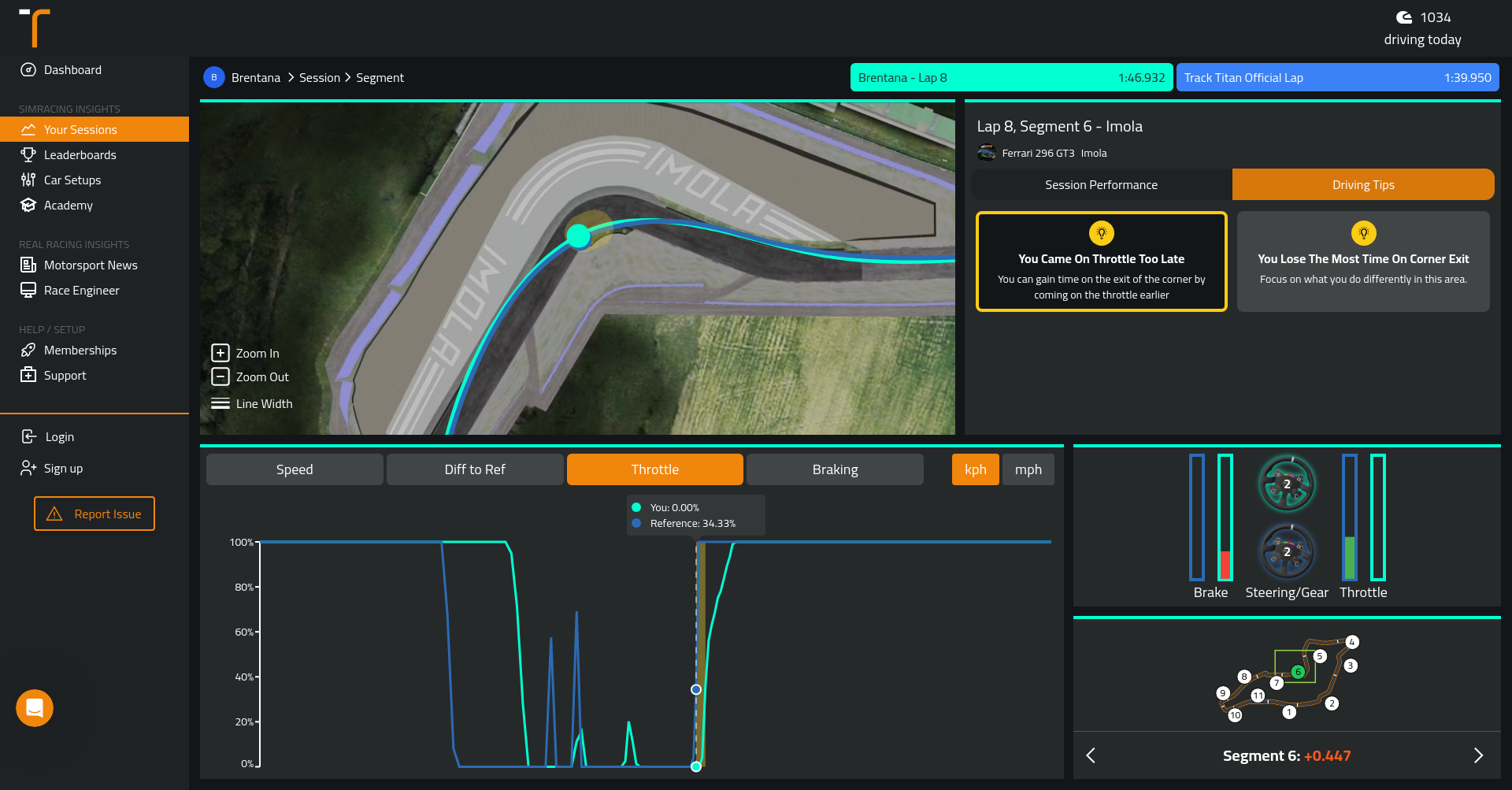
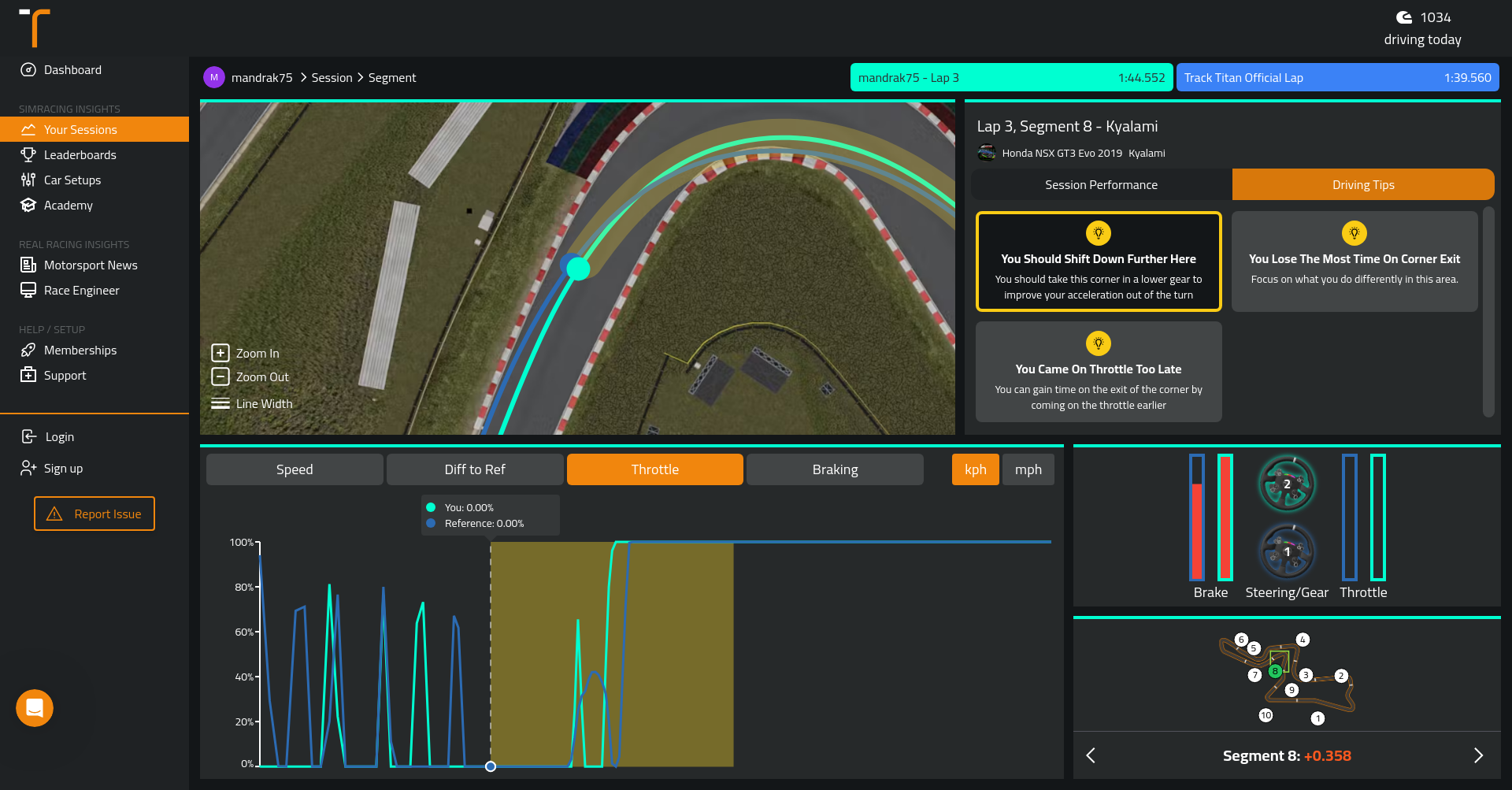
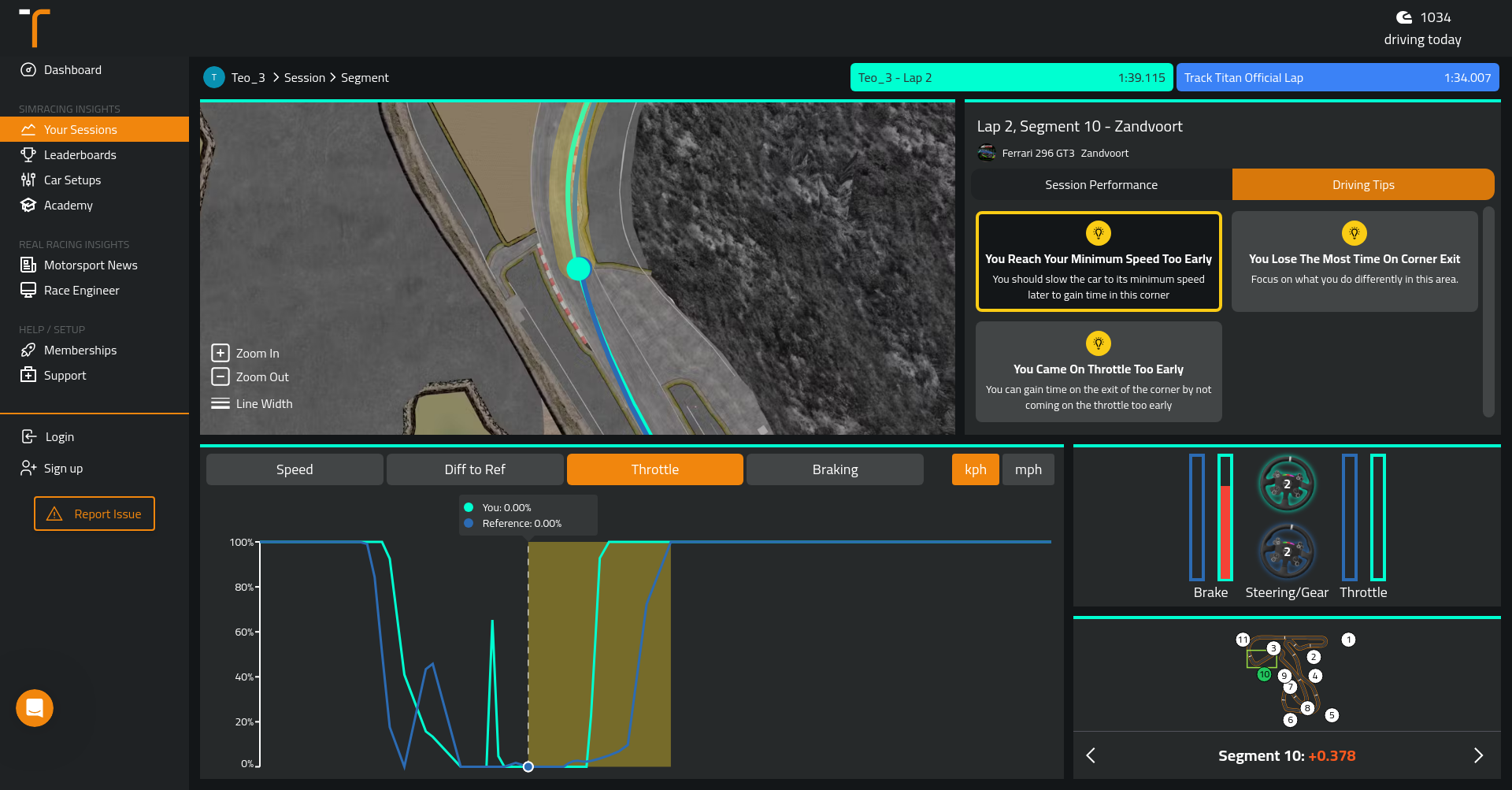
The speed chart analysis reveals that driverB enters the corner with less speed than driverA, due to a slower exit from the previous corner. This lower entry speed affects driverB's entire cornering phase, leading to compounded time loss. Additionally, driverB's minimum corner speed occurs later than driverA's, indicating a delay in throttle application and a less aggressive acceleration out of the corner. To improve performance, driverB should carry more speed from the preceding corner and apply the throttle earlier to enhance acceleration on exit. In contrast, the throttle control chart shows that while driverA is hesitant and gradual in throttle application, resulting in lost potential exit speed, driverB applies the throttle earlier and more decisively. This allows driverB to exit the corner faster and gain time on subsequent straights. DriverA should aim for an earlier and more confident throttle application to reduce time lost during corner exits.
Analyzing the speed chart, it's evident that driverB is entering the corner with a lower speed compared to driverA. This discrepancy begins right at the start of the chart, indicating that driverB exited the previous corner with less momentum. This initial speed deficit carries through the entire corner, compounding time loss as driverB progresses through the section. Furthermore, driverB's minimum speed in the corner occurs noticeably later than that of driverA, suggesting a delayed throttle application. This delay is further evidenced by a less steep increase in speed on corner exit for driverB, compared to driverA's sharper acceleration profile. To improve lap times, driverB should focus on carrying more speed out of the preceding corner and work on earlier throttle application to maximize acceleration and minimize time lost on corner exit.

Analyzing the throttle control chart, it's evident that driverA and driverB exhibit distinct differences in their throttle application. DriverA's graph shows a delayed and gradual increase in throttle application, indicating a later and more cautious approach to powering out of the corner. This hesitation results in a loss of potential exit speed, as they are not utilizing the full acceleration capability of the vehicle as early as possible. Conversely, driverB applies the throttle much earlier and with a sharper increase, demonstrating confidence and commitment to exiting the corner at a higher speed. This early application allows driverB to carry more speed onto the following straight, likely resulting in better lap times. DriverA should focus on initiating throttle application sooner and with more conviction to minimize time lost on corner exit.