114,324
114K
Laps driven today

iRacing

Le Mans Ultimate

Assetto Corsa Competizione

Assetto Corsa

F1 25

Assetto Corsa EVO

Automobilista 2

Forza Motorsport

F1 24

F1 2021

F1 23

F1 2020


Lap 3
Segment 9
1:52.763
6th Feb 2024
Assetto Corsa
Silverstone - GP - Audi R18 E-Tron Quattro 2014

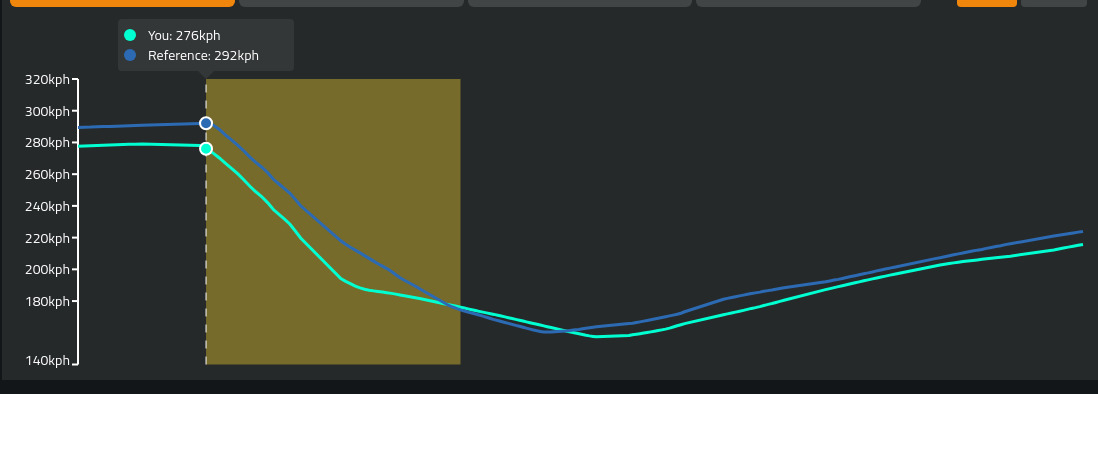
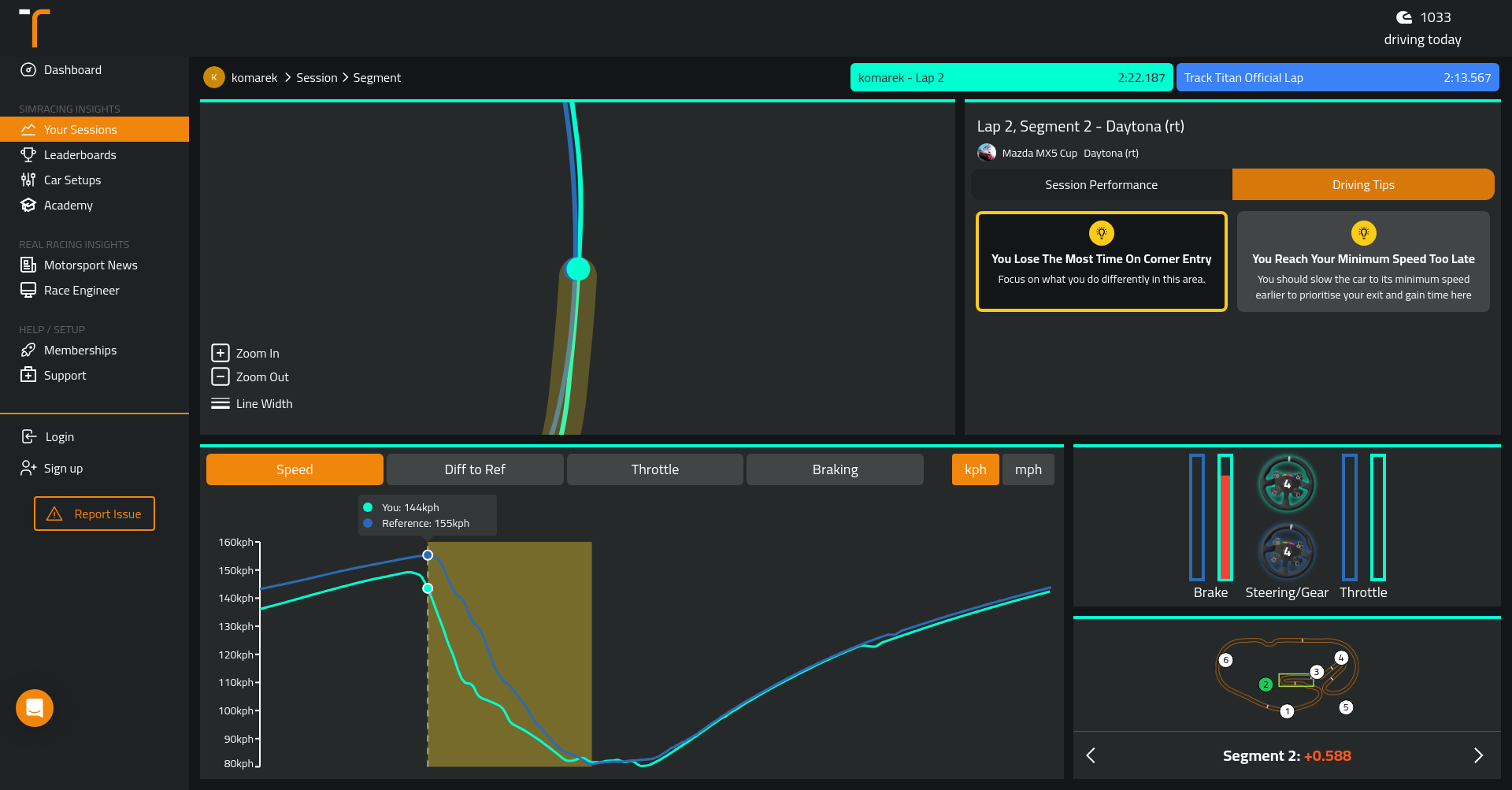
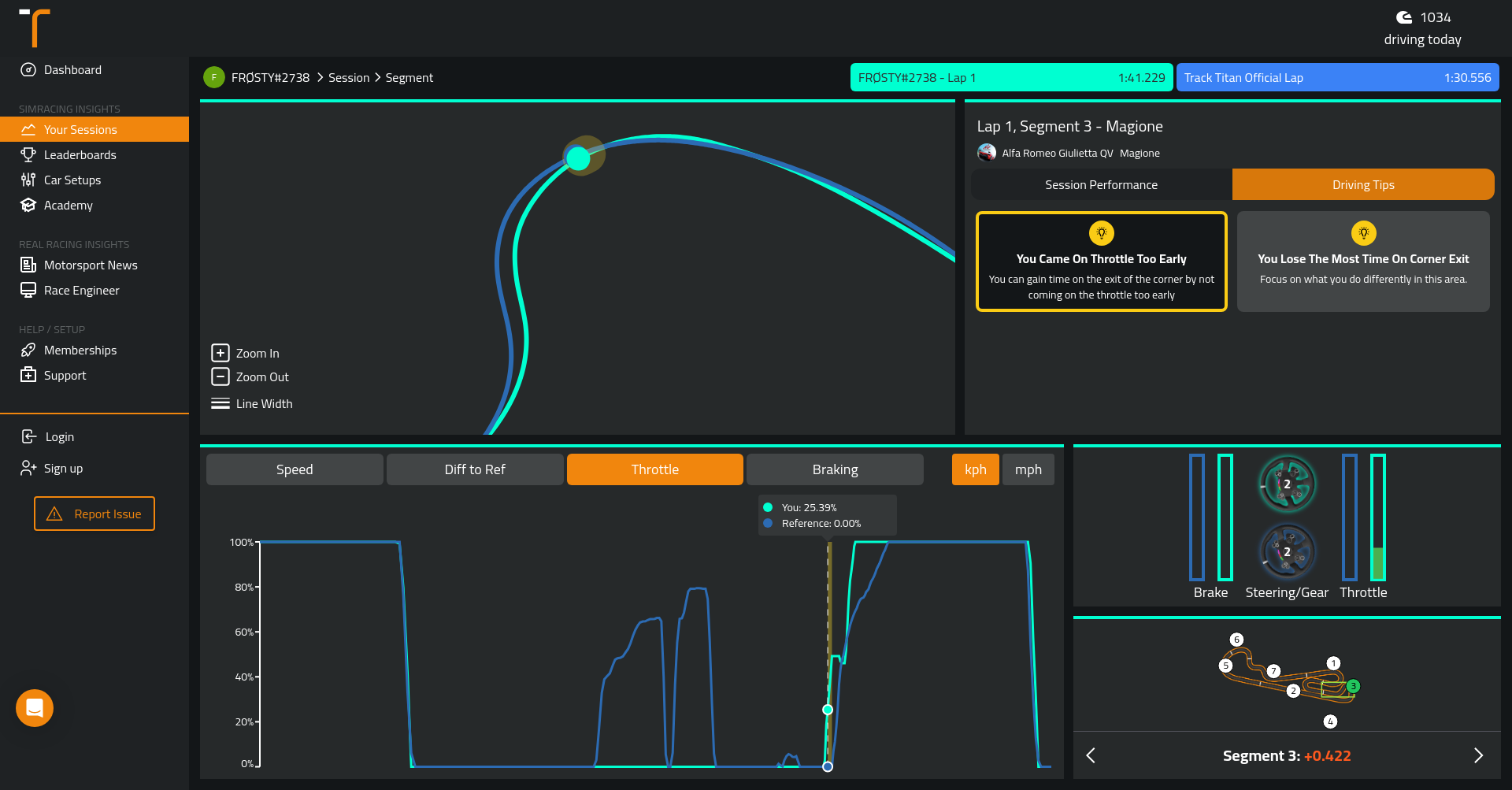
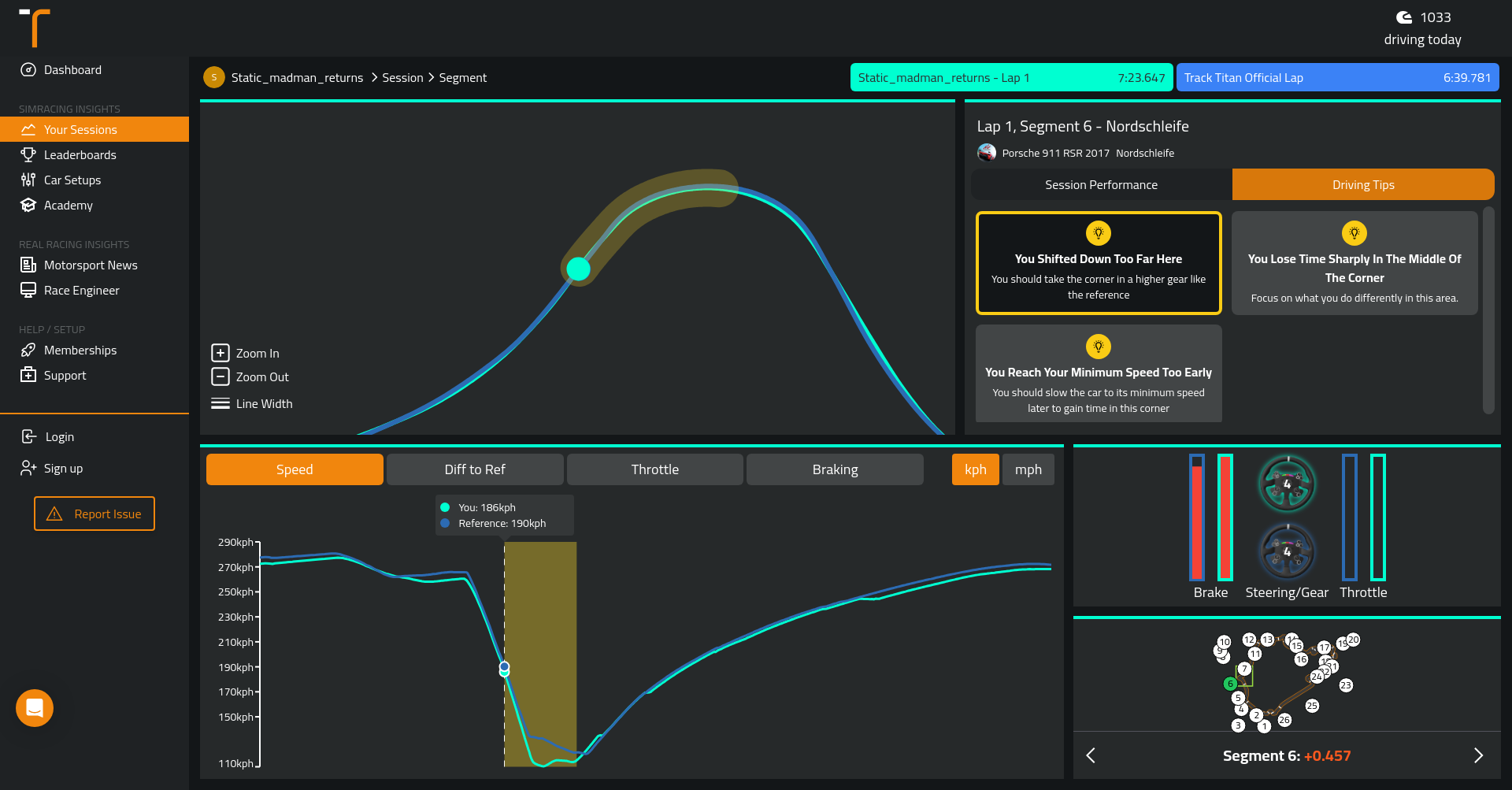
The analysis of the speed chart reveals that driverB is consistently slower than driverA, starting from the corner entry. This is a result of driverB carrying less momentum from the previous corner, which affects their entire approach and exit in the current turn, causing time loss. DriverB's minimum speed occurs later than driverA's, indicating a delay in throttle application and resulting in a slower exit from the turn. To enhance performance, driverB should maintain higher speeds at corner entry and apply the throttle earlier to boost acceleration upon exiting the turn. Additionally, using a lower gear as driverA does could help with better acceleration and improve lap times. In terms of throttle control, driverA is more cautious with their inputs, applying throttle gradually which may be due to concerns about wheelspin or grip. On the other hand, driverB applies throttle much earlier and more aggressively, showing confidence in controlling the car's traction for faster acceleration out of corners. DriverA should aim to apply throttle sooner and more decisively to increase corner exit speeds.
Analyzing the speed chart, it's evident that driverB is entering the corner with a lower speed compared to driverA. This can be seen at the very start of the chart where driverB's speed is already trailing behind. This indicates that driverB exited the previous corner with less momentum, which has a cascading effect on their approach and through the current corner, ultimately leading to time lost. Furthermore, driverB's minimum speed in the corner occurs later than that of driverA, suggesting a delayed throttle application. This is detrimental as it leads to later acceleration out of the turn. The gradient of driverB's speed increase post-apex is also less steep compared to driverA's, confirming a slower exit speed. To improve performance, driverB should focus on carrying more speed through corner entry and engaging the throttle earlier to maximize acceleration out of the turn. Additionally, shifting down further as indicated by the lower gear used by driverA could aid in achieving better acceleration and improving lap times.

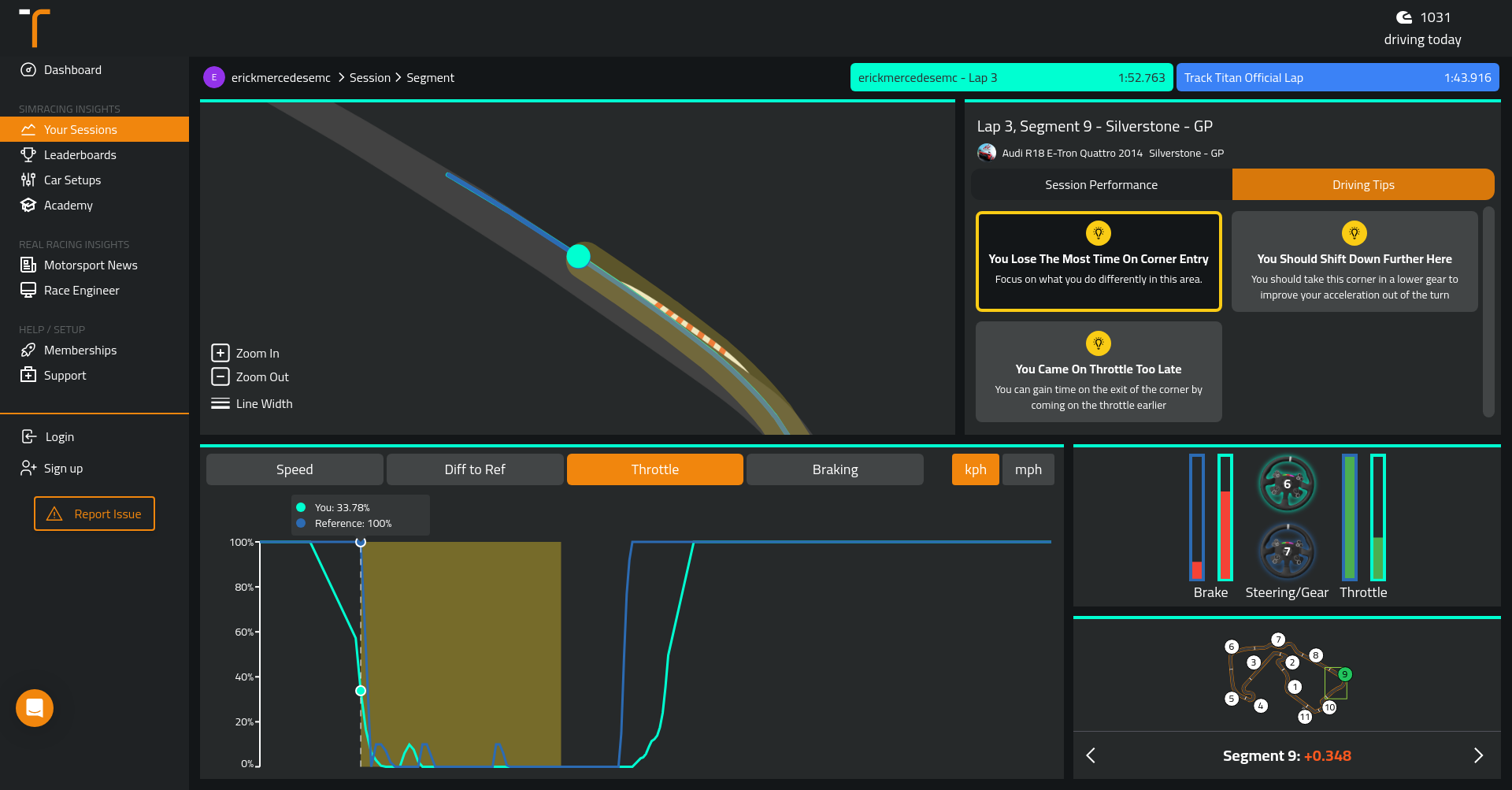
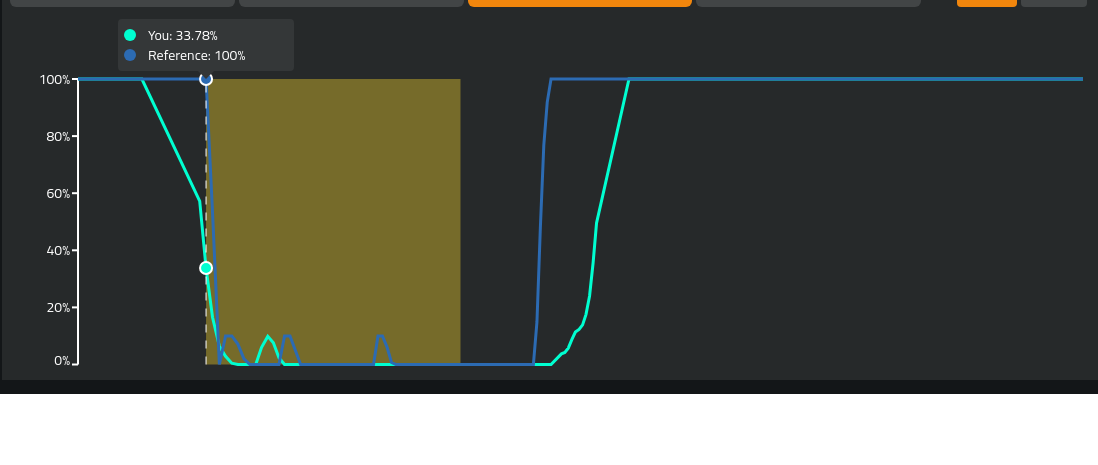
In the provided throttle control analysis, there is a clear discrepancy between driverA and driverB's inputs. DriverA's throttle application is significantly delayed compared to driverB, who applies the throttle much earlier in the timeline. This early application by driverB suggests a more aggressive approach to corner exit, which likely contributes to better acceleration and potentially faster lap times. Furthermore, driverA's gradual increase in throttle application indicates a cautious approach, possibly due to wheelspin or lack of confidence in the vehicle's grip. In contrast, driverB's sharper increase in throttle input demonstrates confidence and control over the car's traction, allowing for a quicker transition from cornering to straight-line speed. DriverA should focus on applying the throttle earlier and with more conviction to improve corner exit speed.