122,444
122K
Laps driven today

iRacing

Le Mans Ultimate

Assetto Corsa Competizione

Assetto Corsa

F1 25

Assetto Corsa EVO

Automobilista 2

Forza Motorsport

F1 24

F1 2021

F1 23

F1 2020


Lap 1
Segment 8
2:18.343
6th Feb 2024
Assetto Corsa
Mugello - BMW M235i Racing

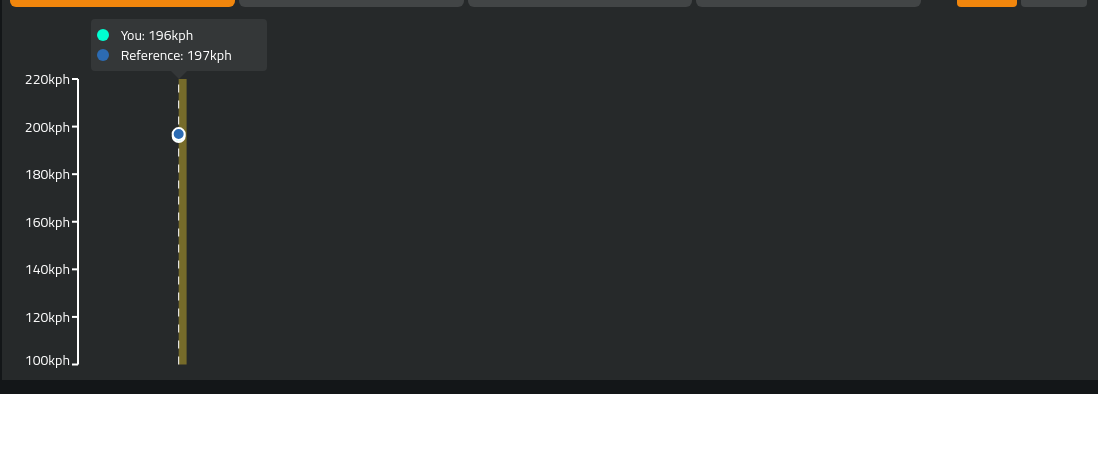
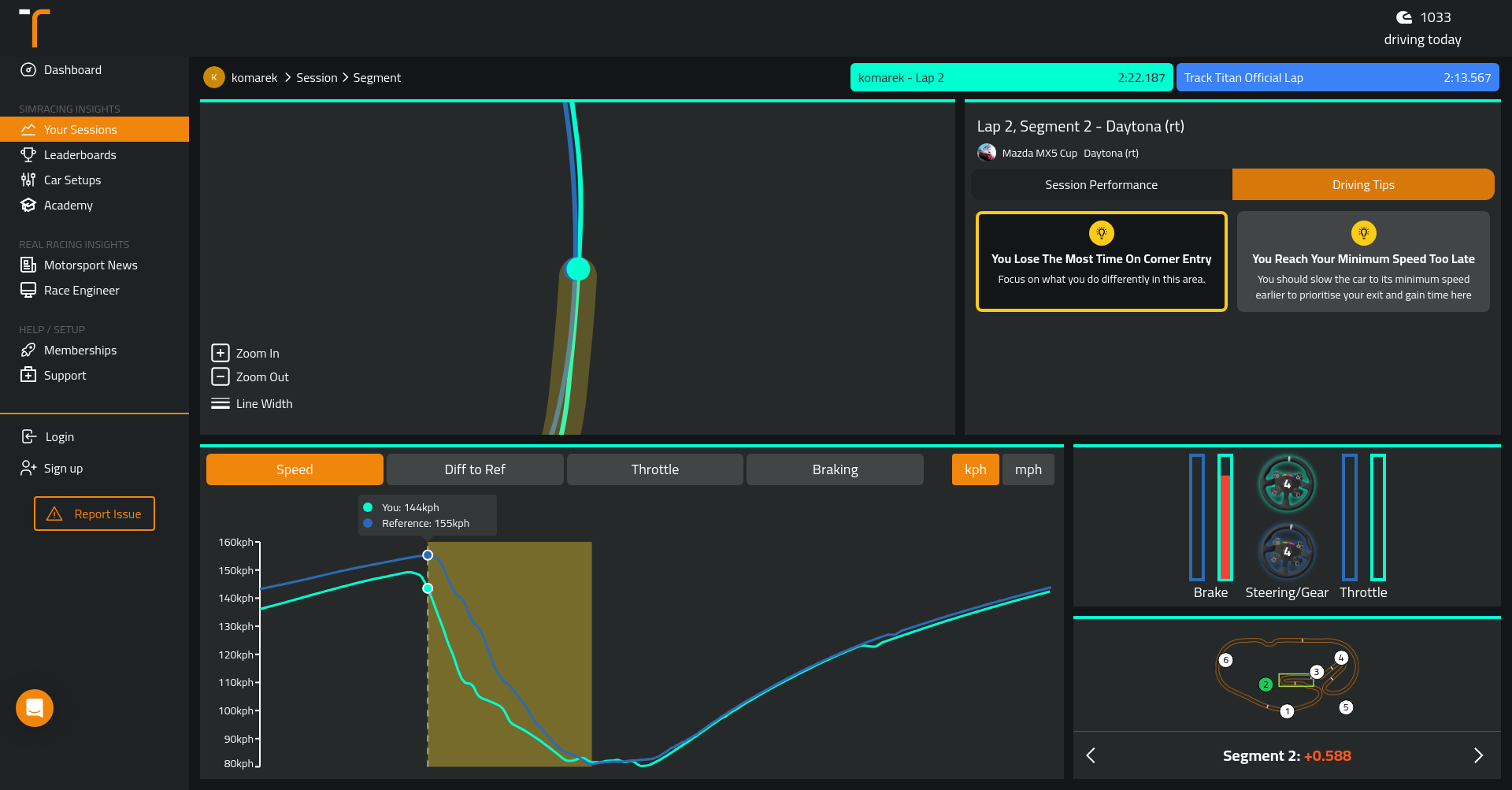
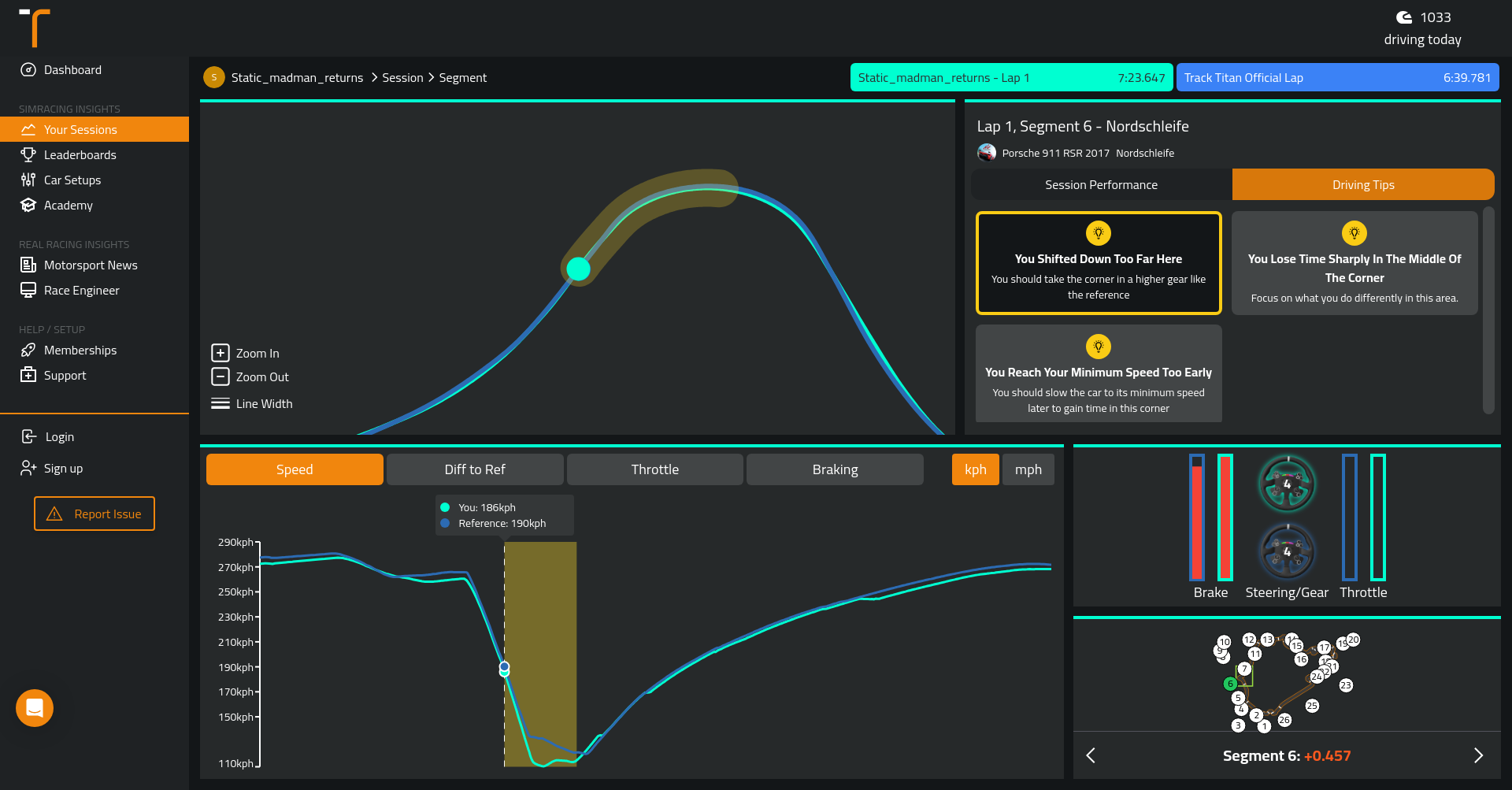
The speed chart analysis reveals that driverB is entering corners at a lower speed than driverA, likely due to less momentum from the previous corner. This sets a slower pace for driverB throughout the corner sequence. DriverB also reaches their minimum speed later and accelerates out of the turn less effectively than driverA, as indicated by a shallower speed increase gradient post-minimum-speed-point. To improve, driverB should focus on braking later and harder to maintain a higher entry speed and downshifting further for better acceleration out of turns. In terms of braking analysis, driverA shows a more aggressive approach with a sharp increase in brake application and gradual release, which may allow for later braking and more speed into the corner through trail braking. On the other hand, driverB's less aggressive initial brake application and quicker release suggest an earlier start to braking or a conservative approach that prioritizes stability over entry speed. For better lap times, driverA could benefit from modulating brake pressure to balance aggressive late braking with control during corner entry.
Analyzing the speed chart, it's evident that driverB is entering the corner with a lower speed compared to driverA. This is indicated by the initial speed difference at the very start of the chart on the left, suggesting that driverB exited the previous corner with less momentum. The impact here is significant as it sets a slower pace for the entire corner sequence. Furthermore, driverB reaches their minimum speed later than driverA, as shown by where their respective speed dips occur on the time axis. This delayed minimum speed indicates that driverB got on the throttle later than driverA, which leads to a compounded time loss due to later acceleration out of the turn. The gradient of driverB's speed increase post-minimum-speed-point is also less steep compared to driverA's, confirming a less effective corner exit and acceleration phase for driverB. To improve, focusing on braking later and harder to maintain higher entry speed and shifting down further for better acceleration out of the turn would be beneficial for driverB.

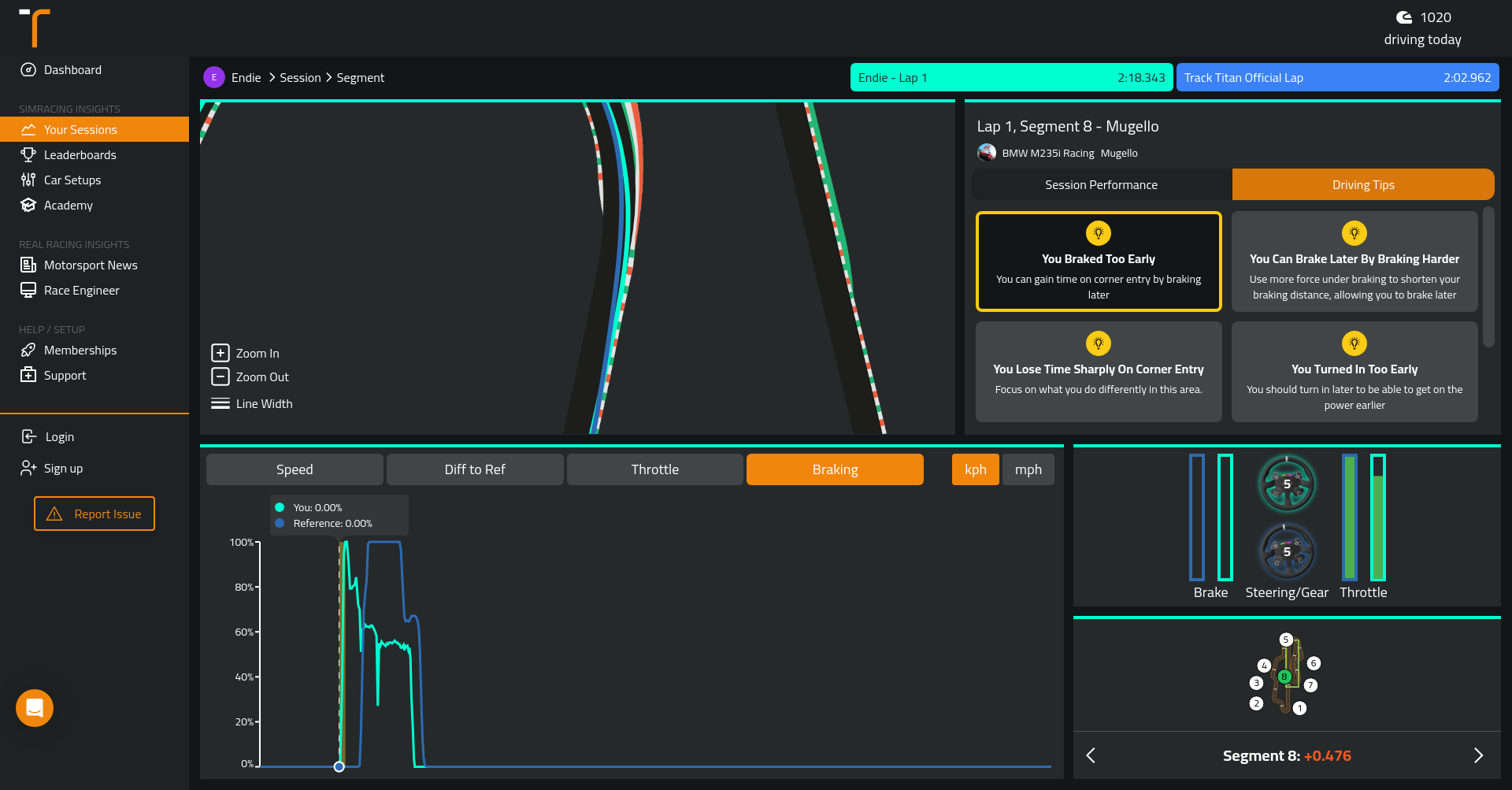
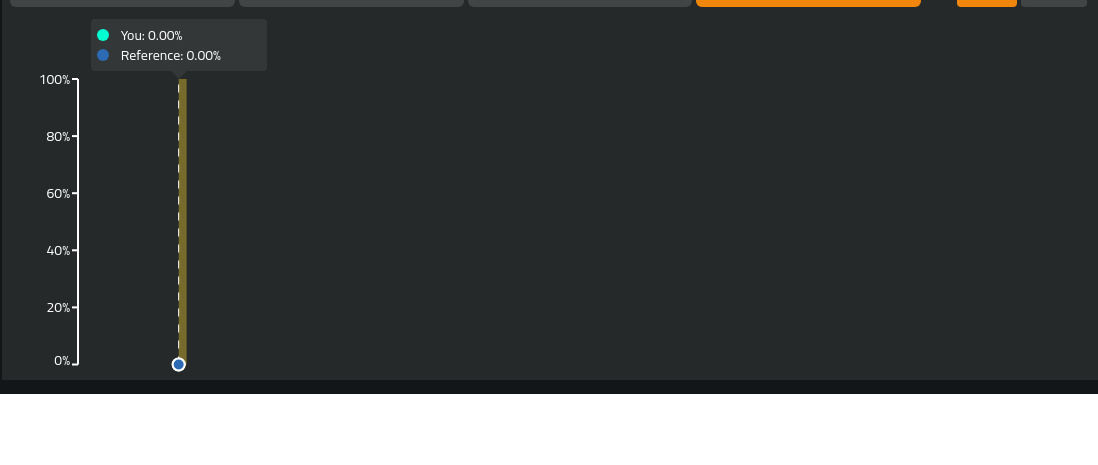
In the provided braking analysis chart, there is a distinct difference between driverA and driverB's braking inputs. DriverA initiates braking with a sharp increase in brake application, reaching peak pressure rapidly. This indicates a more aggressive approach to the braking zone, potentially allowing for later braking and carrying more speed into the corner. However, driverA's release of the brake is gradual, suggesting a period of trail braking that could help in managing the car's balance through corner entry. Conversely, driverB exhibits a less aggressive initial brake application and reaches peak pressure more gradually. This could indicate an earlier start to the braking phase or a more conservative approach to brake force application. DriverB also releases the brakes more quickly than driverA, which may contribute to a different cornering technique that prioritizes stability over entry speed. To improve lap times, driverA should consider modulating brake pressure to achieve an optimal balance between aggressive late braking and maintaining control for corner entry.