117,904
117K
Laps driven today

iRacing

Le Mans Ultimate

Assetto Corsa Competizione

Assetto Corsa

F1 25

Assetto Corsa EVO

Automobilista 2

Forza Motorsport

F1 24

F1 2021

F1 23

F1 2020


Lap 1
Segment 4
1:45.958
6th Feb 2024
Assetto Corsa
Silverstone - GP - Ferrari F2004

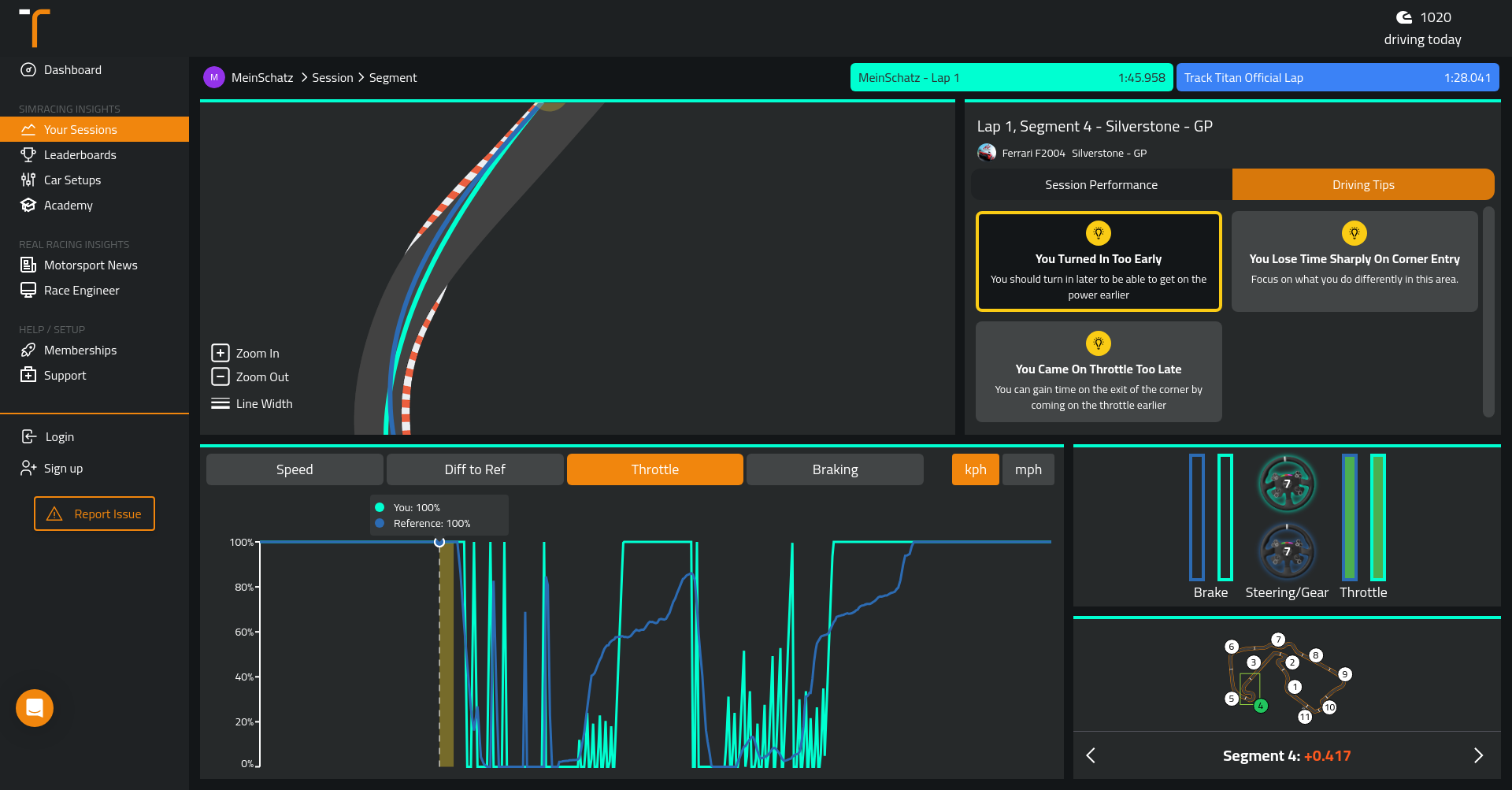
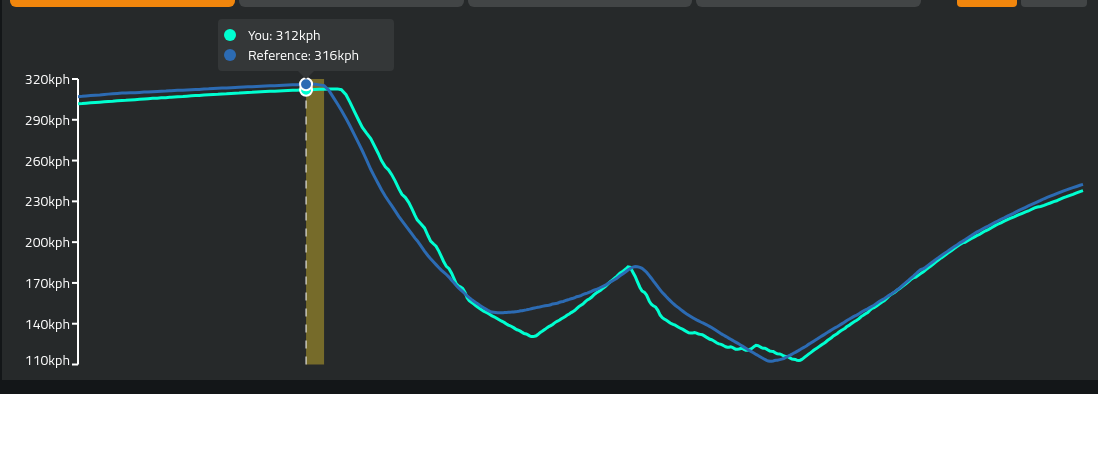
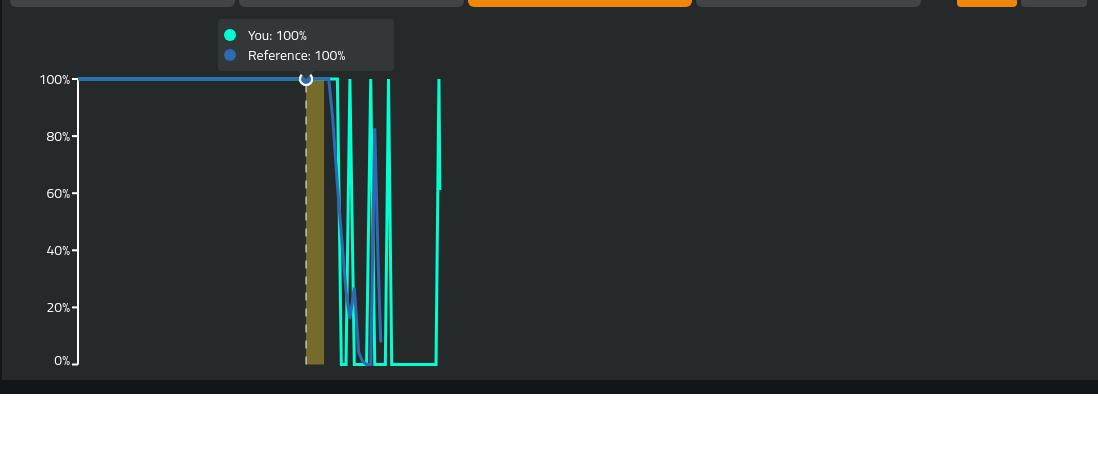
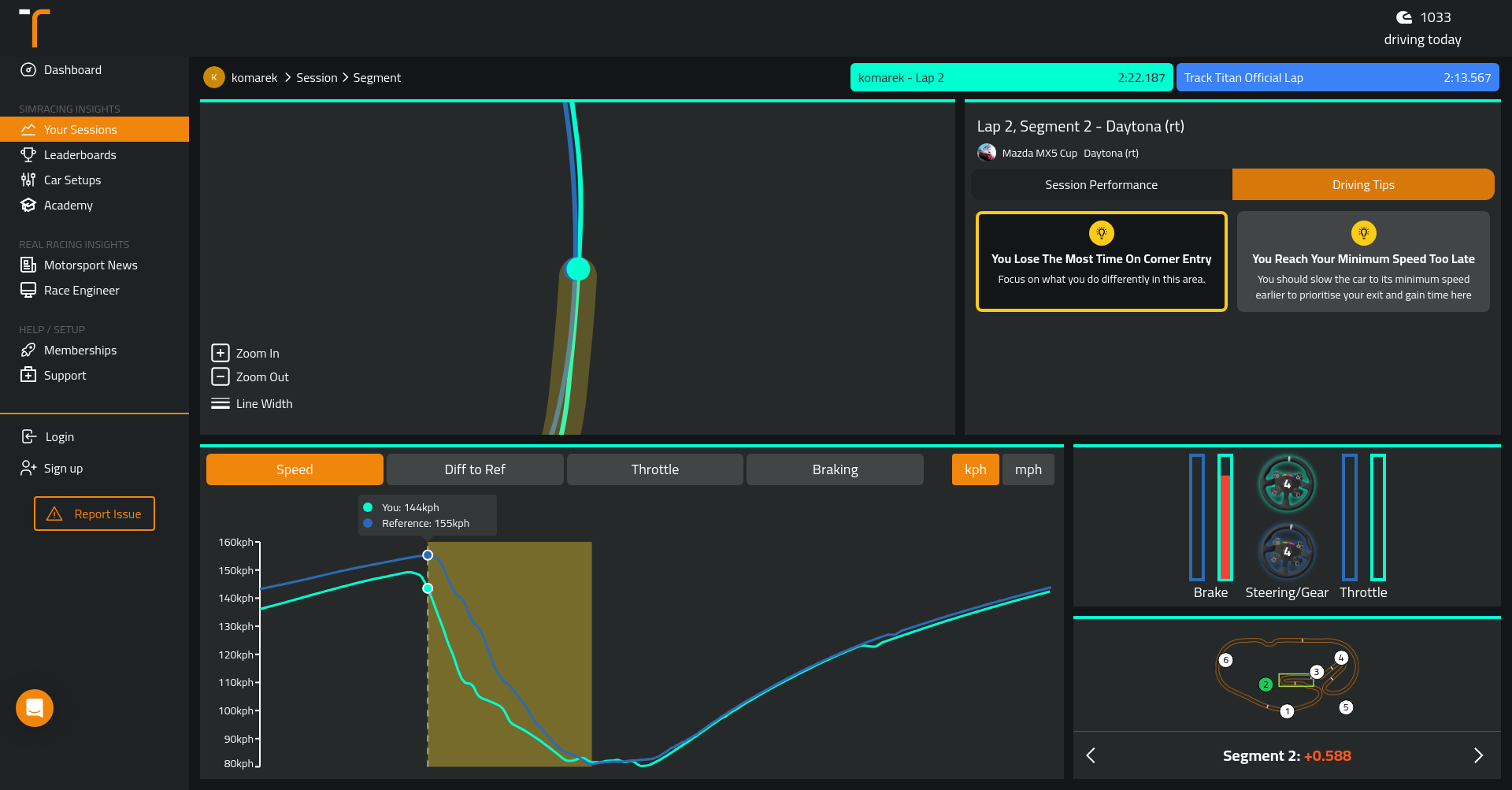
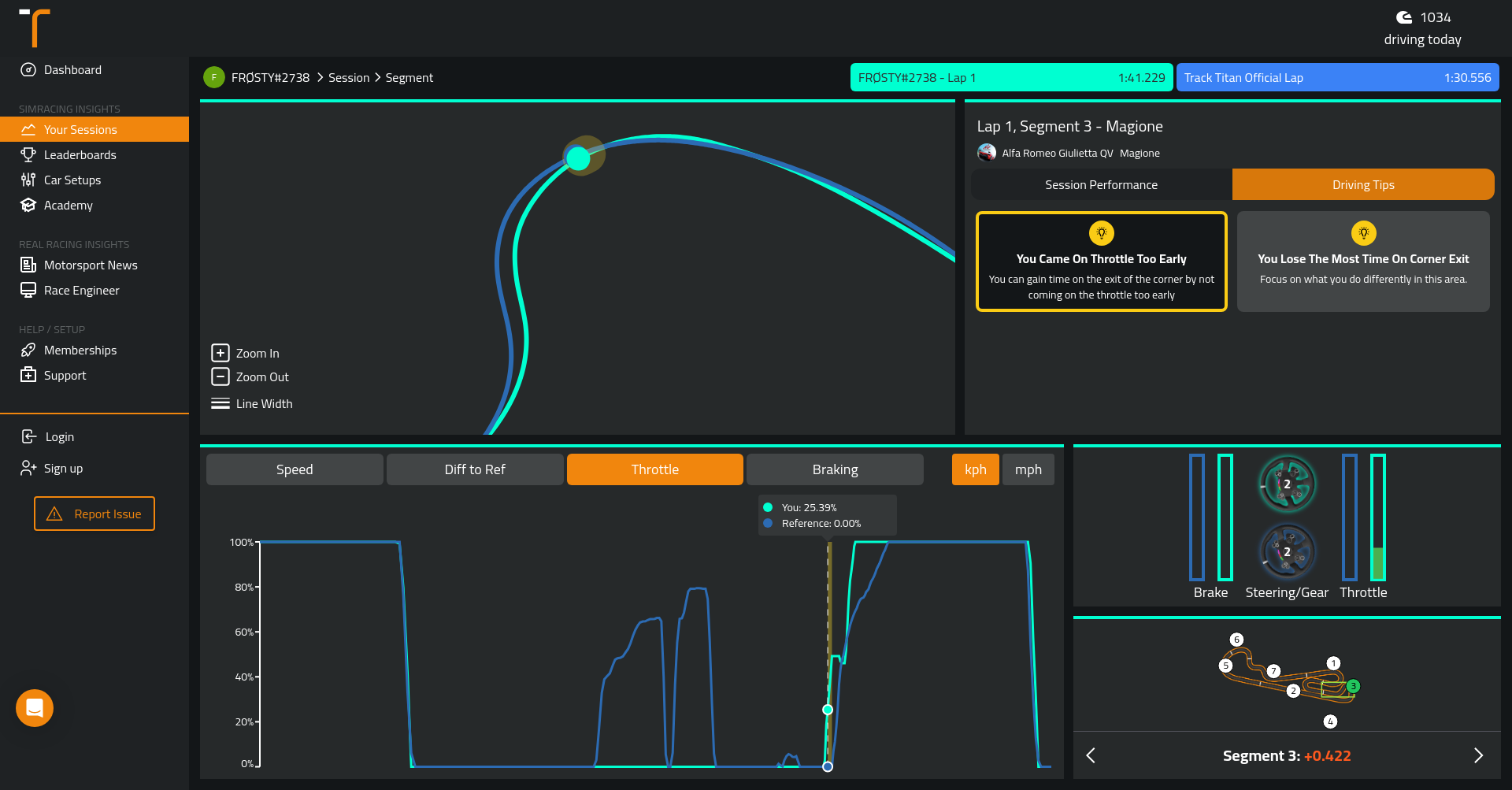
The speed chart analysis reveals that driverB starts the corner with a lower speed than driverA, indicating a loss of momentum from the previous corner. This speed deficit continues into the corner entry, causing driverB to lose time. Additionally, driverB's minimum speed occurs later than driverA's, suggesting a delayed throttle application and resulting in a slower exit speed. To improve lap times, driverB should carry more speed from the preceding corner and apply the throttle earlier to enhance exit speed. In terms of throttle control, driverA exhibits a gradual increase in throttle application, possibly due to managing wheelspin or an early turn-in. In contrast, driverB shows a sharper increase in throttle application, reflecting a more aggressive acceleration out of the corner. DriverA applies full throttle later than driverB, which could lead to time loss on corner exit. For better performance, driverA should delay their turn-in to enable an earlier and stronger throttle application to gain time on corner exit.
Analyzing the speed chart, it's evident that driverB enters the corner with a noticeable speed deficit compared to driverA. This is indicated by the lower speed at the very start of the chart on the left, suggesting that driverB exited the previous corner with less momentum. This initial speed difference carries through to the corner entry, where driverB loses time sharply compared to driverA. The impact here is significant as entering a track section at a lower speed can compound time loss throughout the corner. Furthermore, driverB's minimum speed in the corner occurs later than that of driverA, which indicates a later throttle application. This delay in getting back on power results in a slower exit speed for driverB and a less steep acceleration gradient when compared to driverA. To improve lap times, driverB should focus on carrying more speed from the previous corner and work on timing their throttle application earlier to maximize exit speed and overall corner performance.

Analyzing the throttle control chart, it's evident that driverA and driverB have markedly different approaches to throttle application. DriverA displays a more gradual increase in throttle, which suggests a cautious approach, potentially due to difficulty managing wheelspin or an early turn-in as indicated by the smoother curve. This contrasts with driverB's sharper increase in throttle application, indicative of a more confident and aggressive acceleration out of the corner. The timing of these applications is also critical. DriverA's delayed onset of full throttle application compared to driverB implies a loss of time on corner exit. DriverB reaches full throttle significantly earlier, which would contribute to a higher exit speed and potentially better lap times. To improve, driverA should focus on delaying the turn-in to allow for an earlier and more assertive application of the throttle, as this would help in gaining time on corner exit.