117,904
117K
Laps driven today

iRacing

Le Mans Ultimate

Assetto Corsa Competizione

Assetto Corsa

F1 25

Assetto Corsa EVO

Automobilista 2

Forza Motorsport

F1 24

F1 2021

F1 23

F1 2020


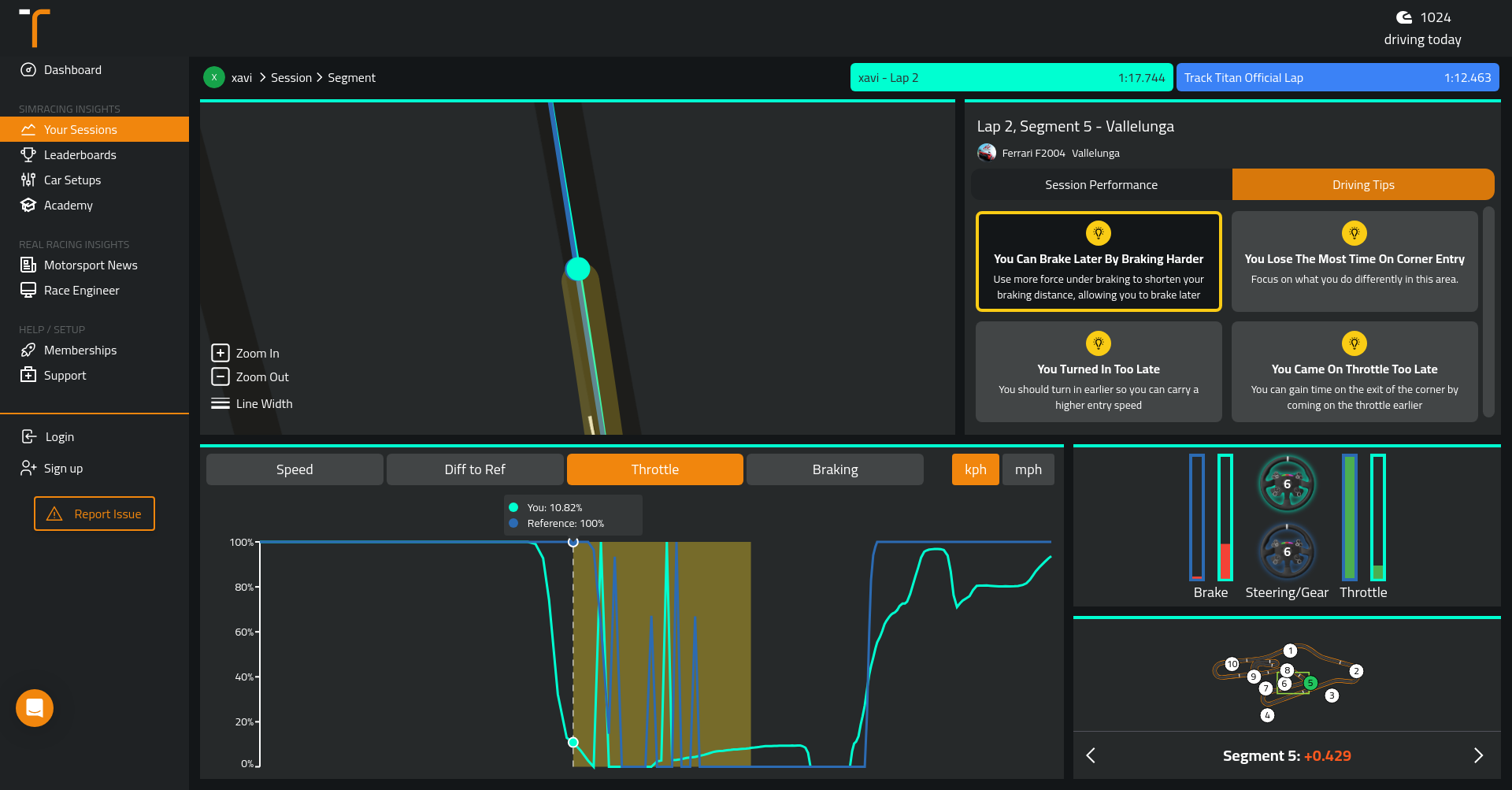
Lap 2
Segment 5
1:17.744
6th Feb 2024
Assetto Corsa
Vallelunga - Ferrari F2004

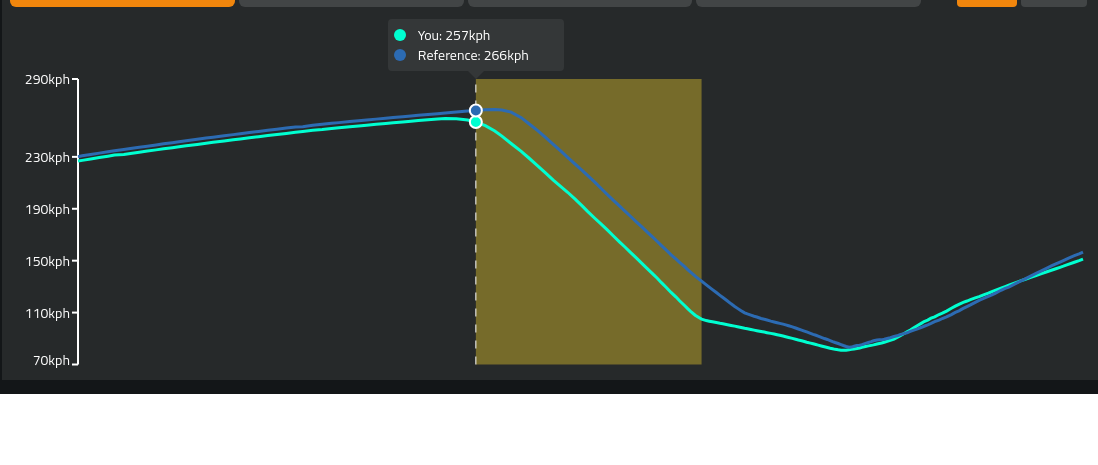
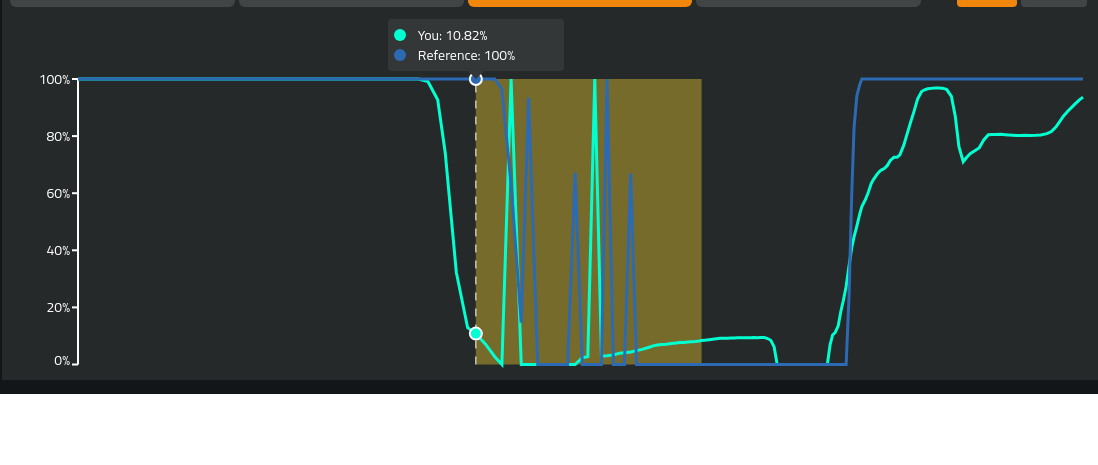
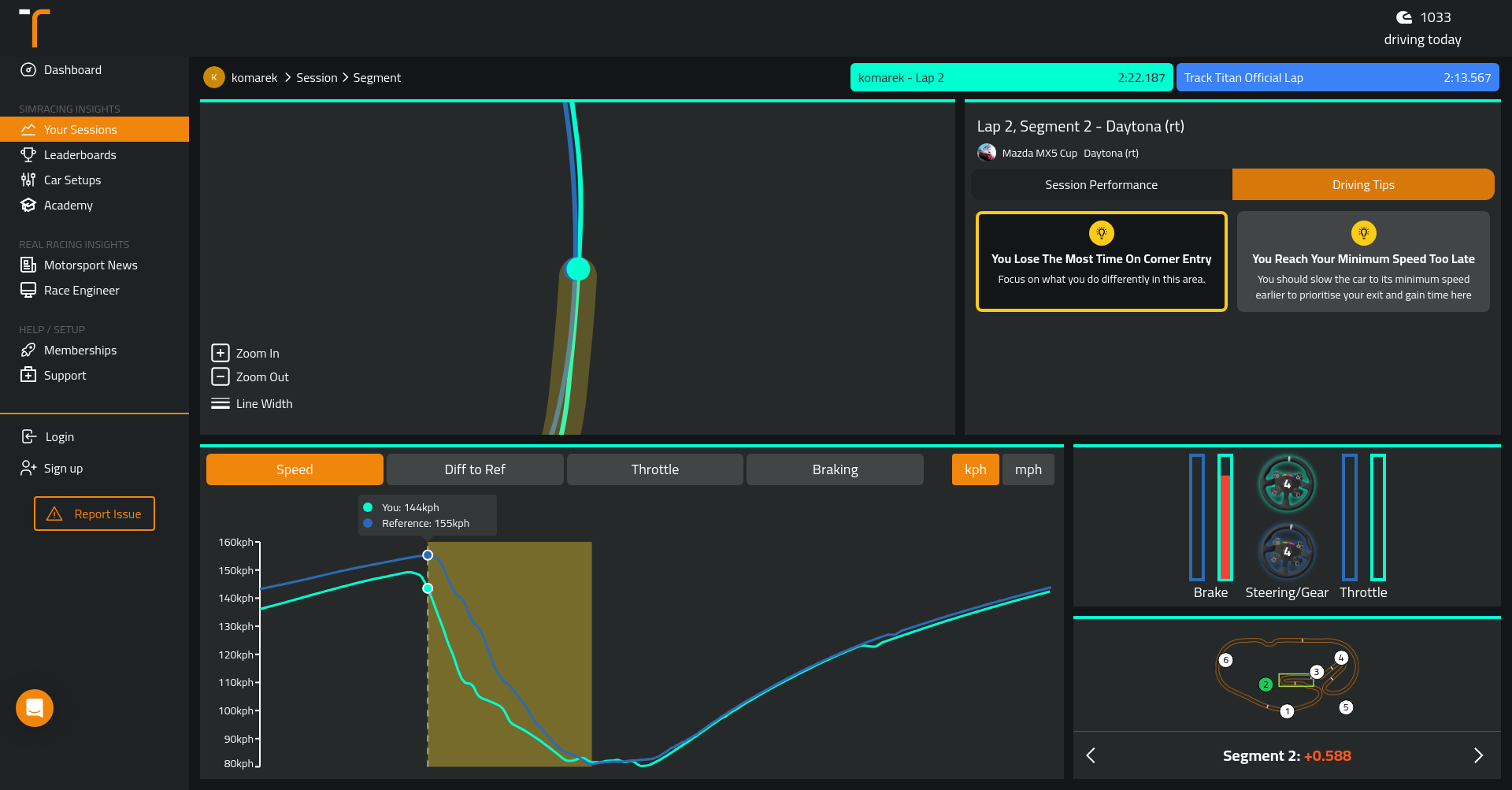
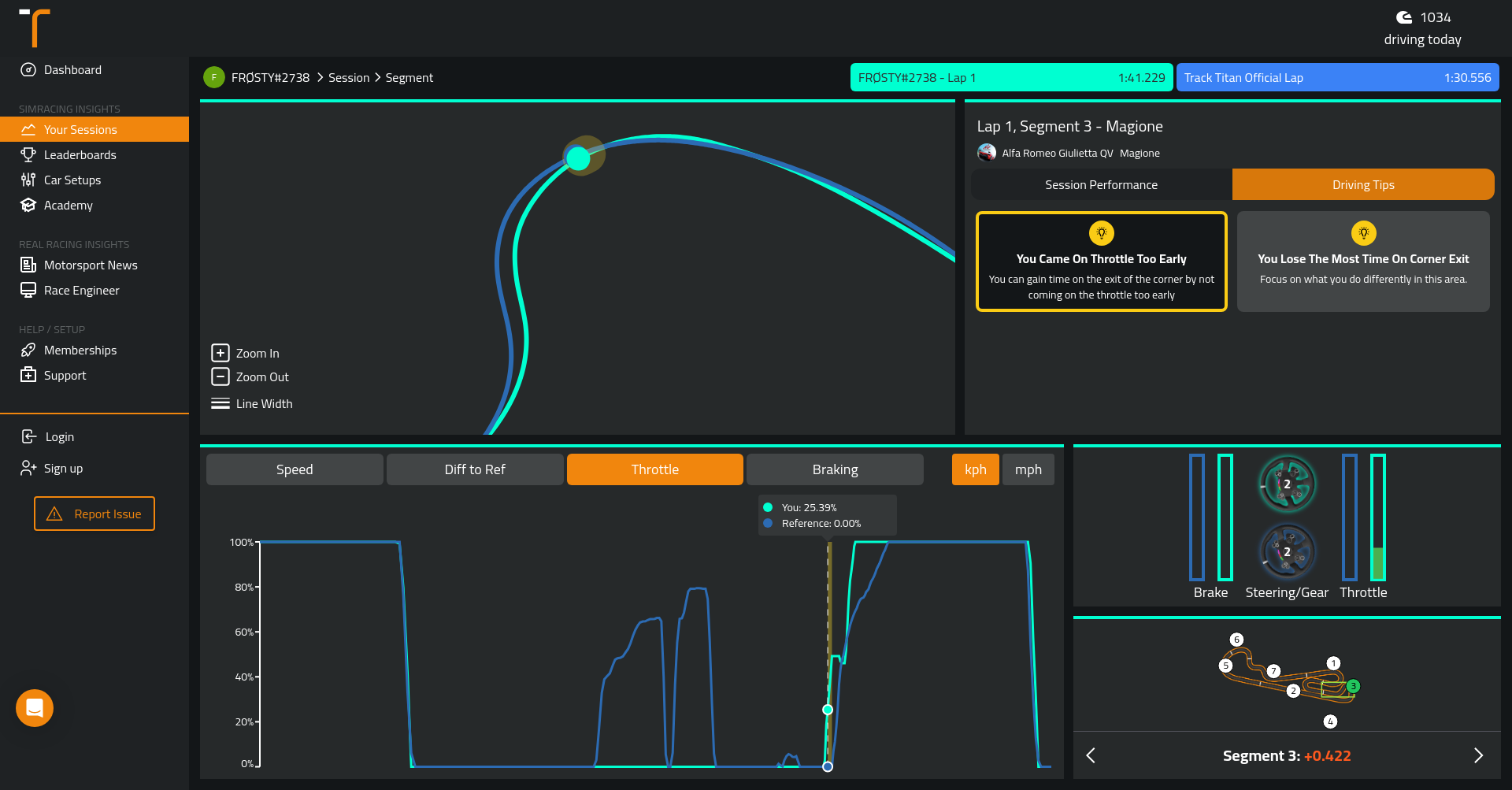
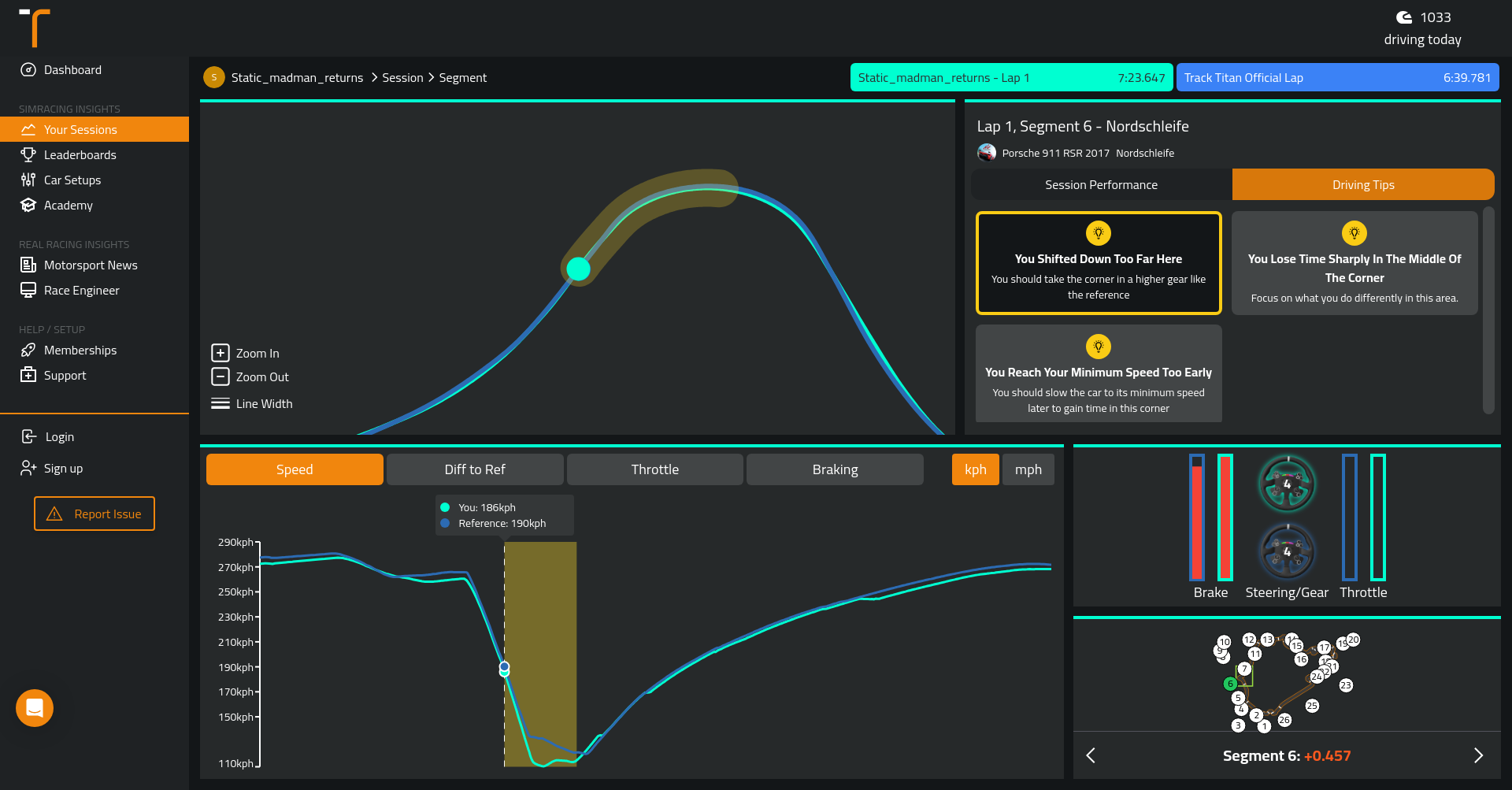
The speed chart analysis reveals that driverB enters corners at a lower speed than driverA, which is a result of carrying less speed from the previous turn. This sets driverB at a disadvantage from the start. DriverB's minimum speed in the corner is also lower and occurs later, indicating a delay in throttle application and consequently, slower acceleration out of the corner. To enhance lap times, driverB should focus on entering corners faster and applying throttle earlier to increase exit speed. In contrast, the throttle control chart shows that driverA is more hesitant and gradual in applying throttle out of corners, suggesting either a lack of confidence in the car's grip or a conservative driving style. This results in time loss compared to driverB's quicker and more decisive throttle application. DriverB's aggressive approach allows for higher exit speeds onto straights, gaining time over driverA. For improved performance, driverA should apply throttle earlier and with greater confidence to capitalize on the vehicle's traction like driverB does.
Analyzing the speed chart, it's evident that driverB is entering the corner at a significantly lower speed compared to driverA. This discrepancy starts right at the beginning of the chart, indicating that driverB has carried less speed out of the previous corner. The impact here is immediate; by not maintaining a higher exit speed from the prior turn, driverB is already at a disadvantage before even approaching the next corner. Furthermore, as we progress through the corner, we see that driverB's minimum speed is lower than that of driverA and occurs later in the corner. This suggests that driverB is on throttle later than driverA, which delays acceleration and leads to additional time lost on corner exit. The gradient of driverB's speed increase post-apex is also less steep compared to driverA's, confirming a later and slower pick-up of speed. To improve lap times, focusing on carrying more entry speed and getting on throttle earlier will be crucial for driverB.

Analyzing the throttle control chart, it's evident that driverA and driverB have distinct differences in their throttle application. DriverA displays a delayed and gradual increase in throttle, indicating a later and more cautious approach to acceleration out of the corner. This hesitation to apply full throttle can be seen as a lack of confidence in the car's grip or a conservative driving style, which ultimately leads to a loss of time compared to driverB. On the other hand, driverB exhibits a quicker and more decisive application of throttle. The steep curve on the chart suggests that driverB is confident in the vehicle's traction and is utilizing it to exit the corner with higher speed. This aggressive approach allows driverB to carry more speed onto the straight, gaining valuable time over driverA. To improve performance, driverA should focus on applying throttle earlier and with more conviction, mirroring the commitment shown by driverB.