122,444
122K
Laps driven today

iRacing

Le Mans Ultimate

Assetto Corsa Competizione

Assetto Corsa

F1 25

Assetto Corsa EVO

Automobilista 2

Forza Motorsport

F1 24

F1 2021

F1 23

F1 2020


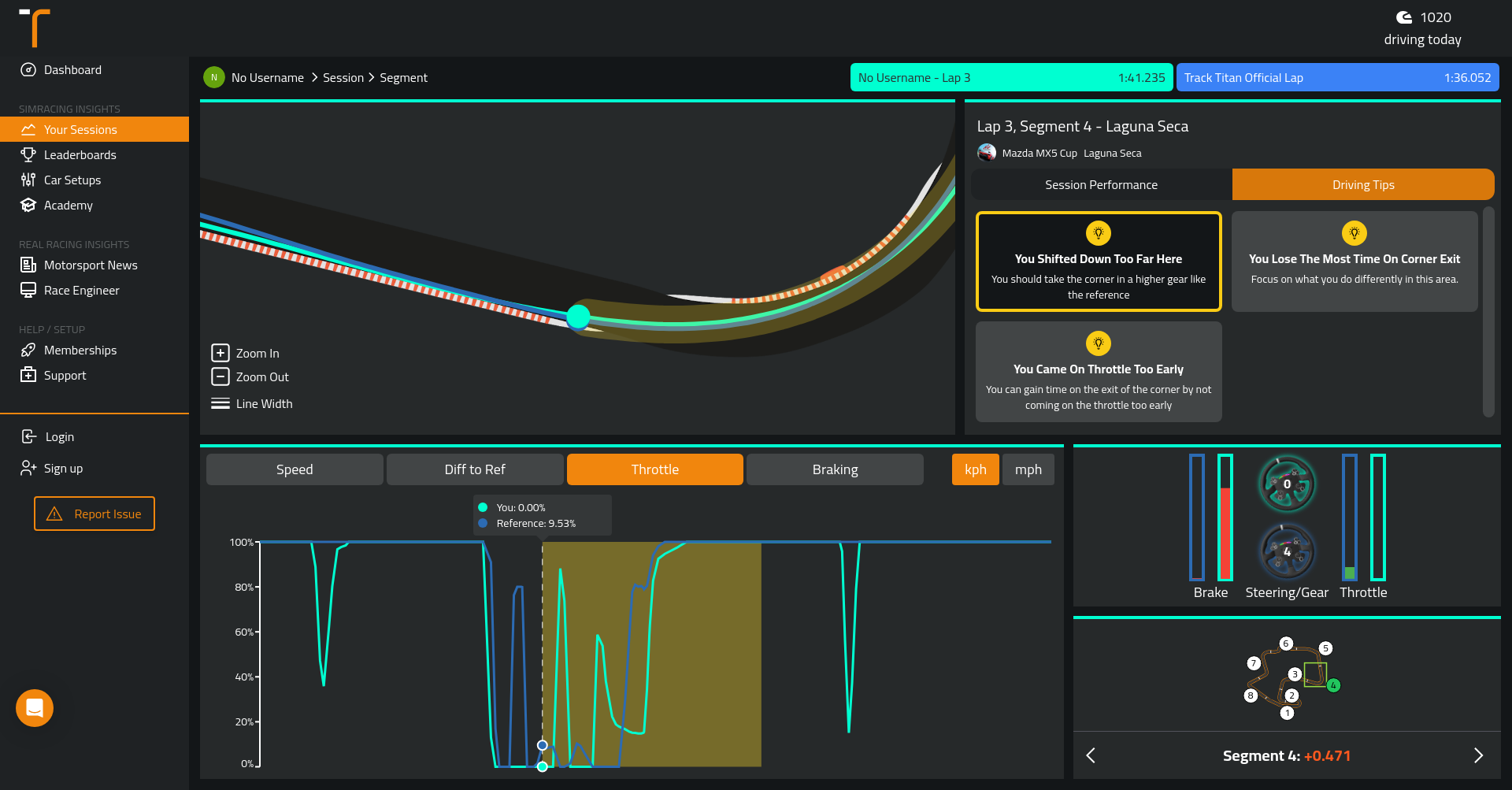
Lap 3
Segment 4
1:41.235
7th Feb 2024
Assetto Corsa
Laguna Seca - Mazda MX5 Cup

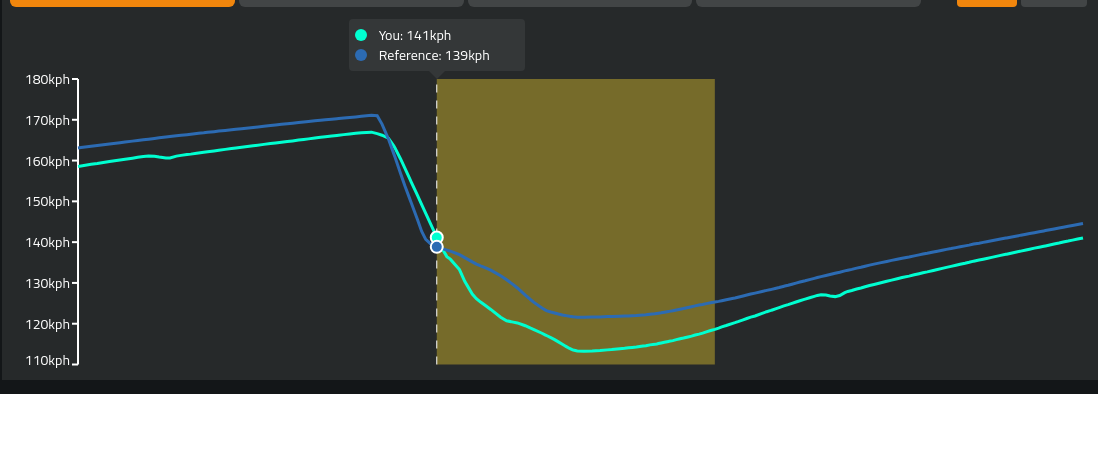
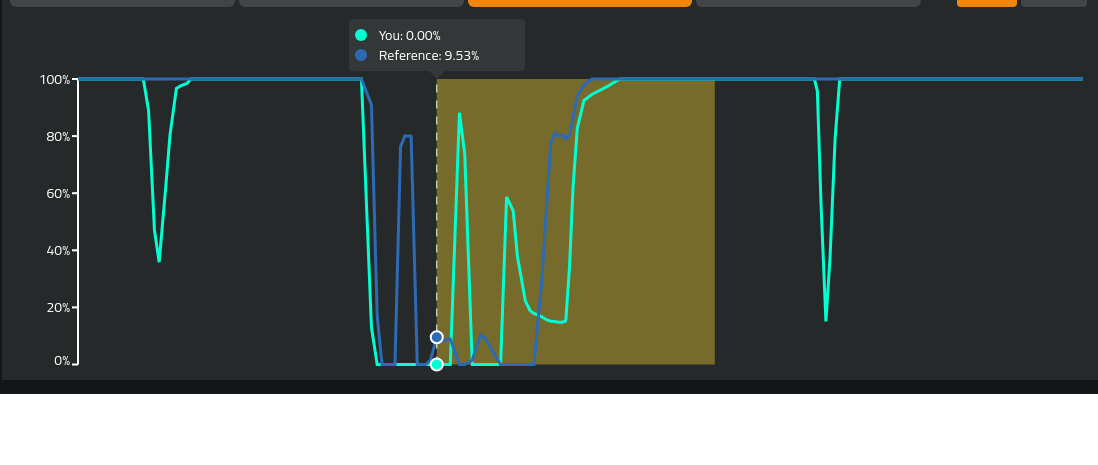
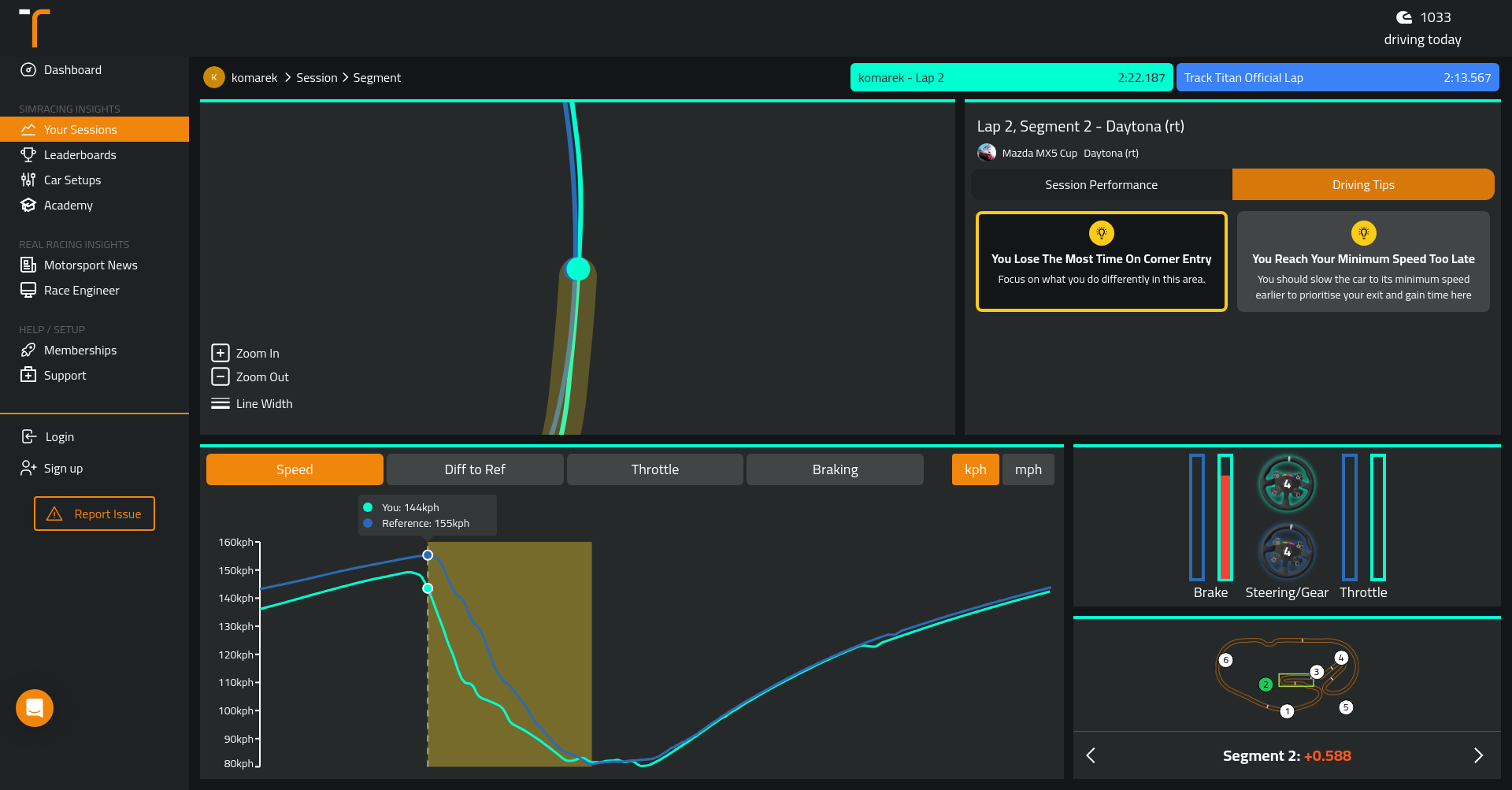
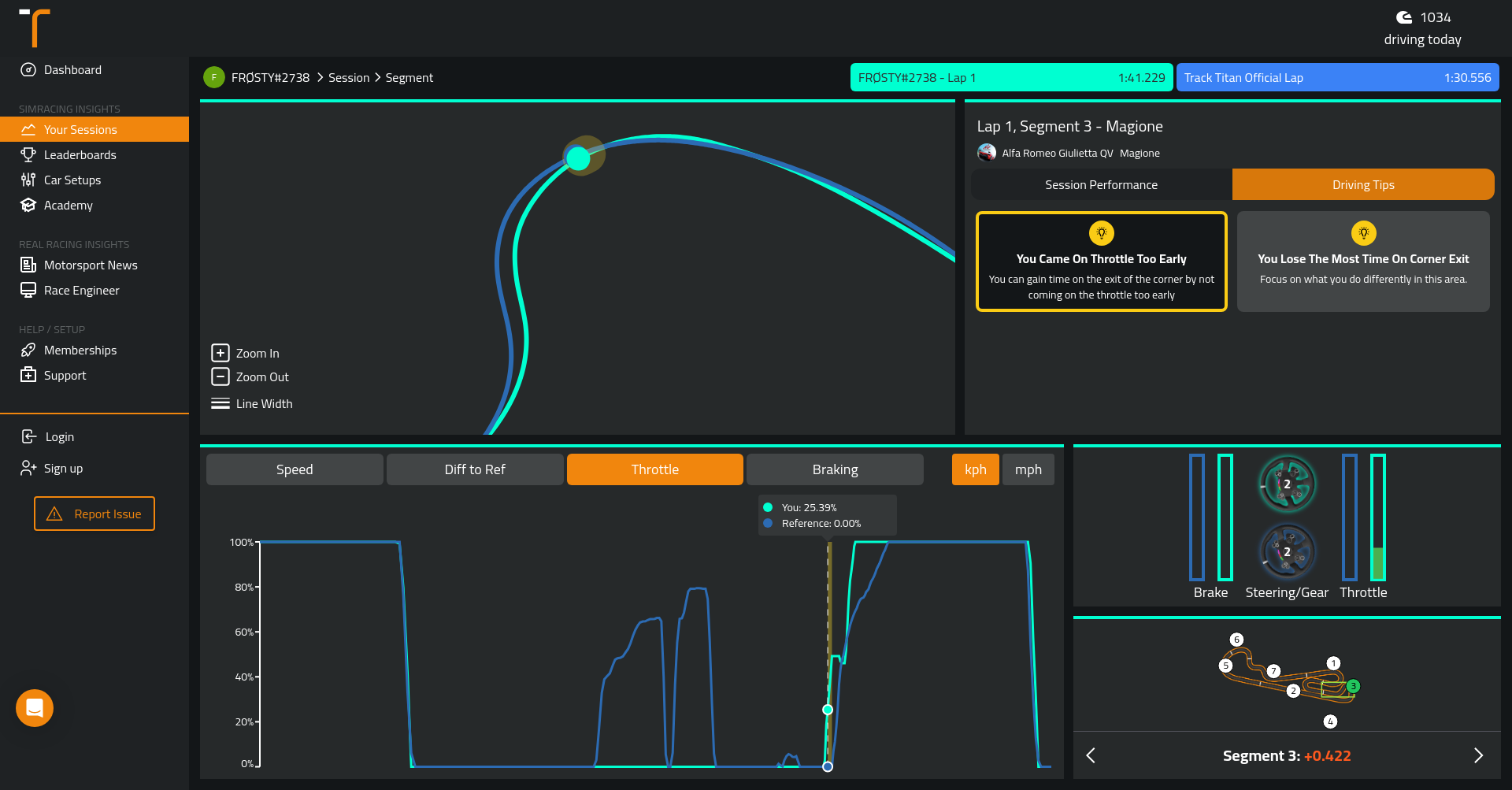
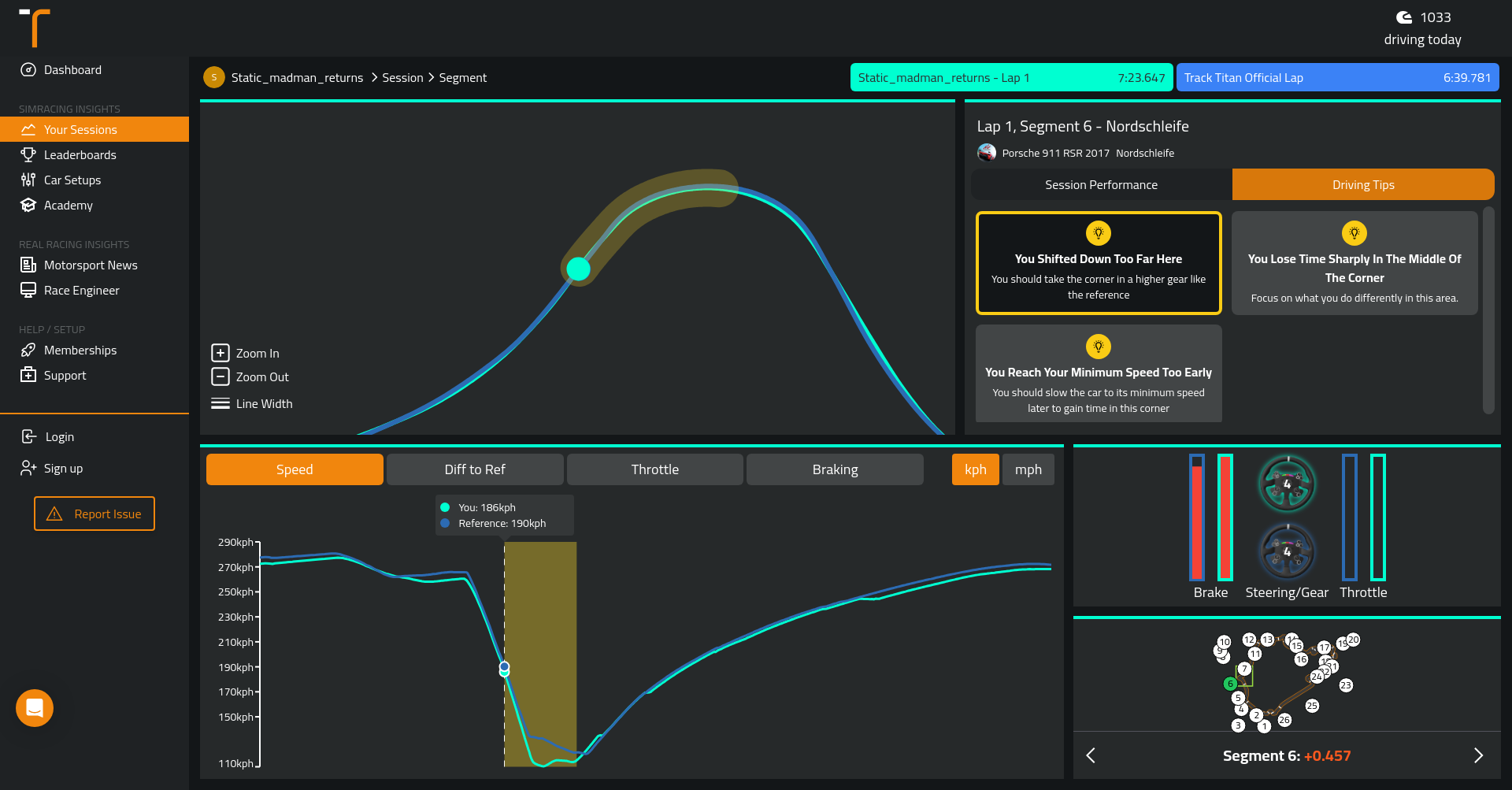
The analysis of the speed chart reveals that driverB enters corners at a lower speed than driverA, indicating a need to carry more momentum from previous corners. DriverB's minimum speed occurs later in the corner, suggesting a delay in throttle application and slower acceleration out of the corner. To improve, driverB should aim to maintain higher exit speeds from preceding corners and delay throttle input slightly for better acceleration and potential time gains on corner exit. The throttle control chart shows that driverA applies throttle earlier than driverB, leading to a less smooth increase in throttle and possibly difficulty managing wheelspin or traction. This early application does not provide a speed advantage and may hinder exit speed from the corner. DriverB's later throttle application results in smoother acceleration and indicates better traction control. DriverA should moderate their throttle input until the car is better positioned for acceleration out of the turn, which could lead to improved lap times through enhanced corner exit speeds.
Analyzing the speed chart, it's evident that driverB enters the corner with a lower speed compared to driverA. This suggests that driverB did not carry as much momentum from the previous corner into this one. The speed differential at the start of the chart indicates that driverB needs to focus on maintaining higher exit speeds from preceding corners to ensure a stronger entry into subsequent ones. Furthermore, driverB's minimum speed occurs later in the corner than driverA's, which implies a delay in throttle application and consequently a later acceleration phase. This is corroborated by the flatter gradient of driverB's speed curve post-apex, signifying slower acceleration out of the corner. To improve, driverB should work on delaying throttle input slightly to prevent early application, which can compromise exit speed. By focusing on these adjustments, there is potential for time gains on corner exit where currently most time is being lost.

Analyzing the throttle control chart, it's evident that driverA is applying throttle significantly earlier than driverB. This premature application results in a less smooth increase in throttle, which could indicate difficulty managing wheelspin or a lack of traction. DriverA's early throttle application is not translating into a speed advantage; instead, it's likely compromising their exit speed from the corner. DriverB, on the other hand, delays their throttle application until later in the corner, which correlates with a smoother and more progressive increase in speed. This suggests better traction control and a more efficient corner exit strategy. DriverA should aim to replicate this approach by moderating their throttle input until the car is better positioned and settled for acceleration out of the turn. This adjustment could result in improved lap times through enhanced corner exit speeds.