117,319
117K
Laps driven today

iRacing

Le Mans Ultimate

Assetto Corsa Competizione

Assetto Corsa

F1 25

Assetto Corsa EVO

Automobilista 2

Forza Motorsport

F1 24

F1 2021

F1 23

F1 2020


Lap 1
Segment 9
2:28.660
7th Feb 2024
Assetto Corsa
Watkins Glen - Mazda MX5 Cup

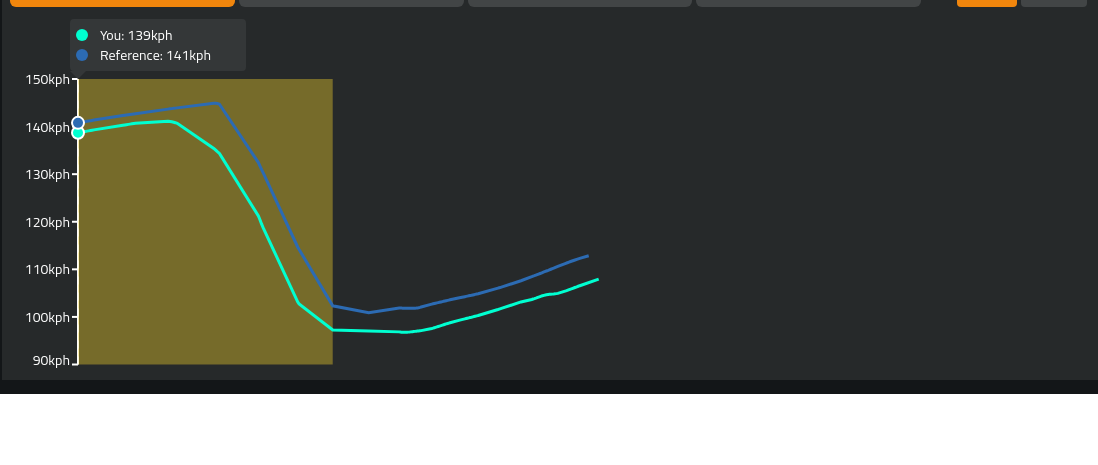
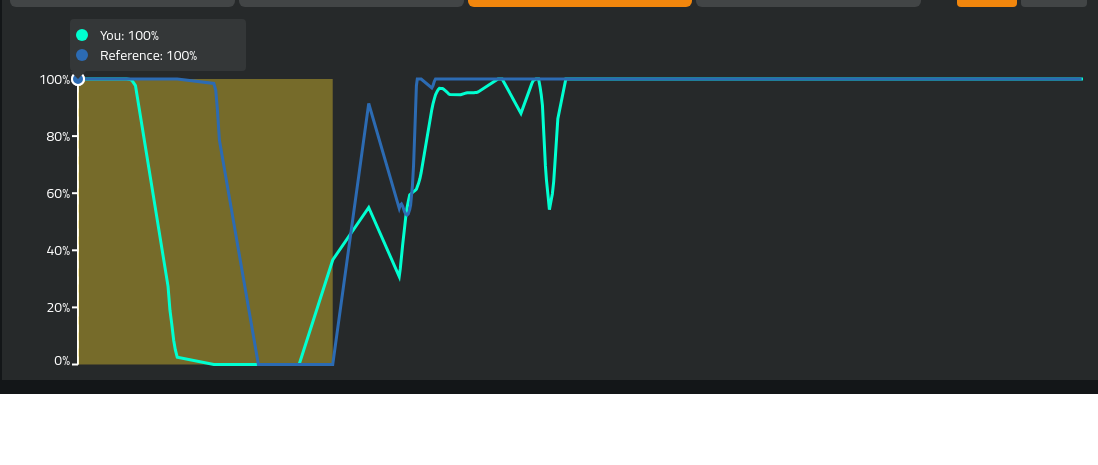
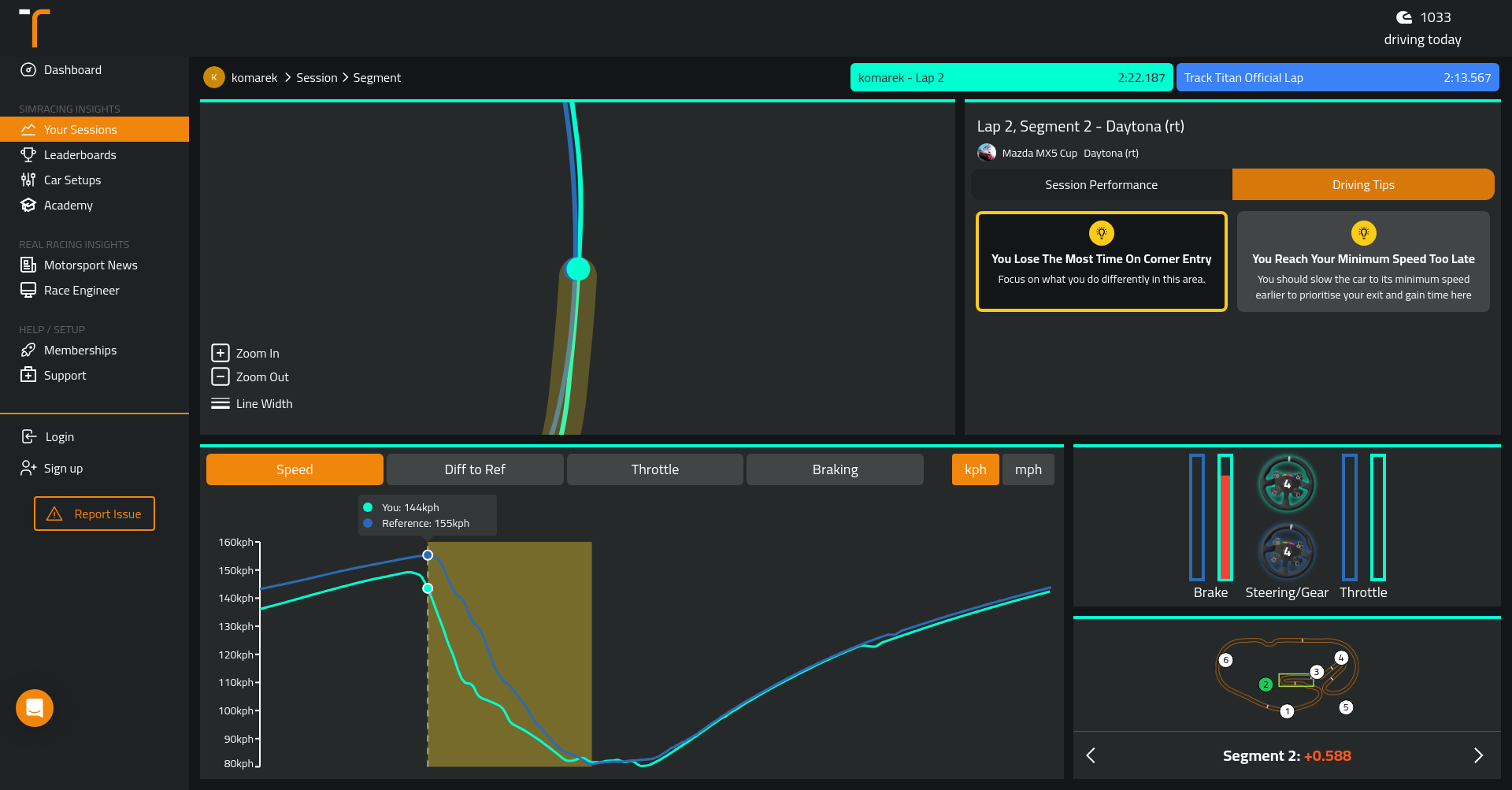
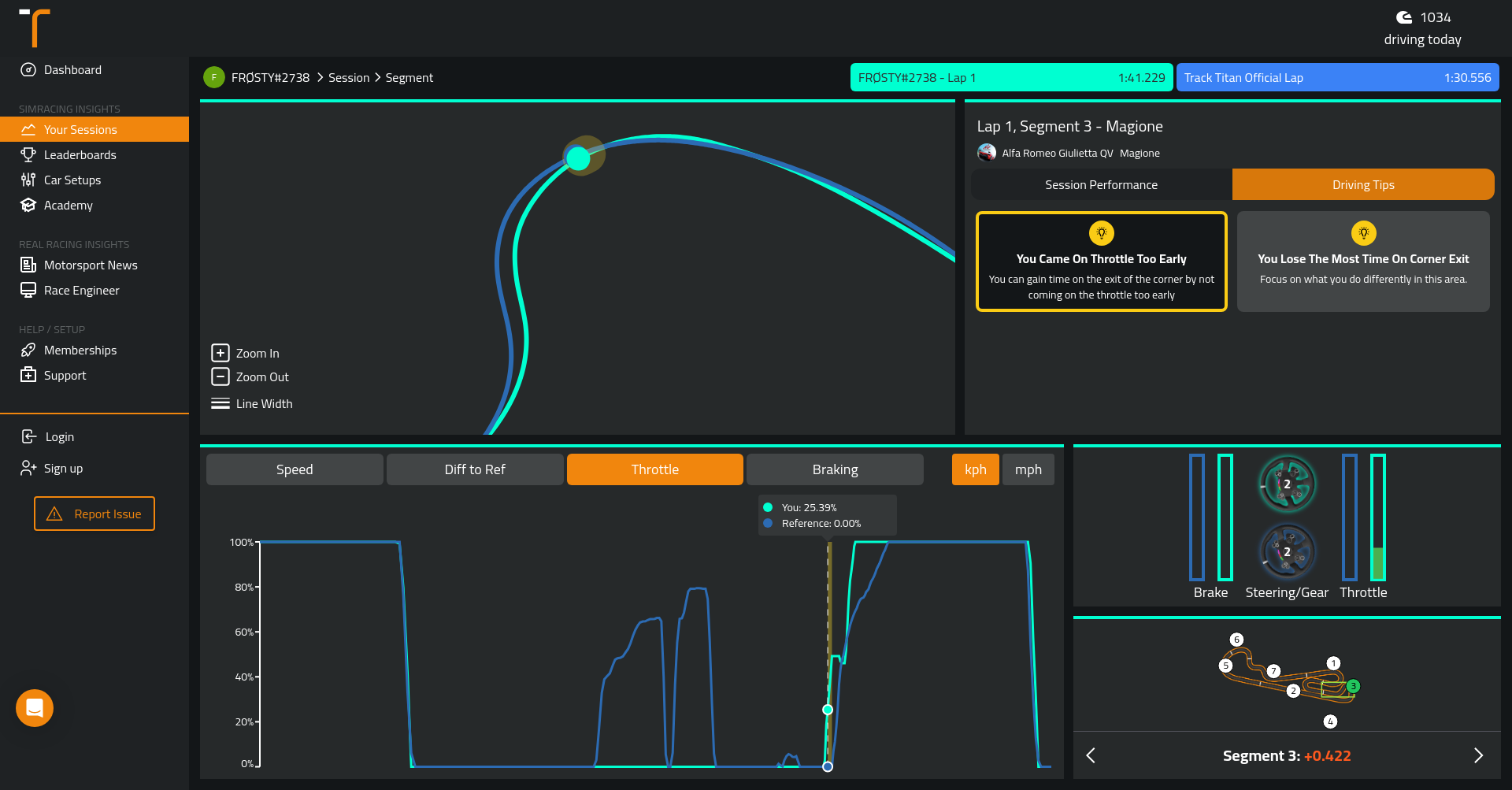
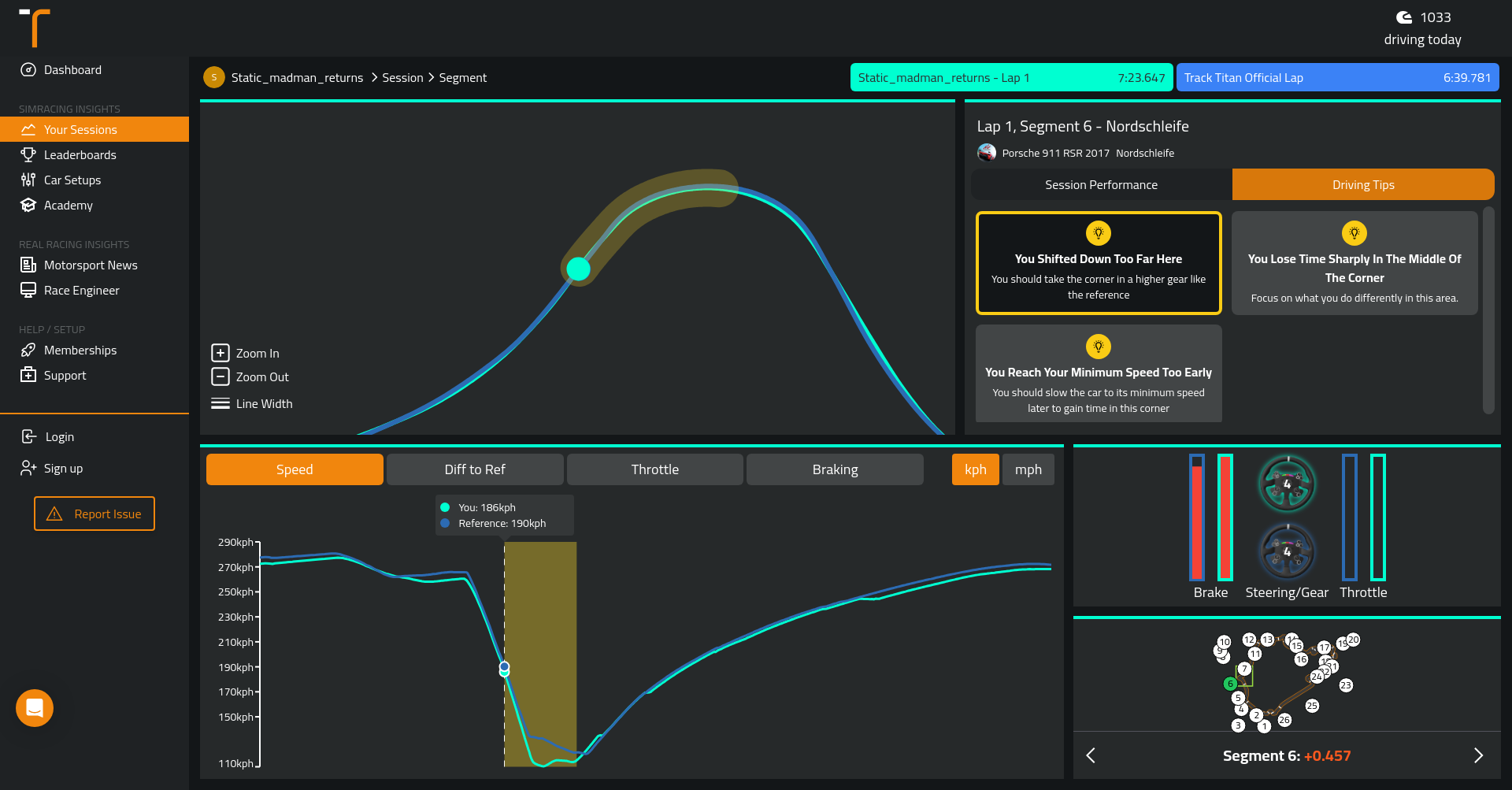
The speed chart analysis reveals that driverB enters the corner with less speed than driverA, suggesting a slower exit from the previous corner. In the mid-corner phase, driverB's speed decreases sharply, indicating significant time loss. DriverB also reaches their minimum speed later and at a lower point than driverA, leading to delayed acceleration and a slower corner exit. The throttle control chart shows that driverA applies throttle later and more gradually than driverB, hinting at a cautious approach due to possibly being unsure about grip or the correct line. This results in lost time, especially in the middle of the corner where their speed is lower compared to driverB. To improve performance, driverA should apply throttle earlier and more decisively to achieve better exit speed and overall lap time. Emulating driverB's aggressive approach to corner exit could help in gaining time on the track.
Analyzing the speed chart, it's evident that driverB is entering the corner with a lower speed compared to driverA. This is indicated by the initial leftmost part of the chart where driverB's speed line starts below that of driverA. This suggests that driverB did not carry as much speed out of the previous corner, which has a cascading effect on their pace through the subsequent section. Focusing on the mid-corner phase, there is a sharp decrease in speed for driverB compared to a more gradual reduction for driverA. This indicates that driverB is losing significant time in this critical part of the corner. The minimum speed for driverB occurs later and is lower than that of driverA, which implies that driverB gets on the throttle later, leading to delayed acceleration and ultimately a slower exit from the corner. The gradient of increase in speed post-minimum-speed-point for driverB is also less steep than that of driverA, further confirming a loss in time due to later throttle application.

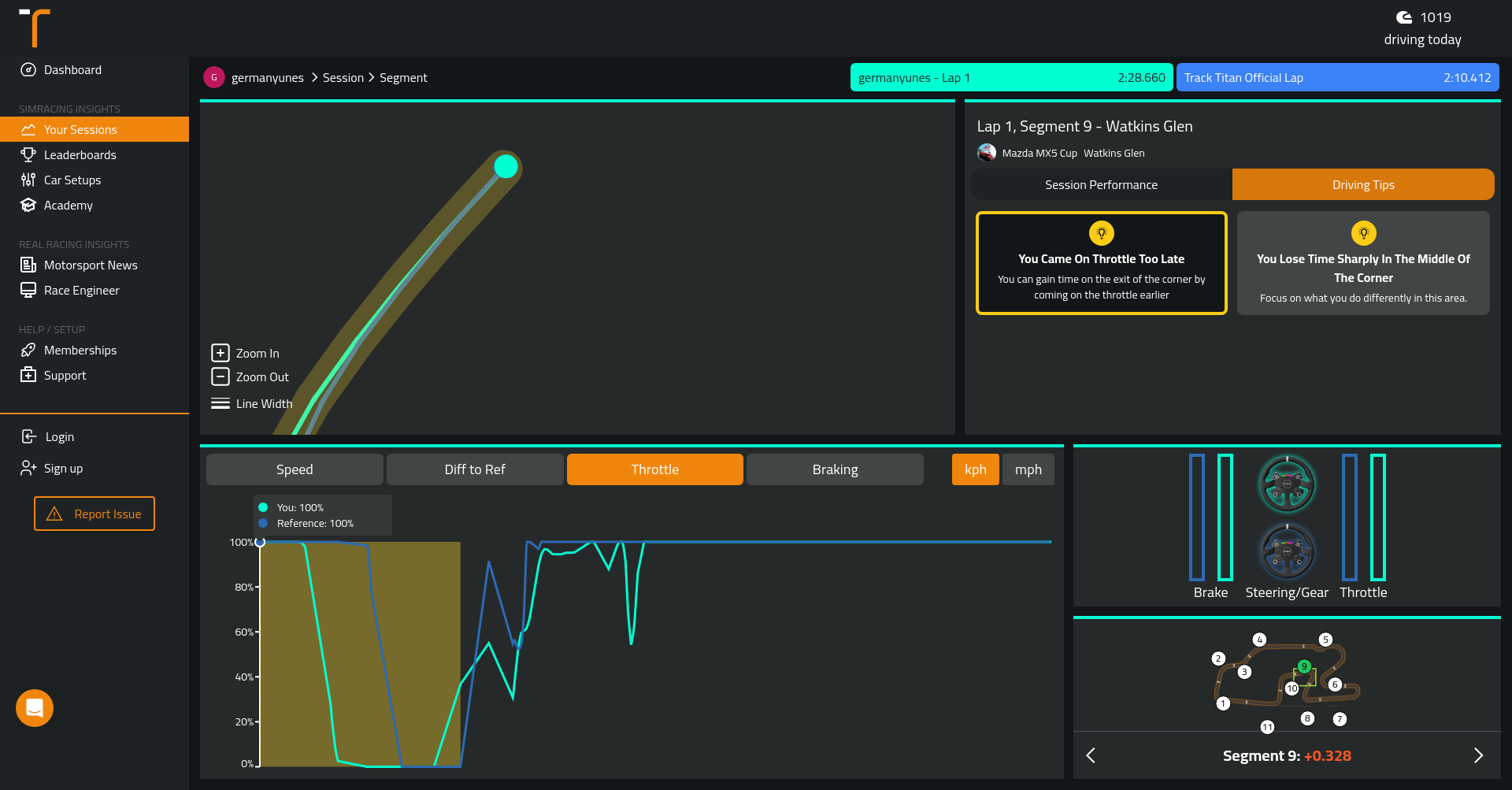
Analyzing the throttle control chart, it's evident that driverA delays throttle application significantly compared to driverB. DriverB initiates a sharp increase in throttle at an earlier point, which suggests a quicker transition from braking to acceleration. This early application of throttle by driverB indicates a more aggressive approach to corner exit, which likely contributes to better exit speed and overall lap time. In contrast, driverA's gradual and delayed increase in throttle application suggests a tentative approach, possibly due to uncertainty about grip or the correct cornering line. This hesitation results in lost time, particularly noticeable in the middle of the corner where driverA's speed remains lower than driverB's. To improve performance, driverA should focus on applying the throttle earlier and more decisively, emulating the reference input provided by driverB for a faster corner exit and improved lap times.