120,898
120K
Laps driven today

iRacing

Le Mans Ultimate

Assetto Corsa Competizione

Assetto Corsa

F1 25

Assetto Corsa EVO

Automobilista 2

Forza Motorsport

F1 24

F1 2021

F1 23

F1 2020


Lap 2
Segment 5
2:08.533
6th Feb 2024
Assetto Corsa
Imola - Mercedes SLS

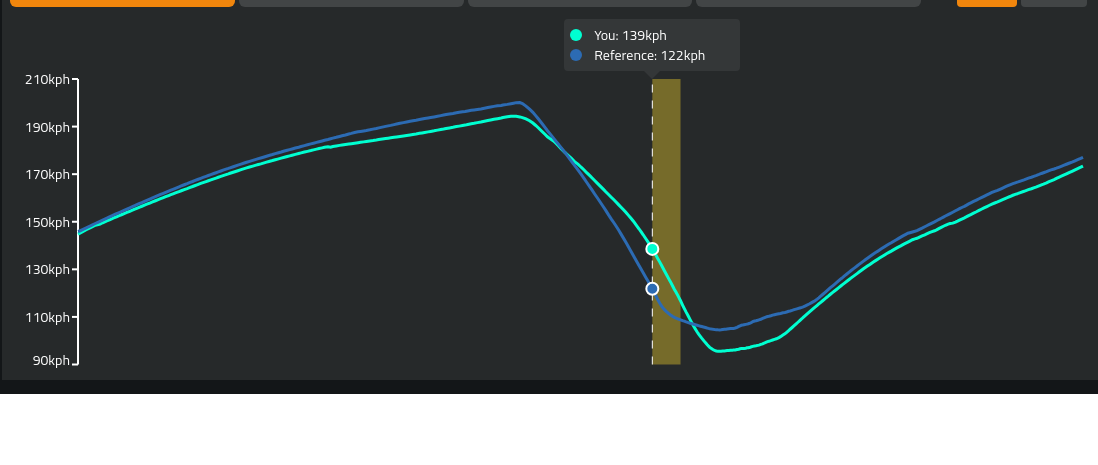
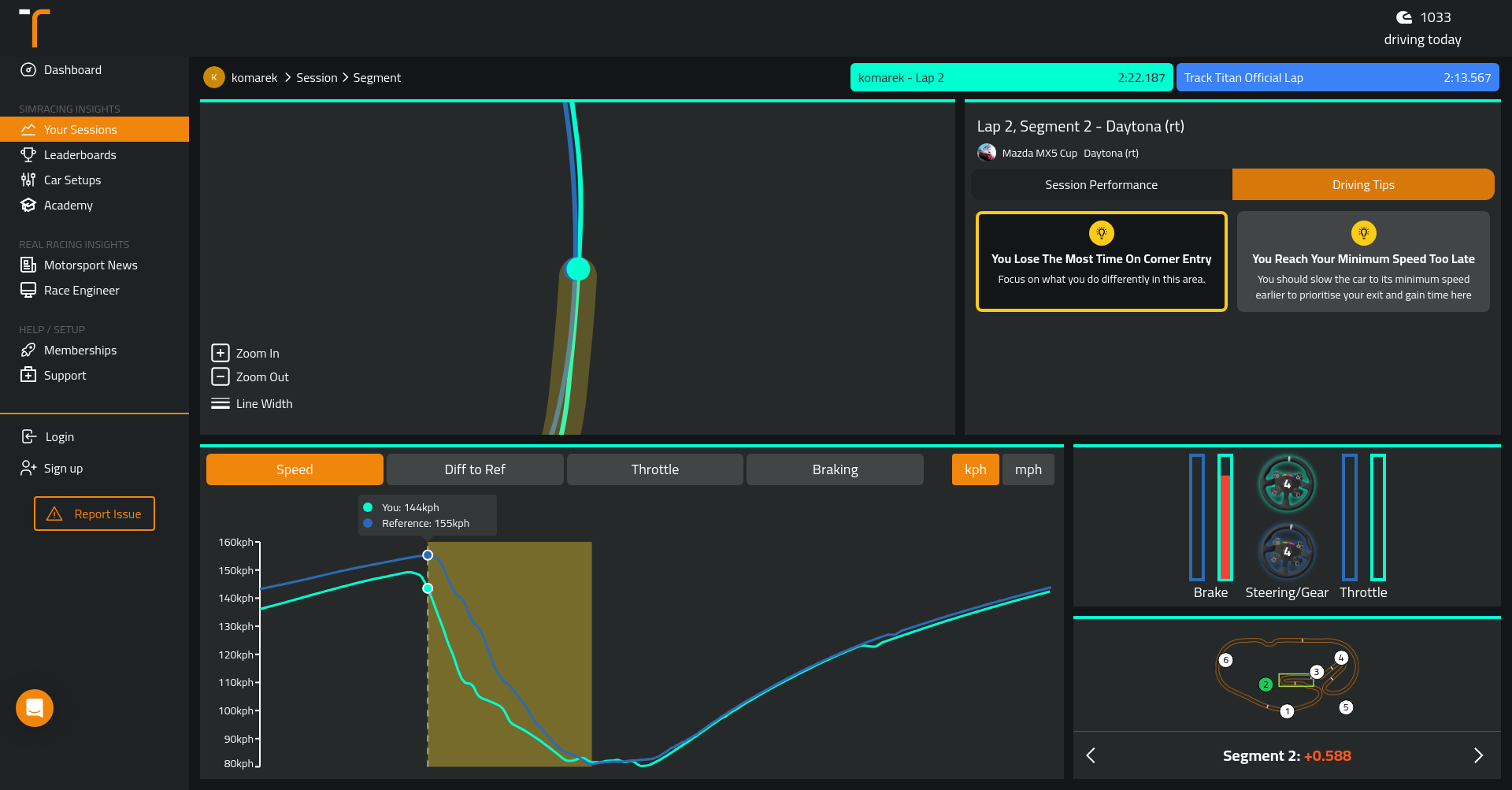
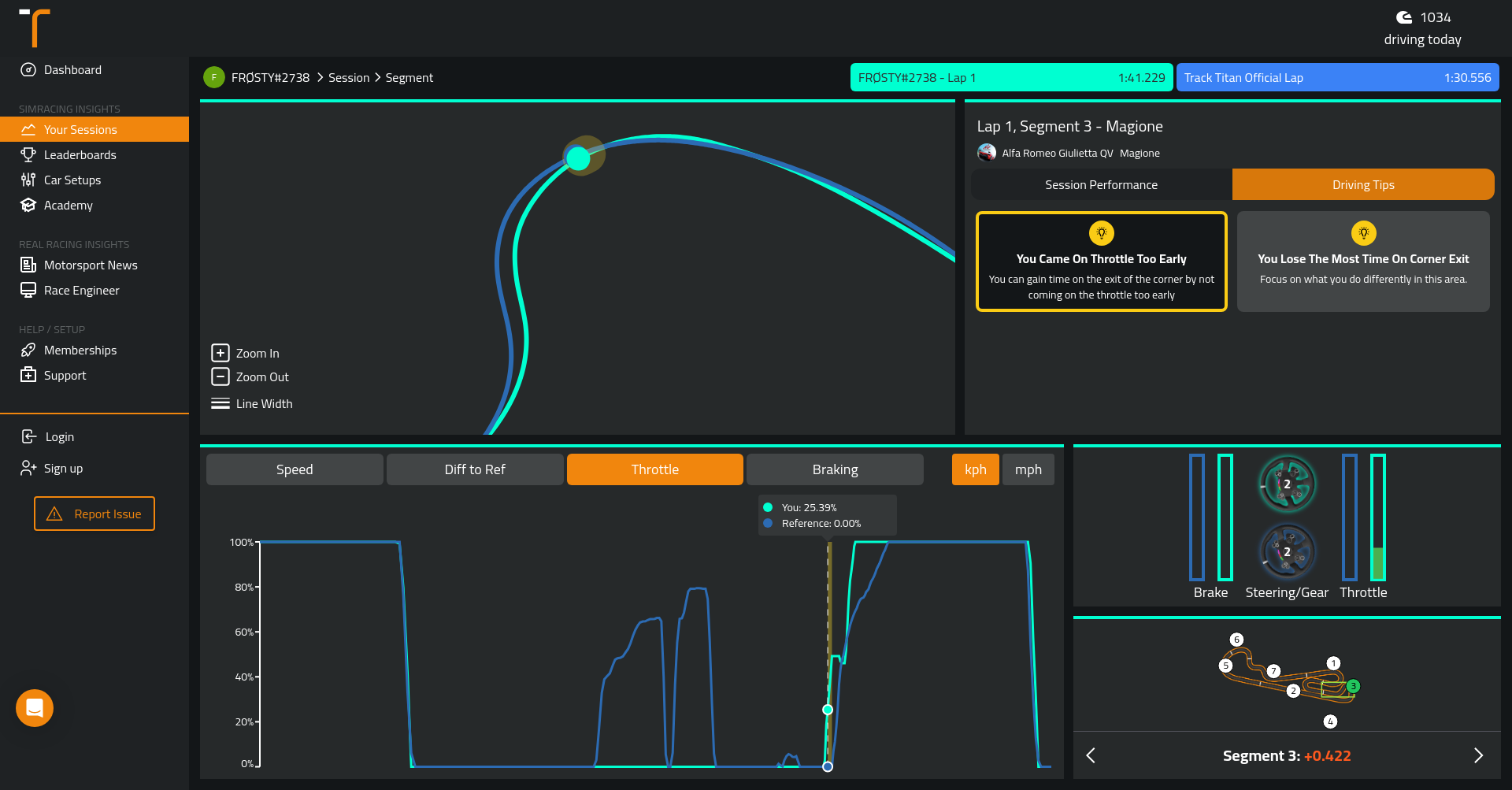
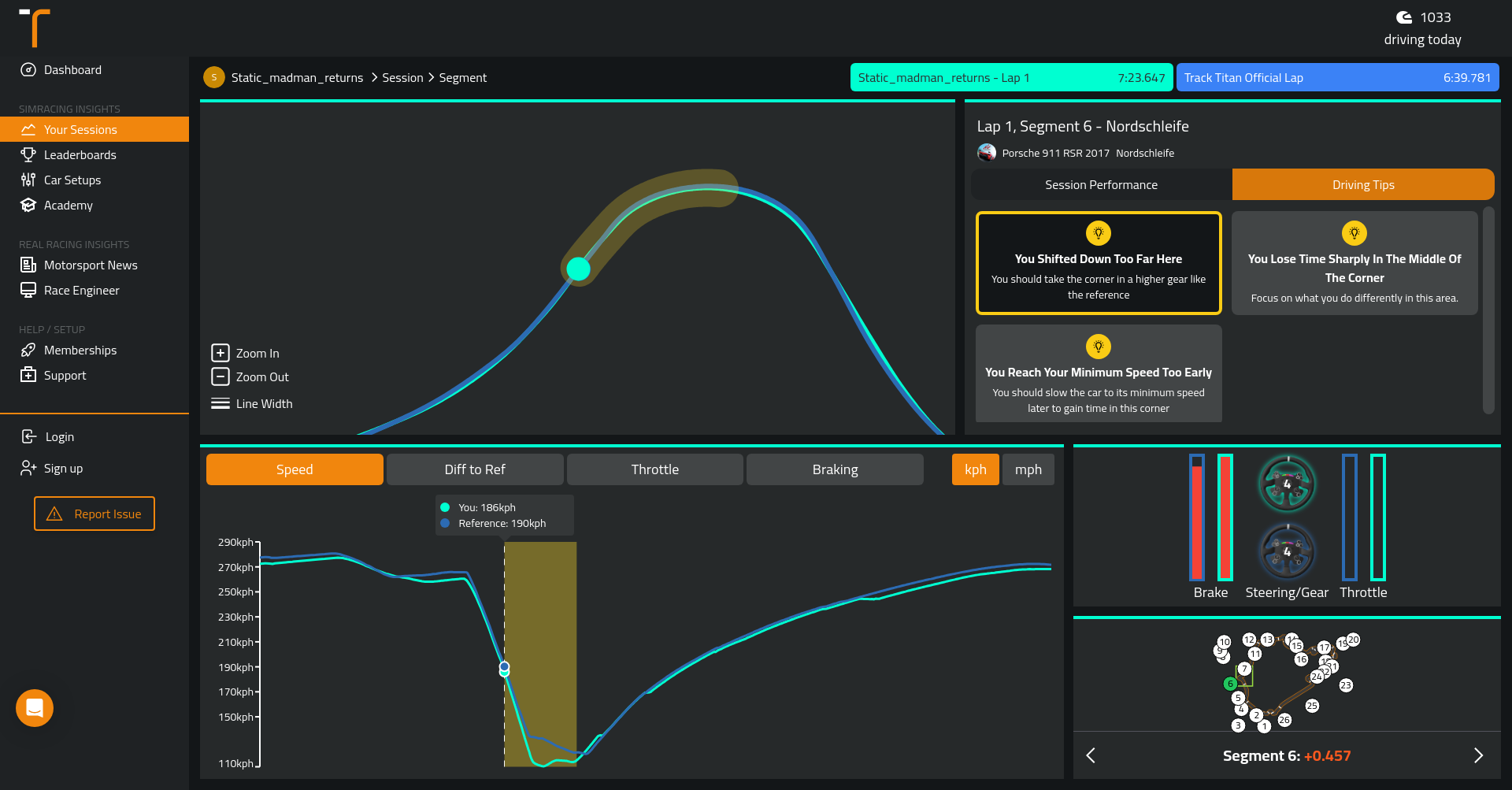
The speed chart analysis reveals that driverB enters the corner with less speed than driverA, suggesting a lack of momentum from the previous corner. This slower entry affects their entire cornering speed and results in a time deficit upon exit. DriverB's minimum corner speed is also reached later than driverA's, indicating a delayed throttle application and a less aggressive acceleration profile. To improve, driverB should aim for an earlier turn-in to maintain more entry speed and apply the throttle earlier for a quicker exit. In terms of throttle control, driverA exhibits a cautious approach with delayed and gradual throttle increase, potentially due to managing wheelspin or uncertainty about grip levels. This results in lost exit speed and time. On the other hand, driverB shows confidence with rapid throttle application and quicker attainment of full throttle, suggesting better car control during acceleration. For better performance, driverA should apply the throttle earlier and more decisively to carry greater speed out of corners and improve lap times.
Analyzing the speed chart, it's evident that driverB is entering the corner at a lower speed compared to driverA. This is indicated by the initial speed difference at the very start of the chart on the left side, suggesting that driverB exited the previous corner with less momentum. This initial deficit in speed carries through into the corner, impacting their overall time. Furthermore, driverB's minimum speed in the corner occurs later than that of driverA, which indicates a delayed throttle application. This delay is further highlighted by a less steep increase in speed on corner exit for driverB, compared to driverA's more aggressive acceleration profile. Consequently, this results in a sharper time loss for driverB as they exit the corner. To improve, focusing on an earlier turn-in could help carry more entry speed and an earlier application of throttle would aid in achieving a faster exit, reducing time lost in this critical section of the track.

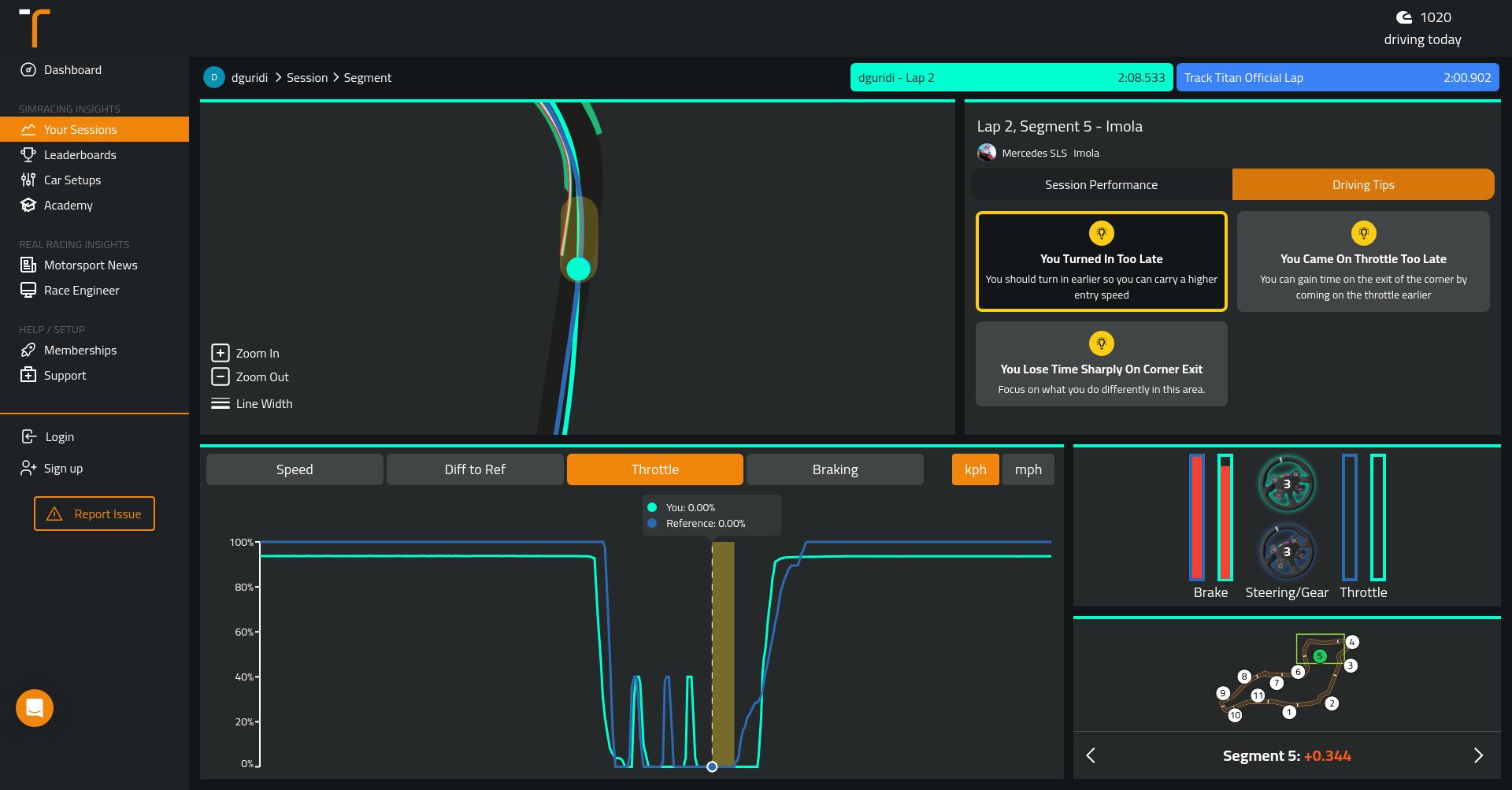
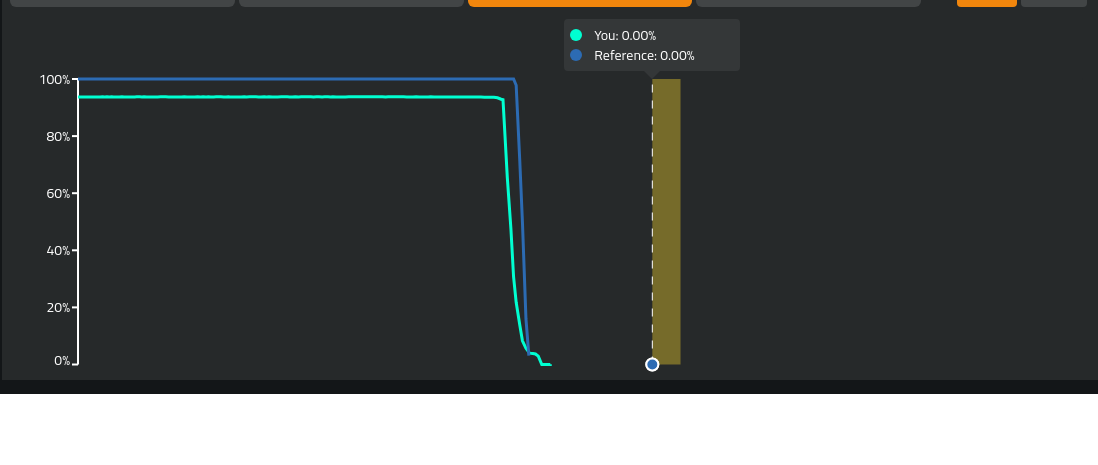
Analyzing the throttle control chart, it is evident that driverA and driverB exhibit distinct differences in their throttle application. DriverA's throttle input shows a delayed and gradual increase, indicating a later and more cautious approach to acceleration out of the corner. This hesitancy results in a loss of potential exit speed and subsequently, time. In contrast, driverB applies the throttle more rapidly and reaches full application sooner, suggesting a confident and aggressive exit strategy that maximizes speed onto the following straight. Furthermore, driverA's gradual throttle application could be indicative of difficulty managing wheelspin or a lack of confidence in the car's grip levels. This contrasts sharply with driverB's quick increase to full throttle, demonstrating not only confidence but also effective car control under acceleration. To improve performance, driverA should focus on earlier throttle application with more conviction to carry higher speed out of the corner, thus reducing lap times significantly.