Brands Hatch Corner Analysis - Porsche 991 GT3 R 2018 (ACC)
February 9th, 2024

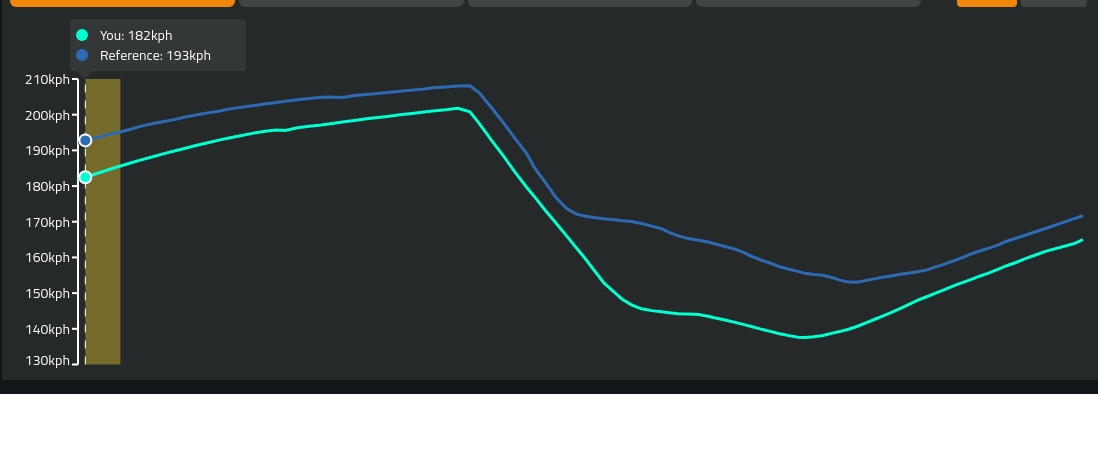
The speed chart analysis reveals that driverB is losing time in the middle of the corner due to early deceleration, which leads to a lower minimum speed and a loss of momentum through the apex. This suggests that driverB might be turning in too early, resulting in a tighter radius and unnecessary speed reduction. Additionally, driverB's acceleration out of the corner is less aggressive than driverA's, leading to a slower exit speed and time lost on the following straight. To improve, driverB should aim for a later turn-in and modulate throttle application to exit the corner at a higher speed. On the other hand, driverA is applying throttle prematurely and sharply, causing a spike in the graph that indicates potential traction loss or wheelspin. This early throttle application contrasts with driverB's smoother approach, which results in better traction control and a more effective corner exit. DriverA reaches full throttle too soon compared to driverB, who accelerates more gradually but achieves a higher exit speed. For better performance, driverA should delay full throttle until after achieving optimal car positioning and stability, adopting a smoother acceleration pattern similar to driverB's approach.
Analyzing the speed chart, it's evident that driverB is losing significant time in the middle of the corner compared to driverA. This is highlighted by the earlier dip and lower minimum speed achieved by driverB. Specifically, driverB reaches their minimum speed considerably before driverA, indicating an early deceleration which results in a loss of momentum through the corner's apex. This premature reduction in speed suggests that driverB may be turning in too early, causing them to navigate a tighter radius at this point and consequently scrub off more speed than necessary. Furthermore, after reaching the minimum speed, driverB's acceleration gradient is less steep compared to driverA's, implying a delay in throttle application. DriverB comes on throttle earlier but not as effectively as driverA, who waits longer but then accelerates more aggressively. This results in driverA exiting the corner at a higher speed and gaining time on the subsequent straight. To improve performance, driverB should focus on turning in later and modulating throttle application to maximize exit speed, aligning their acceleration phase more closely with that of driverA for better momentum conservation and overall lap time reduction.

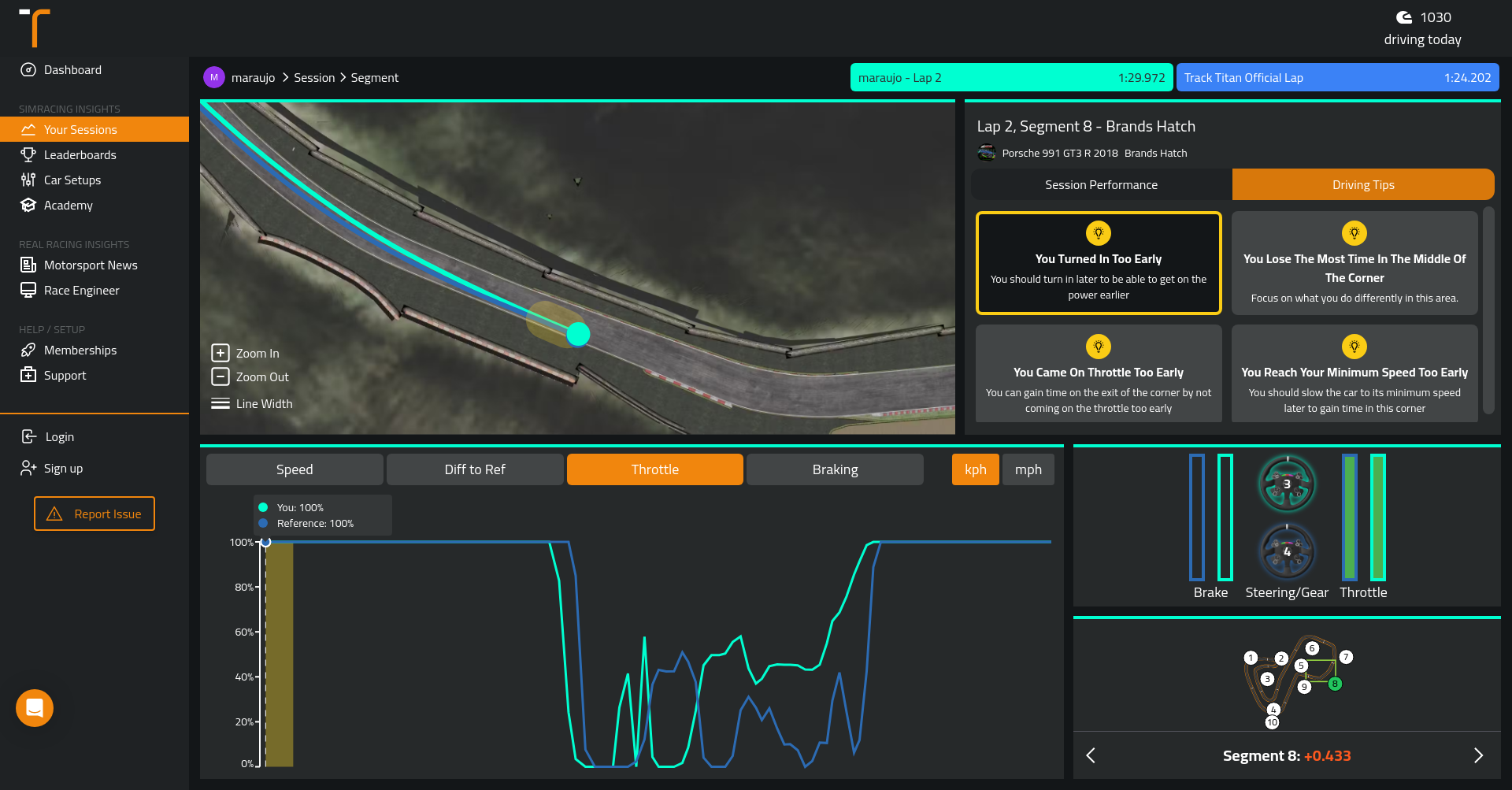
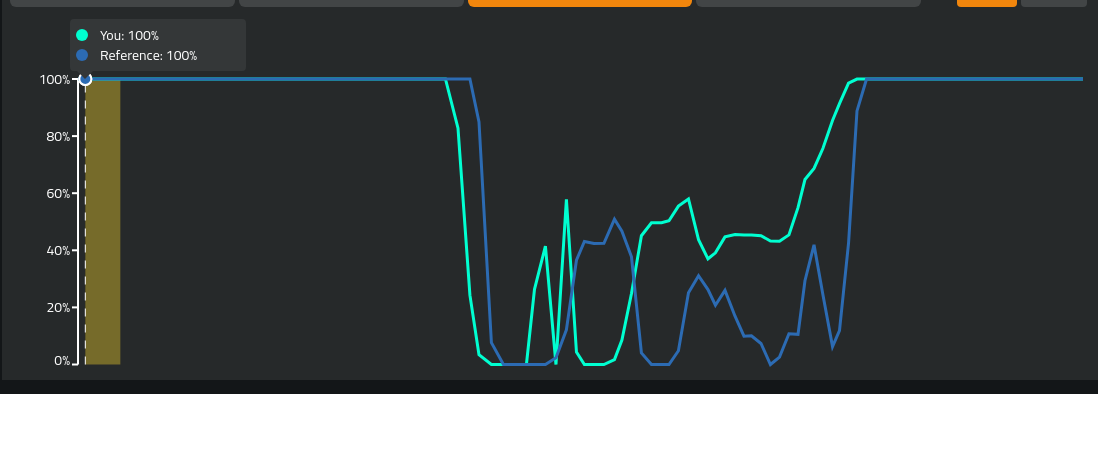
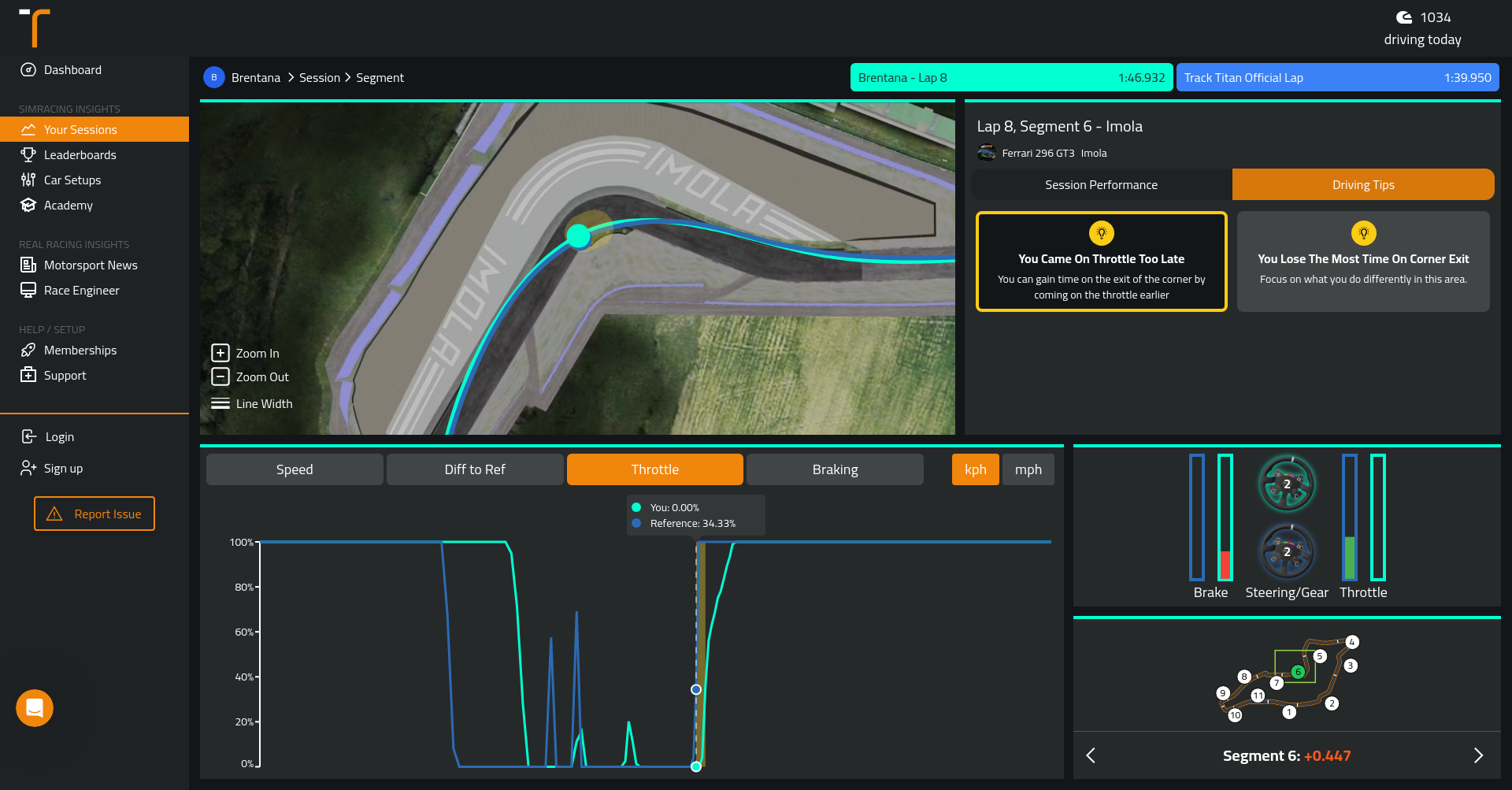
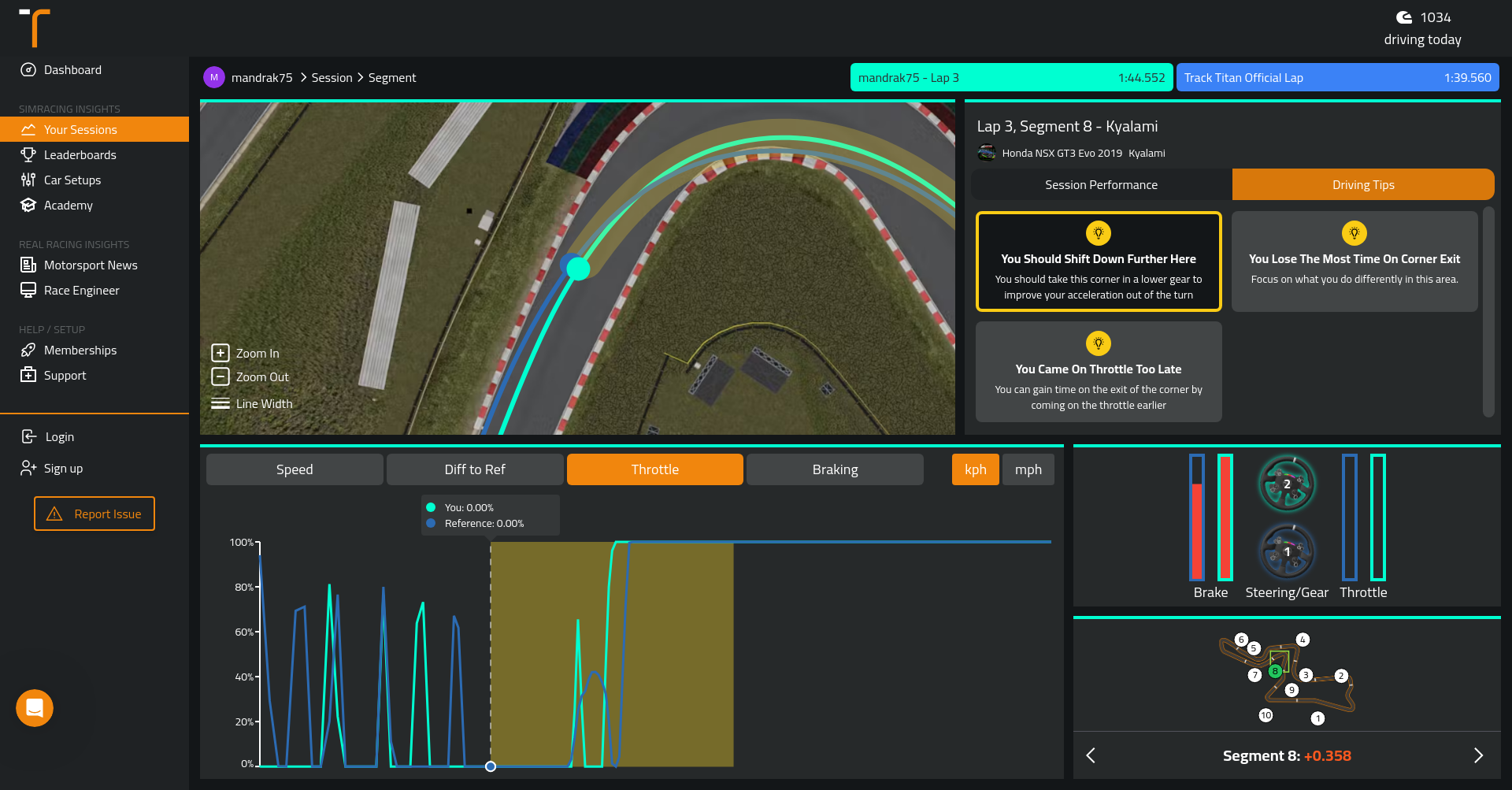
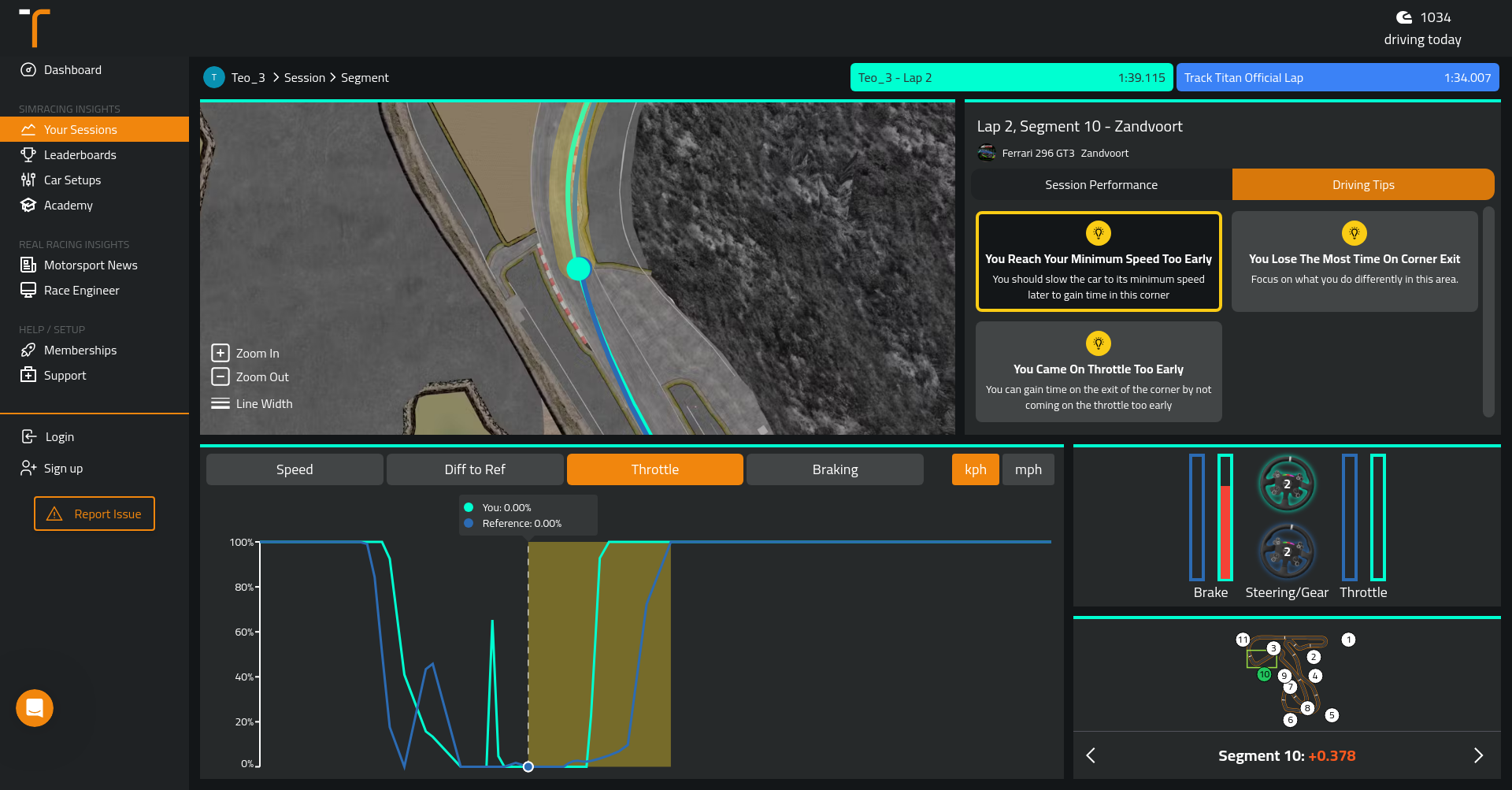
In the provided throttle control analysis, driverA exhibits a premature and sharp increase in throttle application compared to driverB. This early application leads to a spike in the graph, indicating a possible loss of traction or wheelspin as driverA tries to accelerate out of the corner too soon. This contrasts with driverB's smoother and more gradual application, suggesting better traction control and a more effective exit from the corner. Furthermore, driverA reaches full throttle significantly earlier than driverB, which correlates with the head coach's note about coming on throttle too early. DriverB's delayed but steadier increase to full throttle likely contributes to their higher exit speed from the corner. To improve performance, driverA should focus on delaying full throttle application until they have achieved better car positioning and stability, mirroring driverB's smoother acceleration pattern.