Tsukuba Circuit - 2000 Full Corner Analysis - Ray FF1600 (iRacing)
February 10th, 2024

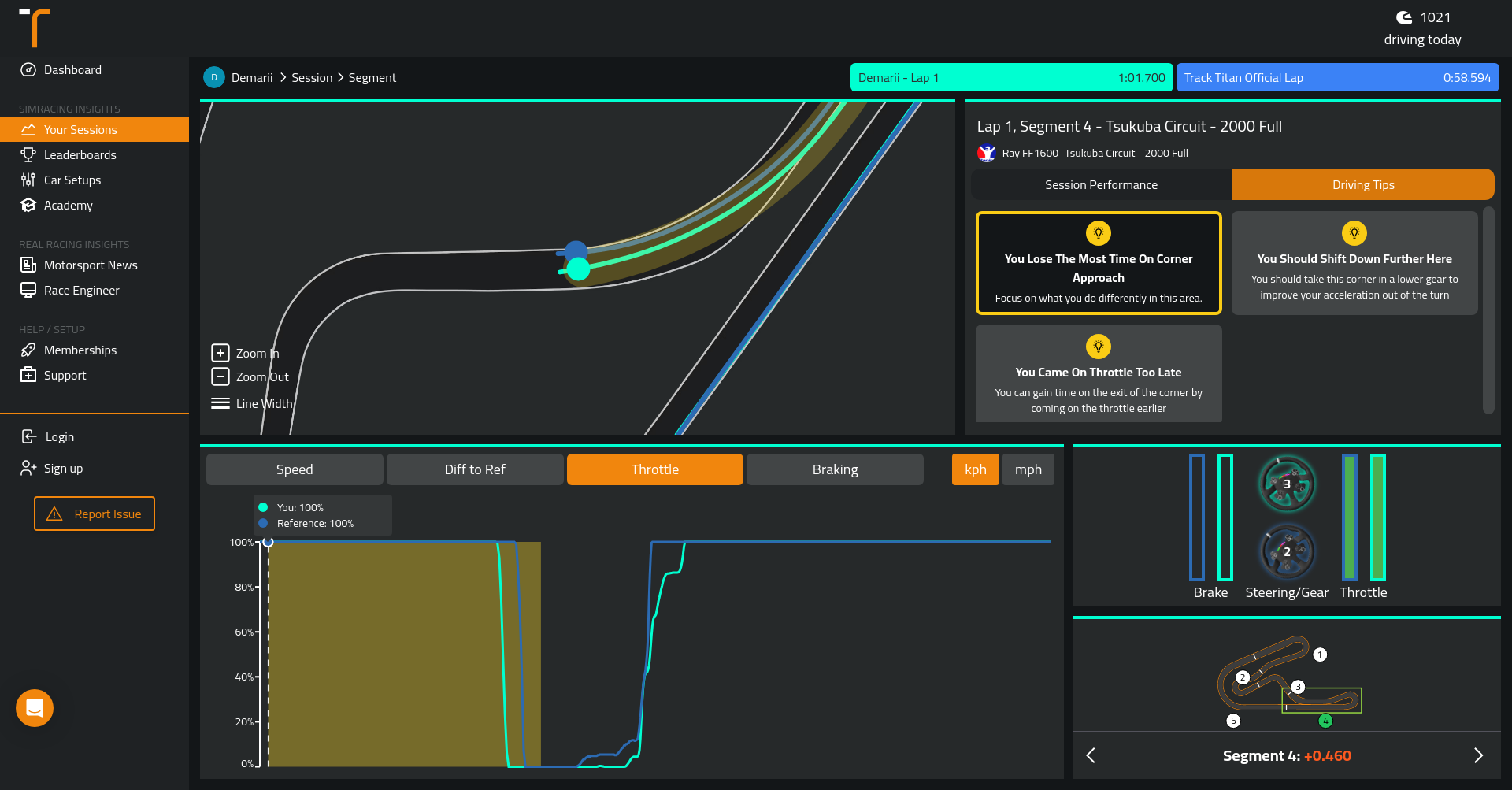
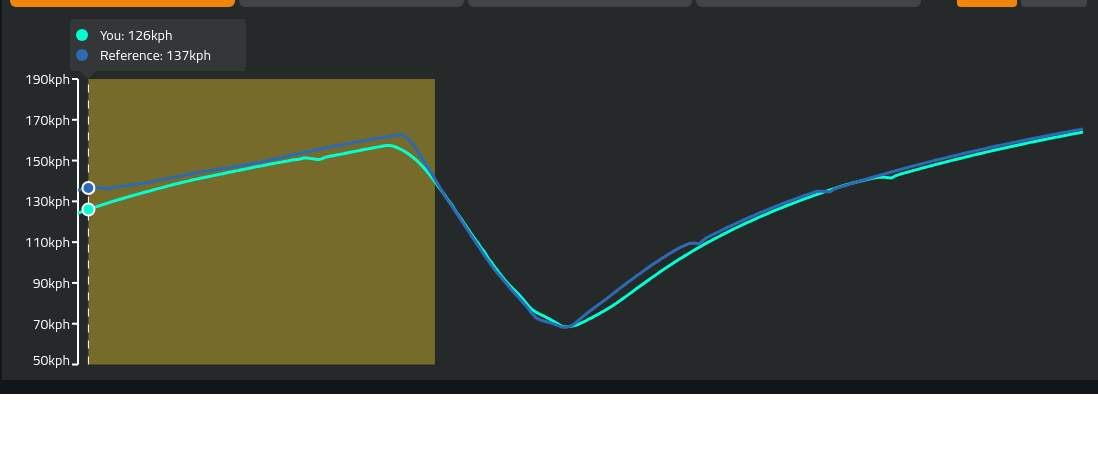
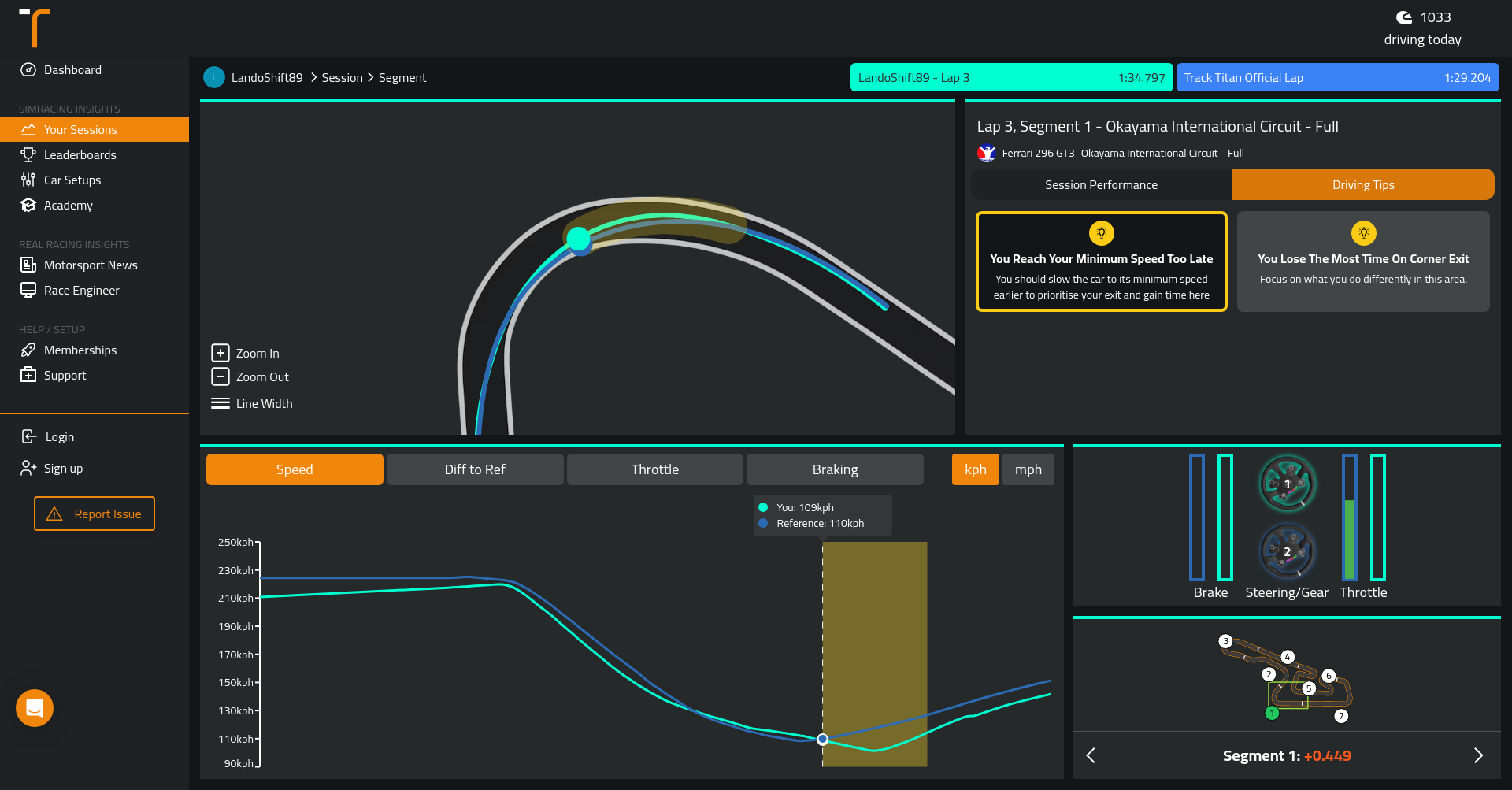
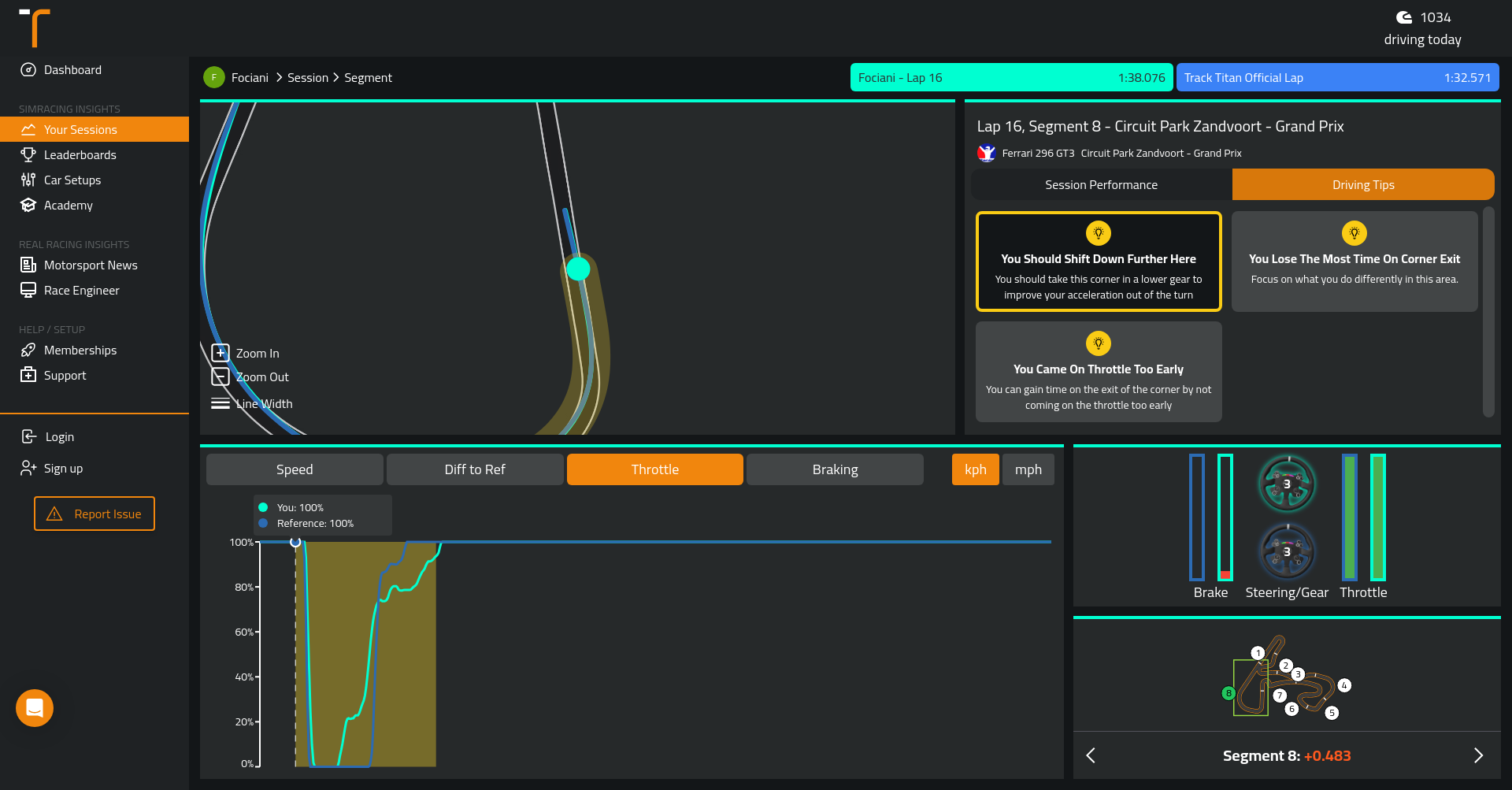
The analysis of the speed chart reveals that driverB enters corners at a lower speed than driverA, which stems from carrying less speed out of the previous corner. This initial disadvantage is exacerbated throughout the corner, as driverB's minimum speed is also lower and occurs later than driverA's. Consequently, driverB accelerates out of the corner later and with less aggression, leading to significant time loss. To enhance performance, driverB should focus on maintaining higher exit speeds from preceding turns and applying throttle earlier. In contrast, when examining throttle control, driverA exhibits a more cautious acceleration with a gradual increase in throttle out of the corner. DriverB, on the other hand, applies throttle sharply and confidently. However, driverA delays reaching full throttle post-corner, missing out on potential acceleration and time gains. For improved lap times, driverA should aim for earlier and more decisive throttle inputs to capitalize on speed during corner exits.
Analyzing the speed chart, it's evident that driverB is entering the corner at a significantly lower speed compared to driverA. This discrepancy starts right at the beginning of the chart, indicating that driverB has carried less speed out of the previous corner. This initial speed deficit puts driverB at a disadvantage even before approaching the current corner, resulting in a compounded time loss throughout. Furthermore, as we progress through the corner, driverB's minimum speed is notably lower than that of driverA and occurs later in the corner. This suggests that not only is driverB slower at the slowest point of the turn but also that they are getting on the throttle later than driverA. The consequence of this is twofold: driverB loses time due to both a lower exit speed and a less aggressive acceleration out of the corner, as seen by a gentler slope on their speed chart post-corner. To improve performance, focusing on carrying more speed from the previous turn and engaging earlier throttle application will be key for driverB.

Analyzing the throttle control chart, it's evident that driverA and driverB have different approaches to throttle application. DriverA shows a more gradual increase in throttle, indicating a cautious acceleration out of the corner. This contrasts with driverB's sharp increase in throttle application, suggesting a more aggressive and confident exit strategy. The intensity and timing of driverB's throttle input are key factors contributing to their speed advantage exiting the turn. Furthermore, driverA's delayed onset of full throttle application post-corner indicates a loss of potential acceleration and time. In comparison, driverB reaches full throttle much earlier, which is crucial for maximizing speed onto the following straight or section of the track. To improve performance, driverA should focus on earlier and more decisive throttle inputs to reduce time lost during corner exits.