122,247
122K
Laps driven today

iRacing

Le Mans Ultimate

Assetto Corsa Competizione

Assetto Corsa

F1 25

Assetto Corsa EVO

Automobilista 2

Forza Motorsport

F1 24

F1 2021

F1 23

F1 2020


Lap 2
Segment 4
1:38.272
7th Feb 2024
Assetto Corsa
Vallelunga - Tatuus FA01

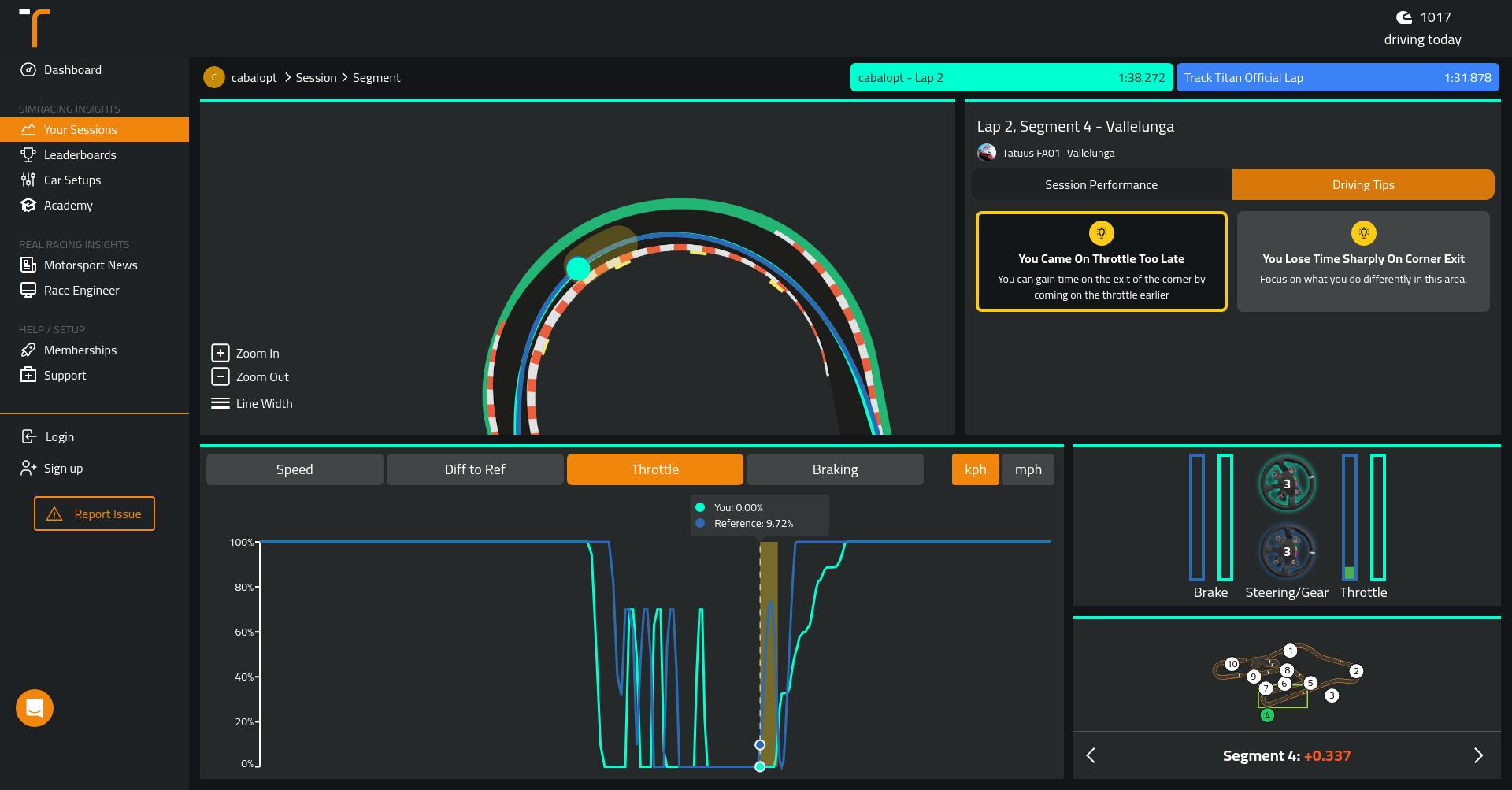
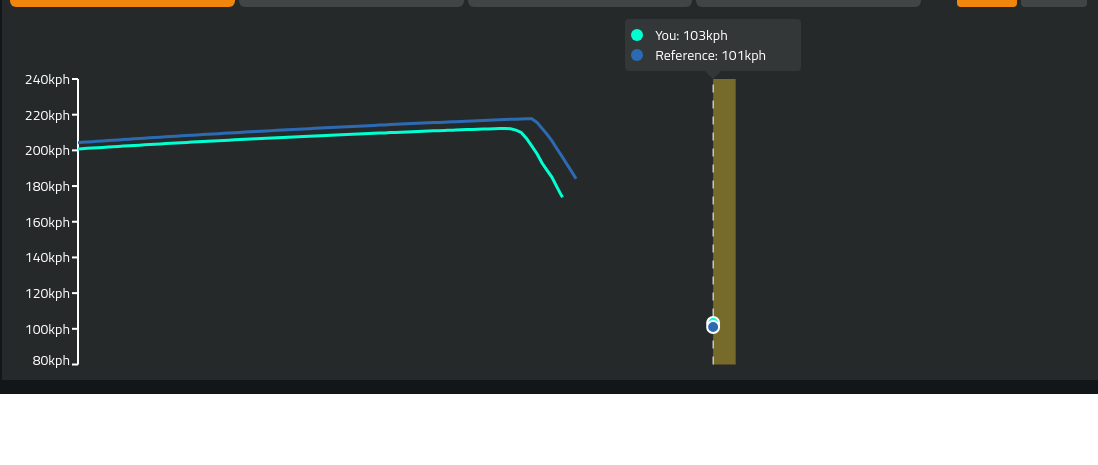
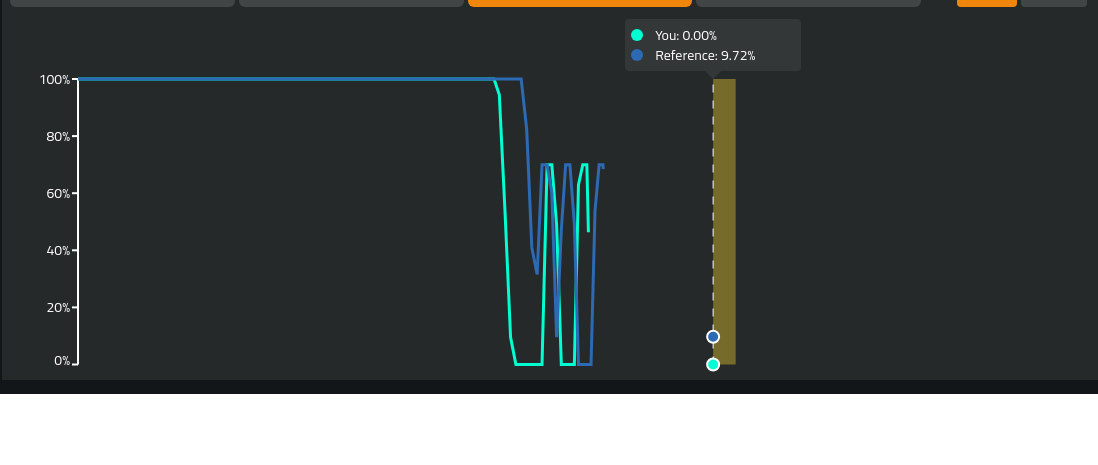
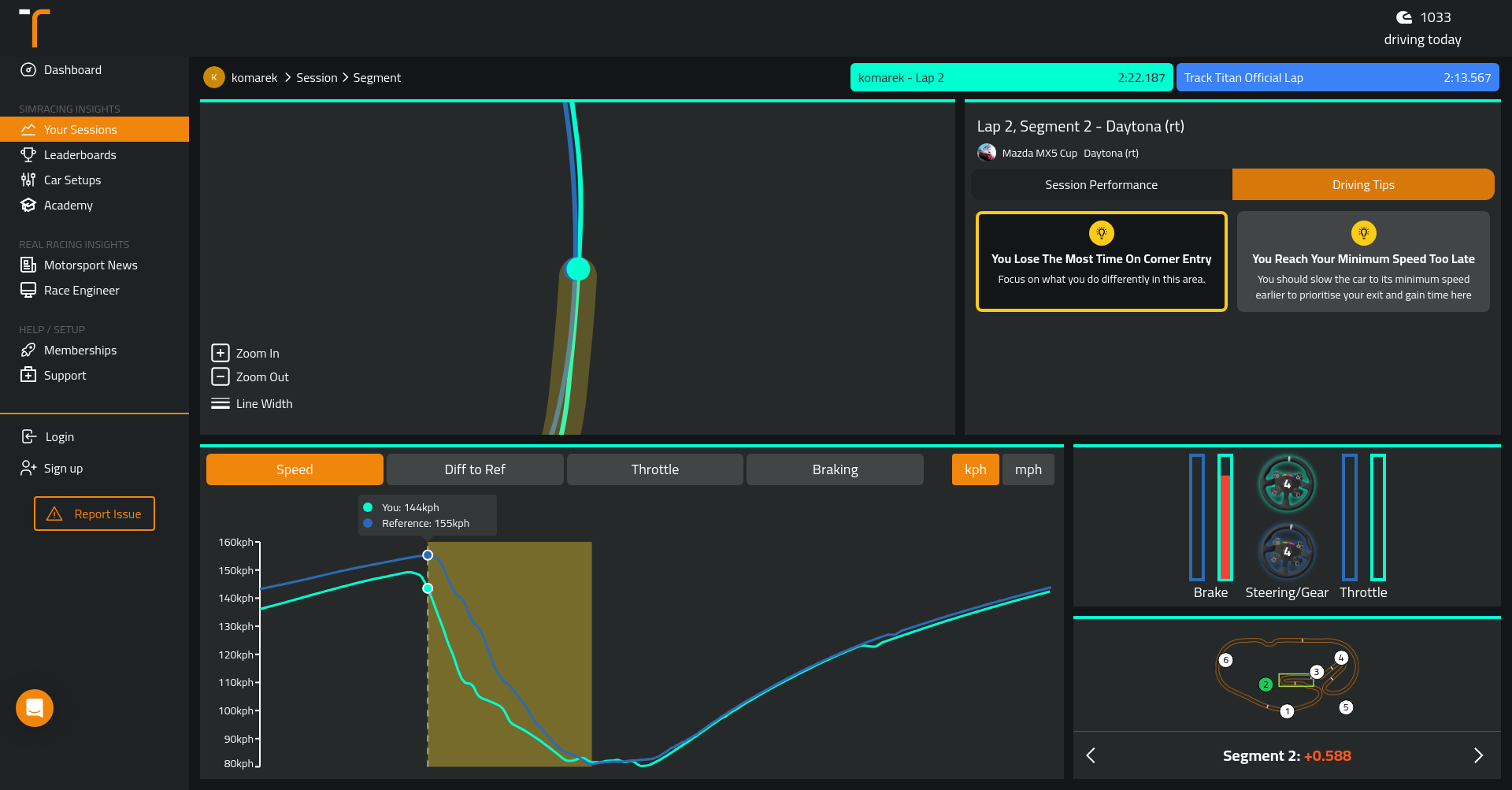
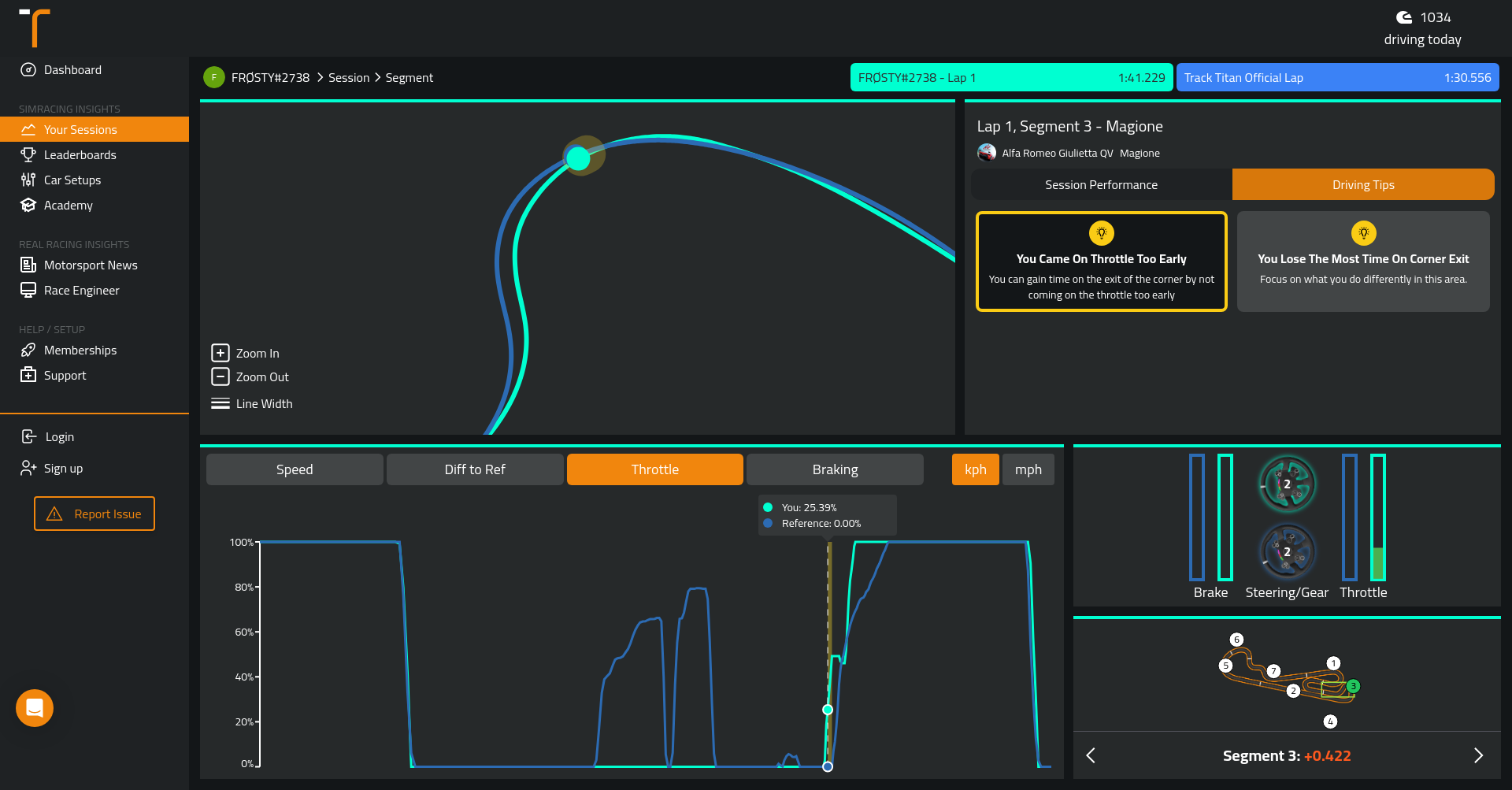
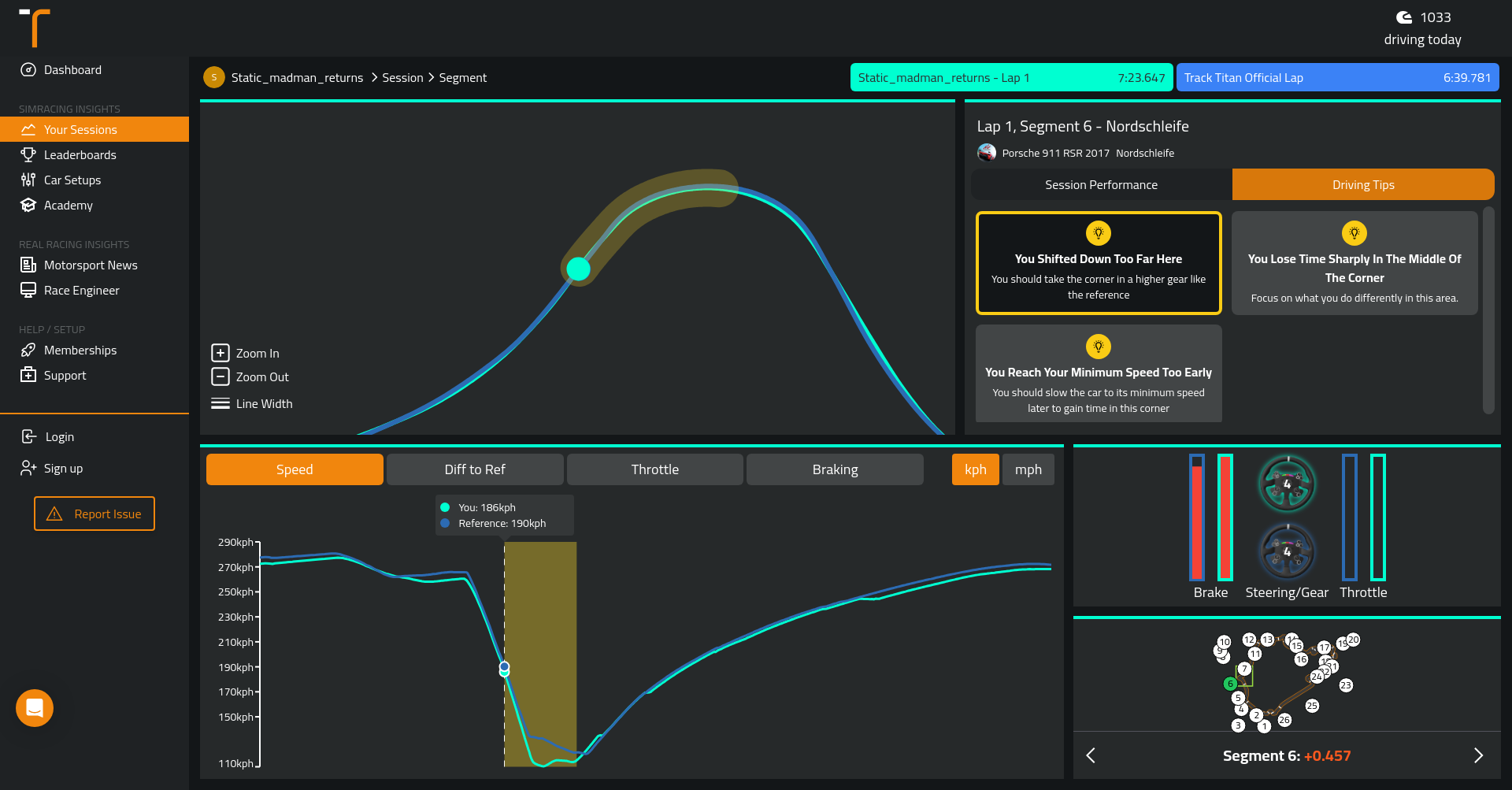
The analysis of the speed chart reveals that driverB is losing time on corner exit due to a slower exit from the previous corner and a later minimum speed in the subsequent corner. This indicates that driverB is braking for longer and accelerating later than driverA, resulting in a slower increase in speed out of the corner. To improve lap times, driverB should aim for earlier throttle application to carry more speed through and out of corners. In contrast, the throttle control chart shows that driverA is hesitant with throttle application, displaying a jagged and delayed pattern, which may be due to wheelspin or lack of vehicle control. DriverB's throttle application is more decisive and linear, suggesting better traction and confidence. DriverA needs to apply the throttle earlier and more smoothly to achieve better exit speeds similar to driverB. Additionally, driverA's less aggressive throttle inputs compared to driverB's contribute to their time loss on corner exit. Overall, both drivers can benefit from focusing on their throttle application timing and smoothness to carry more speed onto straights and improve overall track performance.
Analyzing the speed chart, it's evident that driverB is losing significant time on corner exit compared to driverA. At the very start of the chart, we can see that driverB's speed is already lower than that of driverA, indicating a slower exit from the previous corner. This initial speed deficit carries through to the next section, where driverB's minimum speed in the corner occurs later than driverA's. This suggests that driverB is on the brakes for longer and therefore getting on the throttle later than driverA, which aligns with their slower acceleration out of the corner. The impact of this late throttle application is further highlighted by the steeper gradient in driverA's speed curve as they exit the corner, compared to a more gradual increase for driverB. To improve lap times, driverB should focus on earlier throttle application to carry more speed through and out of the corner. This will help to minimize time lost during this critical phase of cornering and improve overall pace on track.

Analyzing the throttle control chart, it's evident that driverA is hesitant on throttle application compared to driverB. DriverB applies the throttle in a decisive, linear fashion, indicating confidence and traction. In contrast, driverA's application is jagged and delayed, suggesting a struggle with wheelspin or uncertainty in vehicle control at corner exit. The timing of throttle application is crucial; driverB begins to apply throttle much earlier than driverA. This early application allows driverB to carry more speed onto the straight, translating into a time advantage. DriverA needs to focus on applying the throttle earlier and more smoothly to match the exit speed of driverB. The intensity of driverA's later throttle inputs also lacks the aggression seen in driverB's graph, which further contributes to their time loss on corner exit.