117,319
117K
Laps driven today

iRacing

Le Mans Ultimate

Assetto Corsa Competizione

Assetto Corsa

F1 25

Assetto Corsa EVO

Automobilista 2

Forza Motorsport

F1 24

F1 2021

F1 23

F1 2020


Lap 3
Segment 1
1:05.874
7th Feb 2024
Assetto Corsa
Vallelunga - Club - Abarth 500 EsseEsse

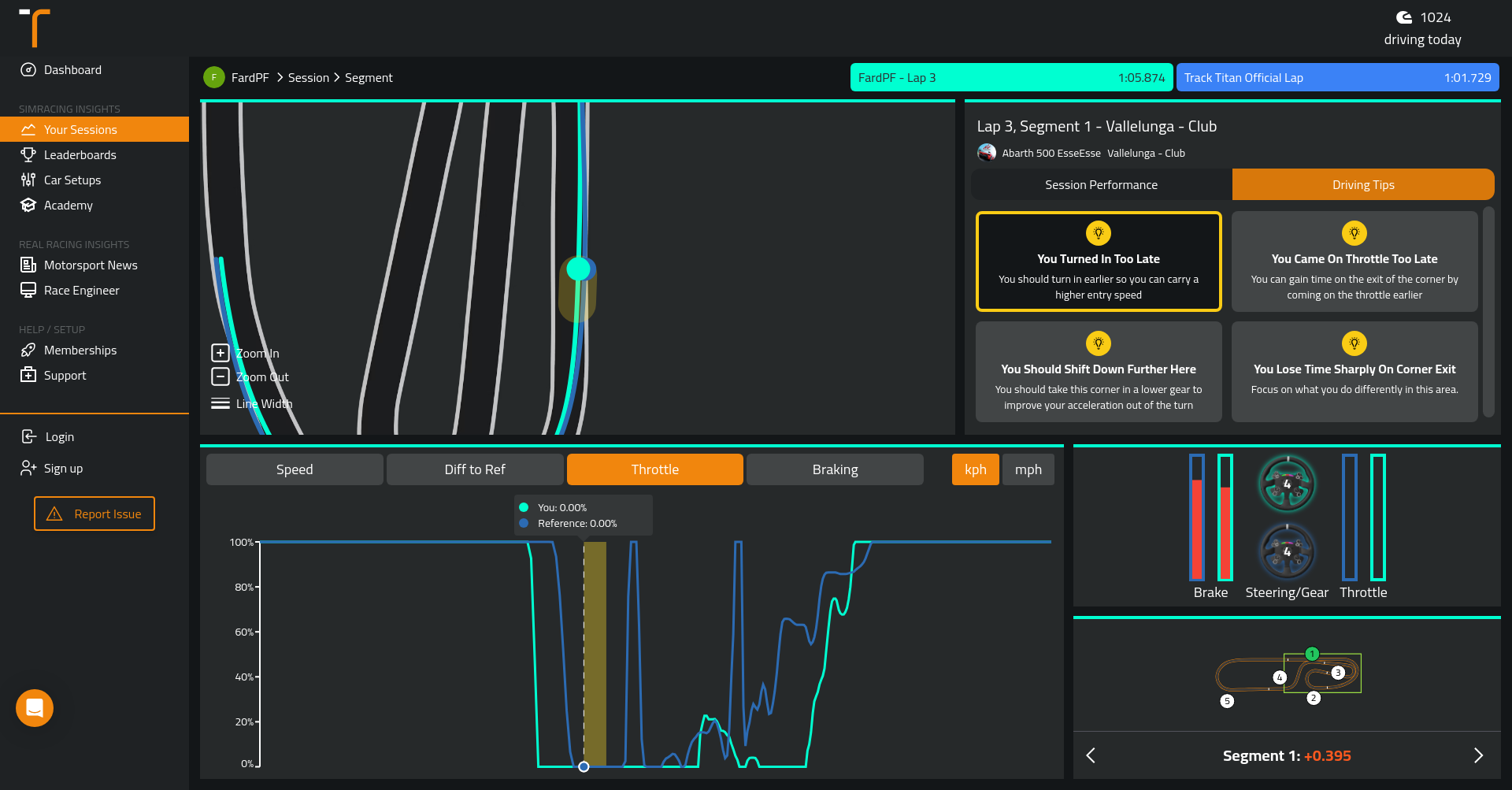
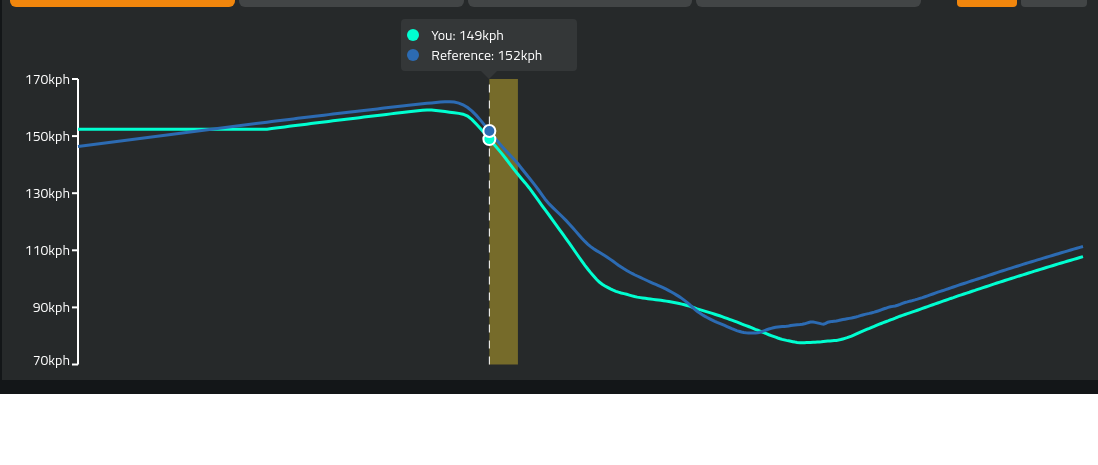
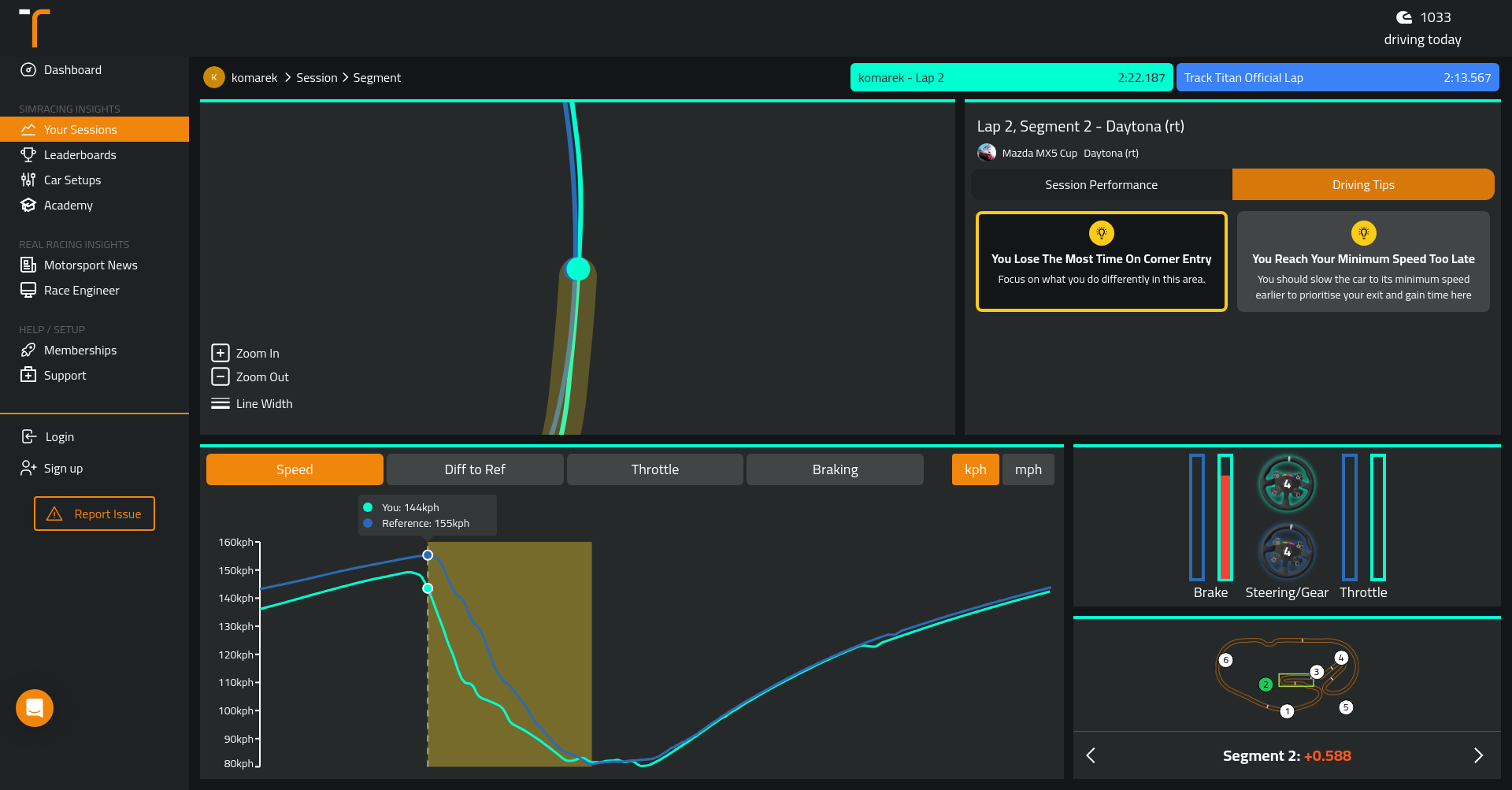
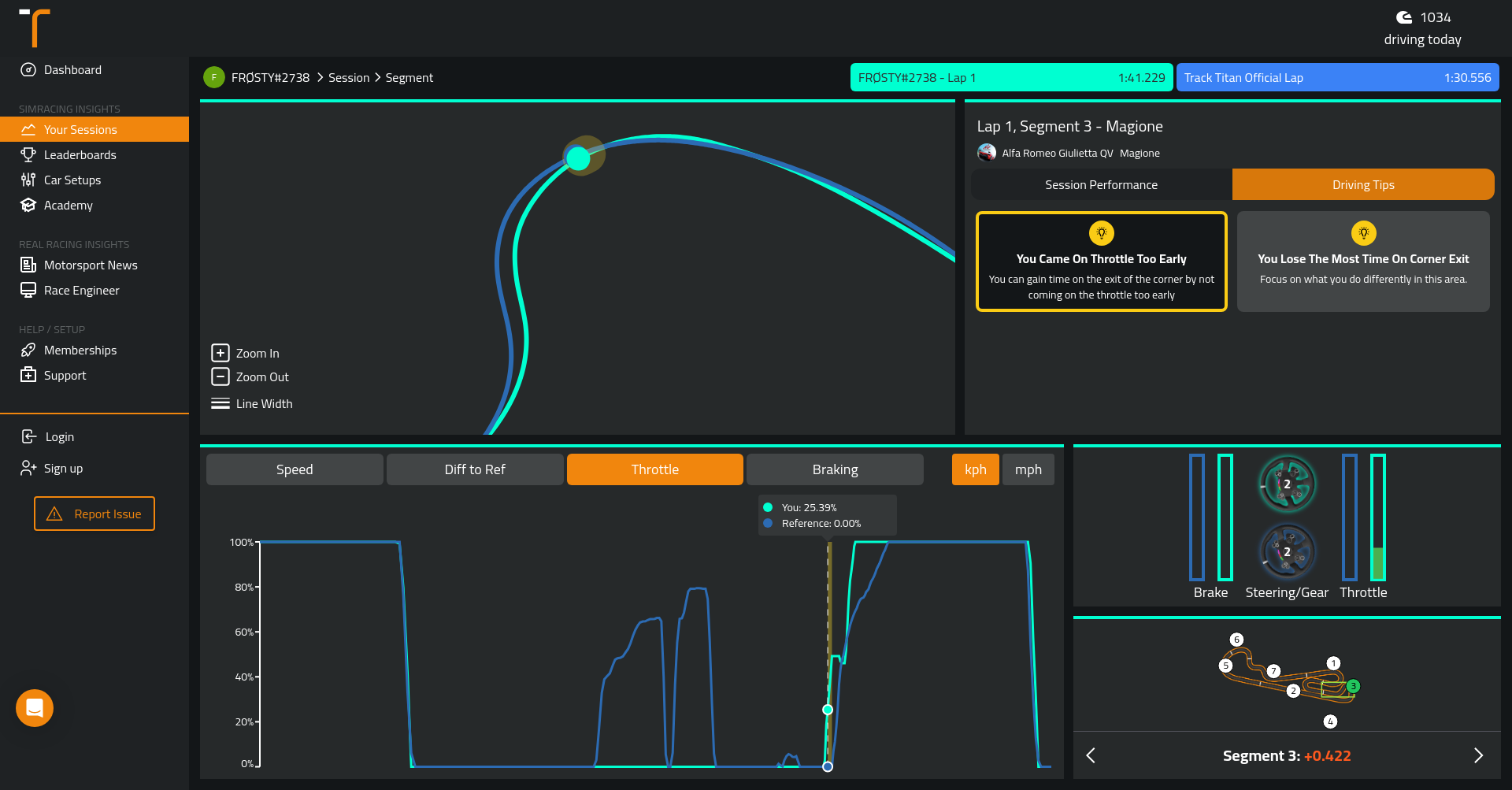
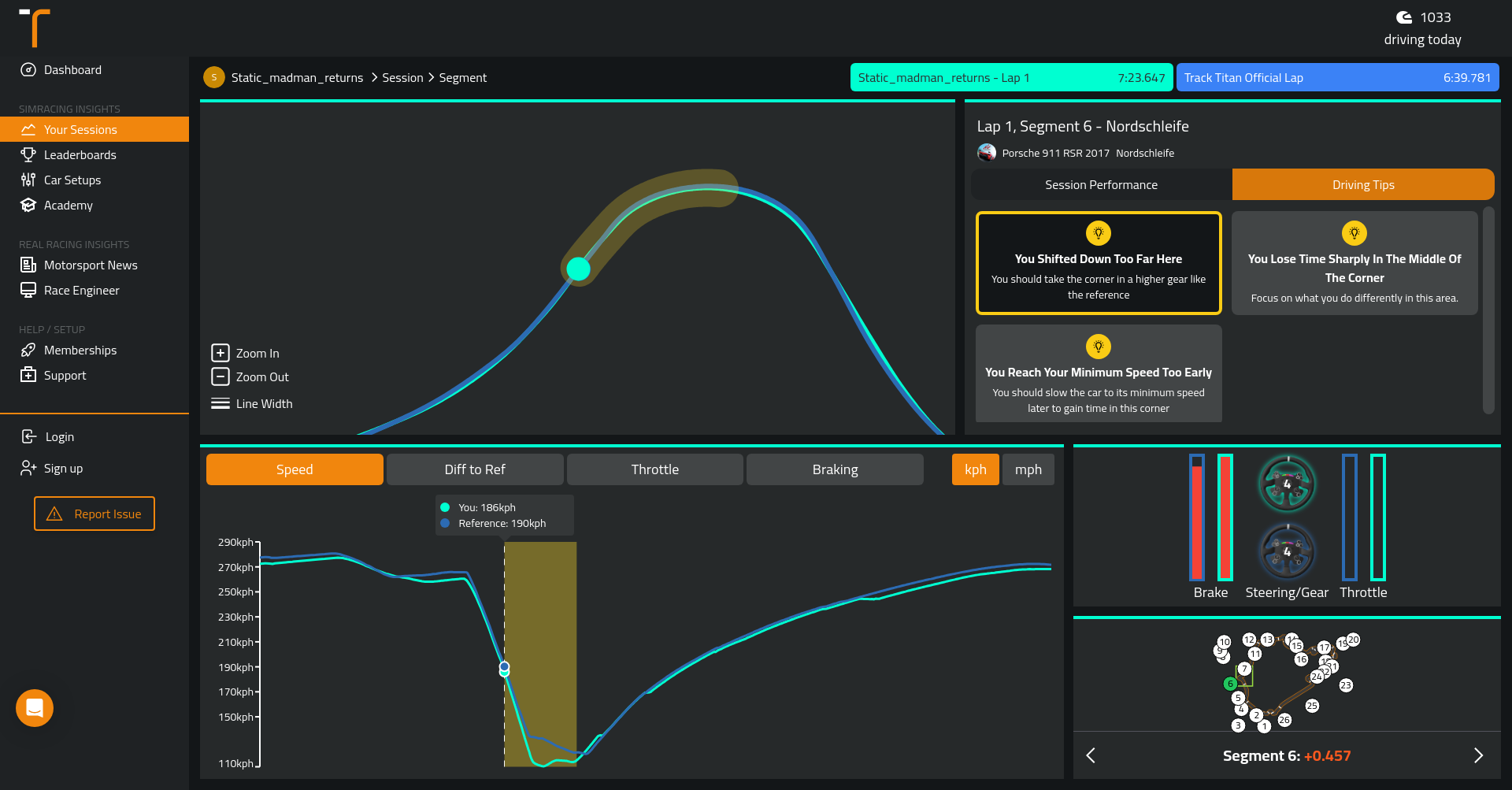
DriverB's cornering technique shows room for improvement when compared to driverA. Entering the corner at a lower speed, driverB loses momentum early on, which is crucial for maintaining a competitive pace. The speed chart reveals that not only does driverB enter the corner slower, but also reaches the minimum speed later and at a lower point than driverA, suggesting a later throttle application. This results in a slower exit as indicated by the less steep gradient of speed increase. To enhance performance, driverB should aim to enter corners at higher speeds and consider turning in earlier to maintain this momentum. Additionally, downshifting further could aid in accelerating out of turns more effectively. In terms of throttle control, driverA's gradual and inconsistent increase suggests hesitation and possible wheelspin issues, leading to time loss. On the other hand, driverB applies throttle quicker and more smoothly, showing better car control and an earlier return to full power. For improved results, driverA needs to focus on earlier and more decisive throttle application to boost exit speeds from corners. This approach will help capitalize on the car's acceleration potential and contribute to better overall lap times.
Analyzing the speed chart, it's evident that driverB enters the corner at a significantly lower speed compared to driverA. This is indicated by the initial left portion of the chart where driverB's speed line is below that of driverA. This suggests that driverB carried less speed from the previous corner into this one, which is a clear area for improvement. The early part of the corner is crucial for maintaining momentum, and entering at a higher speed would enable driverB to minimize time loss in this section. Furthermore, as we progress through the corner, we see that driverB's minimum speed occurs later than that of driverA and is also lower. This delayed and reduced minimum speed indicates a later throttle application by driverB, which results in a slower exit from the corner. The gradient of driverB's speed increase on exit is less steep compared to driverA's, demonstrating a loss of time due to delayed acceleration. To optimize performance, focusing on turning in earlier could help carry more entry speed, and shifting down further may improve acceleration out of the turn for better overall corner exit velocity.

In the provided throttle control analysis, there is a distinct difference between driverA and driverB's throttle application. DriverA exhibits a slower and more gradual increase in throttle, which suggests a delayed response when accelerating out of the corner. This hesitation can lead to a loss of momentum and ultimately, time. In contrast, driverB demonstrates a quicker and more decisive application of throttle, indicating a more aggressive and confident exit strategy that capitalizes on the car's potential for acceleration. Furthermore, driverA's gradual throttle increase is not only slower but also shows signs of inconsistency with slight fluctuations that could be indicative of wheelspin or uncertainty in finding the optimal balance between grip and power. This contrasts sharply with driverB's smooth and rapid throttle input, which reflects better car control and an earlier return to full power. To improve performance, driverA should focus on coming onto the throttle earlier with more conviction to enhance exit speed from the corner.