114,324
114K
Laps driven today

iRacing

Le Mans Ultimate

Assetto Corsa Competizione

Assetto Corsa

F1 25

Assetto Corsa EVO

Automobilista 2

Forza Motorsport

F1 24

F1 2021

F1 23

F1 2020


Lap 2
Segment 2
1:53.948
6th Feb 2024
Assetto Corsa
Nurburgring - Sprint (GT) - BMW M3 E30 - Step 1

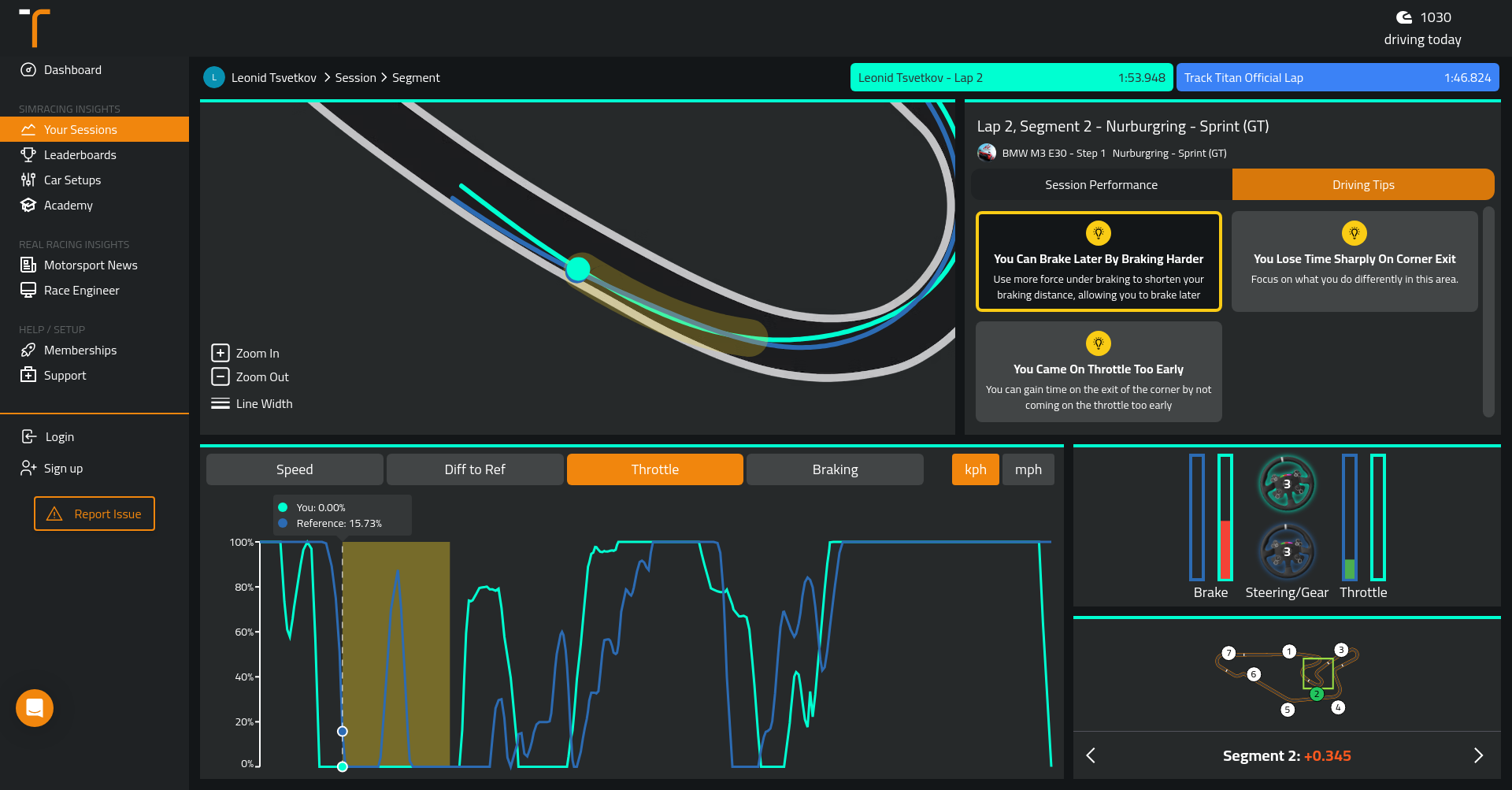
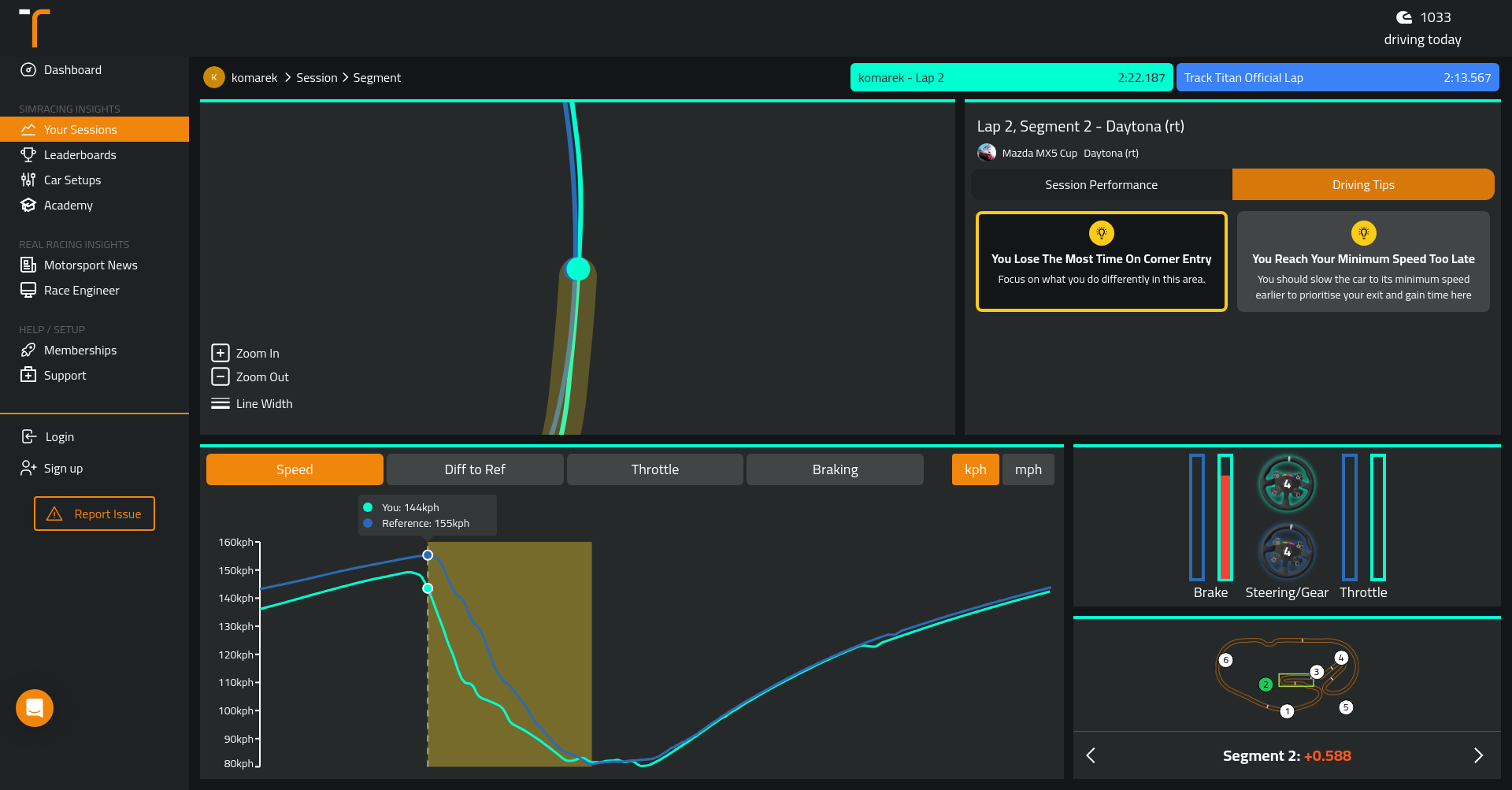
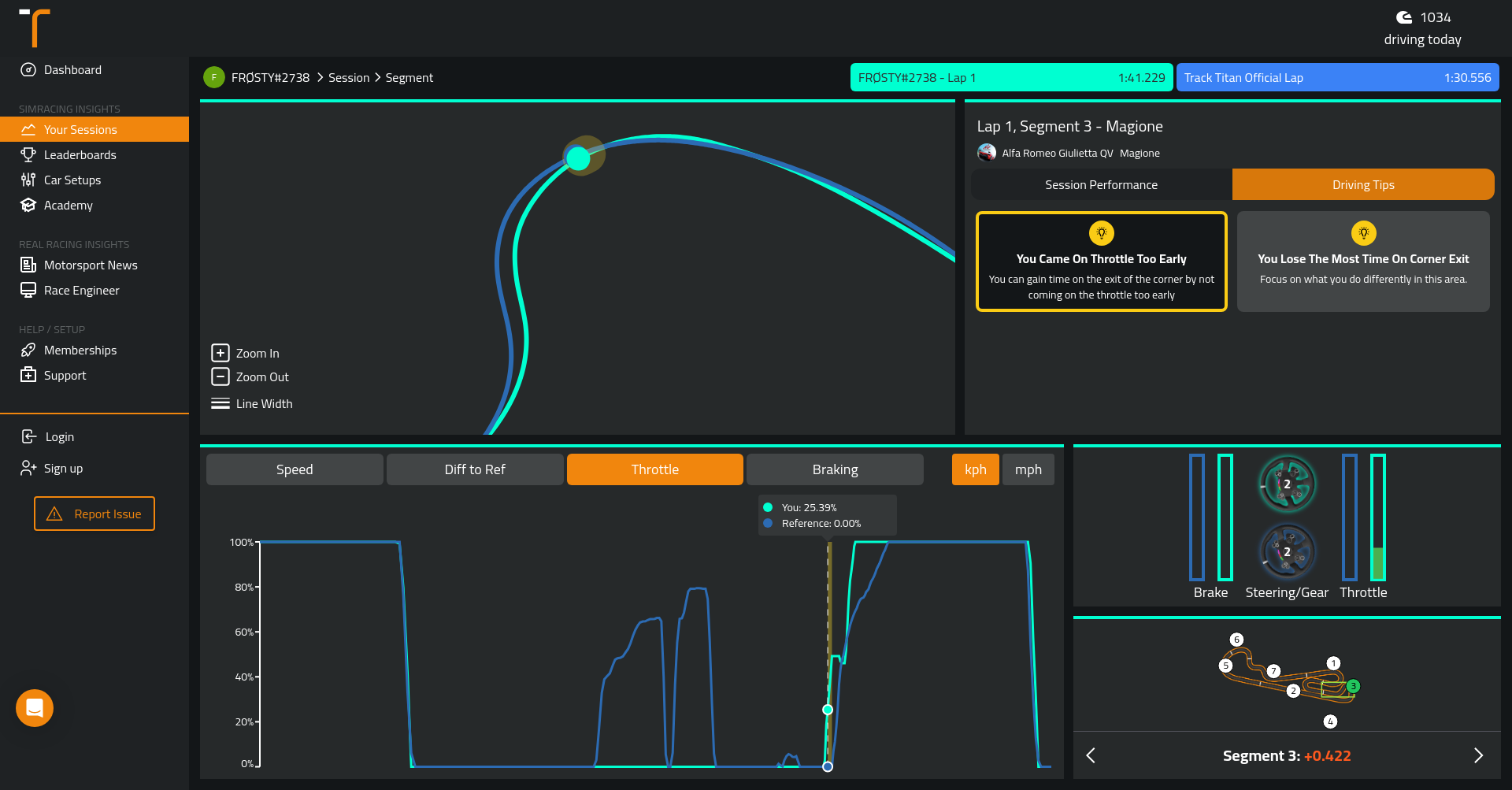
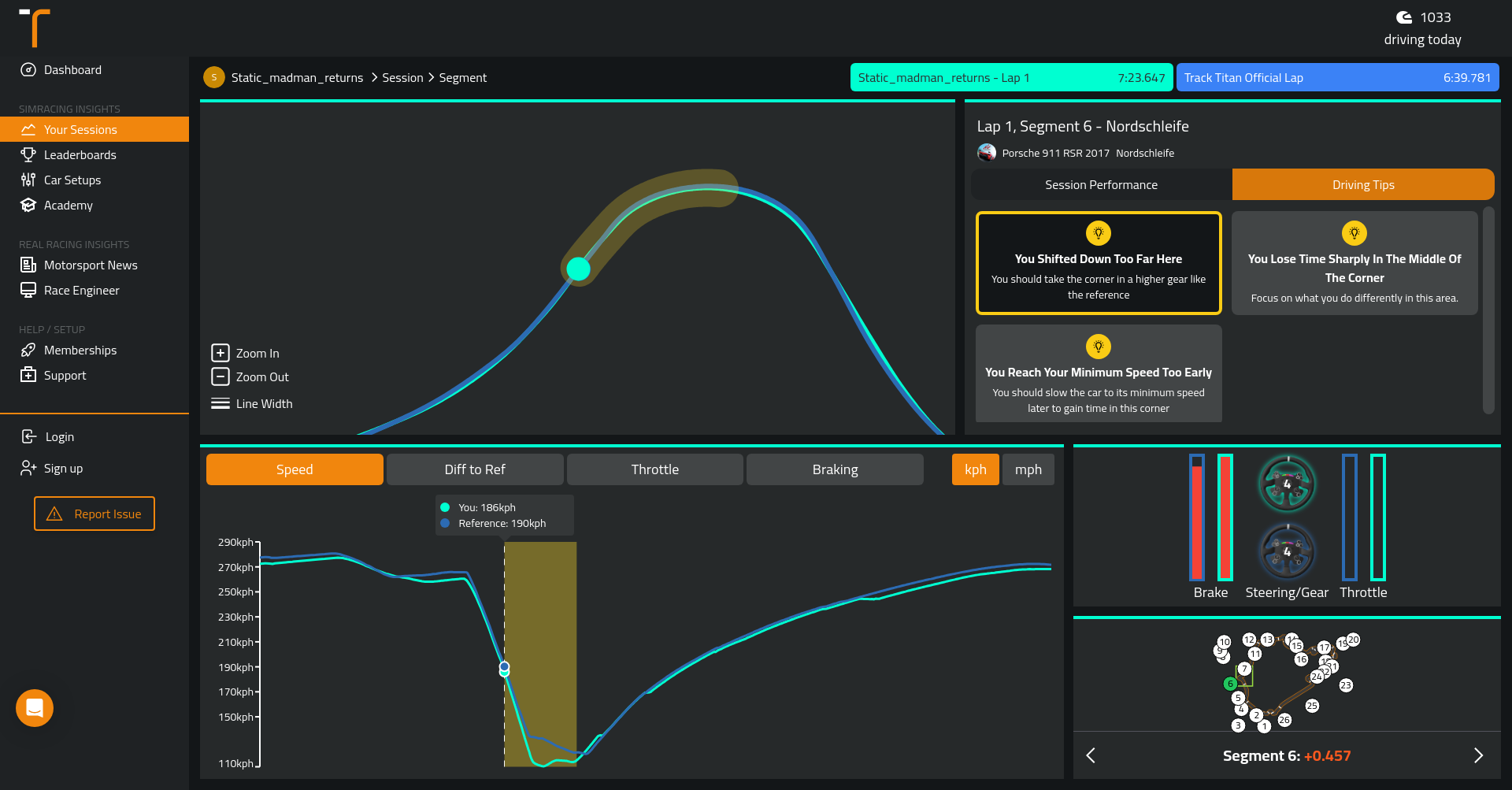
The speed chart analysis reveals that driverB enters corners with a lower speed than driverA, indicating a lack of momentum from the previous corner. This affects their entry speed into the next corner. Additionally, driverB experiences a sharp decrease in speed upon corner exit due to early throttle application, leading to a slower exit. The minimum speed for driverB occurs later than for driverA and is followed by a less steep increase in speed, suggesting delayed acceleration. To enhance performance, driverB should brake later with more force and avoid premature throttle application to maintain higher exit speeds. In terms of throttle control, driverA applies throttle earlier than driverB during corner exit, which is inefficient as it doesn't fully utilize tire grip before accelerating. DriverB's gradual and later throttle application indicates better traction control and faster corner exit speeds. DriverA's early and sharp throttle input can cause instability and potential wheelspin, losing time. In contrast, driverB's smoother progression in applying throttle demonstrates discipline in power delivery for maximum traction and stability. Therefore, driverA should delay and moderate their throttle input for improved performance on corner exits.
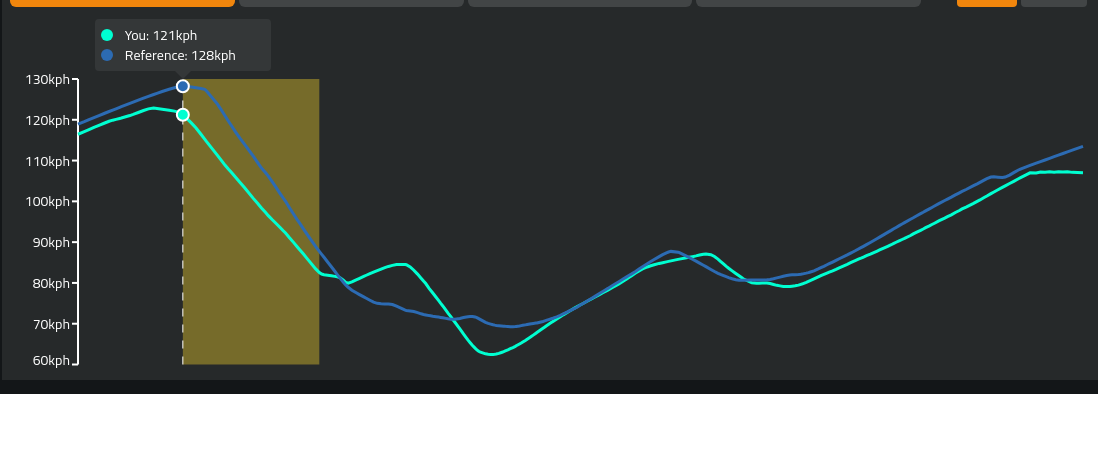
Analyzing the speed chart, it's evident that driverB enters the corner with a lower speed compared to driverA. This indicates that driverB exited the previous corner with less momentum, which has a cascading effect on their entry speed into the current corner. Specifically, at the very start of the chart on the left, driverB's speed is already lower than that of driverA, highlighting this issue. Furthermore, during corner exit, there is a sharp decrease in speed for driverB compared to driverA. This suggests that driverB is coming on throttle too early, which leads to a loss of time as they are not able to carry as much speed out of the corner. The minimum speed for driverB occurs later than for driverA and is followed by a less steep increase in speed, indicating delayed acceleration and thus contributing to time lost on corner exit. To improve performance, driverB should focus on braking later by applying more force and avoiding premature throttle application to maintain higher exit speeds.

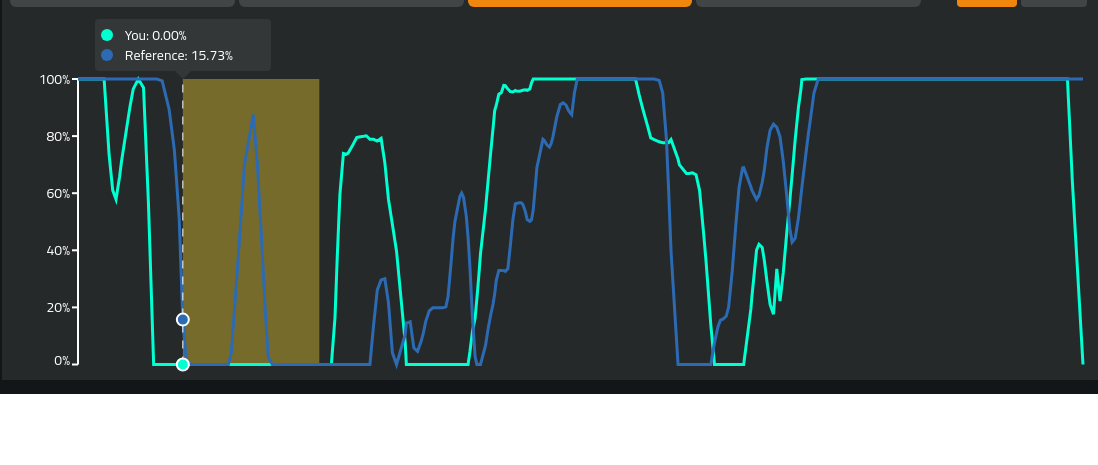
Analyzing the throttle control chart, it's evident that driverA is applying throttle significantly earlier than driverB during corner exit. This premature application results in a less efficient exit as driverA is not utilizing the full grip potential of the tires before accelerating. In contrast, driverB's gradual and later throttle application indicates a more controlled exit, allowing for better traction and ultimately a faster corner exit speed. Furthermore, driverA's initial throttle input is not only early but also shows a sharp increase which suggests an aggressive attempt to accelerate out of the corner. This can lead to instability and potential wheelspin, costing valuable time. DriverB's smoother and progressive application of throttle showcases a more disciplined approach to power delivery, ensuring maximum traction and stability for a quicker acceleration phase post-corner. DriverA should focus on delaying and moderating throttle input for improved corner exit performance.