114,324
114K
Laps driven today

iRacing

Le Mans Ultimate

Assetto Corsa Competizione

Assetto Corsa

F1 25

Assetto Corsa EVO

Automobilista 2

Forza Motorsport

F1 24

F1 2021

F1 23

F1 2020


Lap 1
Segment 3
2:01.503
6th Feb 2024
Assetto Corsa
Nurburgring - Sprint (GT) - BMW Z4

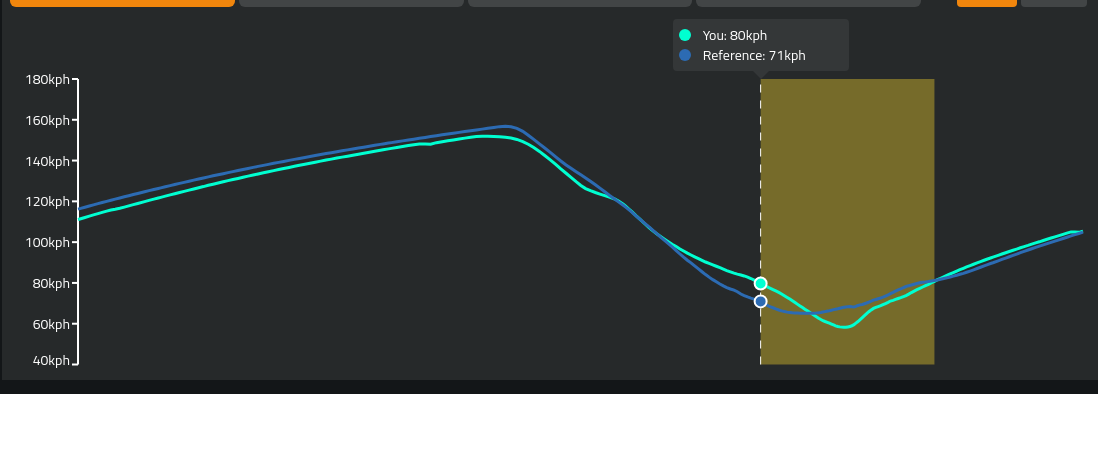
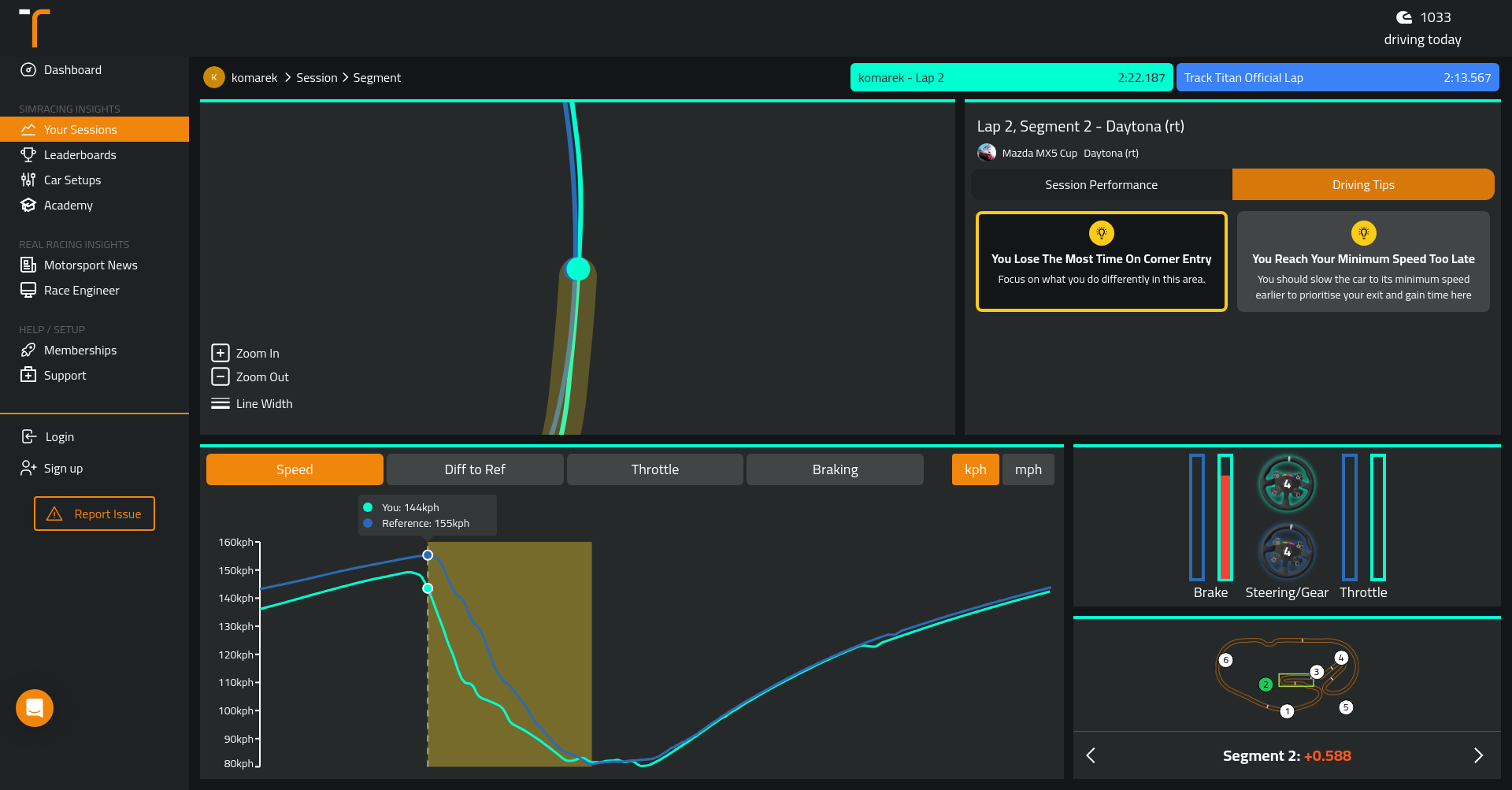
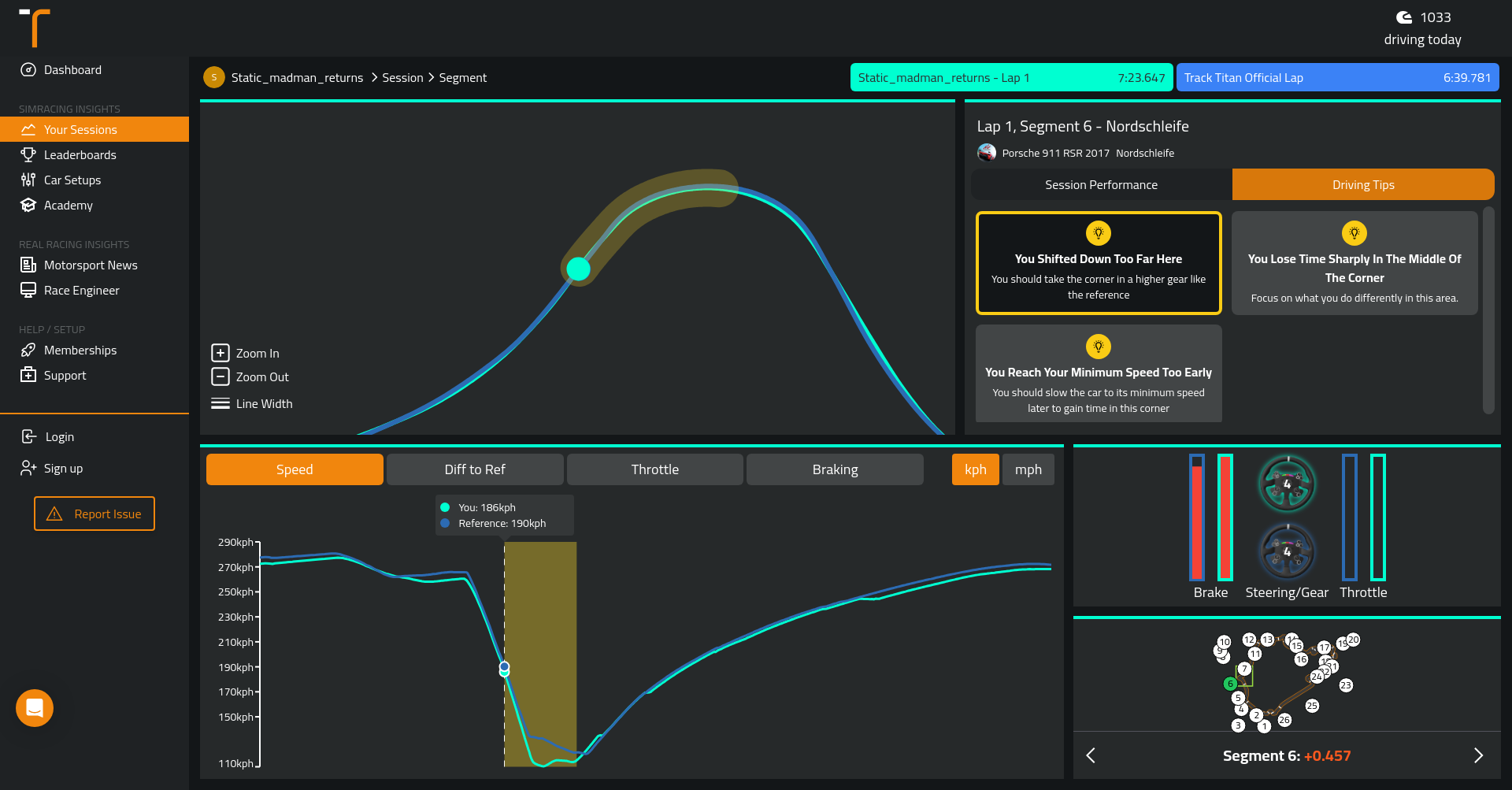
The analysis of the speed chart reveals that driverB is entering and exiting the corner with a lower speed than driverA, which indicates a loss of time due to not carrying enough speed from the previous corner and a delayed throttle application. This results in a slower minimum speed at the corner's slowest point and a less effective acceleration out of the turn. To enhance their performance, driverB should focus on maintaining higher speeds from the previous corner and applying the throttle earlier. In terms of throttle control, driverA is more hesitant with a slower and gradual increase in throttle, potentially due to managing wheelspin or lack of confidence in grip levels. This conservative approach affects exit speed and momentum. Conversely, driverB's quicker throttle application suggests confidence in vehicle control and traction, leading to earlier acceleration and possibly faster exit speeds. DriverA should aim to apply the throttle earlier and more decisively to improve their corner exit performance.
Analyzing the speed chart, it's evident that driverB is entering the corner with a lower speed compared to driverA. This suggests that driverB did not carry as much speed out of the previous corner, which sets them at a disadvantage right from the start. As they progress through the corner, driverB's minimum speed is lower than that of driverA, indicating a loss of time at the slowest point in the corner. Moreover, this minimum speed occurs later for driverB, which implies they got on the throttle later than driverA, leading to delayed acceleration and a consequent time loss on corner exit. The impact of this late throttle application is further highlighted by the comparison of exit speeds and acceleration rates. DriverB's exit speed is noticeably lower than that of driverA, and their speed chart shows a less steep gradient post-corner. This demonstrates that not only did driverB lose time during the corner due to a slower minimum speed and later throttle application but also failed to accelerate as effectively as driverA out of the turn. To improve performance in this section, focusing on carrying more speed from the previous corner into this one and committing to an earlier throttle application will be crucial for driverB.

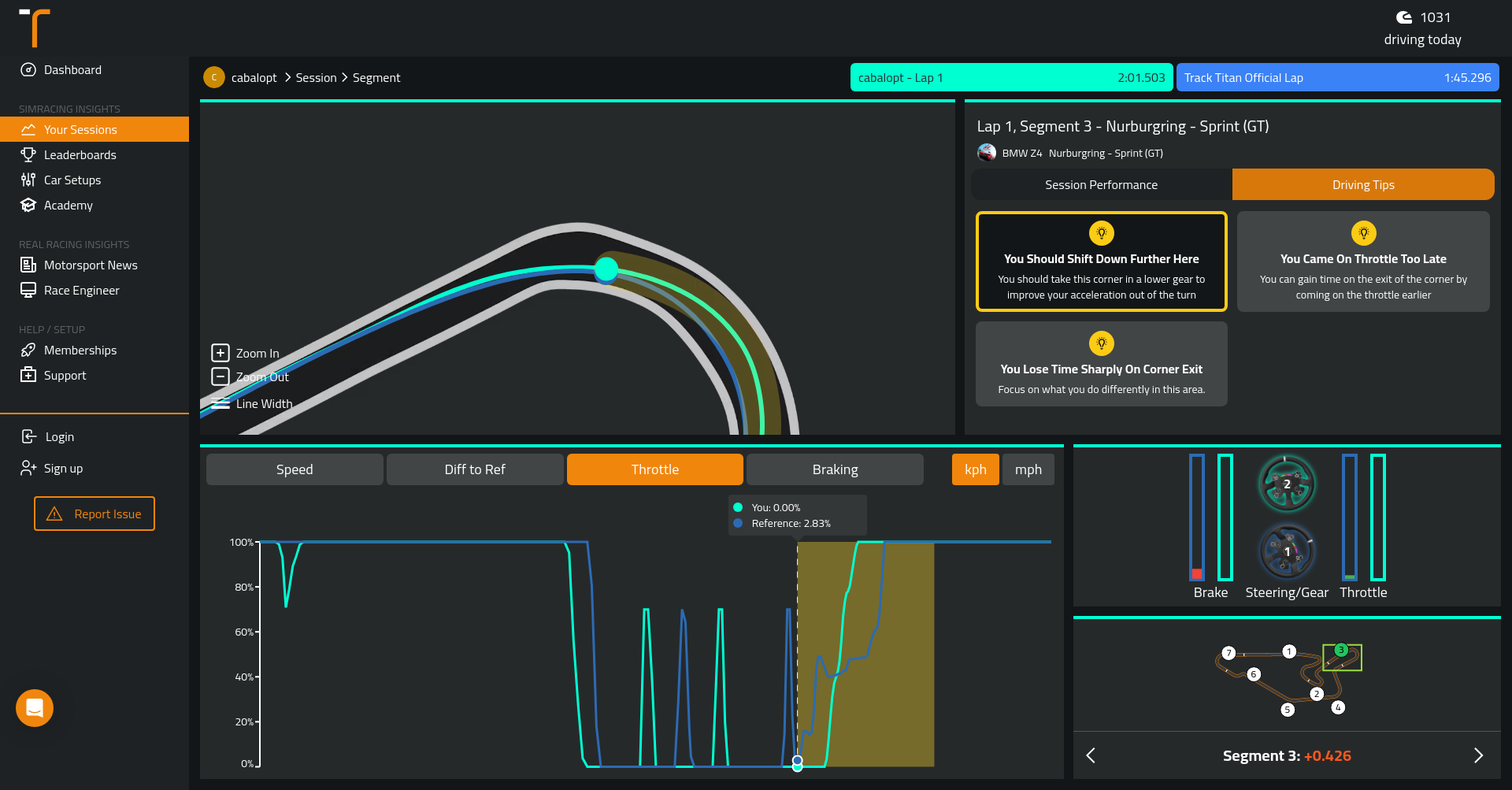
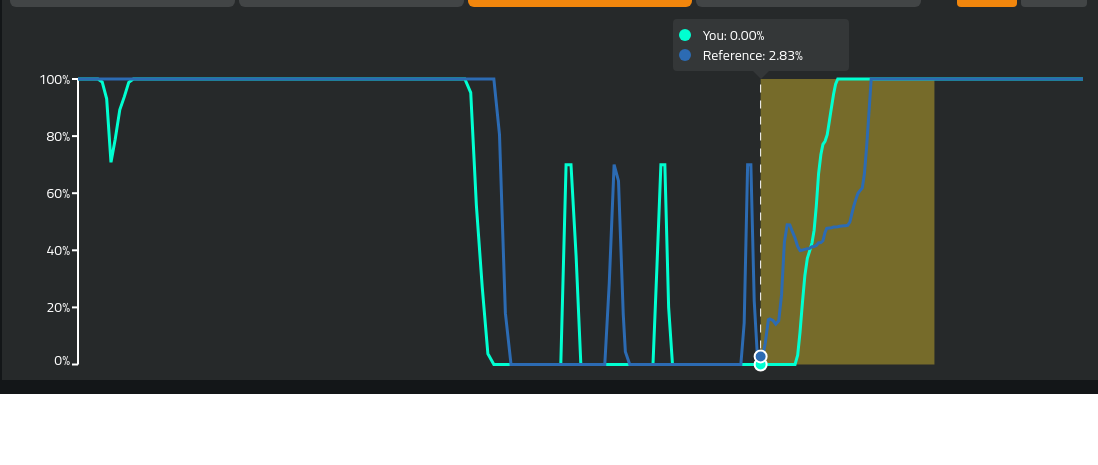
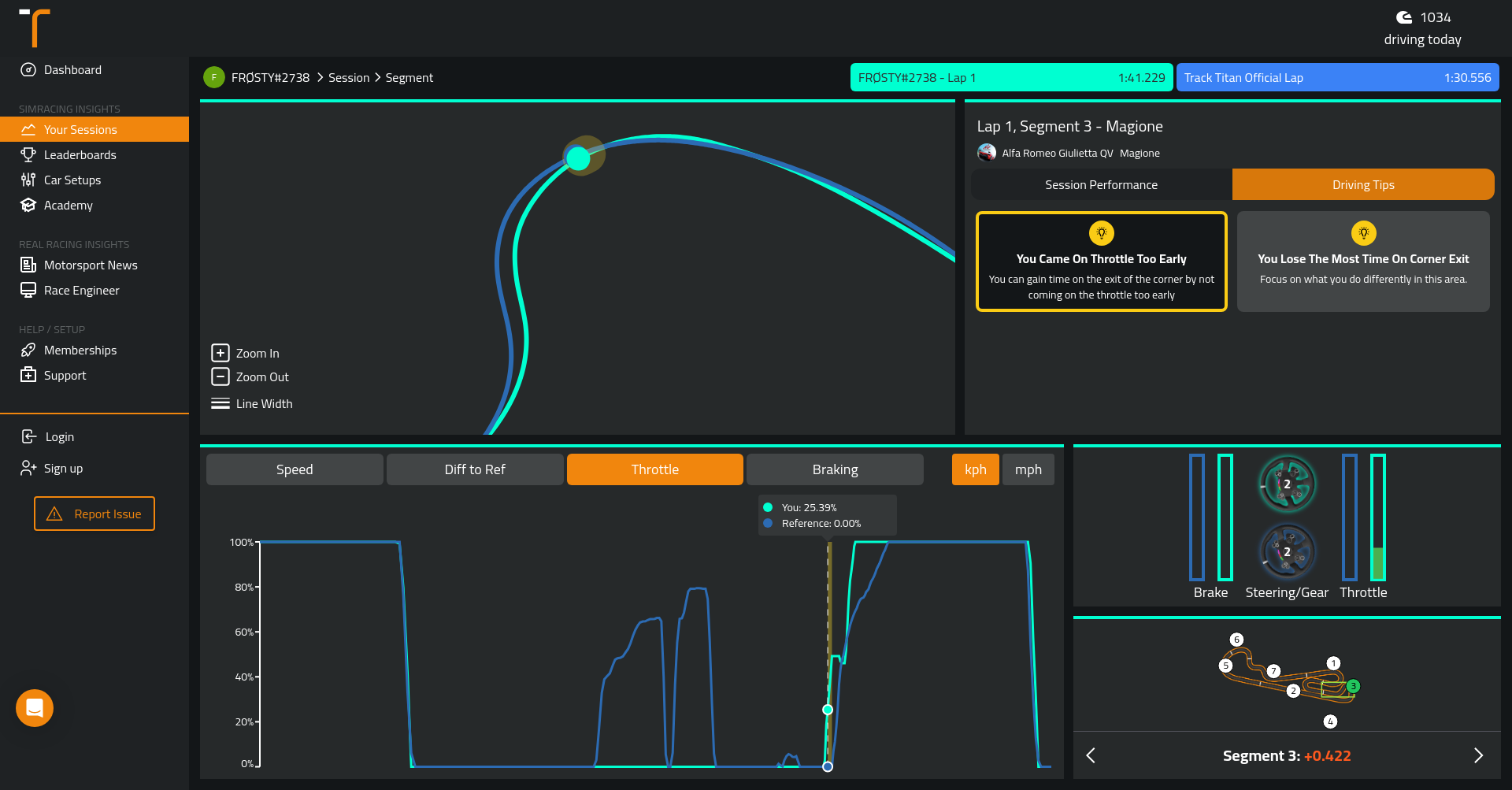
In the provided throttle control analysis, there is a clear difference in the timing and intensity of throttle application between driverA and driverB. DriverA exhibits a slower and more gradual increase in throttle, which suggests a delayed response when accelerating out of the corner. This hesitation can result in lost time as the car is not being accelerated as quickly as possible. In contrast, driverB shows a quicker and more decisive application of throttle, indicating a more aggressive approach to exiting the corner which can lead to better lap times. Furthermore, driverA's gradual throttle increase could also be indicative of managing wheelspin or lack of confidence in the car's grip levels. This conservative approach can compromise exit speed and overall momentum. On the other hand, driverB's rapid increase in throttle application demonstrates confidence in vehicle control and traction, allowing for earlier acceleration and potentially faster corner exit speeds. DriverA should focus on applying the throttle earlier and with more conviction to improve their corner exit performance.