122,869
122K
Laps driven today

iRacing

Le Mans Ultimate

Assetto Corsa Competizione

Assetto Corsa

F1 25

Assetto Corsa EVO

Automobilista 2

Forza Motorsport

F1 24

F1 2021

F1 23

F1 2020


Lap 16
Segment 8
1:38.076
6th Feb 2024
iRacing
Circuit Park Zandvoort - Grand Prix - Ferrari 296 GT3

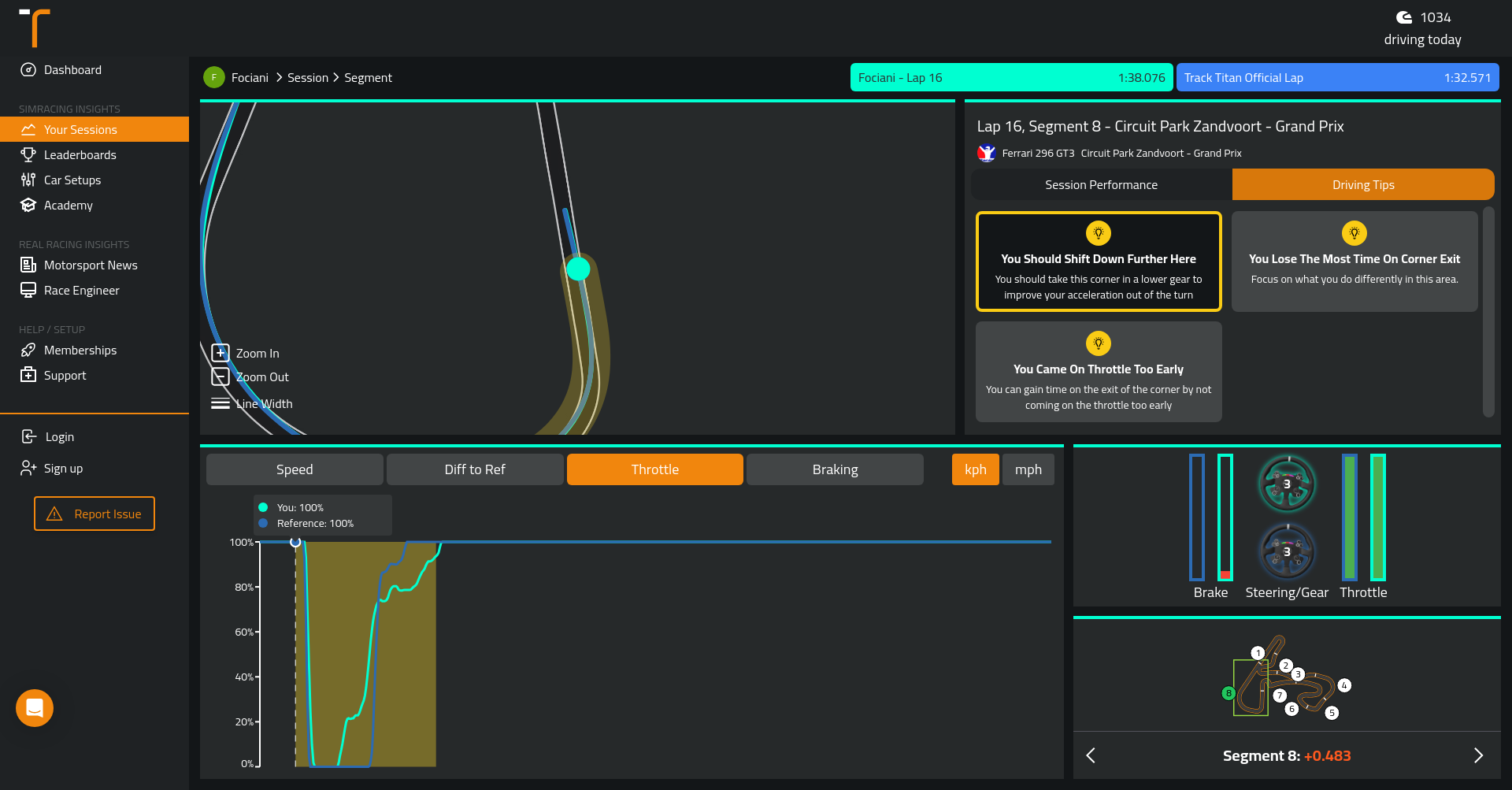
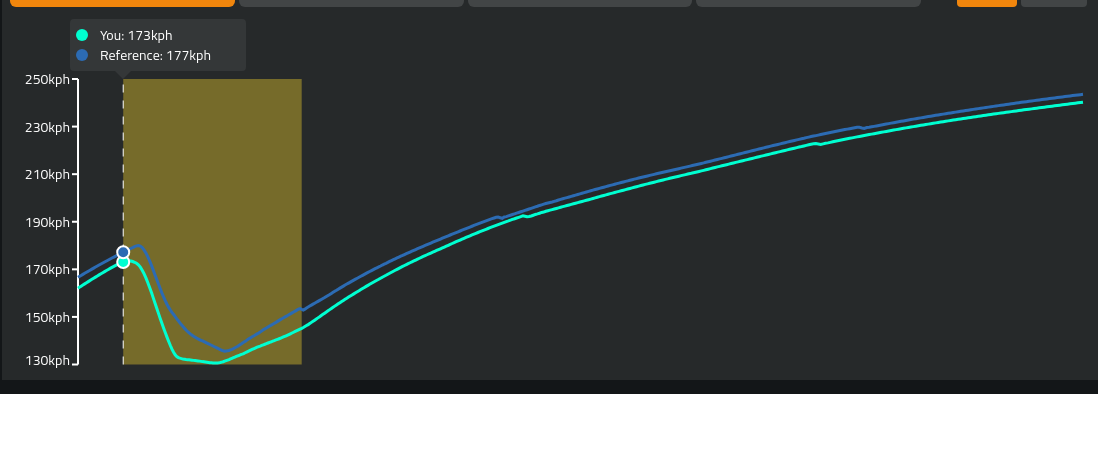
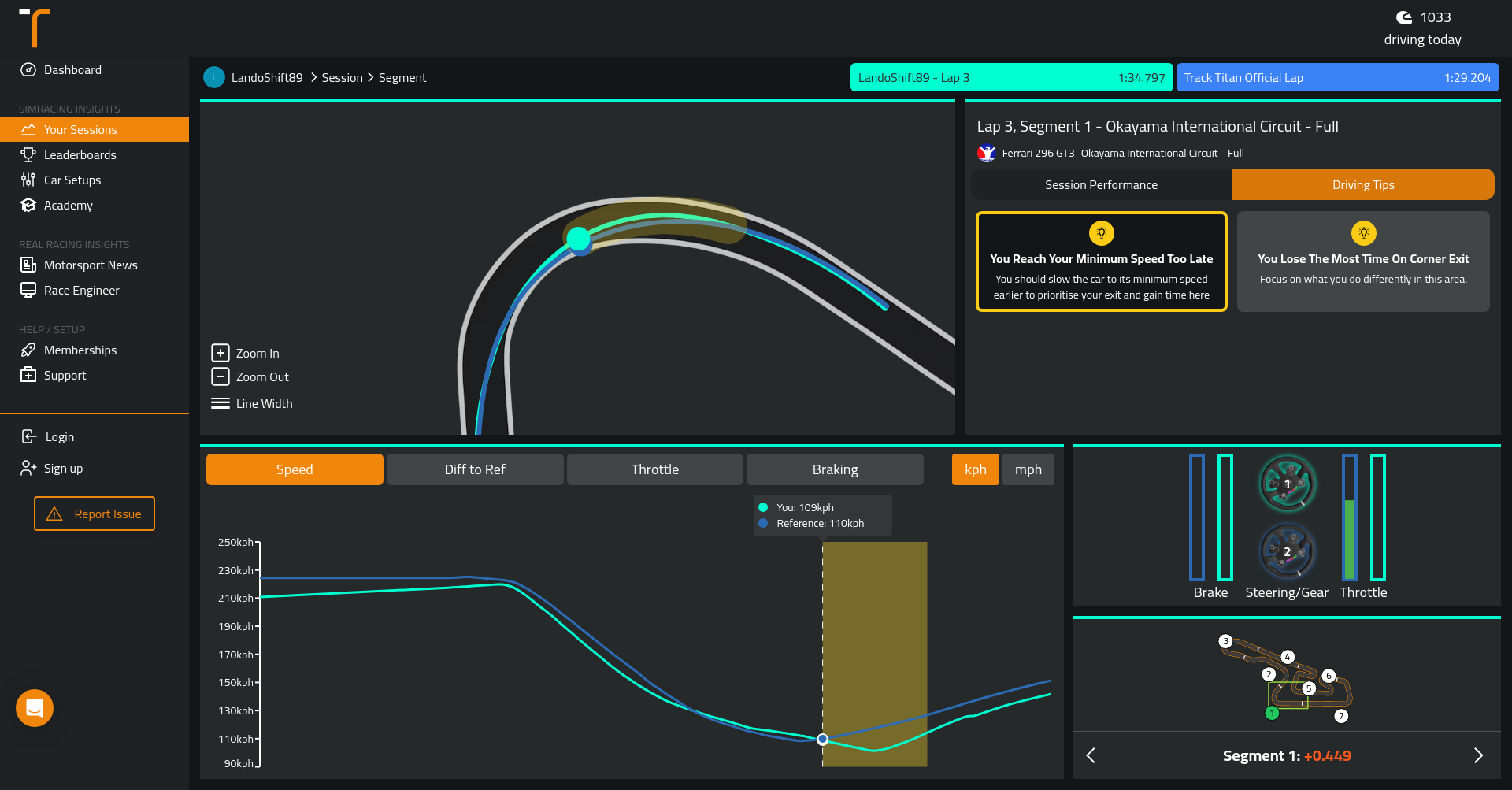
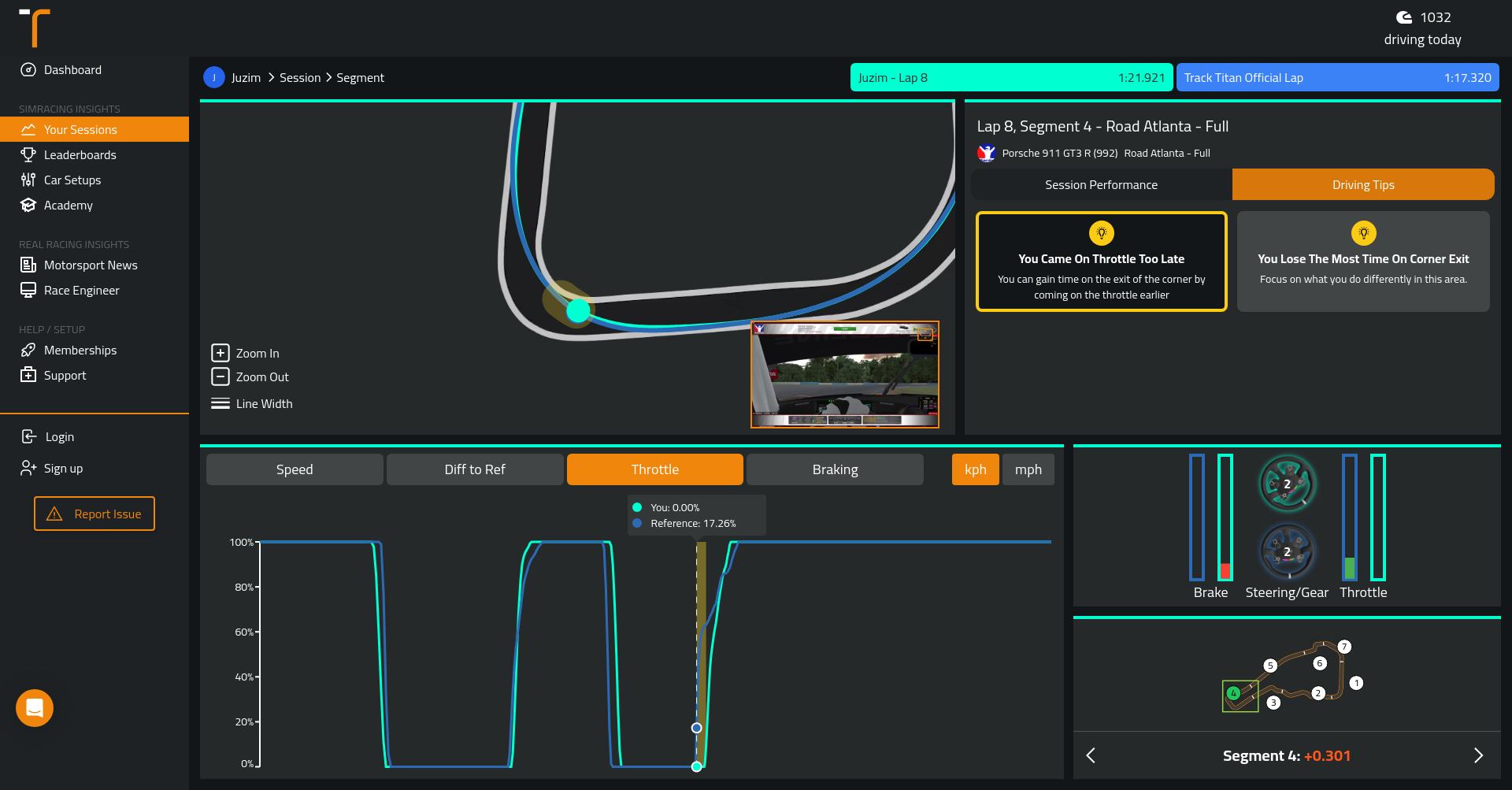
The speed chart analysis reveals that driverB is entering the corner at a lower speed than driverA, likely due to less momentum from the previous corner. This results in a conservative entry and a slower approach, which can lead to time loss. DriverB's minimum speed occurs later than driverA's, indicating a delay in throttle application and leading to a lower exit speed. To improve, driverB should focus on maintaining higher exit speeds through better throttle control and gear selection. In terms of throttle control, driverA is more cautious with a slower increase in throttle, potentially losing time compared to driverB's quicker and more decisive application. DriverA also applies the throttle earlier, which can cause understeer or wheelspin, while driverB's later but sharper increase suggests a balance between maintaining grip and maximizing acceleration. For better performance, driverA should delay their throttle input slightly and aim for a more rapid increase to enhance corner exit speed.
Analyzing the speed chart, it's evident that driverB is entering the corner with a lower speed compared to driverA. This suggests that driverB may have exited the previous corner with less momentum, which is already putting them at a disadvantage before even reaching the braking zone. The impact of this is a slower approach and potentially a more conservative entry into the current corner, which can compound time loss throughout the section. As we progress through the corner, it's noticeable that driverB's minimum speed occurs later than that of driverA, indicating a delay in throttle application. This results in driverB getting on the power later than driverA, leading to less acceleration out of the turn and consequently a lower exit speed. The gradient of driverB's speed increase post-apex is also less steep compared to driverA's, reinforcing that time is being lost on corner exit due to this later application of throttle and suboptimal gear selection for maximizing acceleration. To improve performance in this segment, focusing on maintaining higher exit speeds through better throttle control and gear selection will be crucial for driverB.

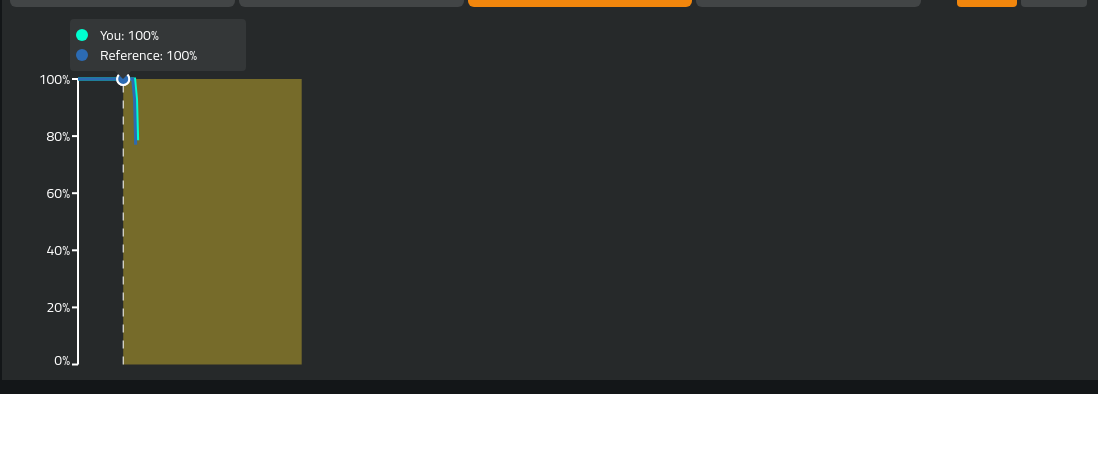
Analyzing the throttle control chart, it's evident that driverA and driverB have distinct differences in their throttle application. DriverA exhibits a slower and more gradual increase in throttle, which suggests a cautious approach to acceleration out of the corner. This could be leading to a loss of time compared to driverB, who shows a quicker and more decisive throttle application. The sharp increase in driverB's graph indicates a confident and aggressive acceleration, which is likely contributing to better exit speed from the corner. Furthermore, driverA comes on the throttle notably earlier than driverB, as seen by the premature rise in their graph. This early application can cause understeer or wheelspin, which compromises exit speed. In contrast, driverB's later but sharper increase in throttle demonstrates a more optimal balance between maintaining grip and maximizing acceleration. To improve performance, driverA should focus on delaying their throttle input slightly and aim for a more rapid increase to enhance their corner exit speed.