114,324
114K
Laps driven today

iRacing

Le Mans Ultimate

Assetto Corsa Competizione

Assetto Corsa

F1 25

Assetto Corsa EVO

Automobilista 2

Forza Motorsport

F1 24

F1 2021

F1 23

F1 2020


Lap 8
Segment 9
1:51.019
6th Feb 2024
iRacing
Autodromo Internazionale Enzo e Dino Ferrari - Grand Prix - FIA Formula 4

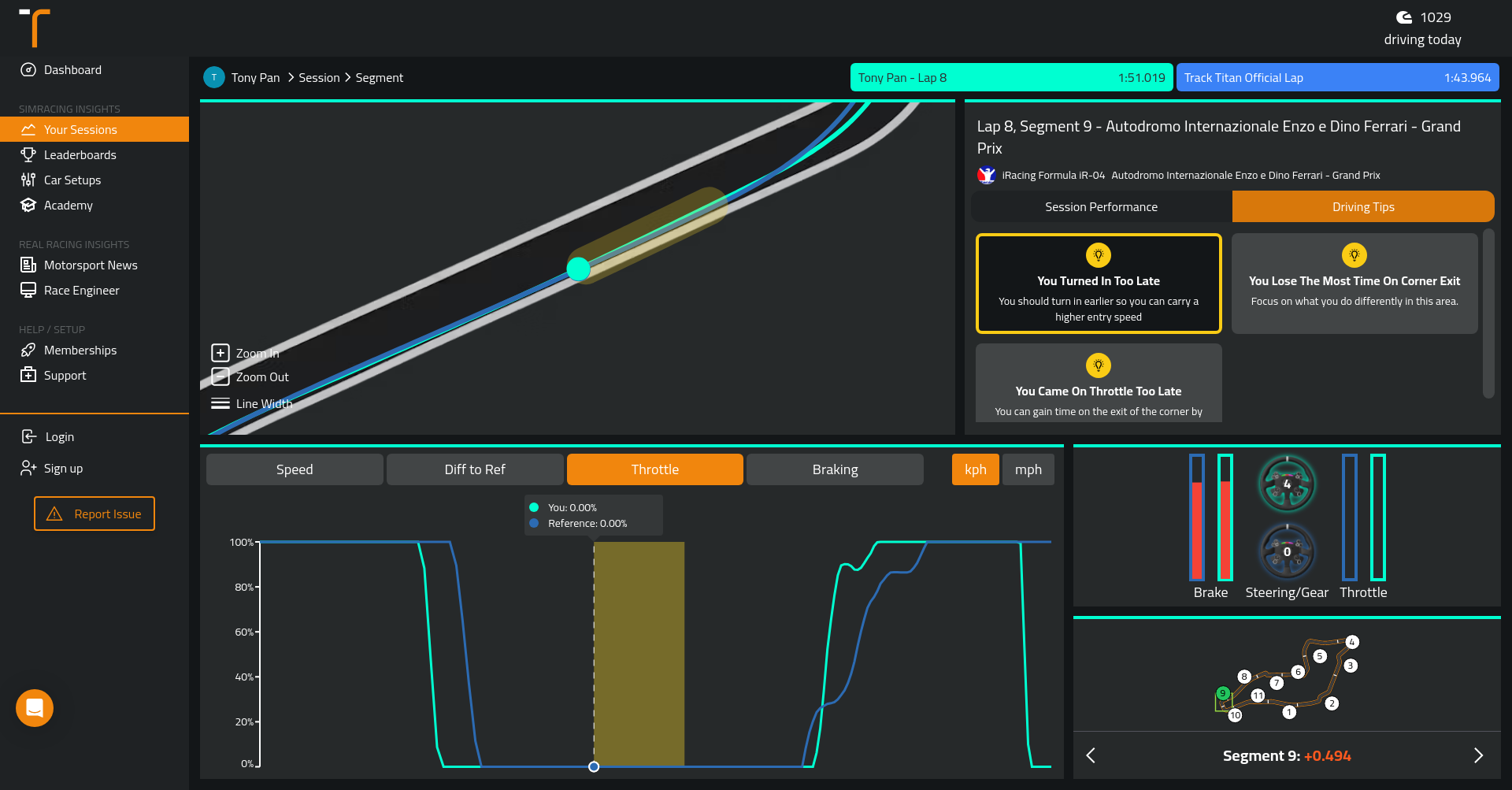
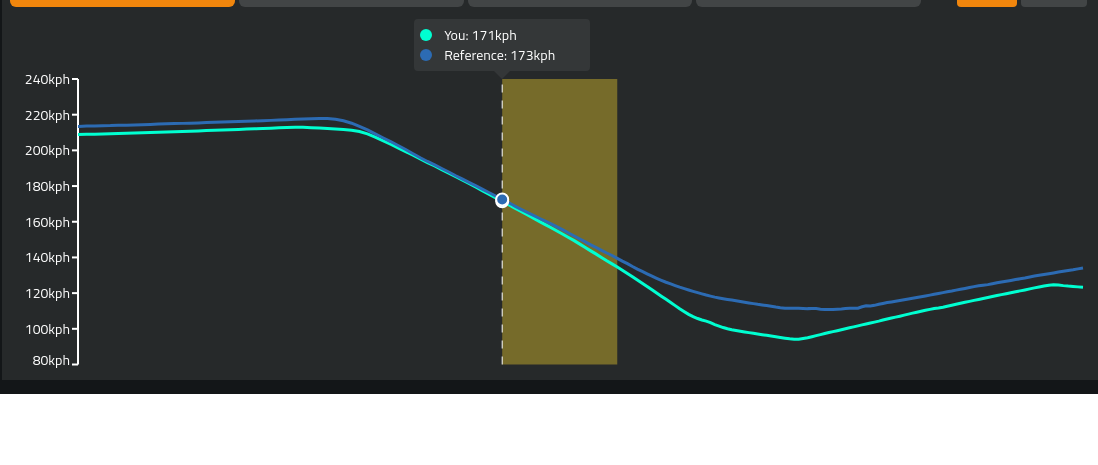
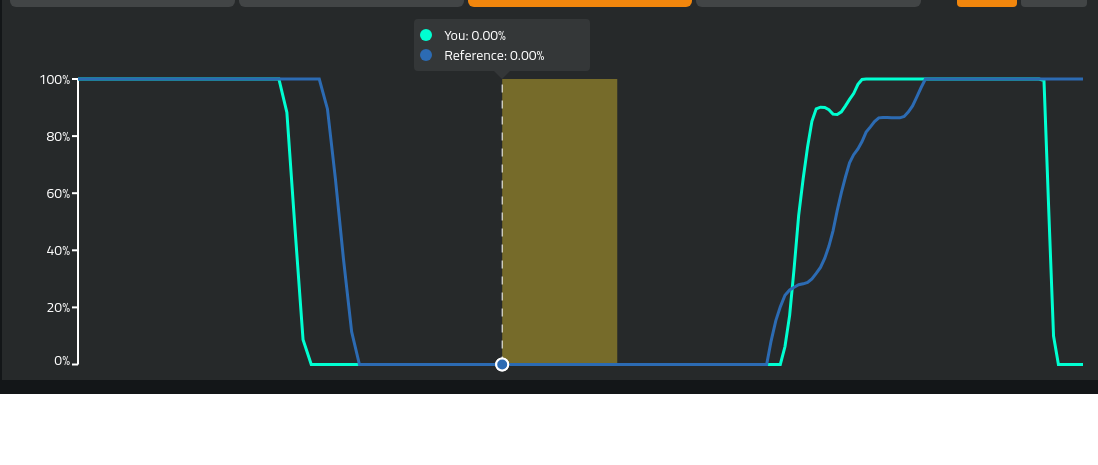
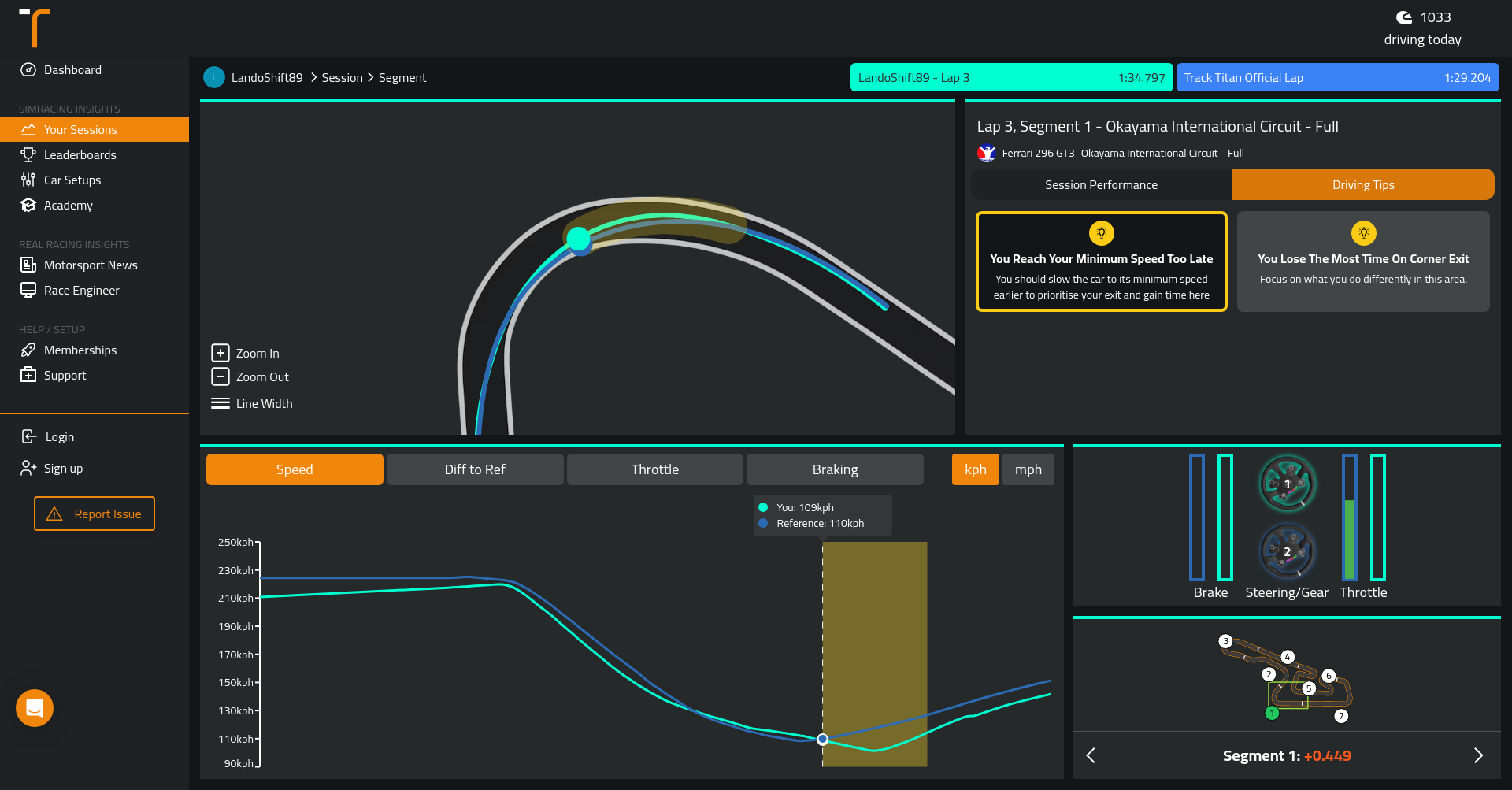
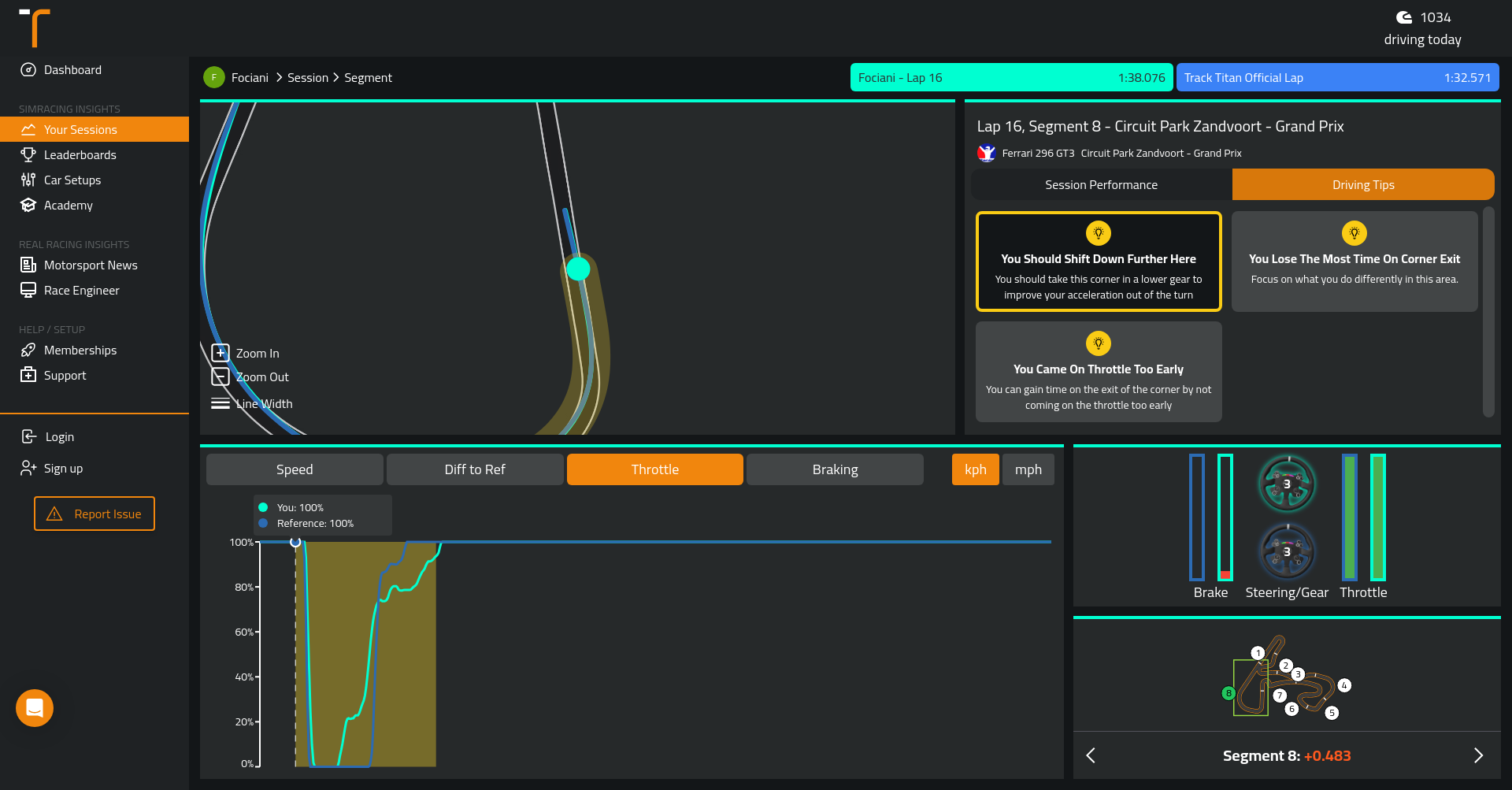
The speed chart analysis reveals that driverB enters corners at a lower speed than driverA, due to less momentum from the previous corner, affecting their entire lap time. DriverB's minimum corner speed occurs later than driverA's, indicating a delayed throttle application and resulting in a slower exit. To improve, driverB should aim for an earlier turn-in and throttle application to maintain higher entry speed and accelerate out of the corner more effectively. In terms of throttle control, driverA is slower and more gradual in reaching full throttle compared to driverB's quicker and more decisive approach. This suggests that while driverB can manage wheelspin better and apply power earlier, driverA's cautious increase in throttle may cause them to lose time on corner exit. For enhancement, driverA should work on applying the throttle earlier and with greater confidence to fully utilize the vehicle's acceleration capabilities during cornering.
Analyzing the speed chart, it's evident that driverB enters the corner at a lower speed compared to driverA. This discrepancy starts right at the beginning of the chart, indicating that driverB exited the previous corner with less momentum. The impact here is significant as it sets a slower pace for the entire section, hindering driverB's overall lap time. Furthermore, driverB's minimum speed in the corner occurs later than that of driverA, suggesting a delayed throttle application. This late minimum speed results in a slower exit as shown by the shallower gradient of driverB's speed curve compared to driverA's steeper incline post-corner. To improve, driverB should focus on an earlier turn-in to maintain higher entry speed and earlier throttle application to enhance acceleration out of the corner, thus reducing time lost on corner exit.

In the provided throttle control analysis, driverA exhibits a delayed and gradual increase in throttle application compared to driverB. This is evident from the more prolonged period of low throttle percentage before reaching full application. DriverB, on the other hand, reaches full throttle much quicker, indicating a more confident and aggressive exit from the corner. The intensity of driverB's throttle application is also more decisive, with a steeper curve on the graph representing a rapid transition to full throttle. This suggests that driverB is able to manage wheelspin better and can therefore apply power earlier and more effectively. DriverA's slower increase in throttle could be causing them to lose time on corner exit, as they are not maximizing the potential acceleration of the vehicle. To improve, driverA should focus on coming onto the throttle earlier and with more conviction to minimize time lost in this crucial phase of cornering.