122,247
122K
Laps driven today

iRacing

Le Mans Ultimate

Assetto Corsa Competizione

Assetto Corsa

F1 25

Assetto Corsa EVO

Automobilista 2

Forza Motorsport

F1 24

F1 2021

F1 23

F1 2020


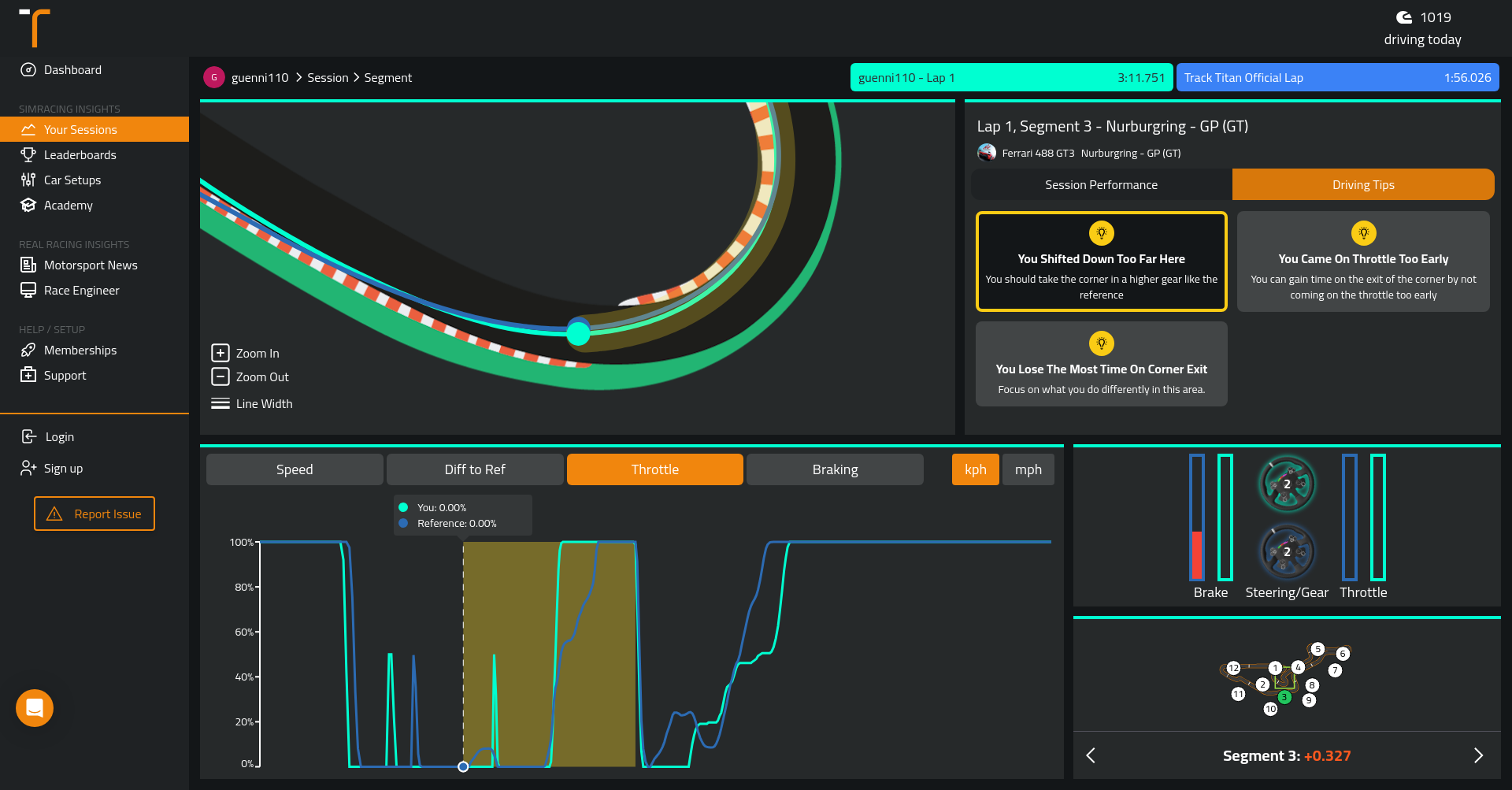
Lap 1
Segment 3
3:11.751
6th Feb 2024
Assetto Corsa
Nurburgring - GP (GT) - Ferrari 488 GT3

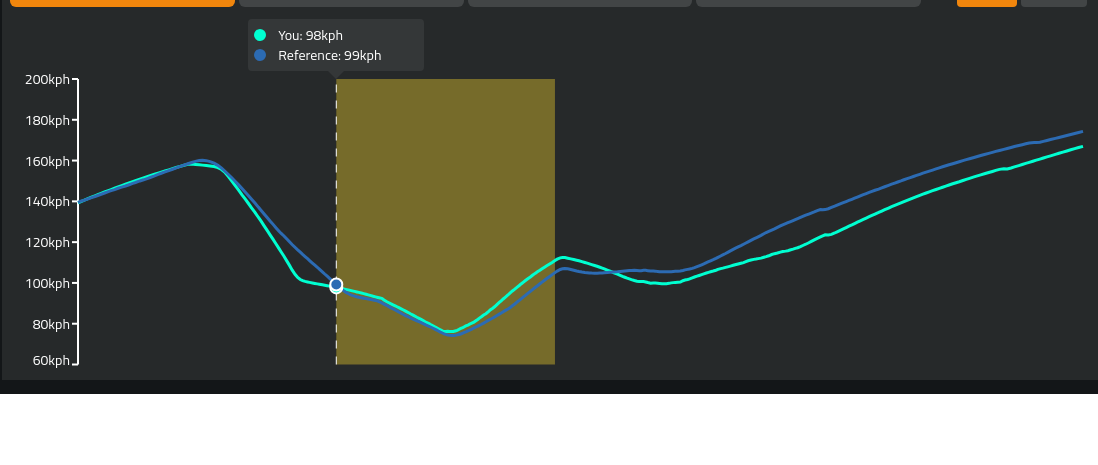
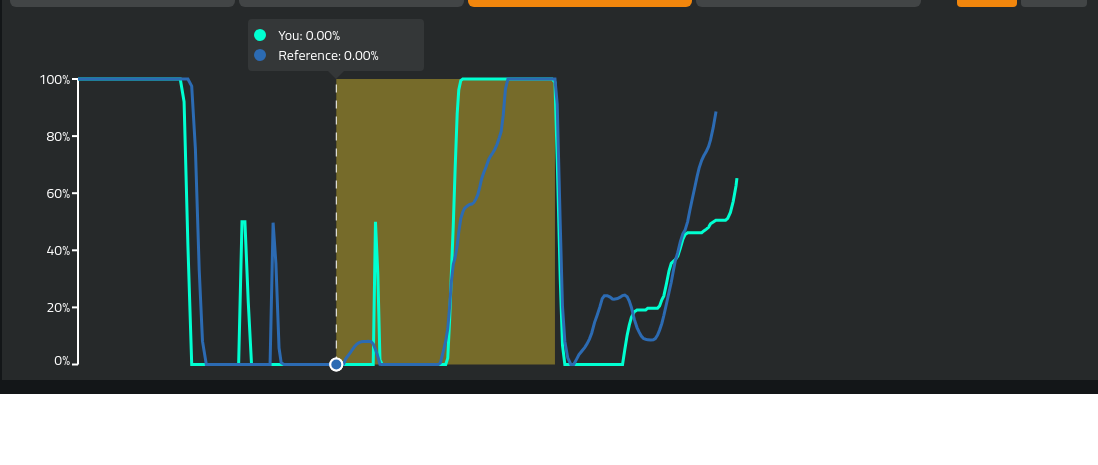
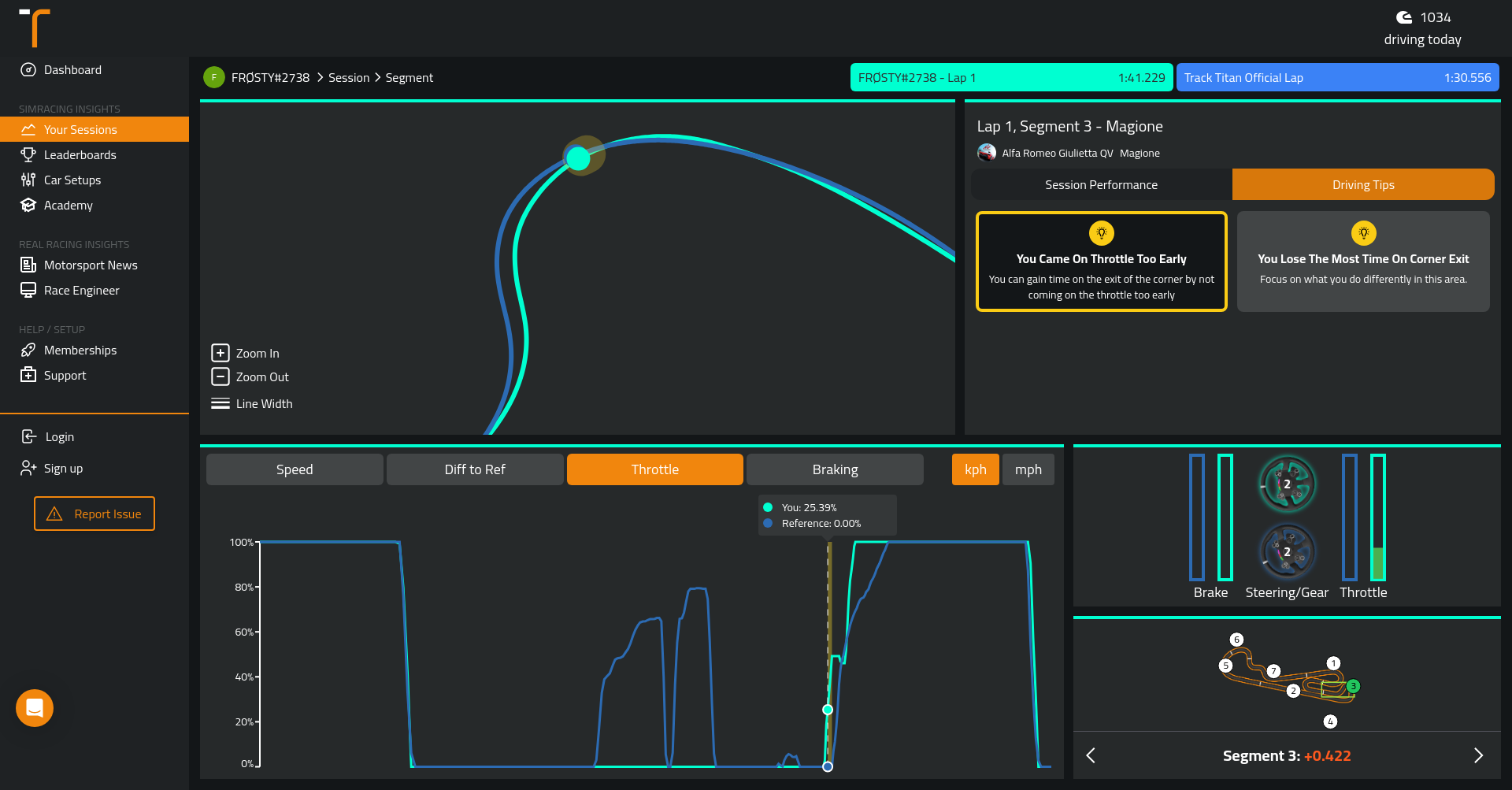
The speed chart analysis reveals that driverB is slower than driverA at the start of the corner, carrying a speed deficit from the previous corner's exit. This slower entry speed for driverB continues through the corner, with a lower minimum speed occurring later than driverA's, indicating a delayed throttle application and resulting in time loss. DriverB's acceleration out of the corner is also less aggressive than driverA's, suggesting an early throttle application that leads to understeer or a need to lift off to regain control. To enhance performance, driverB should focus on achieving a higher exit speed by slightly delaying throttle application until better traction and control are established, allowing for a faster and more forceful exit. On the other hand, driverA starts applying throttle too early in the corner, as shown by the steep initial incline in their throttle graph. This premature acceleration can cause traction loss and slower exit speeds. DriverA's graph also displays a sharp peak followed by a plateau too early in the corner exit phase, whereas driverB has a smoother curve with a later peak. DriverA could improve by postponing full throttle application to align with driverB's timing, potentially increasing speed on corner exit where significant time is being lost. The key takeaway for both drivers is to optimize their throttle control to ensure better traction and higher speeds at the crucial point of exiting corners.
Analyzing the speed chart, it's evident that driverB enters the corner with a speed deficit compared to driverA. This is indicated by the lower speed at the very start of the chart on the left, suggesting that driverB exited the previous corner with less momentum. This initial speed difference carries through to the corner's entry and mid-section, where driverB's minimum speed dips lower than that of driverA. Moreover, this minimum speed occurs later for driverB, which implies a delay in throttle application and consequently a loss of time due to later acceleration. Focusing on the corner exit, driverB's acceleration gradient is less steep compared to driverA's, indicating a slower increase in speed. This is consistent with coming on throttle too early, as it can cause understeer or require a lift-off to regain car control, both resulting in lost time. To improve performance, driverB should aim for a higher exit speed by delaying throttle application slightly for better traction and control, thus allowing for a more aggressive and faster exit.

In the provided throttle control analysis, driverA initiates throttle application significantly earlier than driverB, as indicated by the steeper initial incline in their graph. This premature application of throttle suggests that driverA is attempting to accelerate before fully exiting the corner, which can lead to a loss of traction and ultimately slower exit speeds. DriverB, on the other hand, applies throttle more gradually and later, which allows for better traction and a stronger exit from the corner. Furthermore, driverA's throttle graph shows a sharper peak followed by a plateau, indicating a moment of maximum throttle that is sustained too early in the corner exit phase. This contrasts with driverB's smoother curve that reaches its peak later in the corner exit. This data suggests that driverA could benefit from delaying full throttle application to match the timing of driverB, potentially improving overall speed on corner exit where most time is being lost.