114,324
114K
Laps driven today

iRacing

Le Mans Ultimate

Assetto Corsa Competizione

Assetto Corsa

F1 25

Assetto Corsa EVO

Automobilista 2

Forza Motorsport

F1 24

F1 2021

F1 23

F1 2020


Lap 2
Segment 8
1:54.212
7th Feb 2024
Assetto Corsa
Watkins Glen - Ferrari 488 GT3

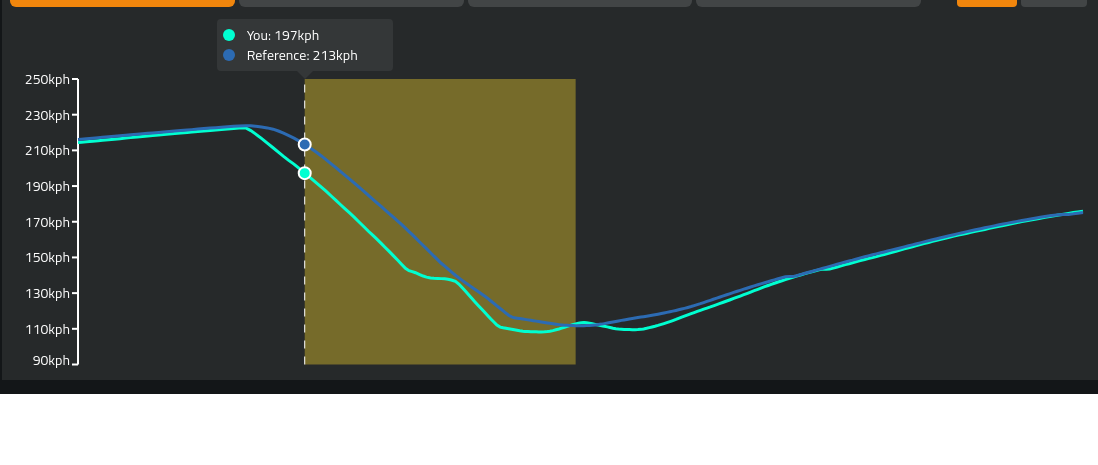
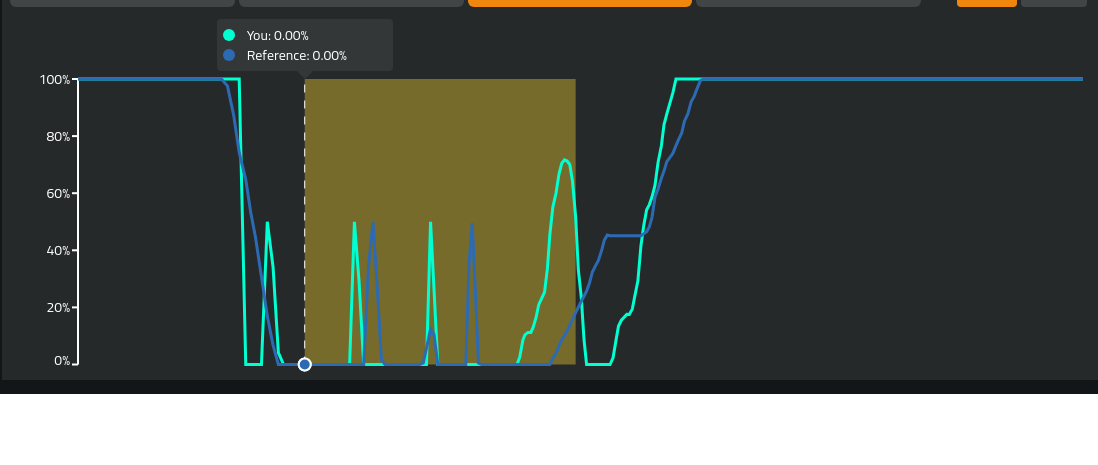
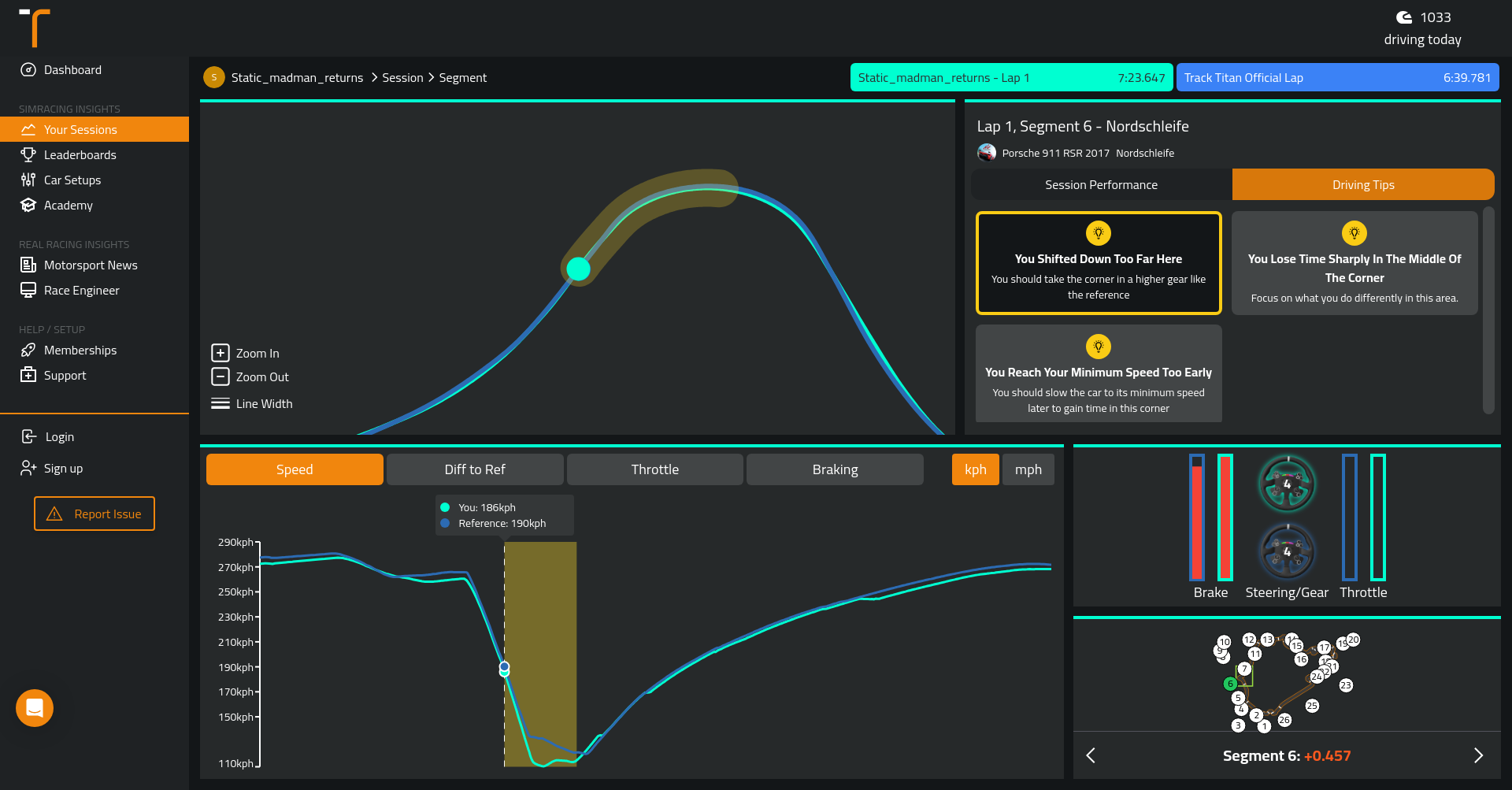
The speed chart analysis reveals that driverB is slower than driverA at corner entry, losing time due to less momentum from the previous corner. DriverB also decelerates too early and reaches a lower minimum speed before driverA, indicating a conservative approach. This results in an inefficient corner exit as they apply throttle earlier but do not utilize the full corner radius for acceleration. To improve, driverB should carry more speed into the corner, delay braking to align with driverA's minimum speed point, and focus on a stronger, later acceleration phase. On the other hand, driverA applies throttle prematurely and aggressively during corner exit, peaking before driverB. This suggests that driverA is on the throttle too soon when the car may not be ready for maximum acceleration, potentially losing exit speed and increasing lap times. In contrast, driverB's smoother and progressive throttle application likely aids in better traction and control. DriverA could improve by moderating their initial throttle input and delaying it to mirror driverB's technique for a more effective corner exit strategy.
Analyzing the speed chart, it's evident that driverB loses significant time on corner entry compared to driverA. This is highlighted by the initial speed difference at the very start of the chart, where driverB is already at a lower speed before entering the braking zone. This indicates that driverB exited the previous corner with less momentum than driverA, setting up a disadvantage right from the outset. Furthermore, driverB reaches their minimum speed too early in the corner, as shown by their lower minimum speed occurring before that of driverA. This premature deceleration suggests an earlier application of brakes or a more conservative approach to corner entry, which hinders their ability to carry optimal speed through the turn. The subsequent earlier throttle application by driverB leads to a less efficient exit as they have not utilized the full potential of the corner's radius for acceleration. To improve lap times, driverB should focus on carrying more speed into the corner and delaying deceleration to match closer with driverA's minimum speed point, ensuring a stronger and later acceleration phase out of the turn.

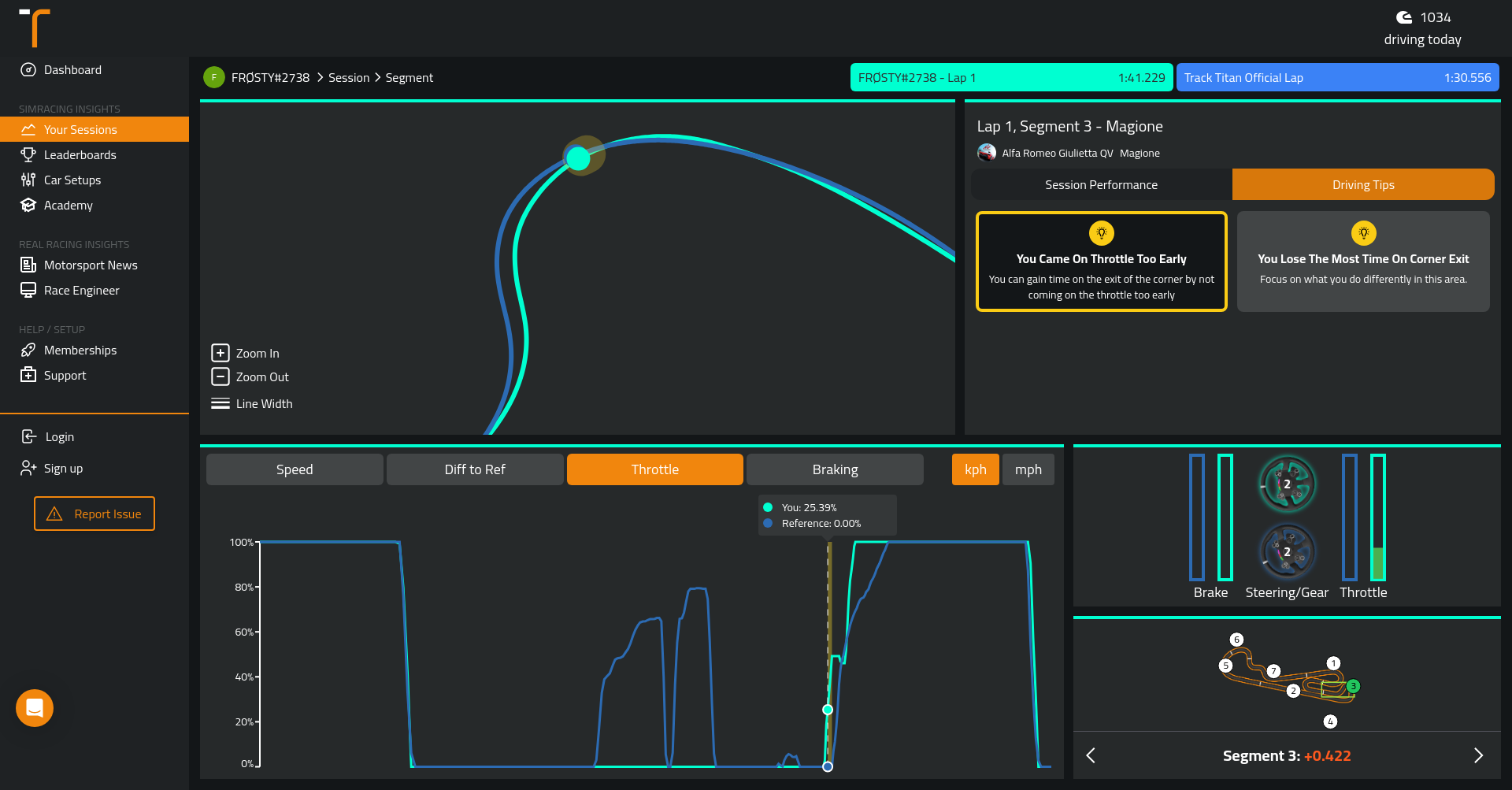
In the provided throttle control chart, driverA exhibits a premature and steep increase in throttle application compared to driverB. This early application leads to reaching the peak of throttle input significantly before driverB, which suggests that driverA is coming on the throttle too early during corner exit. This can result in a loss of potential exit speed and overall lap time as the car may not be settled enough for maximum acceleration. Furthermore, driverA's initial throttle input is more abrupt than that of driverB, who applies the throttle in a smoother and more progressive manner. This smoother application by driverB likely contributes to better traction and control, allowing for a stronger exit from the corner. DriverA could benefit from delaying and moderating their throttle input to match the more effective technique demonstrated by driverB, thus improving their corner exit speed and reducing lap times.