122,247
122K
Laps driven today

iRacing

Le Mans Ultimate

Assetto Corsa Competizione

Assetto Corsa

F1 25

Assetto Corsa EVO

Automobilista 2

Forza Motorsport

F1 24

F1 2021

F1 23

F1 2020


Lap 1
Segment 7
2:24.652
7th Feb 2024
Assetto Corsa
Spa-Francorchamps - McLaren 650S GT3

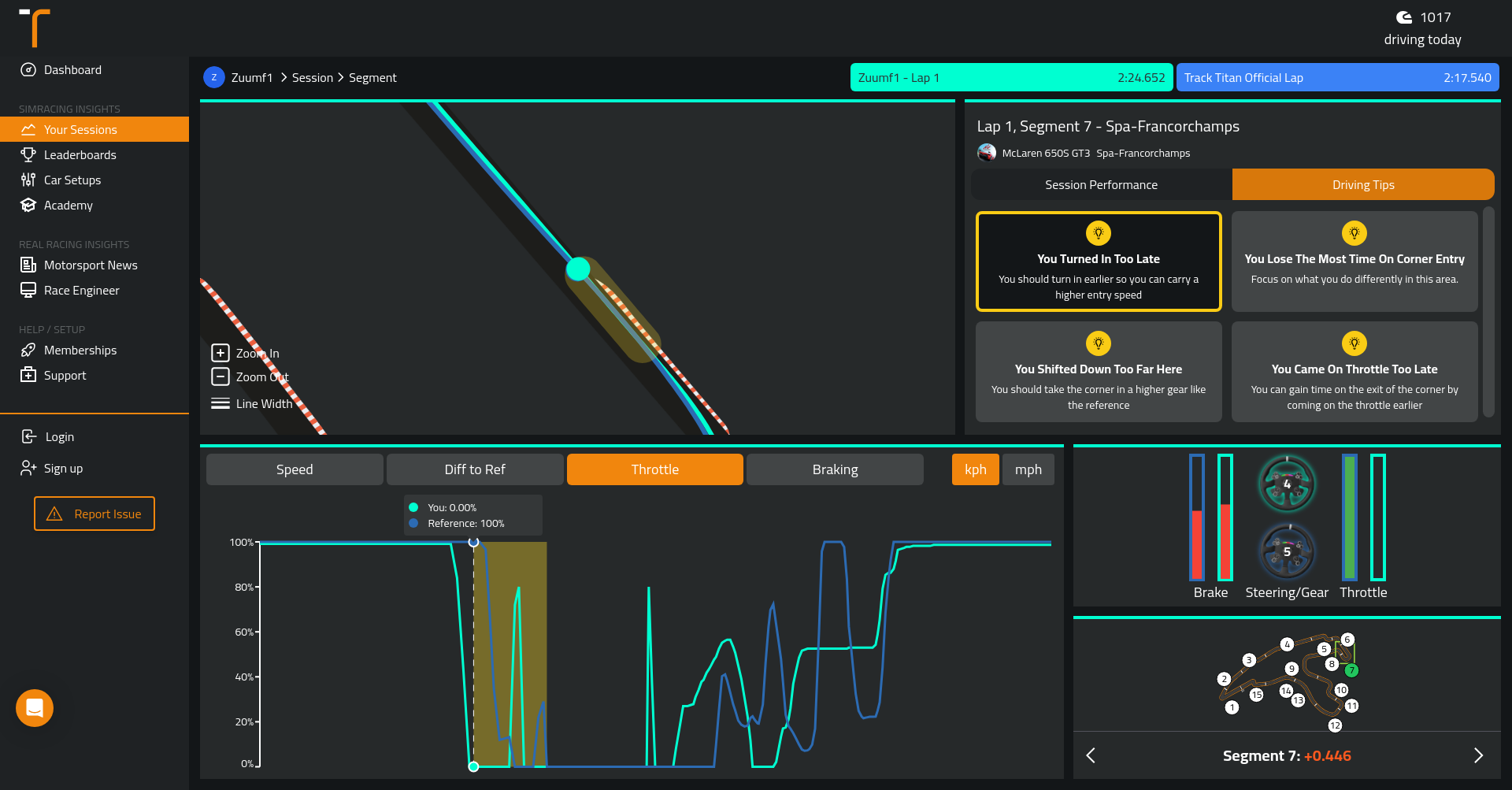
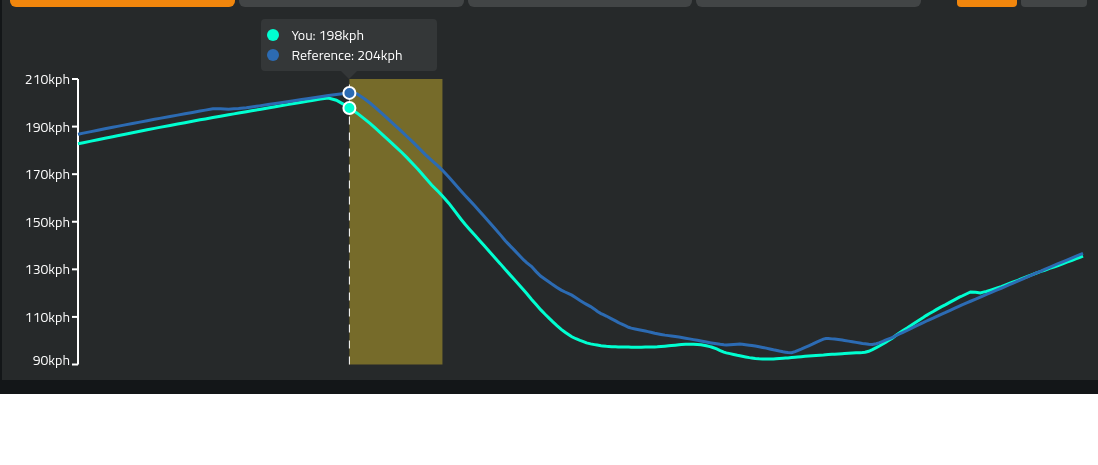
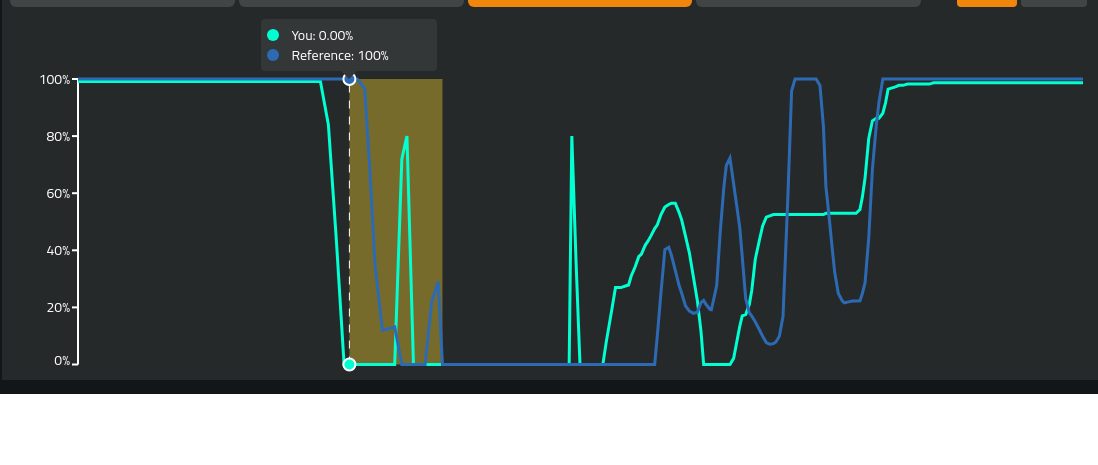
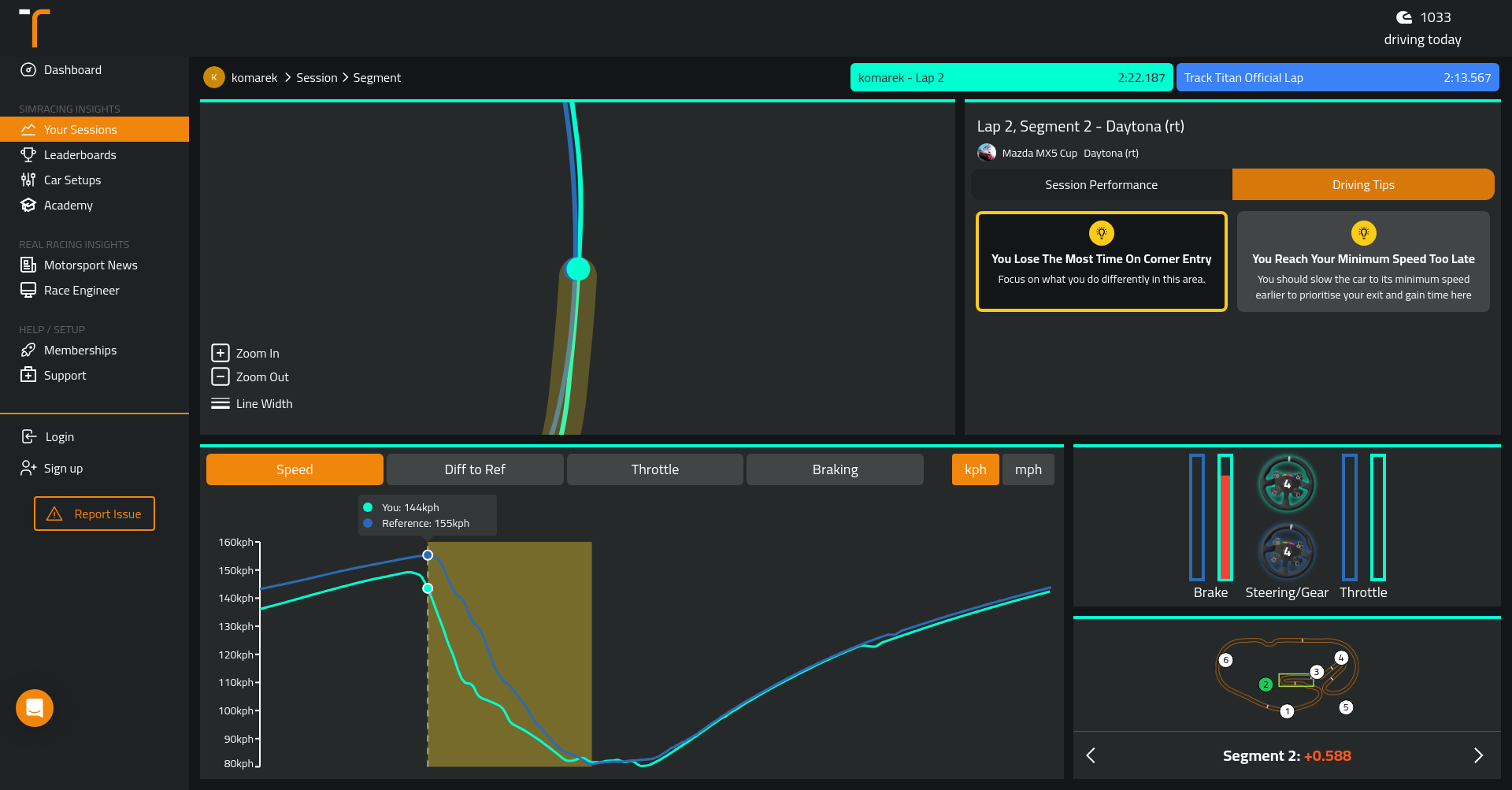
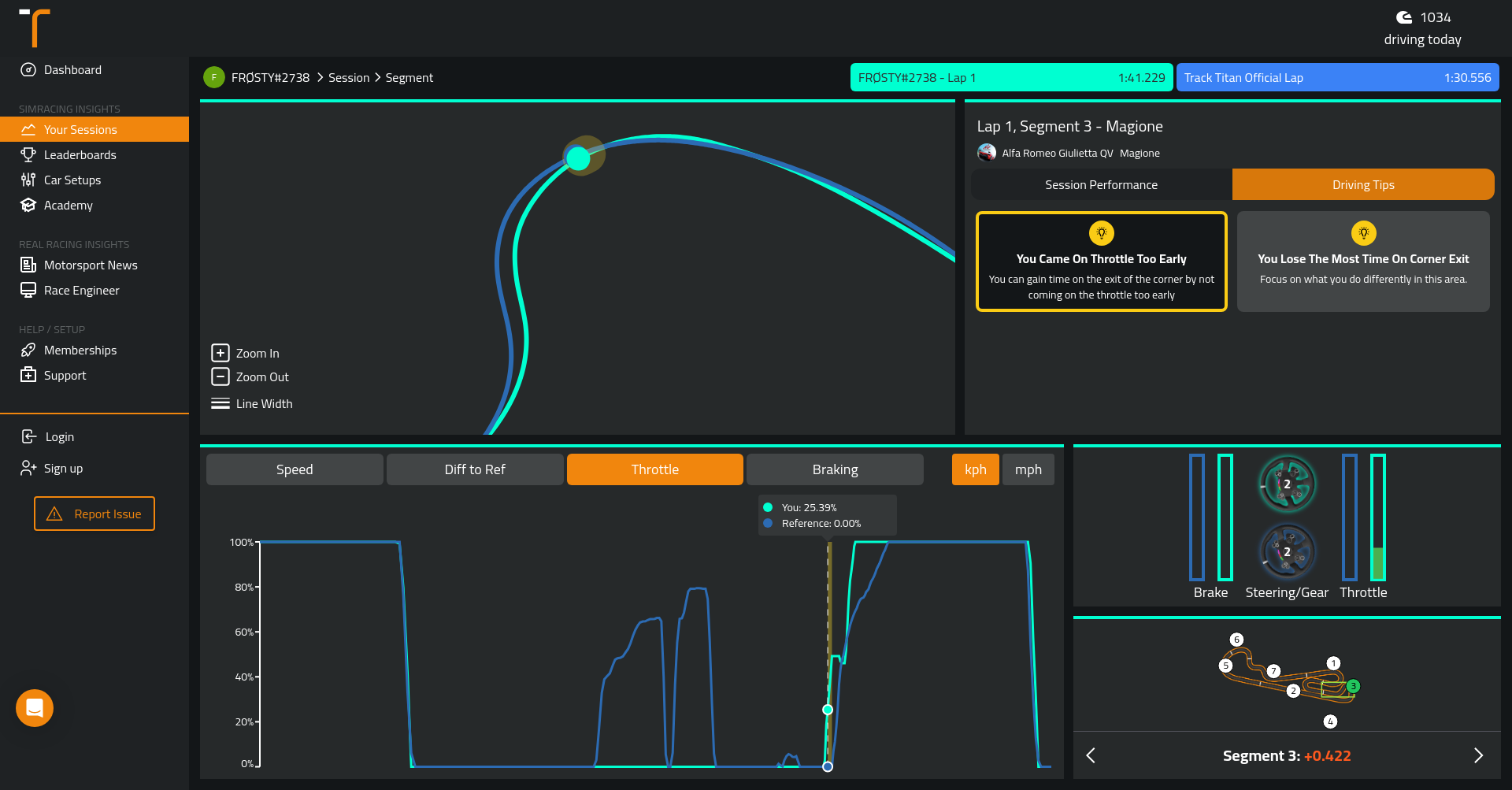
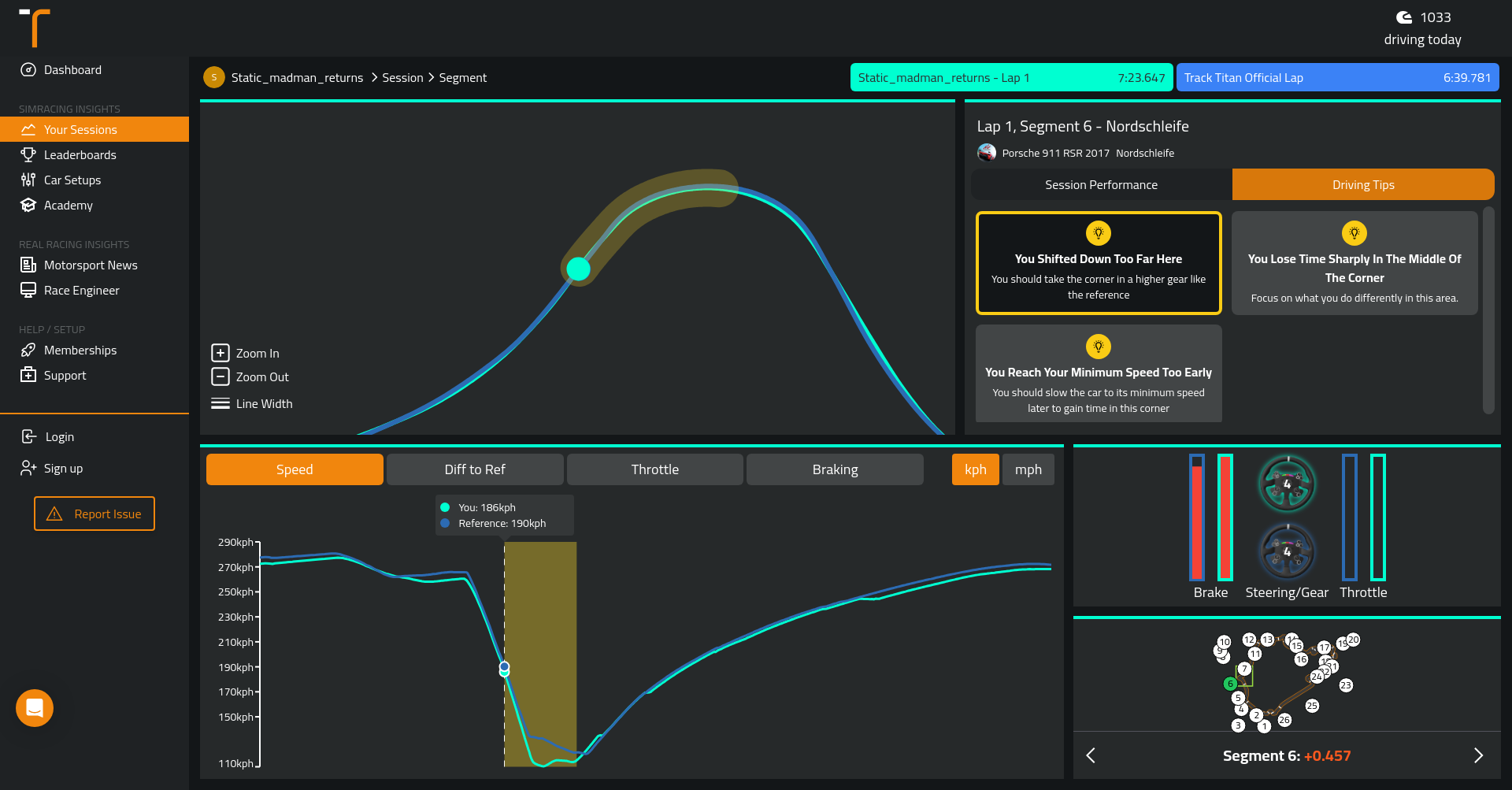
The speed chart analysis reveals that driverB enters the corner with a lower speed than driverA, indicating a loss of momentum from the previous corner. This slower entry affects the entire corner sequence, as driverB also reaches their minimum speed later and at a lower point than driverA. Consequently, driverB accelerates out of the corner later and at a slower rate. To enhance performance, driverB should aim to carry more entry speed by turning in earlier, maintain a higher minimum speed, and apply throttle earlier to accelerate sooner out of the corner. Additionally, taking the corner in a higher gear could lead to a smoother and faster exit trajectory. The throttle control chart shows that driverA is significantly delayed in applying throttle compared to driverB. DriverB's early throttle application results in a smoother increase in speed, while driverA's abrupt acceleration indicates inefficiency during corner exit. DriverA's hesitant initial throttle application suggests either a lack of confidence or an incorrect approach to exiting the corner. In contrast, driverB's confident and steady increase in throttle demonstrates an effective strategy for maximizing acceleration and speed onto subsequent track sections. For improved lap times, driverA should adopt a similar approach to throttle application as demonstrated by driverB.
Analyzing the speed chart, it's evident that driverB enters the corner at a significantly lower speed compared to driverA. This discrepancy starts right at the beginning of the chart, indicating that driverB has exited the previous corner with less momentum. This initial speed deficit is crucial as it sets the pace for the entire corner sequence. The minimum speed of driverB is also lower than that of driverA, and it occurs later in the corner. This suggests that not only is driverB slower at the slowest point of the corner, but they are also getting on the throttle later than driverA, which delays acceleration and results in time lost on corner exit. Furthermore, when examining the gradient of driverB's speed chart post-minimum speed point, it is less steep compared to that of driverA. This indicates a slower rate of acceleration out of the corner for driverB. To improve performance, focusing on carrying more entry speed by turning in earlier could help maintain a higher minimum speed and allow for an earlier throttle application. Additionally, taking the corner in a higher gear as driverA did would likely contribute to a smoother and faster corner exit trajectory for driverB.

Analyzing the throttle control chart, it's evident that driverA is significantly delayed in applying throttle compared to driverB. DriverB initiates throttle application much earlier, which correlates with the advice to come on the throttle sooner to gain time on corner exit. This early application by driverB leads to a smoother increase in speed, while driverA's later application results in a more abrupt speed increase, indicating a less efficient corner exit strategy. Furthermore, driverA's throttle application is not only delayed but also less intense initially compared to driverB. This hesitancy suggests a lack of confidence or an incorrect approach to the corner's exit phase. DriverB's confident and steady increase in throttle demonstrates a better understanding of the car's capabilities and the track layout, allowing for maximized acceleration and speed onto the following straight or corner entry. DriverA should focus on mirroring this approach for improved lap times.