122,247
122K
Laps driven today

iRacing

Le Mans Ultimate

Assetto Corsa Competizione

Assetto Corsa

F1 25

Assetto Corsa EVO

Automobilista 2

Forza Motorsport

F1 24

F1 2021

F1 23

F1 2020


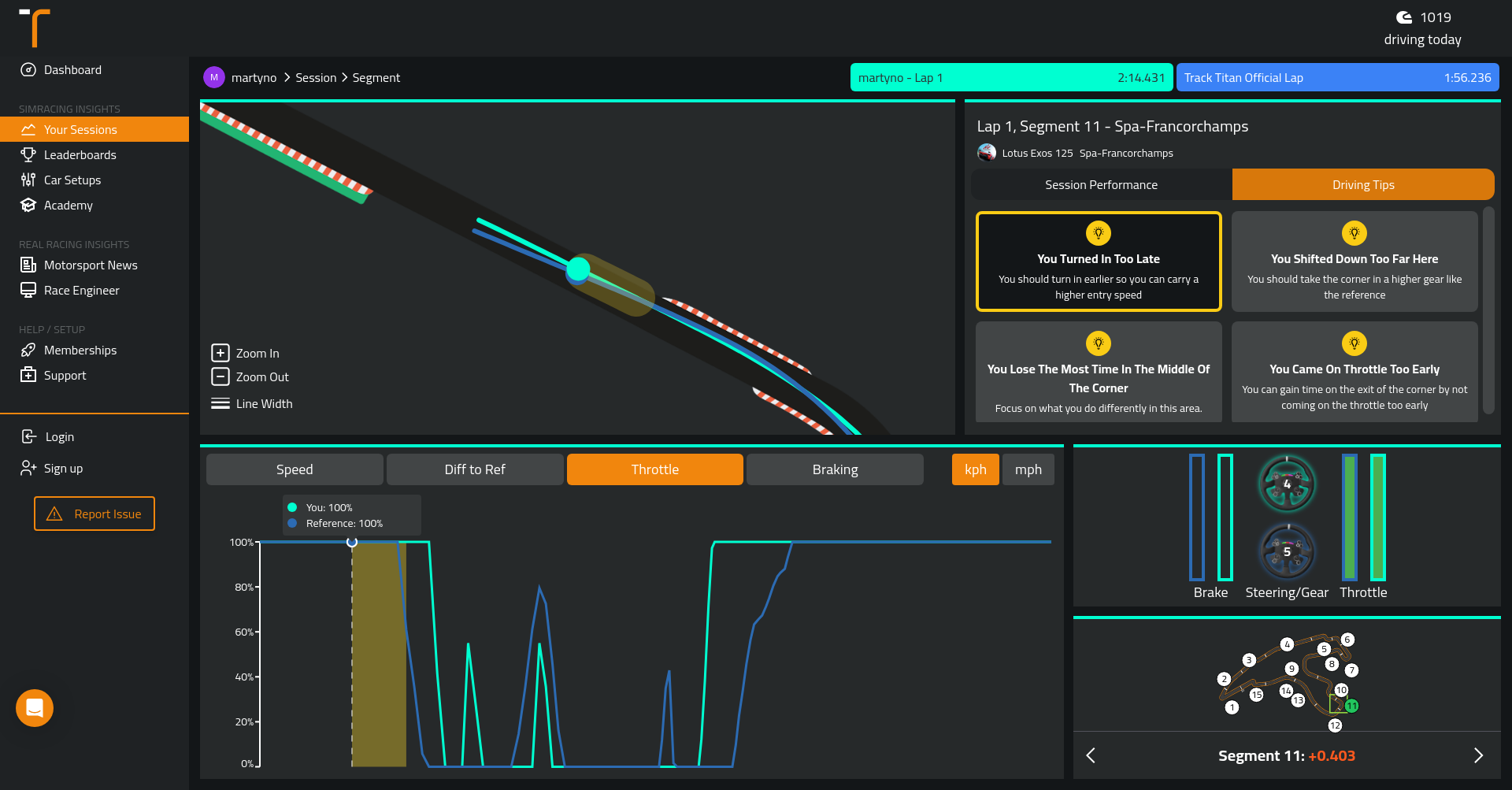
Lap 1
Segment 11
2:14.431
6th Feb 2024
Assetto Corsa
Spa-Francorchamps - Lotus Exos 125

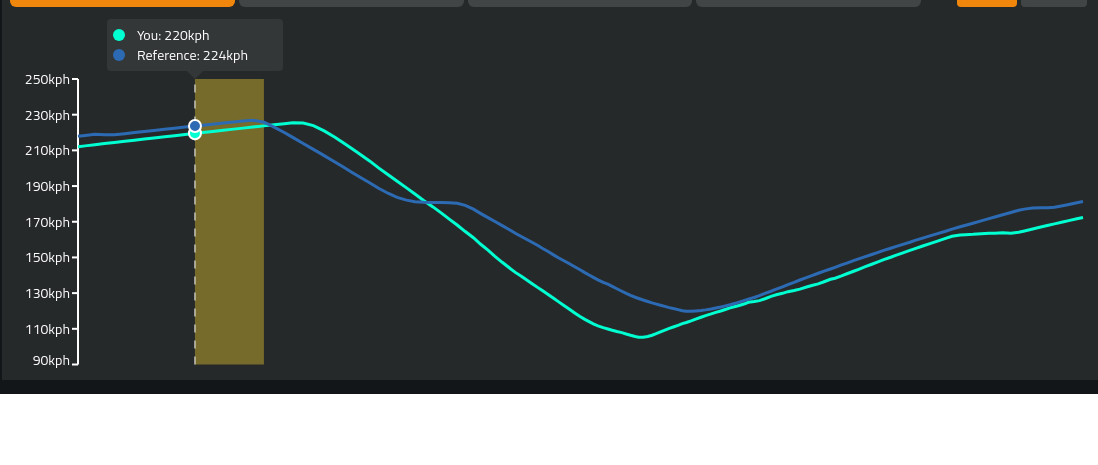
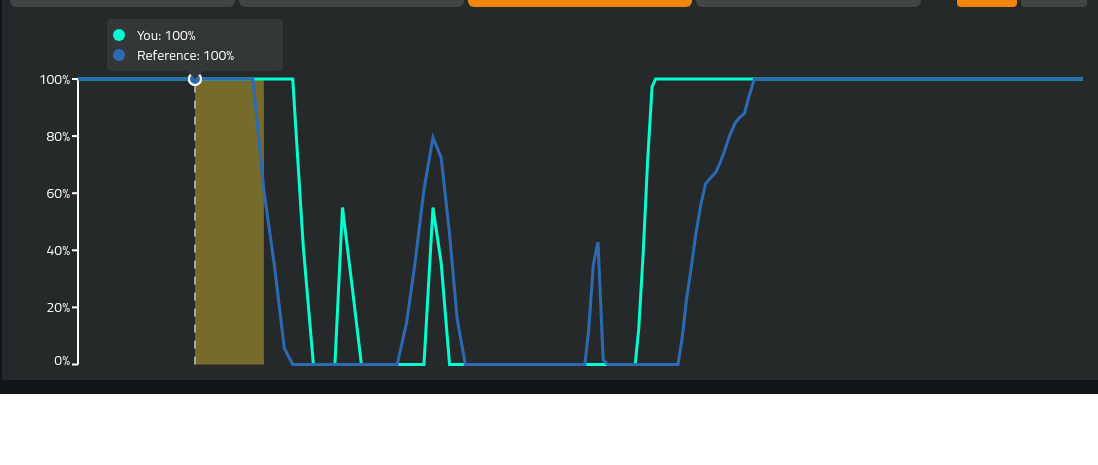
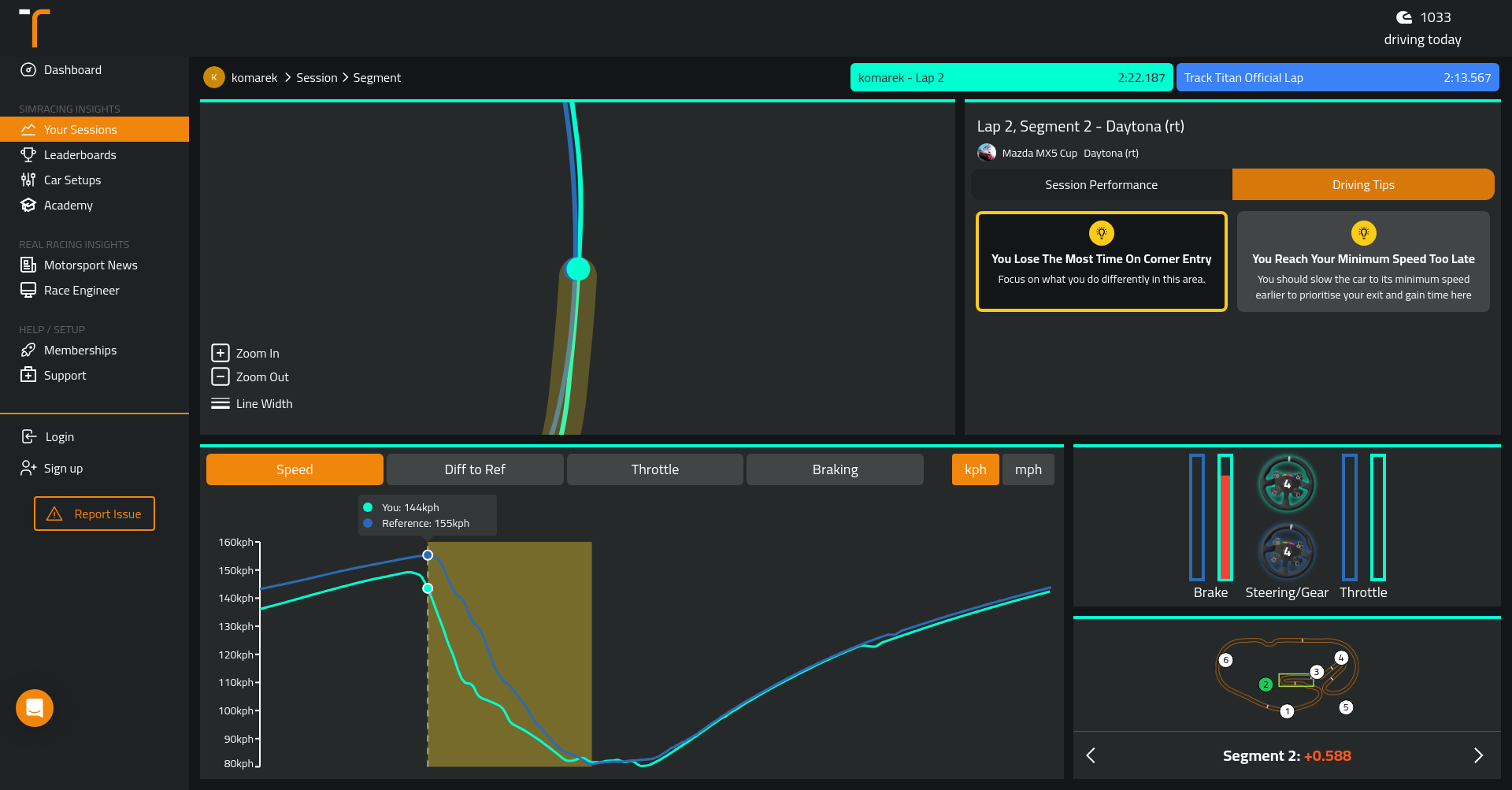
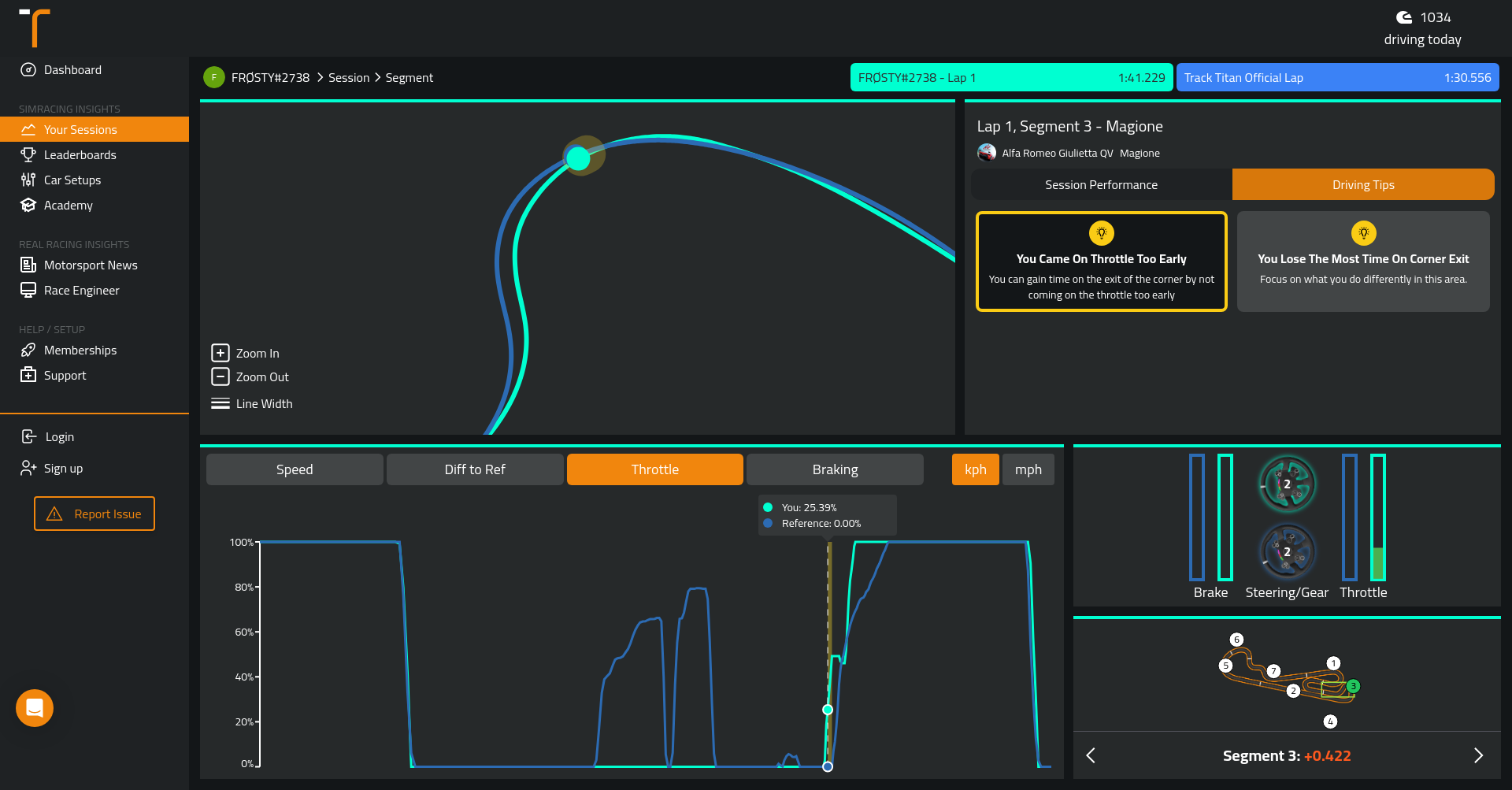
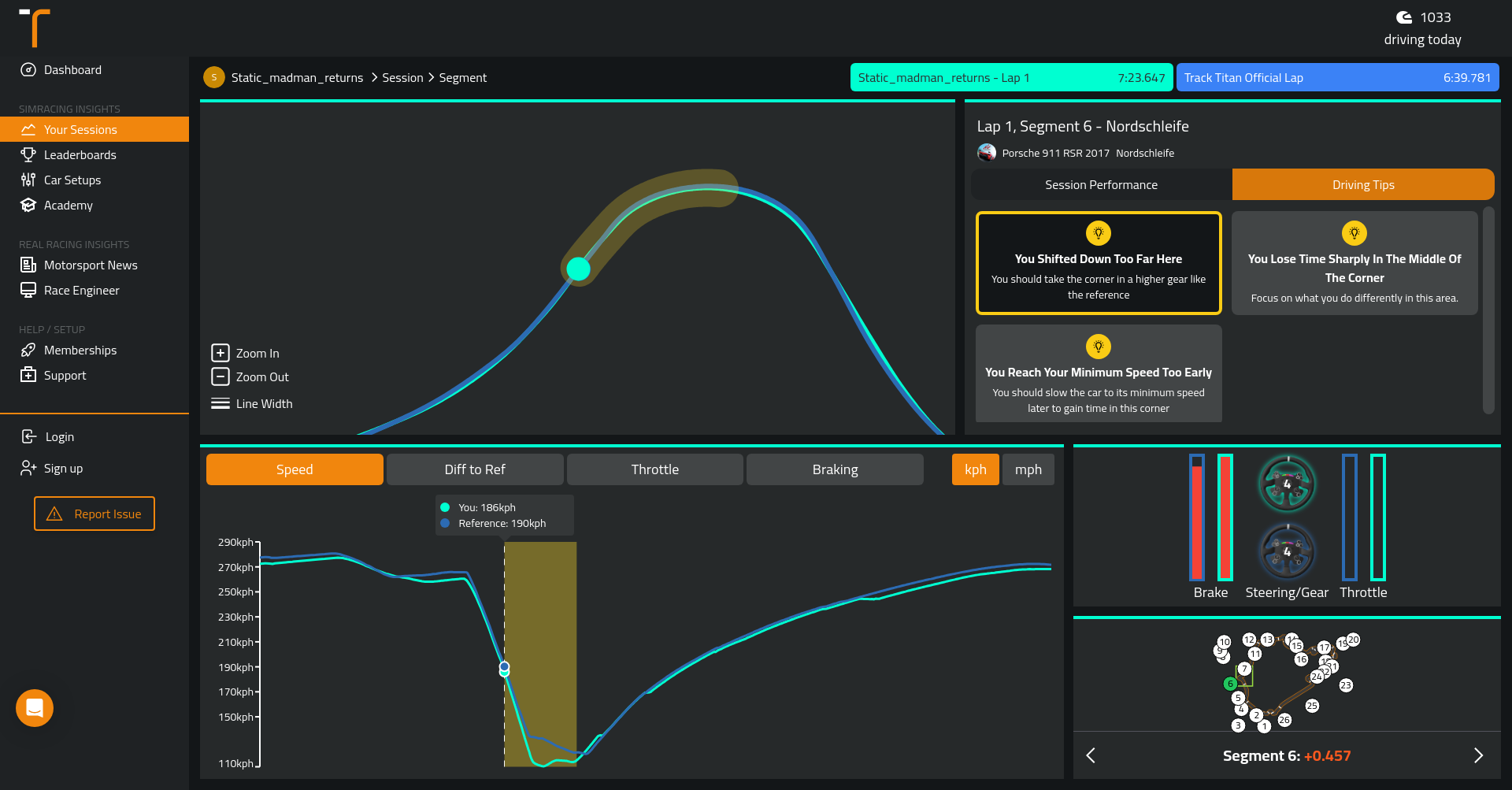
The speed chart analysis reveals that driverB enters the corner at a lower speed than driverA, indicating a slower exit from the previous corner. DriverB's minimum speed occurs later, suggesting a delayed turn-in and a less steep acceleration gradient, pointing to a later throttle application and less effective traction use. A significant speed difference in the middle section of the corner for driverB may be due to incorrect gear selection and an early throttle application, which can unsettle the car. To improve lap times, driverB should focus on maintaining higher entry speed with earlier turn-in, appropriate gear selection without unnecessary downshifting, and delaying throttle application for better traction and exit speed. DriverA's throttle control analysis shows a premature and sharp increase in throttle application, which can lead to time loss on corner exit due to wheelspin or suboptimal traction. In contrast, driverB's gradual and controlled increase suggests better traction management for a smoother exit. DriverA comes on the throttle too early in the corner compared to driverB's later and more progressive application, which helps carry more speed through the corner. To enhance performance, driverA should aim for smoother throttle input similar to driverB for improved corner exit speed and overall lap time efficiency.
Analyzing the speed chart, it's evident that driverB is entering the corner with a lower speed compared to driverA. This can be seen at the very start of the chart where driverB's speed line is below that of driverA, indicating a slower exit from the previous corner and consequently a slower entry into this one. The minimum speed of driverB also occurs later than that of driverA, suggesting a delayed turn-in. This is further compounded by the fact that after reaching this minimum speed, driverB's acceleration gradient is less steep compared to driverA's, indicating a later application of throttle and less effective use of available traction. In the middle section of the corner, there is a significant speed difference where driverB falls behind. This could be due to an incorrect gear selection as indicated by an unnecessary downshift which has caused a loss in momentum. DriverB also comes on throttle too early, which can unsettle the car and prevent carrying optimal speed through to corner exit. To improve lap times, focusing on maintaining higher entry speed through earlier turn-in, selecting the appropriate gear without over-downshifting, and delaying throttle application for better traction and exit speed would be crucial for driverB.

In the provided throttle control analysis, driverA exhibits a premature and sharp increase in throttle application compared to driverB. This indicates that driverA is coming on the throttle too early, which can lead to a loss of time on corner exit due to potential wheelspin or suboptimal traction. The reference line of driverB shows a more gradual and controlled increase in throttle, suggesting better traction management and a smoother exit from the corner. Furthermore, there is a noticeable difference in the timing of throttle application between the two drivers. DriverA's throttle input occurs significantly earlier in the corner, which correlates with the earlier note about premature acceleration. This contrasts with driverB's later and more progressive application, which likely contributes to their ability to carry more speed through and out of the corner. DriverA should aim to replicate this smoother throttle input pattern to improve their corner exit speed and overall lap time.