117,319
117K
Laps driven today

iRacing

Le Mans Ultimate

Assetto Corsa Competizione

Assetto Corsa

F1 25

Assetto Corsa EVO

Automobilista 2

Forza Motorsport

F1 24

F1 2021

F1 23

F1 2020


Lap 2
Segment 4
1:34.816
6th Feb 2024
Assetto Corsa
Monza - Lotus Exos 125 - Step 1

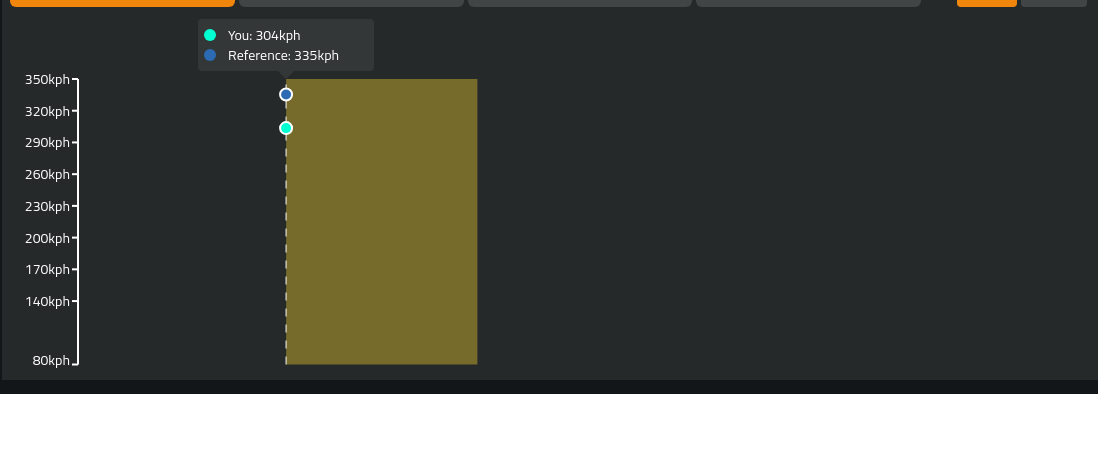
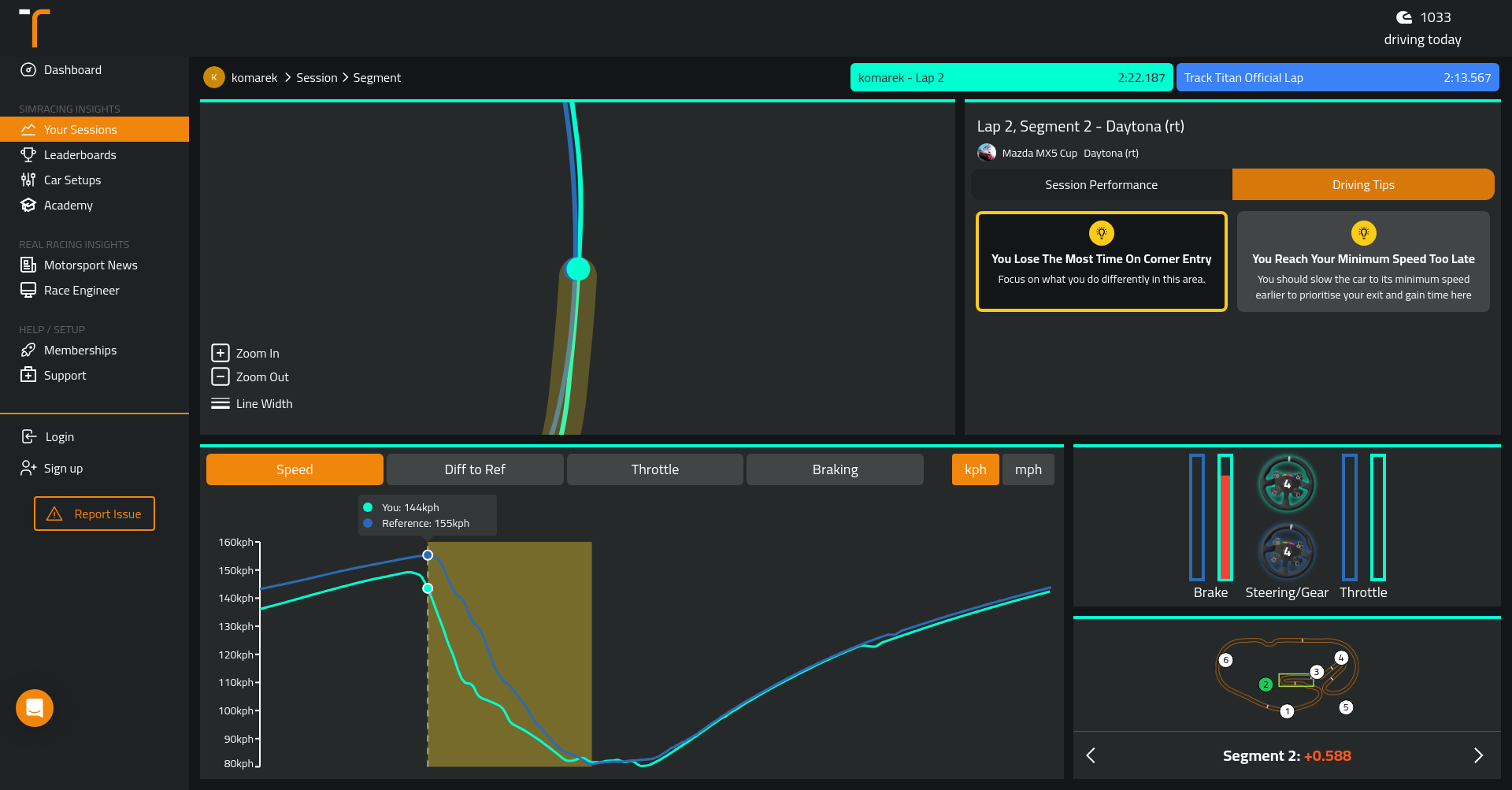
The speed chart analysis reveals that driverB is losing time on corner exit due to a lower initial speed, indicating a poor exit from the previous corner. This speed deficit affects their approach and execution of the next corner, where driverB's minimum speed occurs later than driverA's, suggesting late braking and excess mid-corner speed. This results in delayed acceleration and a lower exit speed for driverB. To improve, driverB should brake earlier to achieve an earlier minimum speed for a more effective corner exit and faster subsequent straight-line acceleration. Conversely, driverA applies brakes later and more abruptly, leading to a delayed minimum speed and compromised corner exit velocity. To enhance performance, driverA should adopt an earlier and more progressive braking approach similar to driverB's. This would likely yield a better minimum cornering speed and stronger exit, enhancing overall lap times.
Analyzing the speed chart, it's evident that driverB is losing significant time on corner exit compared to driverA. At the very start of the chart, driverB already exhibits a lower speed, indicating a less optimal exit from the previous corner. This initial speed deficit carries through, affecting their approach into the next corner. As they progress through the corner, driverB's minimum speed occurs noticeably later than that of driverA. This suggests that driverB is braking too late and therefore carrying excess speed into the mid-corner phase, which delays their ability to get back on the throttle. The impact of this late minimum speed is clear when examining the exit phase; driverB's acceleration out of the corner is delayed and less steep compared to driverA's. Consequently, this results in a lower exit speed for driverB, further contributing to time lost in this section. To improve performance, driverB should focus on braking earlier to achieve an earlier minimum speed, allowing for a more effective corner exit strategy and faster acceleration onto the subsequent straight.

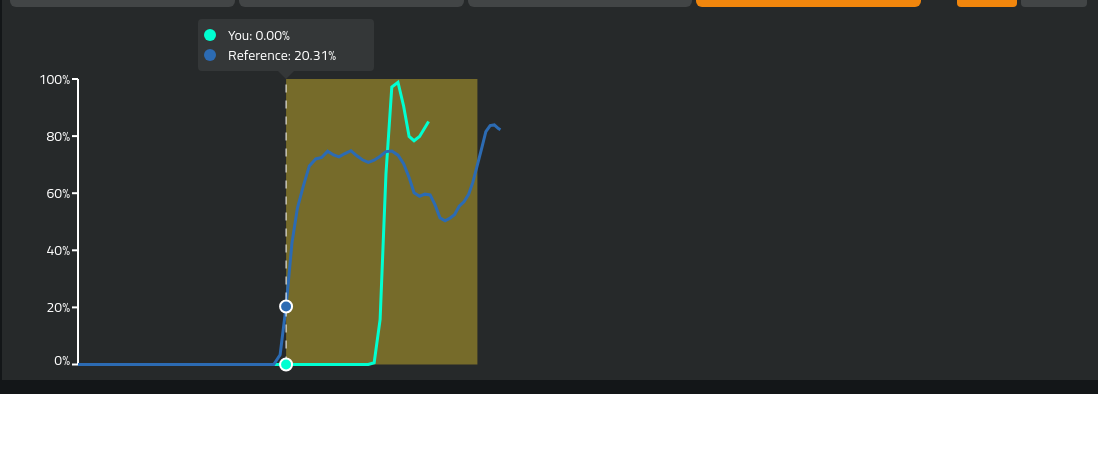
In the provided braking analysis, driverA exhibits a later and more abrupt application of the brakes compared to driverB. This is evident from the sharp increase in brake application at a later point on the time axis. DriverB, on the other hand, initiates braking earlier and with a less aggressive onset, as shown by the smoother and earlier rise in brake application. The consequence of driverA's late braking is a delayed reach of minimum speed, which compromises their corner exit speed. The data suggests that driverA needs to apply brakes earlier and more progressively to match driverB's braking profile. This adjustment would likely result in an improved minimum cornering speed and a stronger exit, ultimately leading to better lap times.