117,319
117K
Laps driven today

iRacing

Le Mans Ultimate

Assetto Corsa Competizione

Assetto Corsa

F1 25

Assetto Corsa EVO

Automobilista 2

Forza Motorsport

F1 24

F1 2021

F1 23

F1 2020


Lap 13
Segment 3
1:52.813
6th Feb 2024
iRacing
Okayama International Circuit - Full - Global Mazda MX-5 Cup

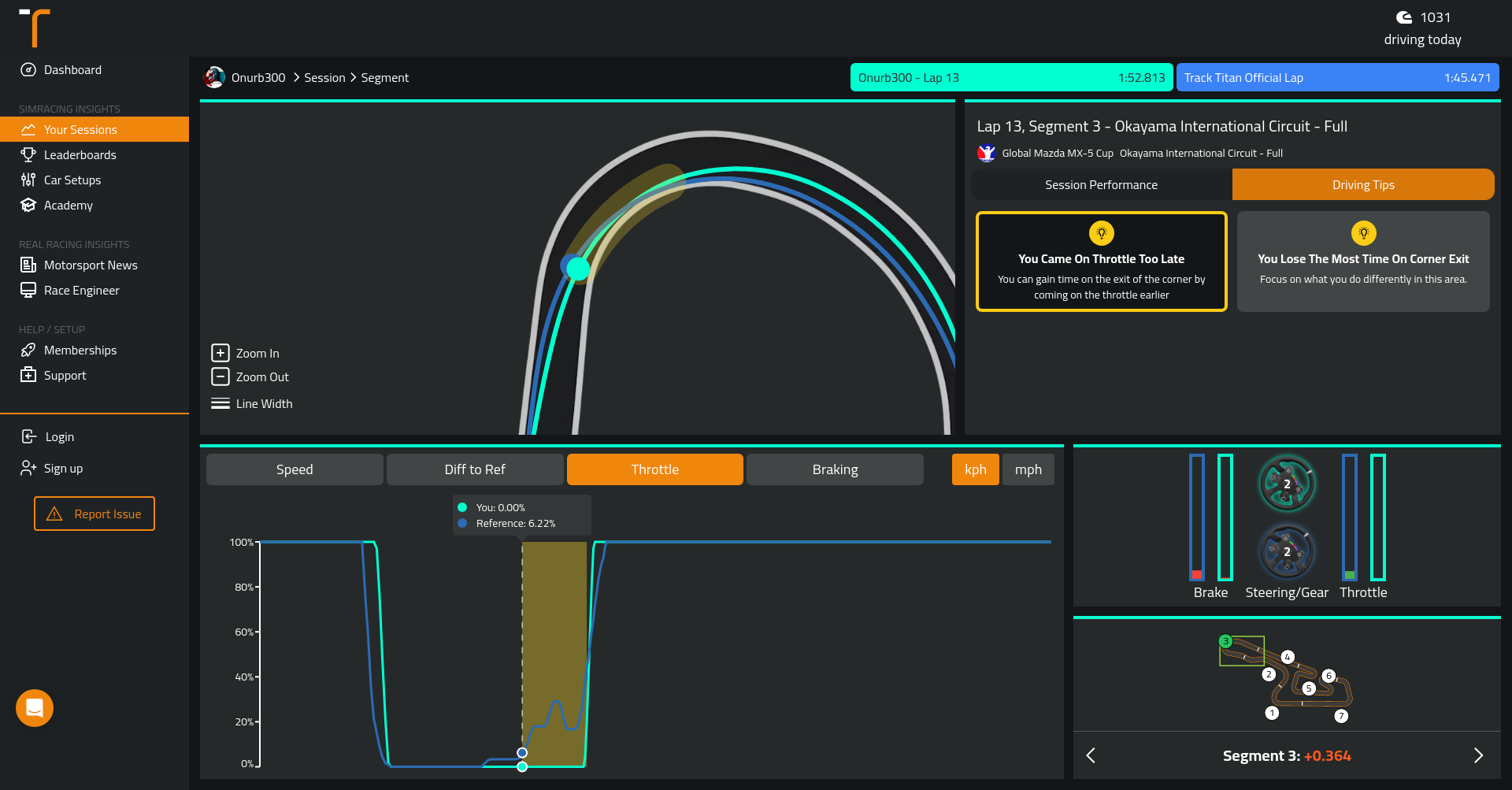
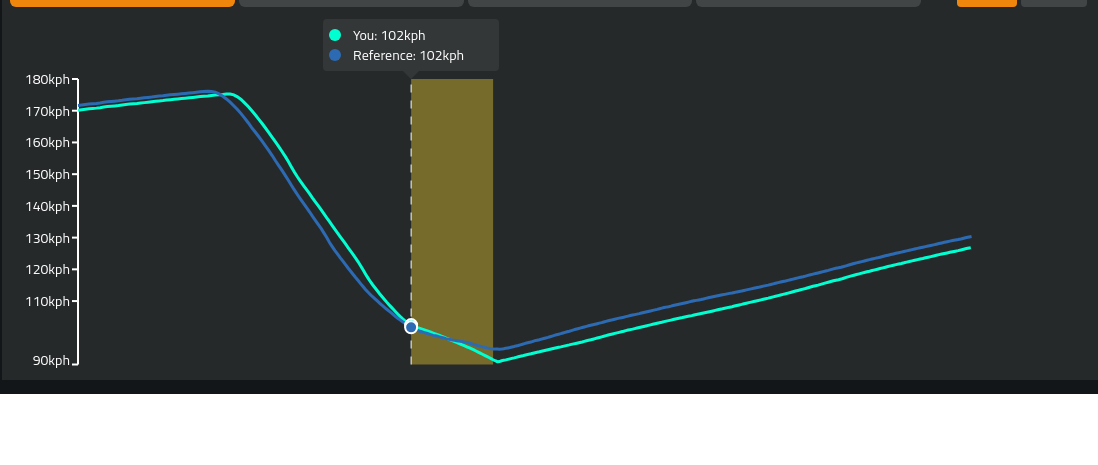
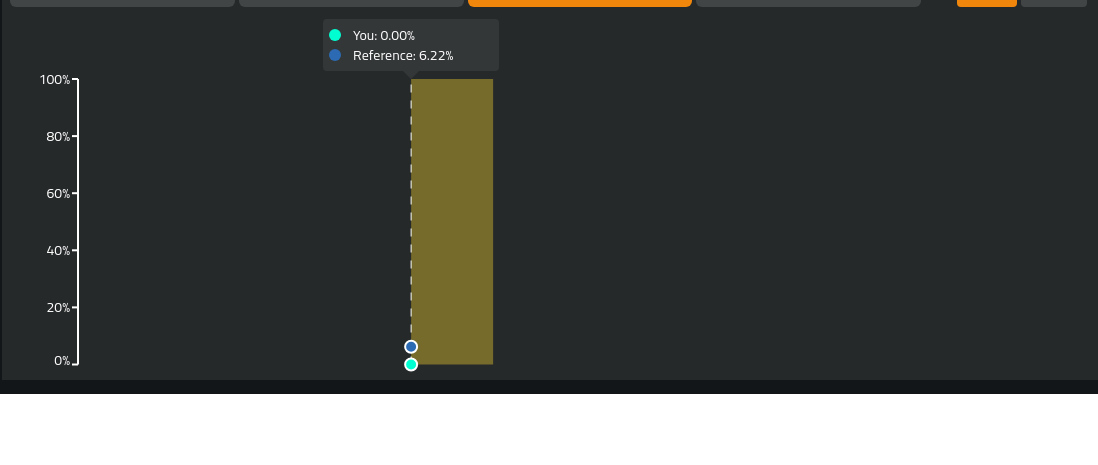
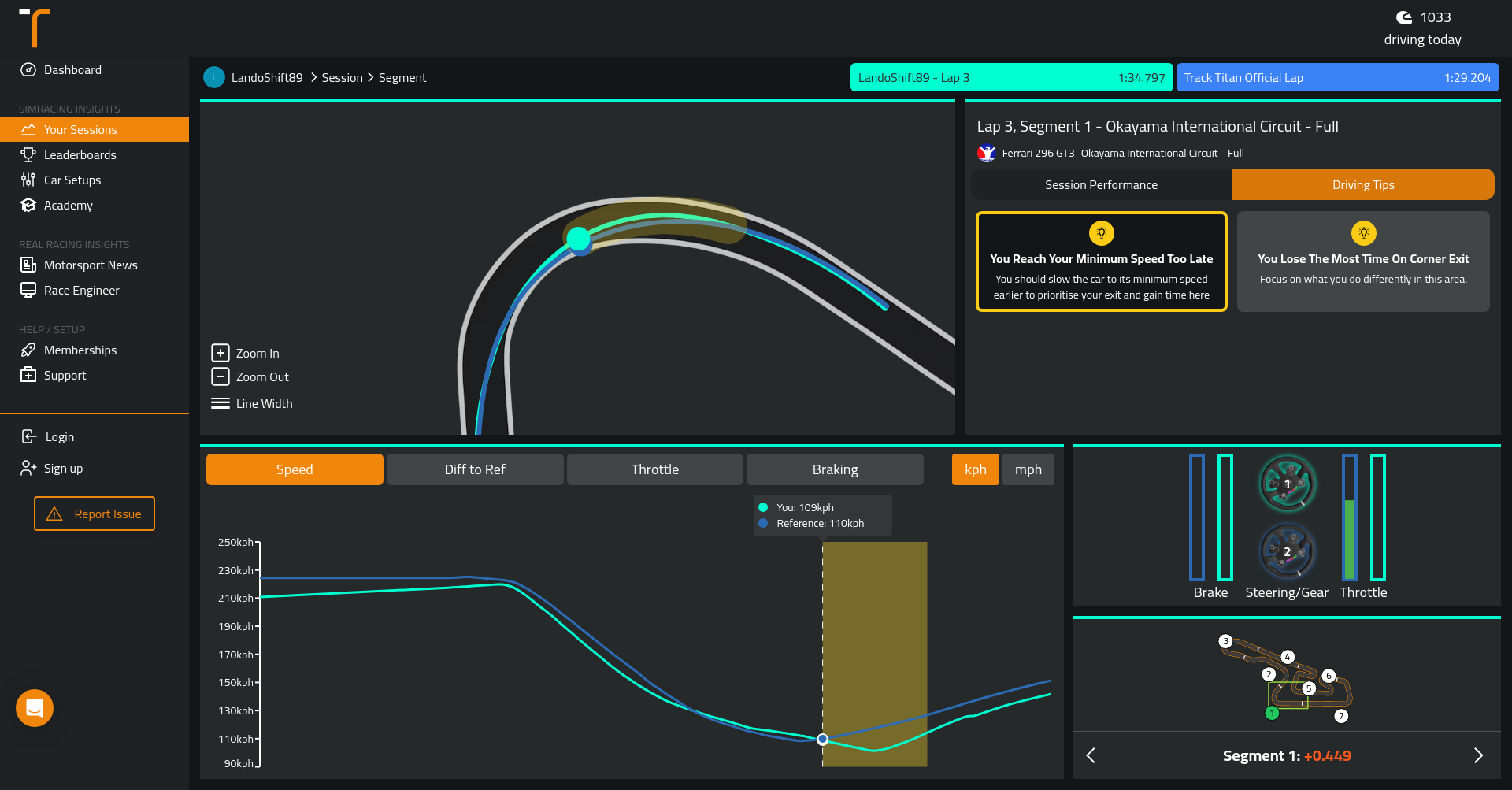
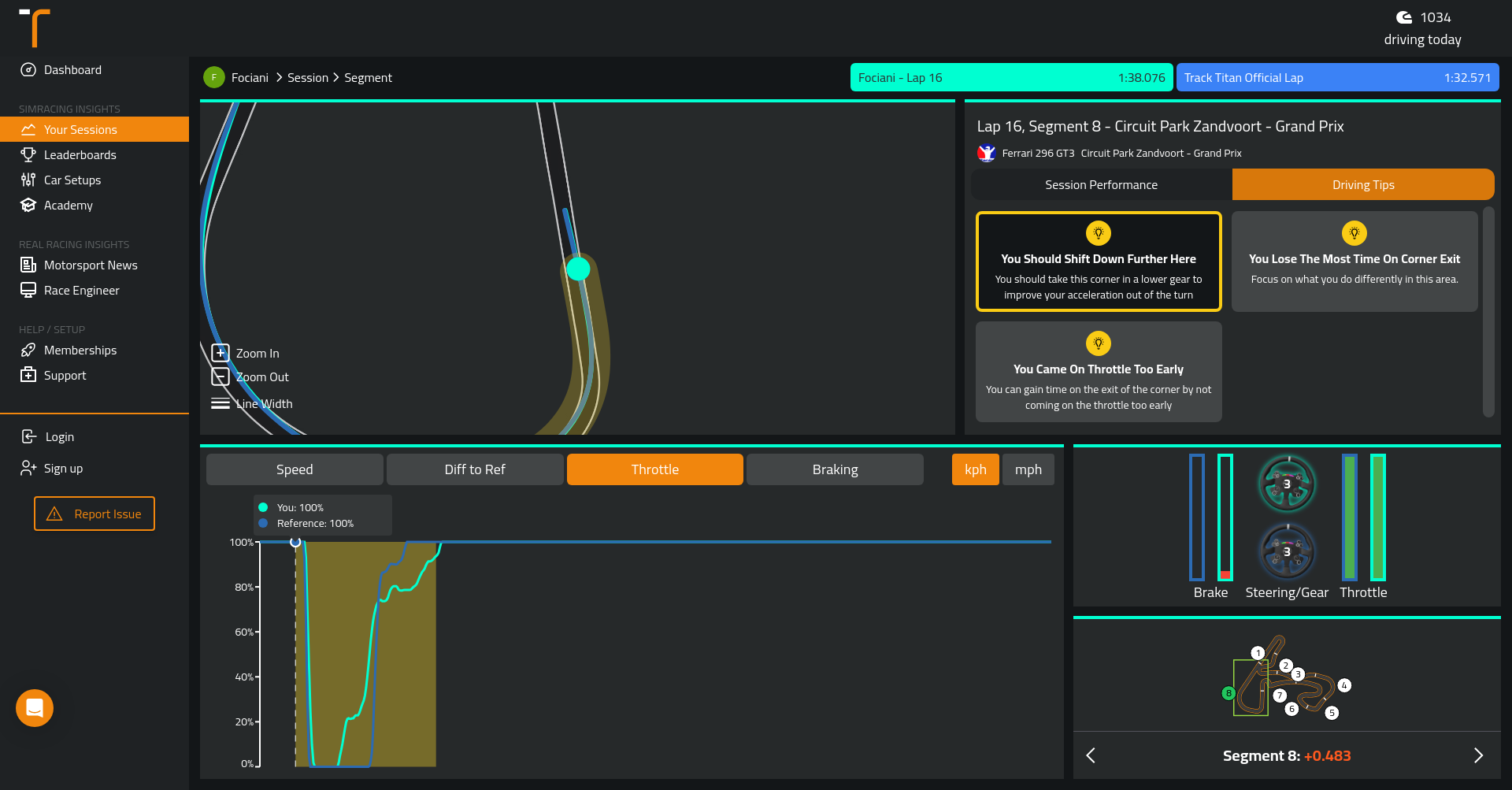
The speed chart analysis reveals that driverB is slower than driverA at the corner exit due to a lower minimum speed and a delayed return to throttle, resulting in a less steep acceleration curve. To improve, driverB should aim to increase their minimum corner speed and apply the throttle earlier to achieve an acceleration profile similar to driverA's, which will help reduce time lost during corner exit. On the other hand, the throttle control chart shows that driverA is slower in applying the throttle compared to driverB, who applies it at a steeper angle for quicker transition from braking to acceleration. This allows driverB to maintain more speed through the corner exit. DriverA needs to apply the throttle earlier and with more confidence to maximize exit speed and decrease lap times. In summary, both drivers have areas for improvement: driverB should work on carrying more speed through the corner and transitioning faster back onto the throttle, while driverA needs to focus on a quicker and more committed application of the throttle at corner exit. By addressing these issues, both drivers can enhance their performance and achieve better lap times.
Analyzing the speed chart, it's evident that driverB loses significant speed compared to driverA at the corner exit. Initially, both drivers enter the corner with a similar speed, but as they progress through the turn, a discrepancy becomes apparent. DriverB's minimum speed is lower than that of driverA, indicating a more conservative approach or a potential loss of momentum due to earlier braking or less aggressive cornering. Furthermore, the point at which driverB reaches their minimum speed occurs later than driverA, suggesting that driverB is slower to get back on the throttle. This delay in throttle application results in a lower exit speed for driverB and a less steep acceleration curve compared to driverA. To improve lap times, driverB should focus on increasing their minimum corner speed and transitioning to throttle application earlier to match the acceleration profile of driverA, thereby minimizing time lost on corner exit.

Analyzing the throttle control chart, it's evident that driverA is significantly slower in applying the throttle compared to driverB. DriverB initiates throttle application at a steeper angle, indicating a quicker and more confident transition from braking to acceleration. This aggressive approach allows driverB to carry more speed through the corner exit, which is crucial for lap time improvement. Furthermore, driverA's gradual and delayed increase in throttle application suggests a lack of commitment at the corner exit, which is where they lose most of their time compared to driverB. To enhance performance, driverA should focus on applying the throttle earlier and with more conviction. This will enable them to maximize their exit speed and reduce lap times consistently.