122,247
122K
Laps driven today

iRacing

Le Mans Ultimate

Assetto Corsa Competizione

Assetto Corsa

F1 25

Assetto Corsa EVO

Automobilista 2

Forza Motorsport

F1 24

F1 2021

F1 23

F1 2020


Lap 5
Segment 3
2:21.110
6th Feb 2024
Assetto Corsa Competizione
Silverstone - Audi R8 LMS GT4 2016

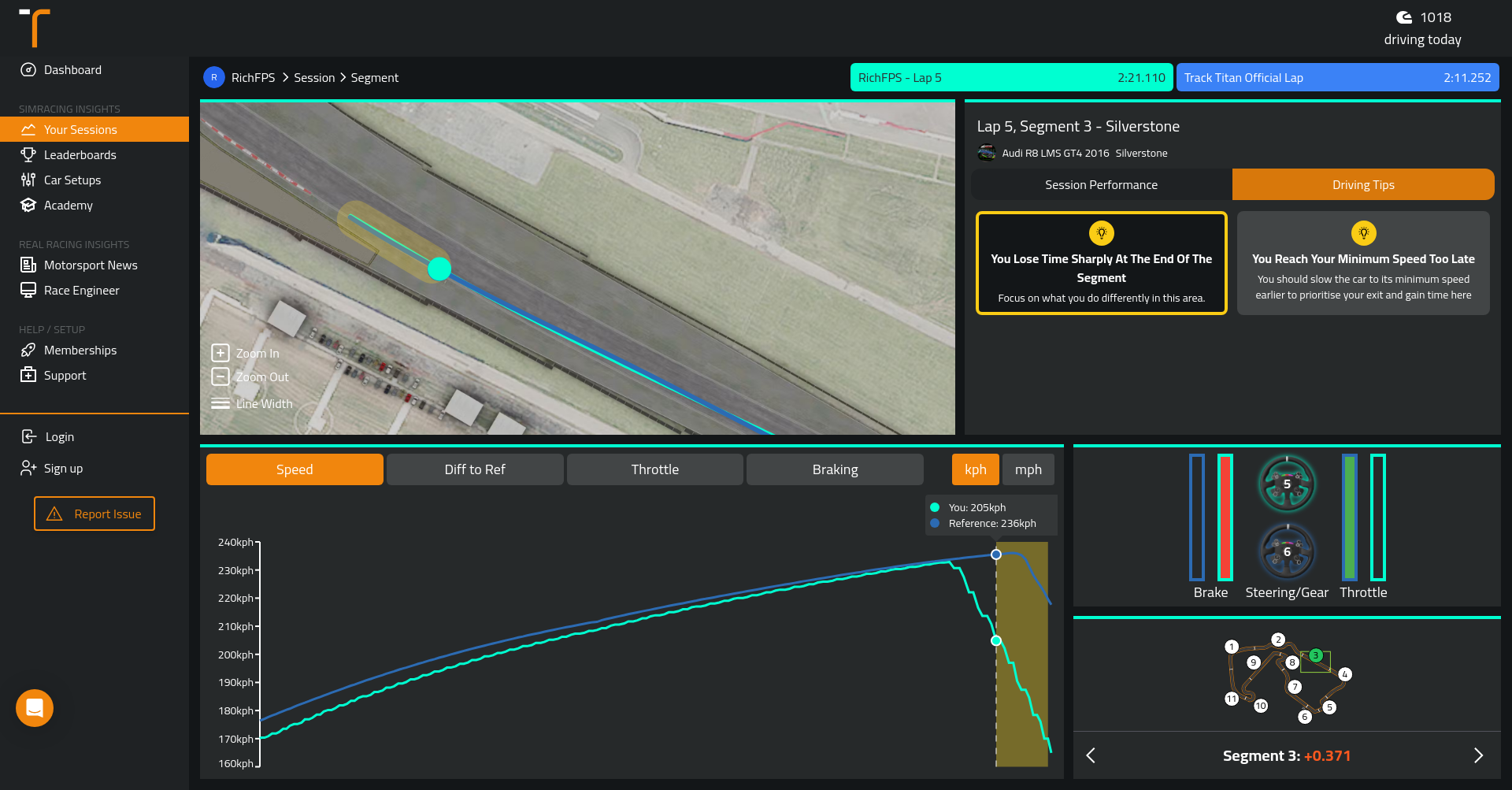
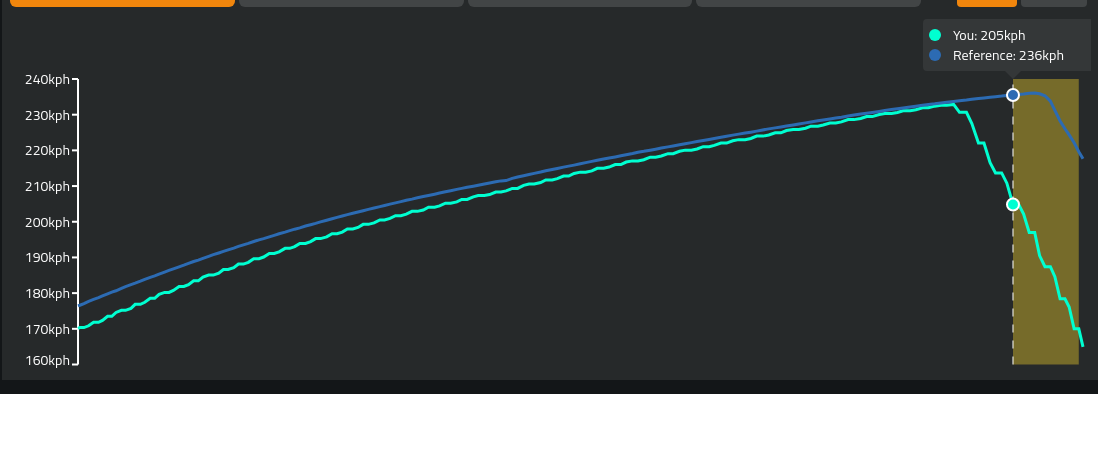
The speed chart comparison between driverA and driverB highlights crucial differences in their cornering techniques, which impacts their lap times. DriverB starts the corner at a lower speed than driverA, indicating a loss of momentum from the previous turn. Additionally, driverB's aggressive initial braking causes an early speed reduction, while driverA maintains a higher speed for longer. As they progress through the corner, driverB's speed drops sharply at the end of the segment, showing that they reach their minimum cornering speed later than driverA. This results in a delayed acceleration out of the corner for driverB. In contrast, driverA exhibits a smoother transition back to acceleration. The aftermath is evident in the less steep increase in speed for driverB compared to driverA's rapid acceleration post-corner. To enhance performance and reduce lap times, it is advised that driverB should focus on carrying more momentum into the corner from the preceding turn. They should also aim for an earlier minimum cornering speed to allow for sooner throttle application and a faster exit from the turn. This approach will help in achieving smoother transitions between braking and accelerating phases, ultimately leading to improved overall lap times.
Analyzing the speed chart, it's evident that driverB is already at a lower speed at the very start of the corner compared to driverA. This indicates that driverB exited the previous corner with less momentum, which is a critical area of time loss. The early part of the graph shows a steeper decline in speed for driverB, suggesting a more aggressive initial braking approach but also leading to an earlier reduction in speed compared to driverA who maintains higher speed longer into the corner. Towards the end of the segment, there's a sharp decrease in speed for driverB, while driverA's speed graph shows a smoother transition back to acceleration. This suggests that driverB reaches their minimum cornering speed later than driverA, resulting in delayed throttle application and consequently a slower exit. The gradient of driverB's speed increase post-corner is less steep compared to that of driverA, confirming that not only did they lose time by braking too late into the corner but also by accelerating out of it later and more gradually. To improve lap times, focusing on achieving an earlier minimum cornering speed and transitioning to throttle sooner will be key for driverB.