122,247
122K
Laps driven today

iRacing

Le Mans Ultimate

Assetto Corsa Competizione

Assetto Corsa

F1 25

Assetto Corsa EVO

Automobilista 2

Forza Motorsport

F1 24

F1 2021

F1 23

F1 2020


Lap 3
Segment 8
1:44.552
6th Feb 2024
Assetto Corsa Competizione
Kyalami - Honda NSX GT3 Evo 2019

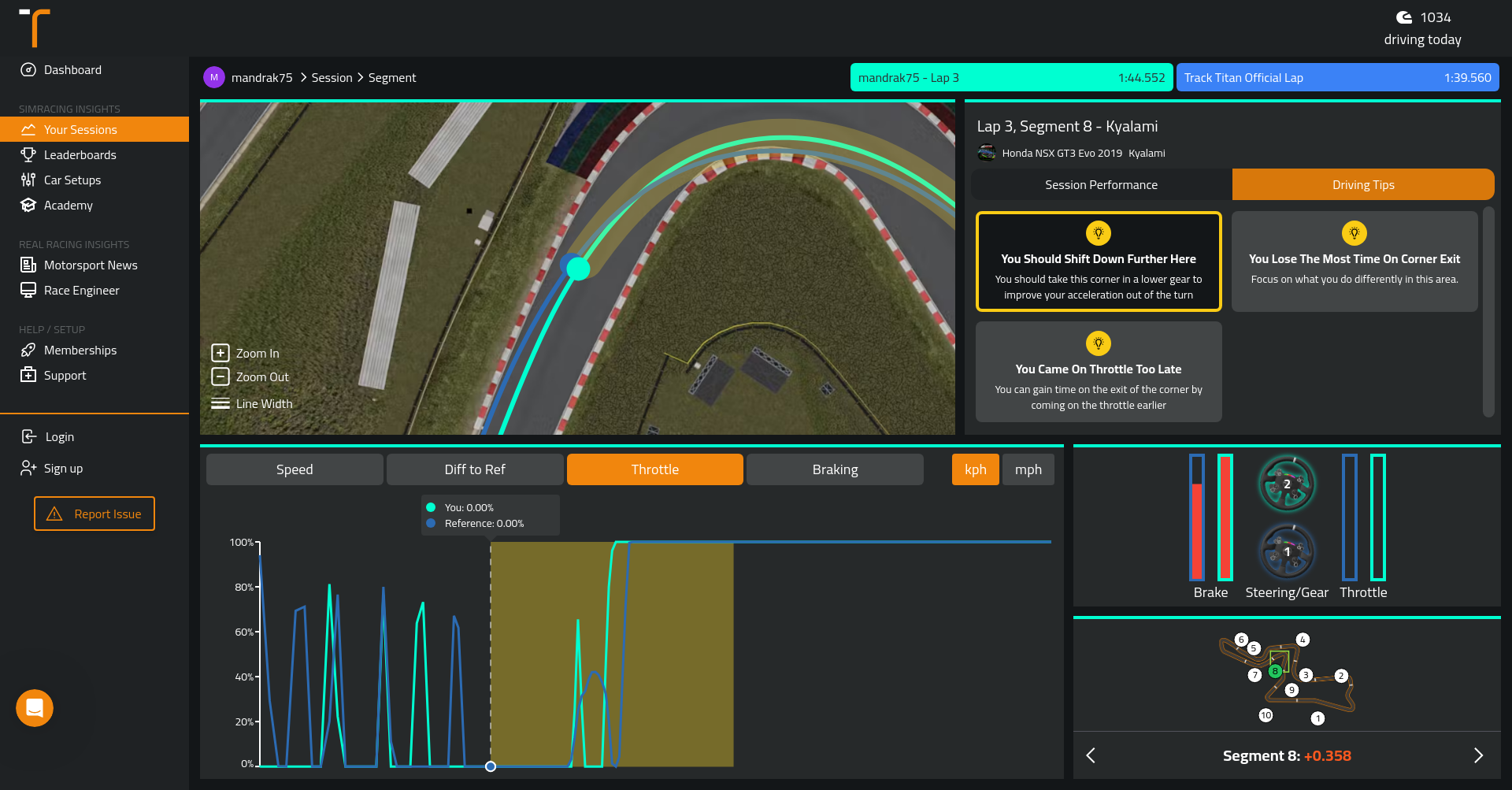
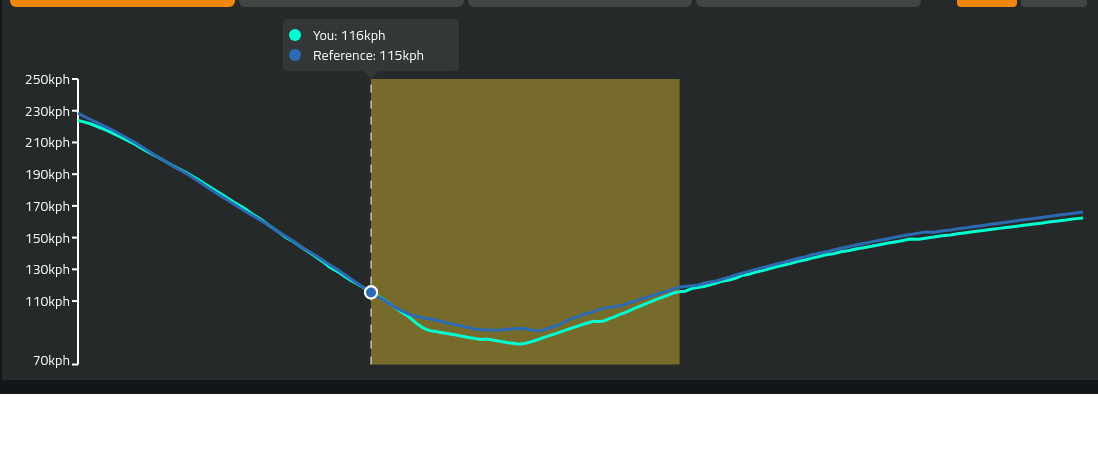
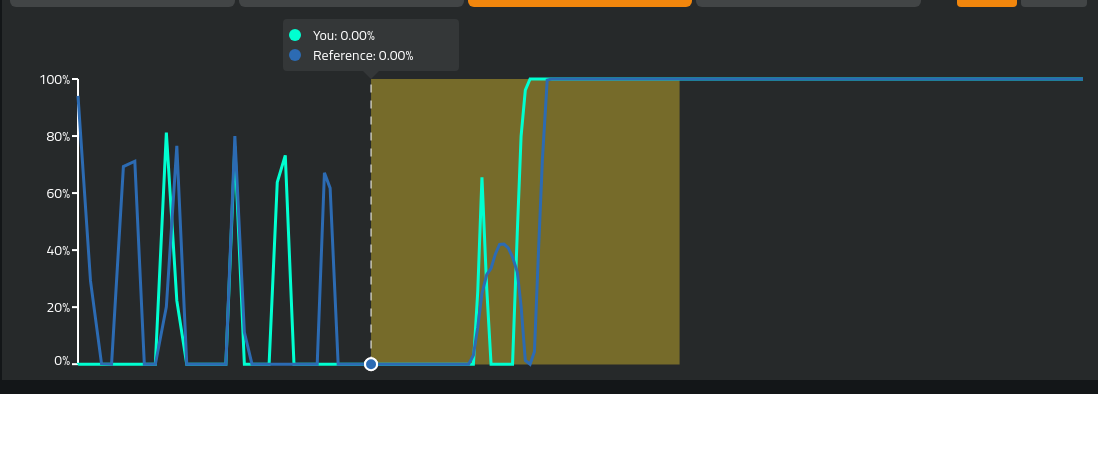
The speed chart analysis reveals that driverB (You) is slower than driverA (Reference) at the corner exit, which is crucial for lap time improvement. DriverB enters the corner with a lower speed and reaches the minimum speed later than driverA, indicating a delayed throttle application. This results in a slower acceleration phase and a lower exit speed. To improve, driverB should focus on an earlier throttle application and possibly use a lower gear to enhance acceleration out of the turn. In terms of throttle control, driverA shows a more cautious approach with delayed and gradual throttle application, leading to lost potential acceleration, especially at the corner exit. In contrast, driverB applies throttle earlier and more decisively, achieving higher speeds upon exiting the corner. This aggressive approach is beneficial for maintaining momentum and improving lap times. Therefore, driverA should aim to apply throttle earlier after the apex to reduce time lost during this critical phase of cornering.
Analyzing the speed chart, it's evident that driverB (You) is losing significant speed at the corner exit compared to driverA (Reference). At the very start of the chart, driverB already has a lower speed entering the corner, indicating a less optimal exit from the previous turn. This initial speed deficit carries through to the corner in question. The minimum speed for driverB occurs later than that of driverA, suggesting a delayed throttle application. This delay is confirmed by a shallower gradient in the speed increase after the corner's apex, pointing to a slower acceleration phase for driverB. The most critical area for improvement for driverB lies in the corner exit phase. The data shows that not only does driverB reach their minimum speed later than driverA, but they also fail to accelerate as quickly out of the turn. This is demonstrated by both a lower exit speed and a less steep increase in speed compared to driverA. To address this, focusing on earlier throttle application and possibly using a lower gear could enhance acceleration and improve overall lap time.

In the provided throttle control analysis, driverA exhibits a delayed and gradual application of throttle compared to driverB. This is evident from the slower ascent in the throttle application curve of driverA, which indicates a later and more cautious power input. This hesitation in applying full throttle results in a loss of potential acceleration and, consequently, time, especially at the corner exit where momentum is crucial. DriverB, on the other hand, demonstrates an earlier and more decisive application of throttle. The steeper curve in their graph suggests a quicker transition to full throttle, which allows for better drive out of the corner. This aggressive approach helps in maintaining higher speeds upon corner exit, contributing to improved lap times. DriverA should emulate this by committing to an earlier throttle application post-apex to minimize time lost during this critical phase of cornering.