122,247
122K
Laps driven today

iRacing

Le Mans Ultimate

Assetto Corsa Competizione

Assetto Corsa

F1 25

Assetto Corsa EVO

Automobilista 2

Forza Motorsport

F1 24

F1 2021

F1 23

F1 2020


Lap 2
Segment 10
1:39.115
6th Feb 2024
Assetto Corsa Competizione
Zandvoort - Ferrari 296 GT3

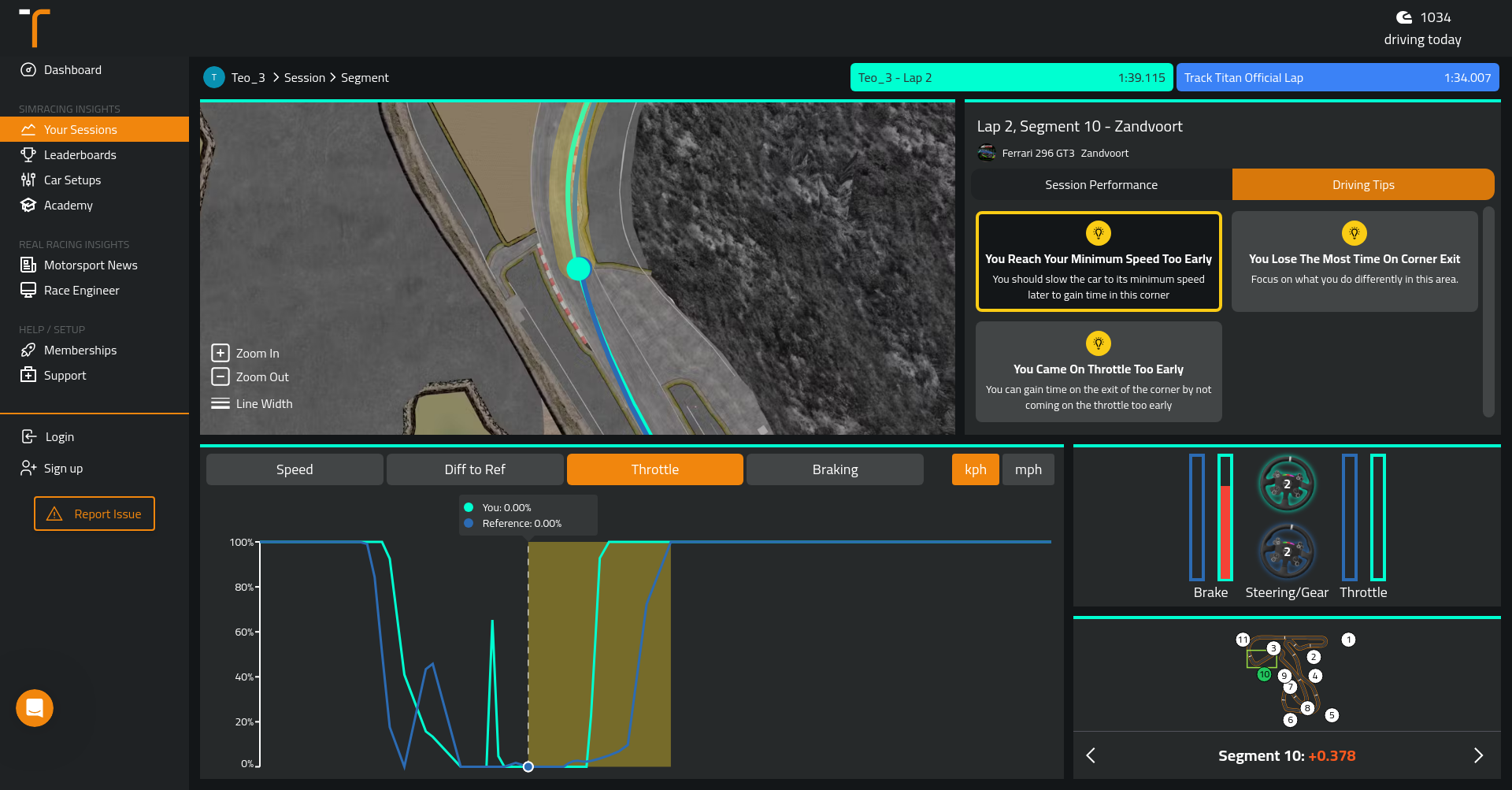
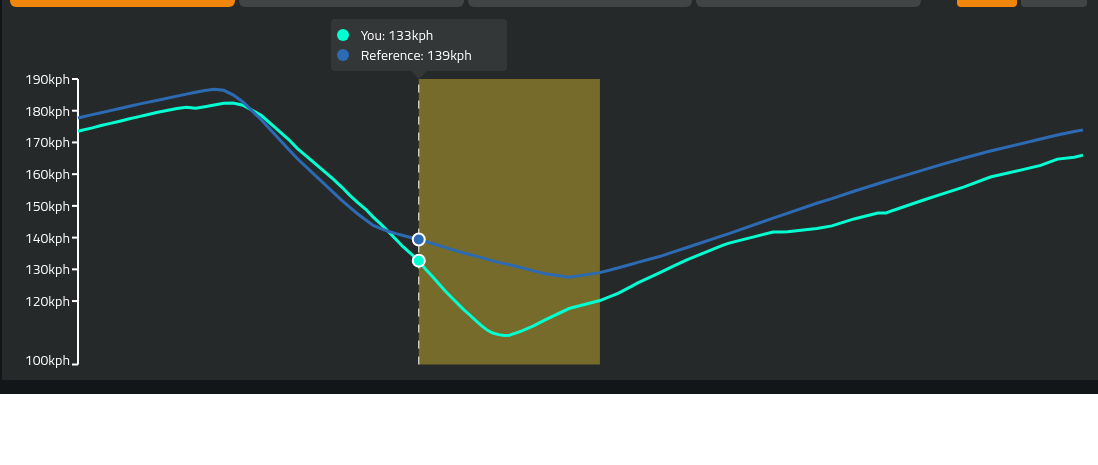
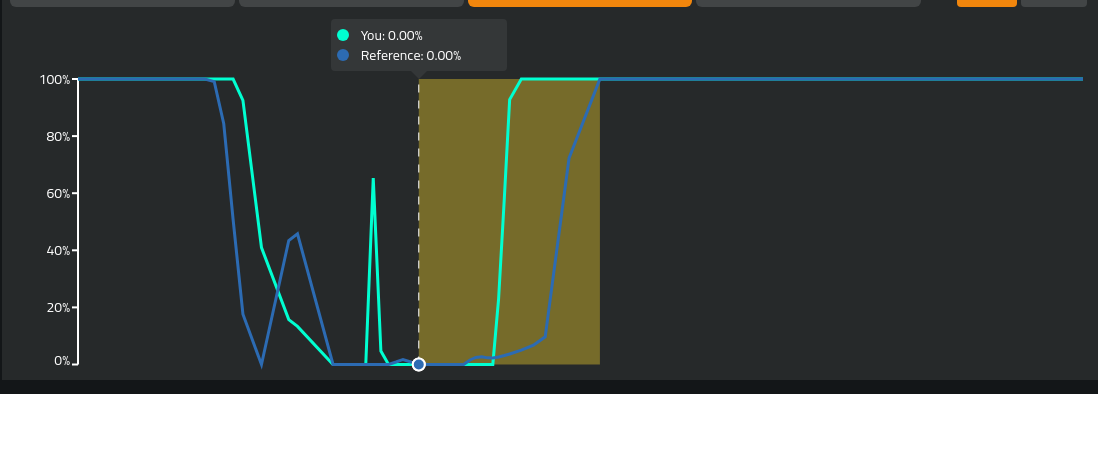
The speed chart analysis reveals that driverB is slower on corner exit due to a conservative approach, reaching minimum speed too early and applying the throttle prematurely. This results in a slower increase in speed out of the corner compared to driverA. To improve, driverB should carry more speed through the mid-corner and delay throttle application for a smoother and more effective acceleration phase. In contrast, the throttle control chart shows that driverA applies the throttle too early, leading to a plateau in their curve which indicates a need to manage wheelspin or avoid running wide. DriverB's smoother and later throttle increase suggests better grip management and stronger acceleration. DriverA should delay their initial throttle application to match driverB's timing for higher exit speeds and better lap times. Additionally, driverA needs to modulate the throttle more smoothly after initial application to avoid over-correction and car unsettlement. By refining these aspects of their driving technique, driverA can enhance their corner exit strategy.
Analyzing the speed chart, it's evident that driverB is losing significant time on corner exit compared to driverA. At the very start of the chart, driverB's speed is already lower than that of driverA, indicating a slower exit from the previous corner. This initial speed deficit carries through, affecting the entire corner sequence. As they approach the apex, driverB reaches their minimum speed earlier than driverA. This premature deceleration suggests a conservative approach to corner entry and mid-corner speed maintenance. The impact of this early minimum speed is further compounded by driverB's throttle application. The data shows that driverB gets on the throttle sooner than necessary, which can unsettle the car and prevent optimal acceleration out of the corner. This early throttle application likely contributes to a loss of time on corner exit, as indicated by a less steep increase in speed compared to driverA's more gradual and effective acceleration phase. To improve lap times, driverB should focus on carrying more speed through the mid-corner and delaying throttle application until a point where it can be applied smoothly and progressively for maximum traction and exit speed.

Analyzing the throttle control chart, it's evident that driverA and driverB have distinctly different approaches to throttle application. DriverA applies the throttle significantly earlier than driverB, as indicated by the steeper initial incline in their curve. This premature application results in a plateau, suggesting a need to maintain or slightly reduce throttle to manage wheelspin or avoid running wide on corner exit. In contrast, driverB's smoother and later increase in throttle indicates a more controlled exit, maximizing grip and allowing for a stronger acceleration phase. DriverA should delay their initial throttle application to match the timing of driverB. This would likely result in maintaining higher exit speeds and improved lap times. Additionally, driverA needs to focus on modulating the throttle more smoothly as they reach full application. The jagged nature of their curve post-initial application implies over-correction, which can unsettle the car and lead to time loss on corner exit. By refining these elements of their throttle control, driverA can achieve a more efficient corner exit strategy.