122,247
122K
Laps driven today

iRacing

Le Mans Ultimate

Assetto Corsa Competizione

Assetto Corsa

F1 25

Assetto Corsa EVO

Automobilista 2

Forza Motorsport

F1 24

F1 2021

F1 23

F1 2020


Lap 2
Segment 5
1:59.717
7th Feb 2024
Assetto Corsa Competizione
Monza - Audi R8 LMS Evo 2019

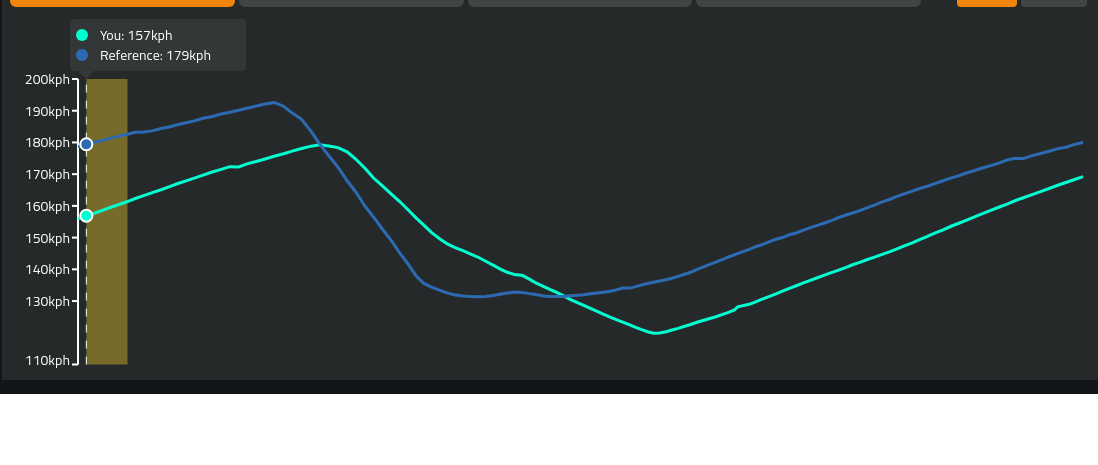
The speed chart analysis reveals that driverB enters the corner at a lower speed than driverA, indicating a loss of momentum from the previous corner due to early speed reduction. This affects the entire cornering phase as driverB also reaches their minimum speed later than driverA, resulting in a slower exit and less acceleration out of the corner. The advice for driverB is to brake earlier and reach minimum cornering speed sooner for an earlier and more powerful exit. In contrast, driverA's braking chart shows a later and more abrupt braking approach, leading to a delayed minimum speed reach. DriverA maintains brake pressure longer, possibly trailing brakes into the corner, which may cause a late reach of minimum cornering speed. DriverB's smoother deceleration curve suggests an earlier release of brakes and transition to throttle application. The recommendation for driverA is to brake earlier with less intensity to improve exit speed and reduce time lost during the corner exit.
Analyzing the speed chart, it's evident that driverB enters the corner with a lower speed compared to driverA. This is indicated by the initial left side of the chart where driverB's speed is already reduced before the braking zone, suggesting a loss of momentum from the previous corner. This early reduction in speed leads to a compromised approach and affects the entire cornering phase. Furthermore, driverB reaches their minimum speed significantly later than driverA, as shown by the minimum point occurring further right on the x-axis. This delay indicates that driverB gets on the throttle later than driverA, resulting in a slower exit and less acceleration out of the corner. The gradient of driverB's speed increase post-minimum is also less steep compared to driverA's, confirming a loss of time during corner exit due to this later application of power. To improve lap times, driverB should focus on braking earlier and achieving their minimum cornering speed sooner to facilitate an earlier and more powerful exit from the turn.

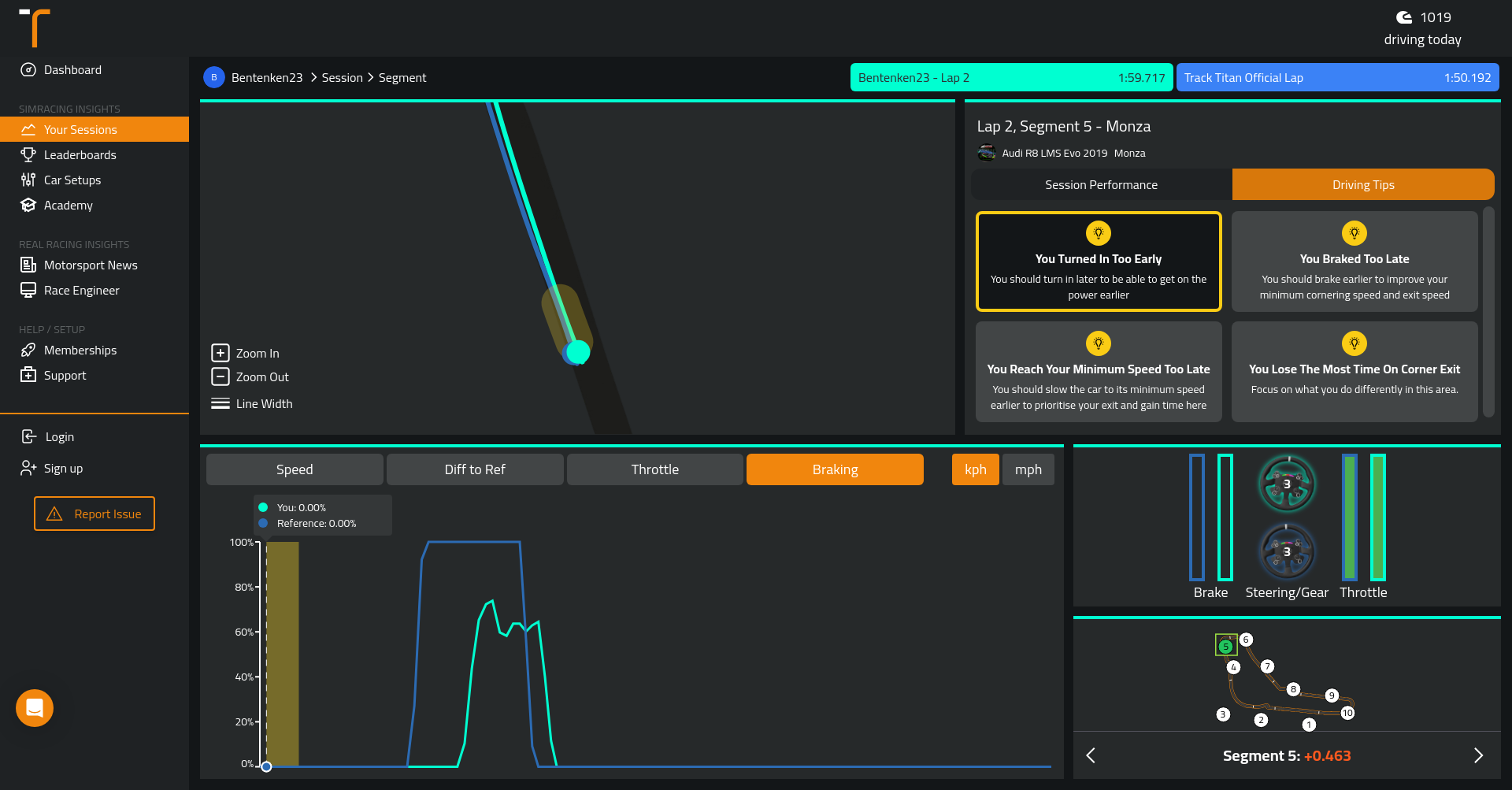
In the provided braking chart, driverA exhibits a later and more abrupt application of brakes compared to driverB. This is evidenced by the steeper initial incline in driverA's brake graph, indicating a heavier foot on the brake pedal. This late braking approach leads to a delayed reach of minimum speed, which can compromise the exit speed out of the corner. DriverB, on the other hand, engages the brakes earlier and with less intensity, allowing for a smoother deceleration curve. Furthermore, driverA maintains brake pressure for a longer duration before releasing it completely, which suggests that they are trailing the brakes deep into the corner. This technique could be causing driverA to reach their minimum cornering speed too late. In contrast, driverB's graph shows a quicker tapering off of brake pressure, implying an earlier release and transition to throttle application. To improve performance, driverA should focus on braking earlier with less intensity to prioritize exit speed and minimize time lost during corner exit.