122,444
122K
Laps driven today

iRacing

Le Mans Ultimate

Assetto Corsa Competizione

Assetto Corsa

F1 25

Assetto Corsa EVO

Automobilista 2

Forza Motorsport

F1 24

F1 2021

F1 23

F1 2020


Lap 2
Segment 3
2:10.212
6th Feb 2024
Assetto Corsa Competizione
Bathurst (Mount Panorama) - Audi R8 LMS Evo II 2022

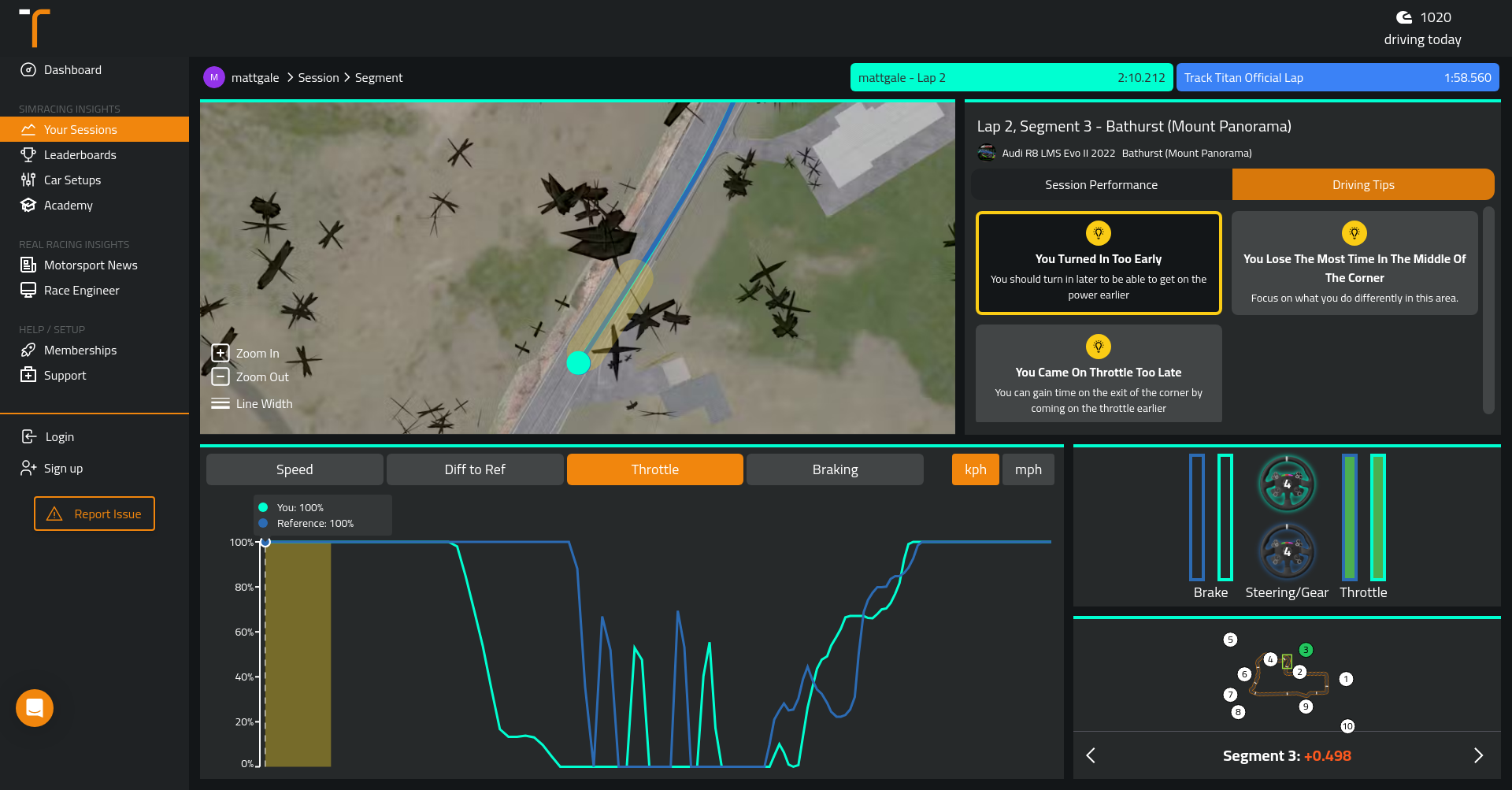
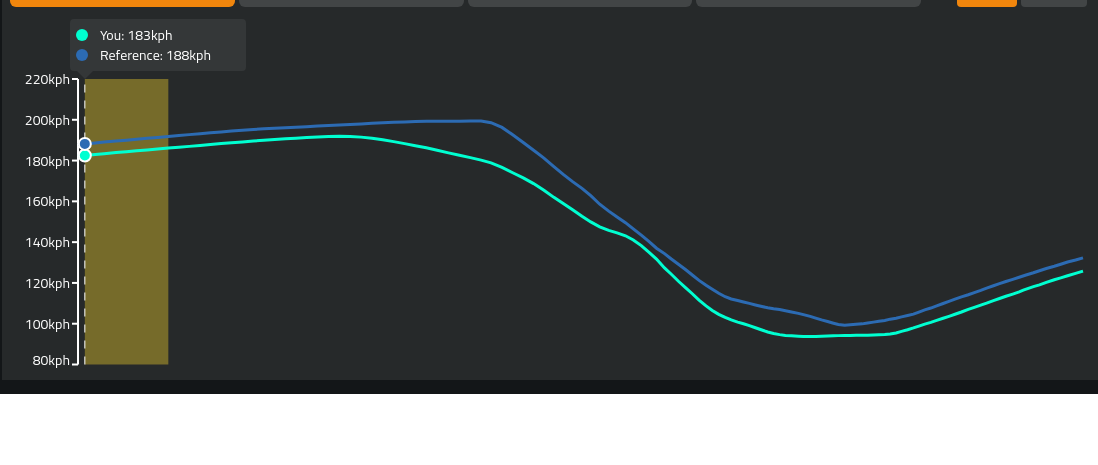
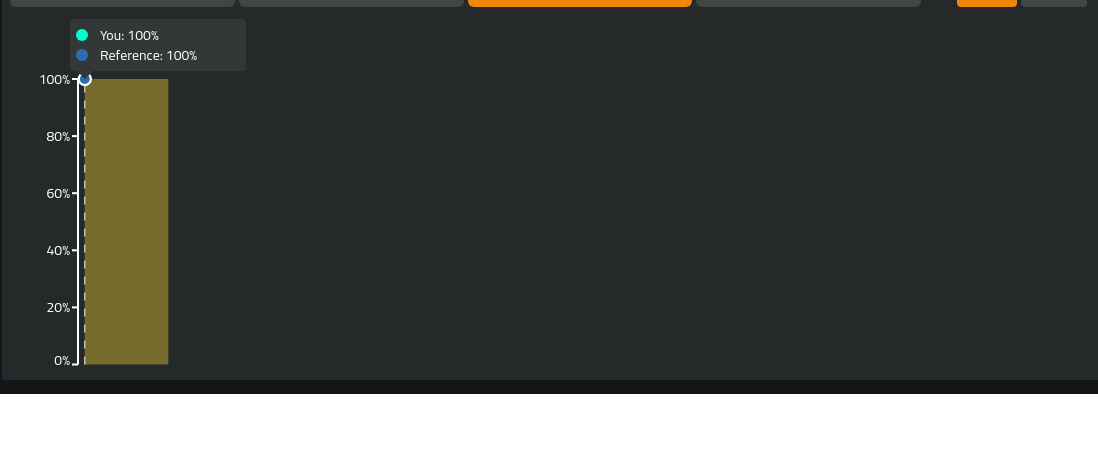
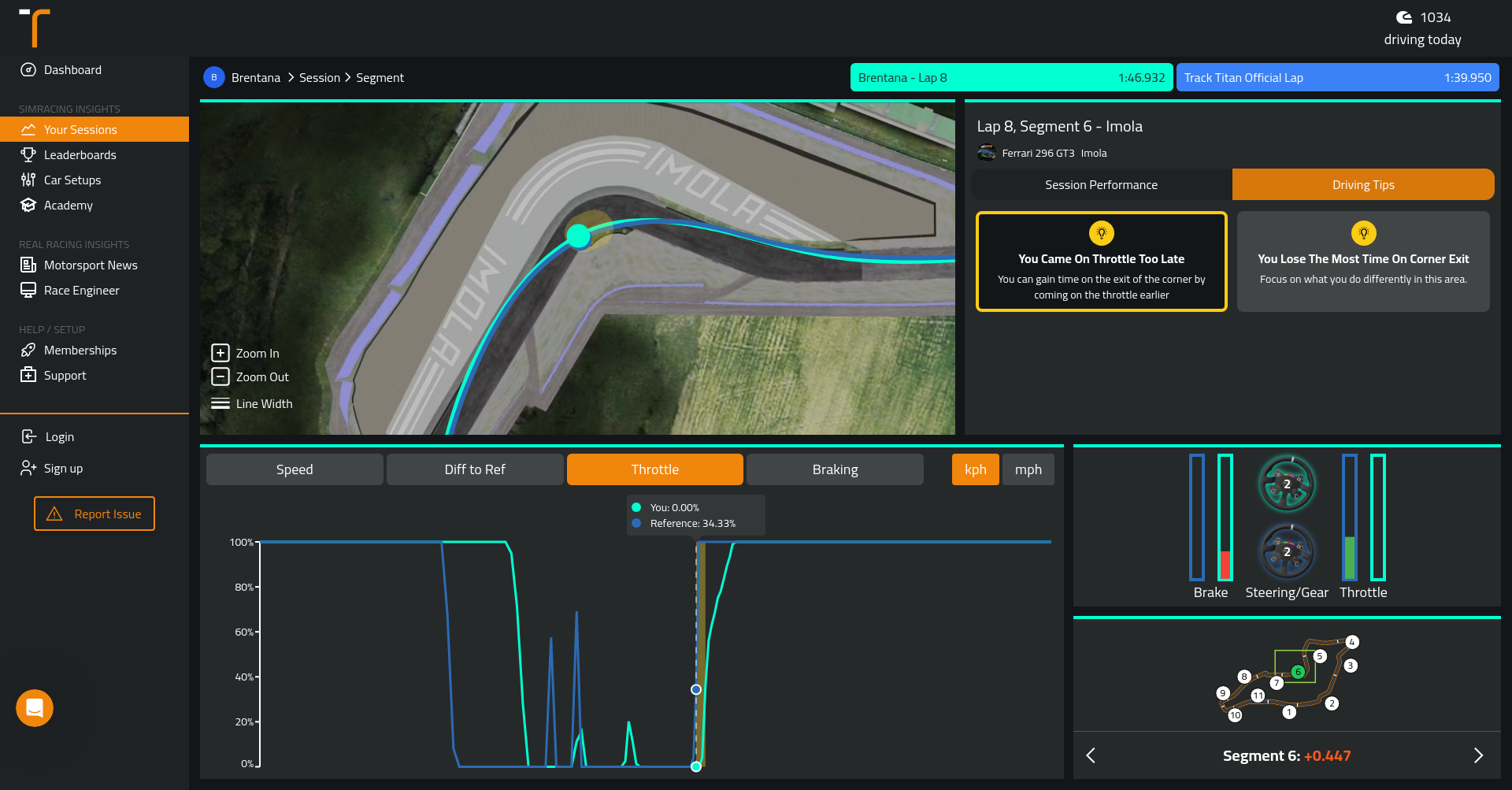
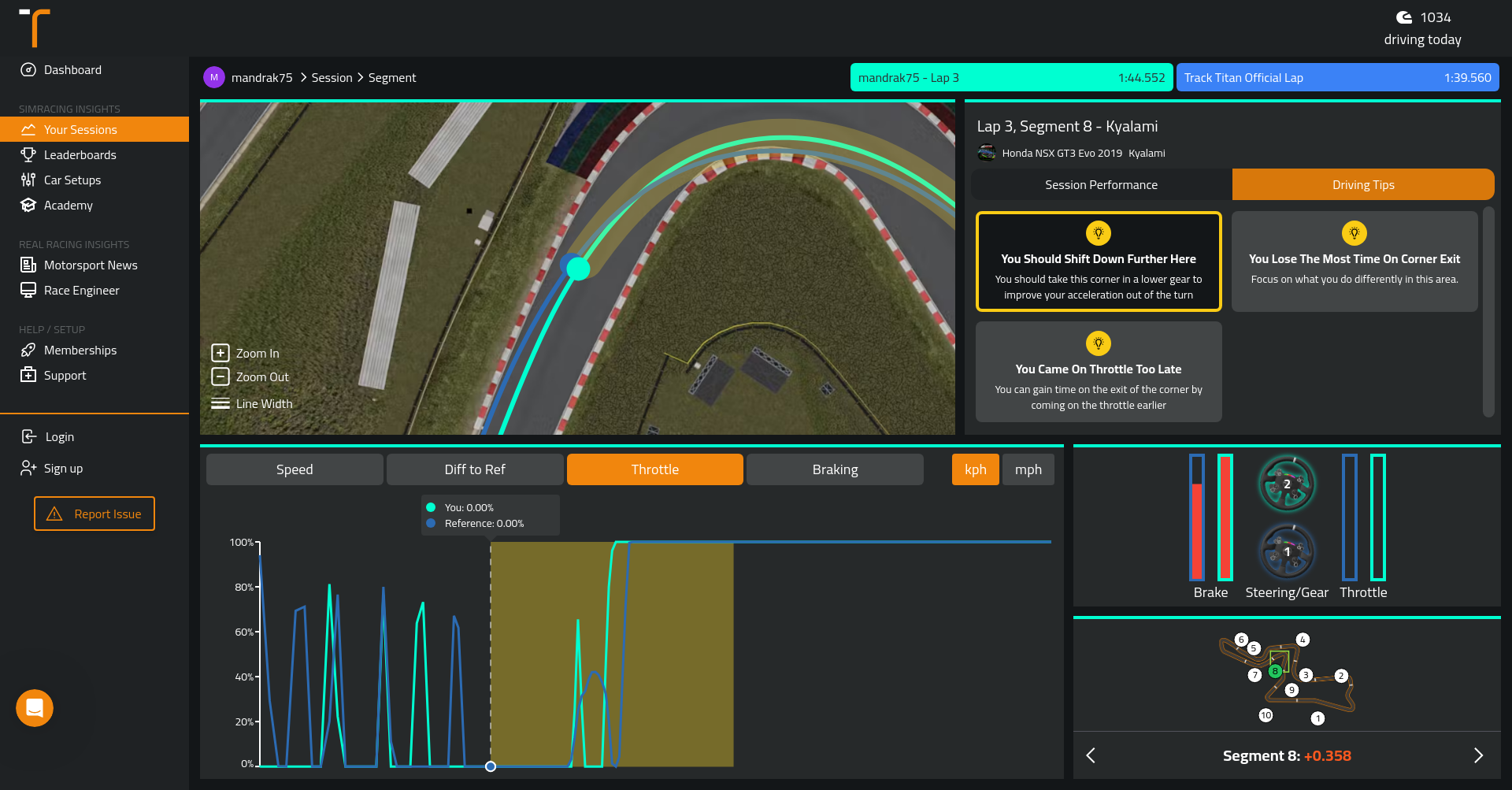
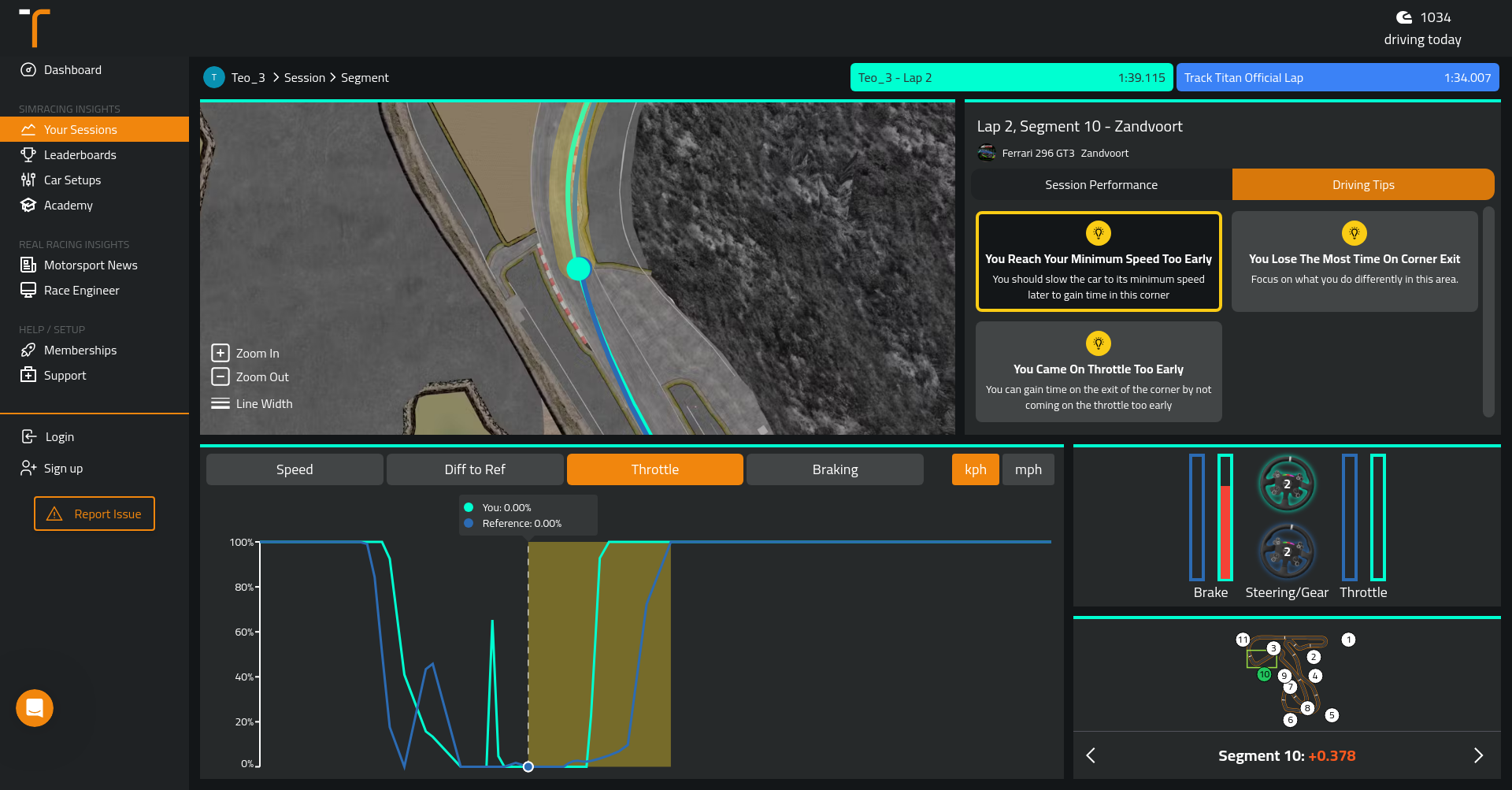
The speed chart analysis reveals that driverB is entering corners at a lower speed than driverA, which results in a consistent loss of time. DriverB's minimum speed occurs later than driverA's, indicating a delayed throttle application and slower acceleration on corner exit. To enhance performance, driverB should maintain more speed from the previous corner and apply the throttle earlier to accelerate faster out of the turn. On the other hand, the throttle control chart shows that driverA is slower in applying throttle compared to driverB, who applies it rapidly and smoothly. This suggests that driverB has better traction and confidence, leading to quicker acceleration. DriverA's gradual throttle application points to a lack of grip or certainty, causing a delay in reaching full throttle and losing valuable time on corner exit. For improvement, driverA needs to apply the throttle earlier and more decisively to minimize time lost in the middle section of the corner and achieve faster lap times.
Analyzing the speed chart, it's evident that driverB enters the corner with a lower speed compared to driverA. This suggests that driverB exited the previous corner with less momentum, which is immediately putting them at a disadvantage as they approach the next turn. The gap in speed is maintained throughout the initial phase of the corner, indicating a consistent loss of time due to this initial deficit. As we progress through the corner, driverB's minimum speed occurs noticeably later than that of driverA, suggesting a delayed throttle application. This is further supported by the shallower gradient of driverB's speed increase on corner exit, indicating slower acceleration. To improve performance, driverB should focus on carrying more speed from the previous corner and work on timing their throttle application earlier to match or exceed driverA's acceleration out of the turn.

Analyzing the throttle control chart, it's evident that driverA is significantly slower in applying throttle compared to driverB. DriverB applies the throttle in a rapid, smooth fashion, indicating confidence and traction, allowing for quicker acceleration out of the corner. In contrast, driverA's gradual and hesitant throttle application suggests a lack of grip or certainty, leading to a delay in acceleration which can be seen through the more extended period of time before reaching full throttle. Furthermore, driverA's late application of full throttle is costing valuable time on corner exit. DriverB reaches full throttle much earlier, which translates into better drive out of the corner and ultimately faster lap times. To improve performance, driverA should focus on applying the throttle earlier and more decisively. This will help to minimize time lost in the middle section of the corner where they are currently losing most time compared to driverB.