114,324
114K
Laps driven today

iRacing

Le Mans Ultimate

Assetto Corsa Competizione

Assetto Corsa

F1 25

Assetto Corsa EVO

Automobilista 2

Forza Motorsport

F1 24

F1 2021

F1 23

F1 2020


Lap 6
Segment 9
1:26.910
6th Feb 2024
Assetto Corsa Competizione
Brands Hatch - BMW M4 GT3 2022

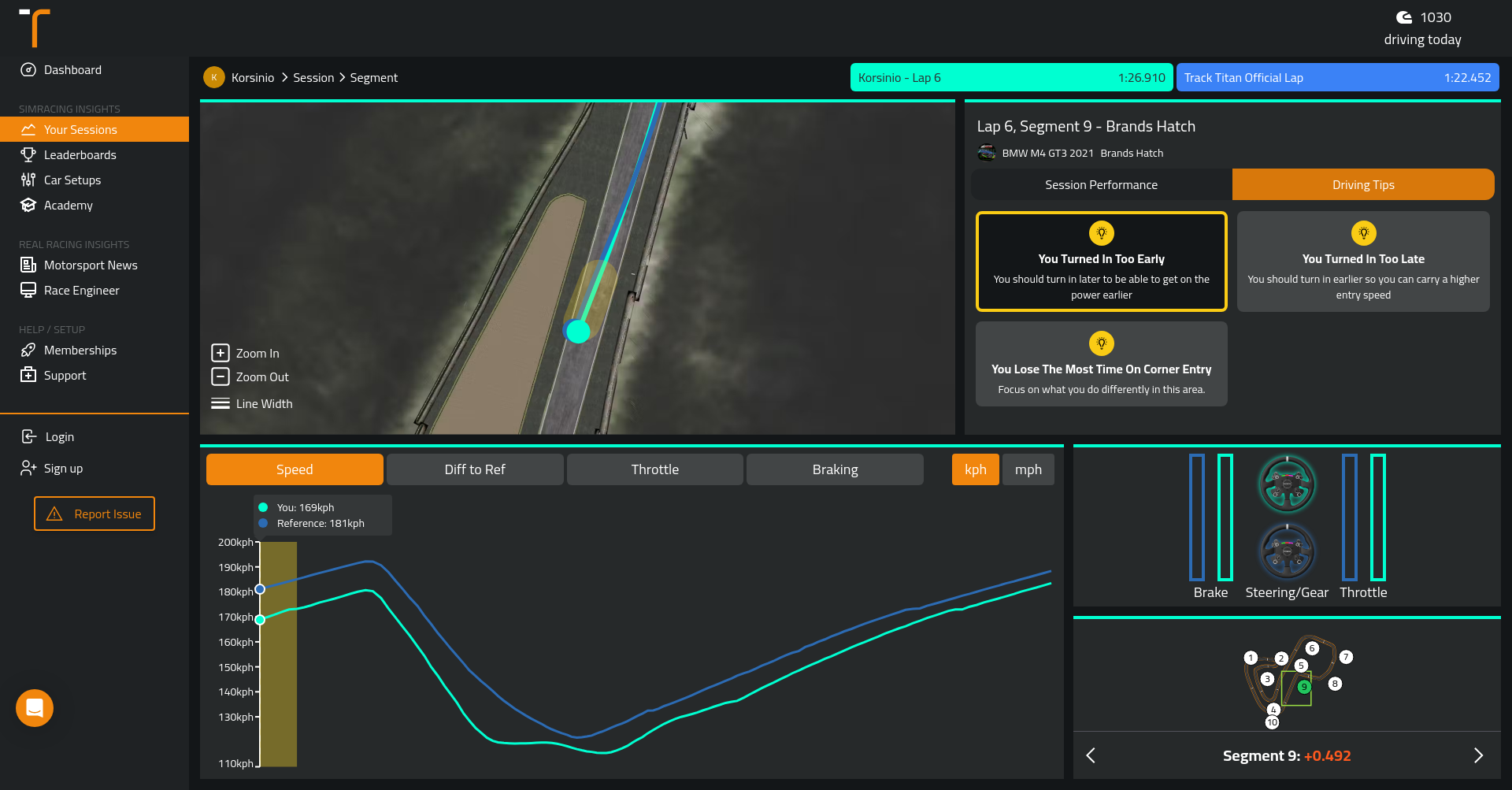
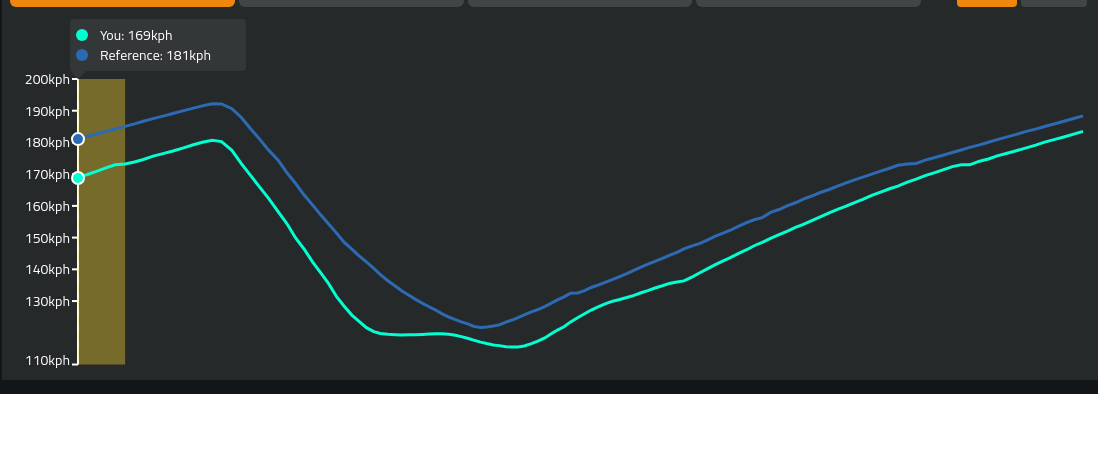
DriverB's approach to the corner is less effective than driverA's, as evidenced by the speed chart. DriverB enters the corner at a lower speed, indicating a loss of momentum from the previous corner. This initial disadvantage is compounded by a slower minimum speed reached later in the turn, suggesting delayed throttle application and suboptimal acceleration out of the corner. The key areas for driverB to improve include carrying more entry speed into the corner by refining braking points and turn-in timing. By doing so, driverB can maintain higher speeds throughout the corner and achieve a more efficient exit, which will lead to better overall performance on track.
Analyzing the speed chart, it's evident that driverB is entering the corner with a lower speed compared to driverA. This can be observed at the very start of the chart, where driverB's speed line is already below that of driverA before reaching the braking zone. This indicates that driverB exited the previous corner with less momentum, which sets them up at a disadvantage even before addressing the current corner. As we progress through the corner, there's a noticeable difference in minimum speeds; driverB's minimum speed is lower than that of driverA and occurs later in the corner. This delay in reaching minimum speed suggests that driverB is slower to get back on the throttle, resulting in later acceleration and thus a time loss on corner exit. The gradient of driverB's speed increase post-minimum speed is also less steep compared to driverA's, confirming a less effective exit and acceleration phase for driverB. To improve performance, focusing on carrying more entry speed by optimizing braking points and turn-in timing would be crucial for driverB.