114,876
114K
Laps driven today

iRacing

Le Mans Ultimate

Assetto Corsa Competizione

Assetto Corsa

F1 25

Assetto Corsa EVO

Automobilista 2

Forza Motorsport

F1 24

F1 2021

F1 23

F1 2020


Lap 6
Segment 10
1:45.512
6th Feb 2024
Assetto Corsa Competizione
Kyalami - BMW M4 GT3 2022

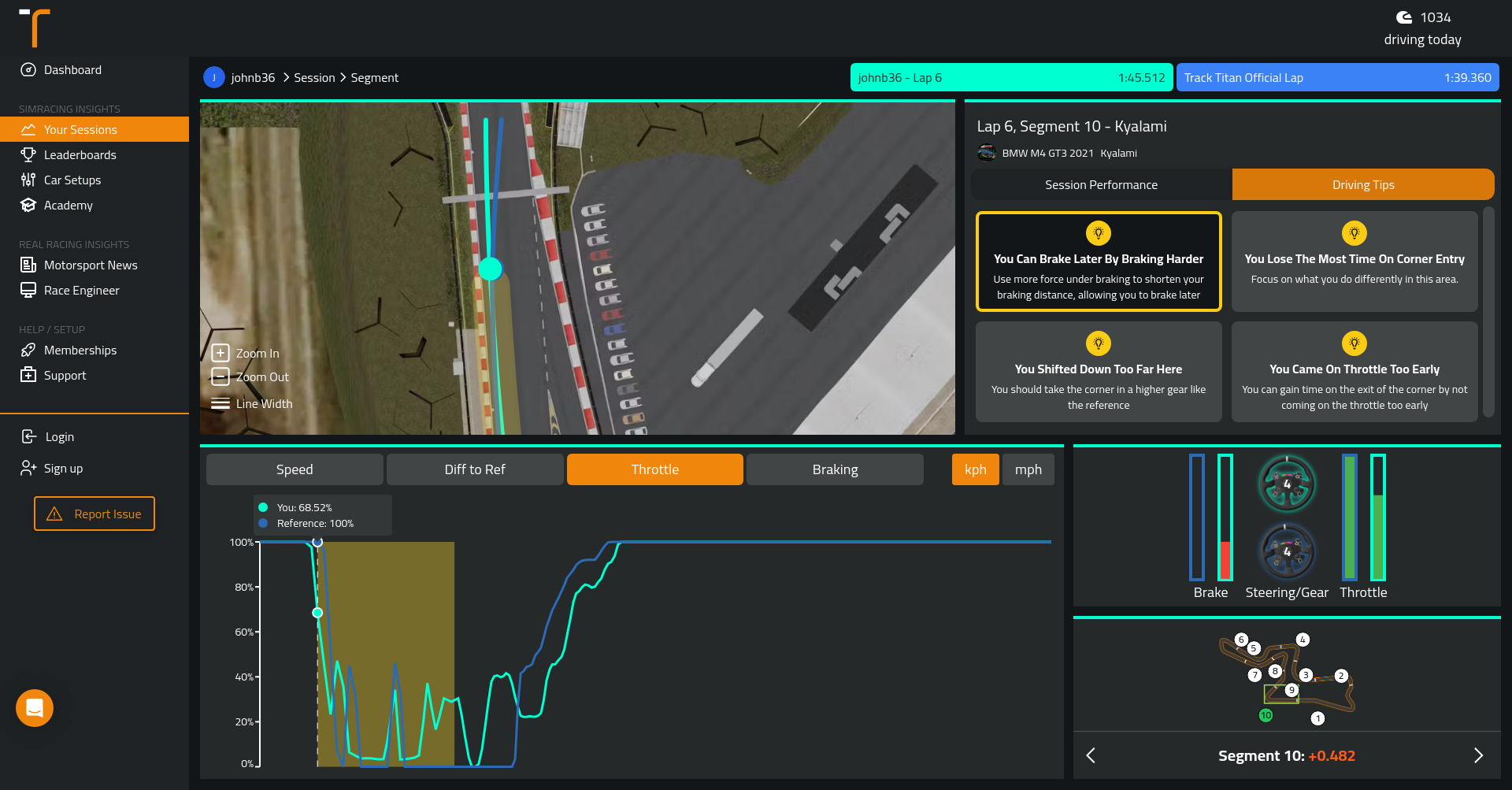
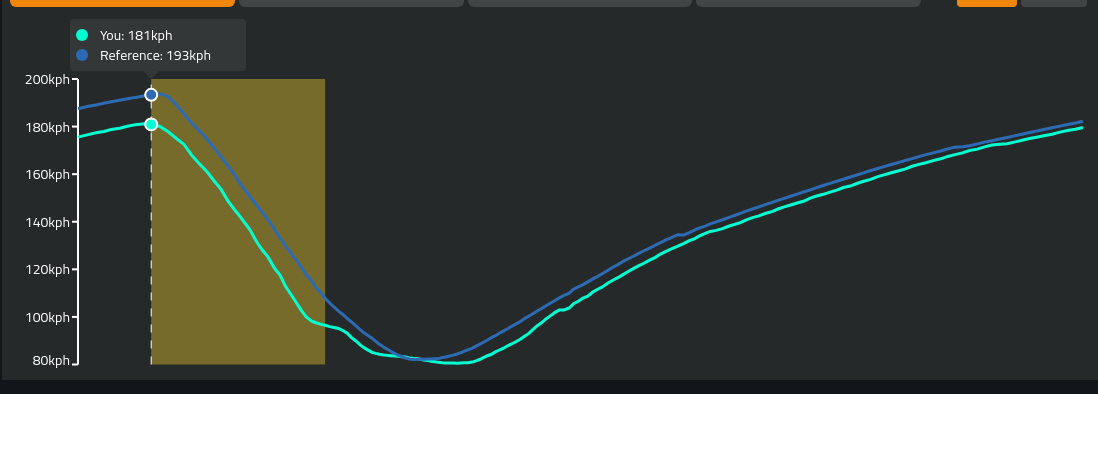
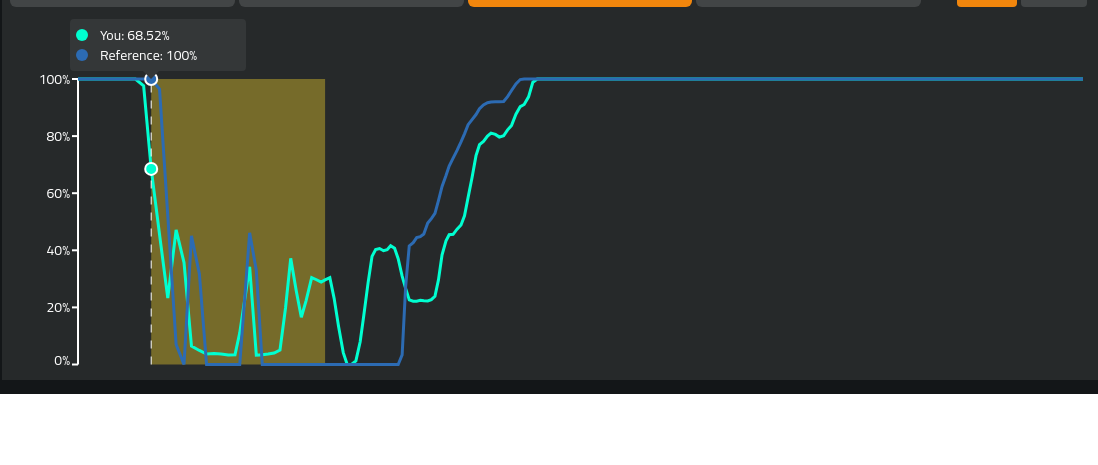
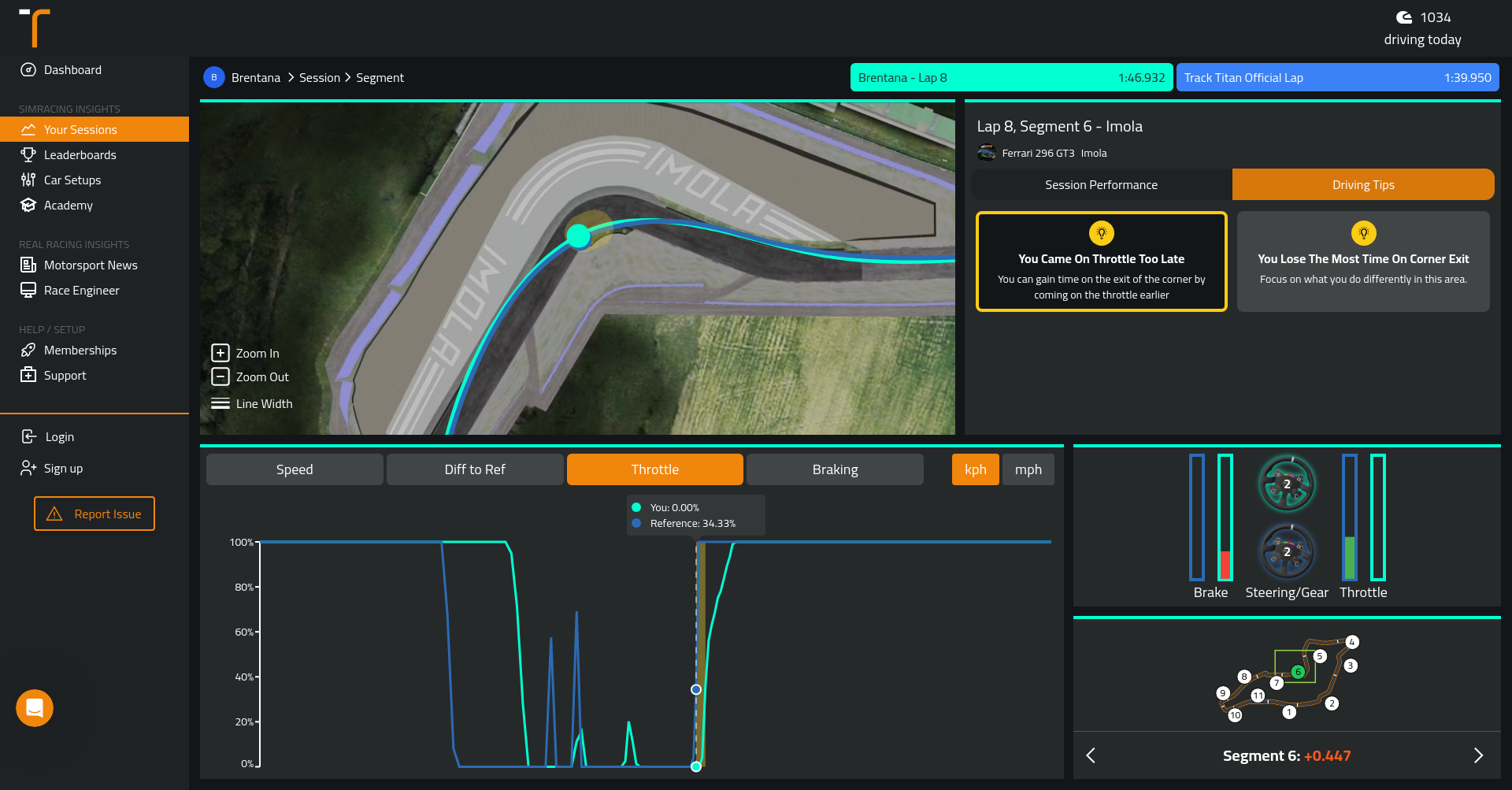
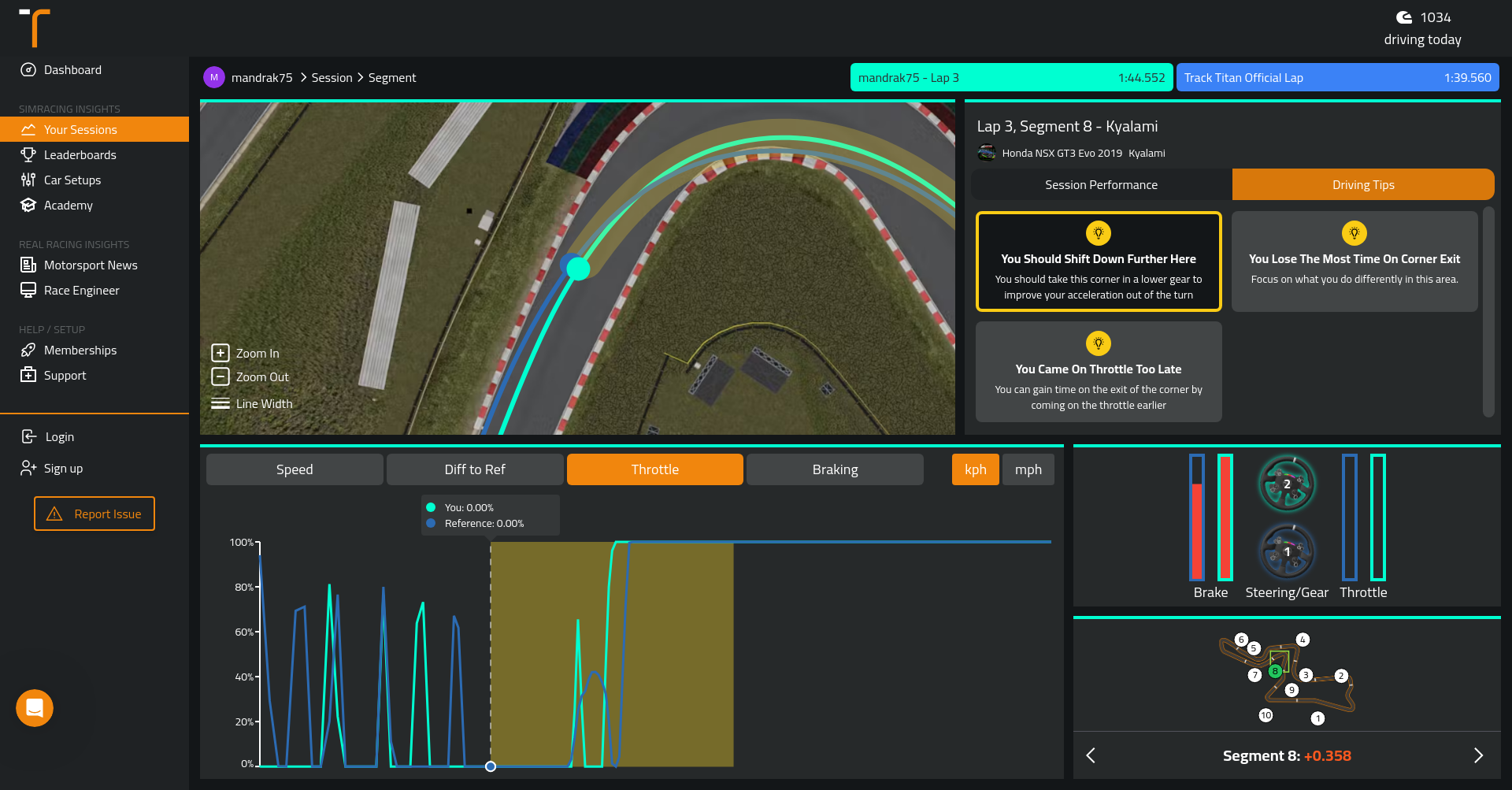
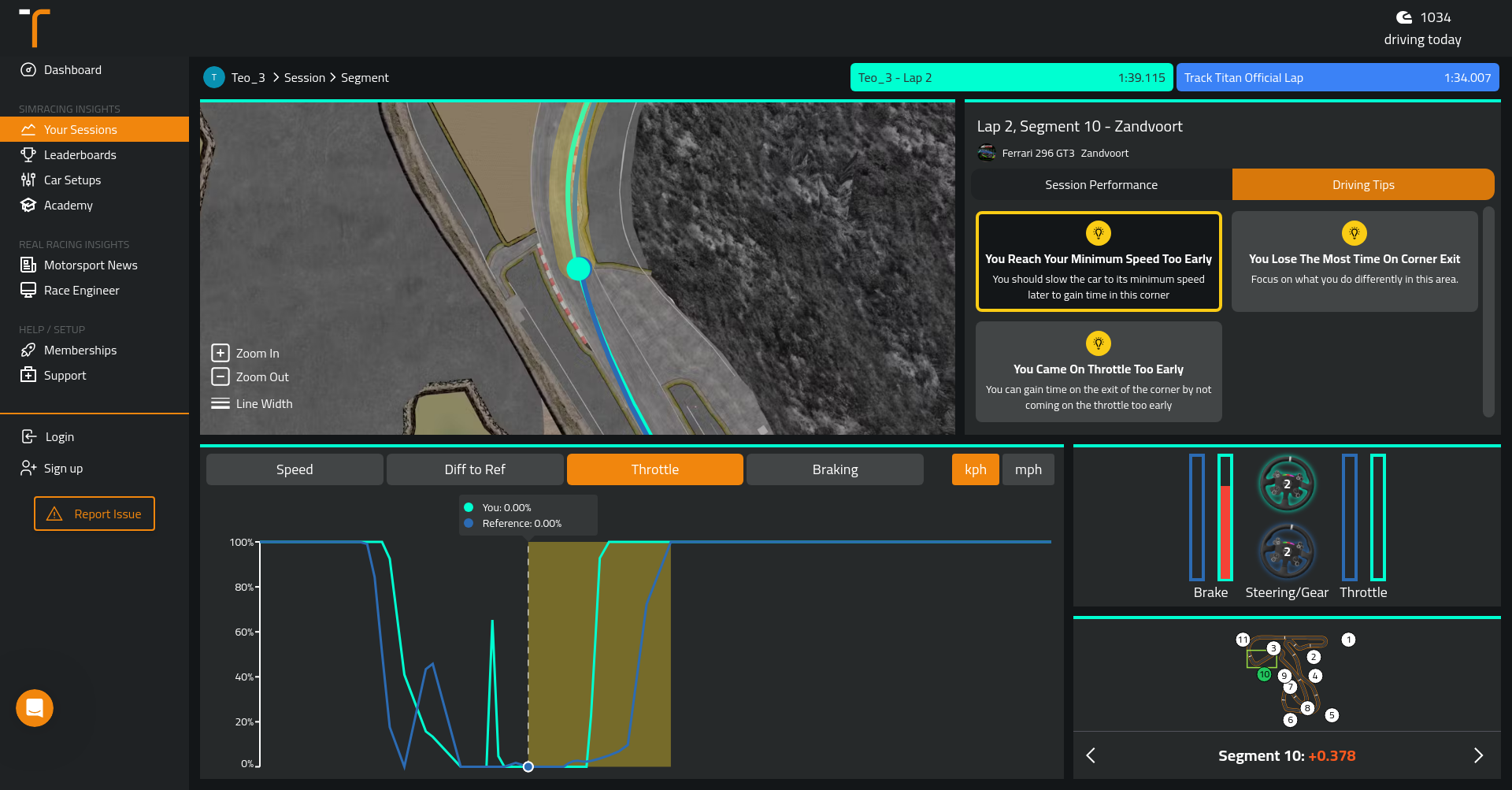
The speed chart analysis reveals that driverB enters the corner at a lower speed than driverA, suggesting a loss of momentum from the previous corner. DriverB also reaches their minimum corner speed later and accelerates out of the corner with a shallower speed curve, indicating delayed throttle application. To enhance lap times, driverB should focus on maintaining higher entry speed from the preceding corner and timing their throttle application better to carry more speed through and out of the turn. Examining throttle control, driverA applies throttle earlier but in a less smooth manner, likely causing wheelspin or traction loss. Meanwhile, driverB's gradual throttle increase suggests better traction and stability for an efficient corner exit. DriverA should aim for a smoother throttle curve by delaying initial input and progressively increasing it to optimize grip and improve exit speed.
Analyzing the speed chart, it's evident that driverB is entering the corner at a significantly lower speed compared to driverA. This is indicated by the initial left portion of the chart where driverB's speed is already reduced before even reaching the braking zone. This suggests that driverB exited the previous corner with less momentum, which adversely affects their entry into the current corner. Furthermore, a critical observation is that driverB's minimum speed in the corner occurs later than that of driverA, indicating a delay in throttle application. This results in driverB accelerating later out of the corner, which can be seen in the shallower gradient of their speed curve compared to driverA's steeper ascent post-corner. Additionally, driverB's premature throttle application seems to hinder their ability to carry optimal speed through and out of the turn, as evidenced by their lower exit speed relative to driverA. To improve lap times, focusing on carrying more speed from the previous corner into this one and optimizing throttle application timing will be key for driverB.

Upon analyzing the throttle control chart, it is evident that driverA initiates throttle application significantly earlier than driverB. This premature application leads to a less smooth increase in throttle, which can be observed through the jagged nature of the graph. This suggests that driverA may be experiencing wheelspin or a lack of traction, which is detrimental to maintaining speed and control through the corner. In contrast, driverB's graph displays a more gradual and controlled increase in throttle application. This indicates better traction and stability, allowing for a more efficient exit from the corner. DriverA should aim to replicate this smoother curve by delaying their initial throttle input and focusing on a progressive increase to optimize grip and ultimately improve corner exit speed.