117,319
117K
Laps driven today

iRacing

Le Mans Ultimate

Assetto Corsa Competizione

Assetto Corsa

F1 25

Assetto Corsa EVO

Automobilista 2

Forza Motorsport

F1 24

F1 2021

F1 23

F1 2020


Lap 3
Segment 6
1:59.185
6th Feb 2024
Assetto Corsa Competizione
Nurburgring - BMW M4 GT3 2022

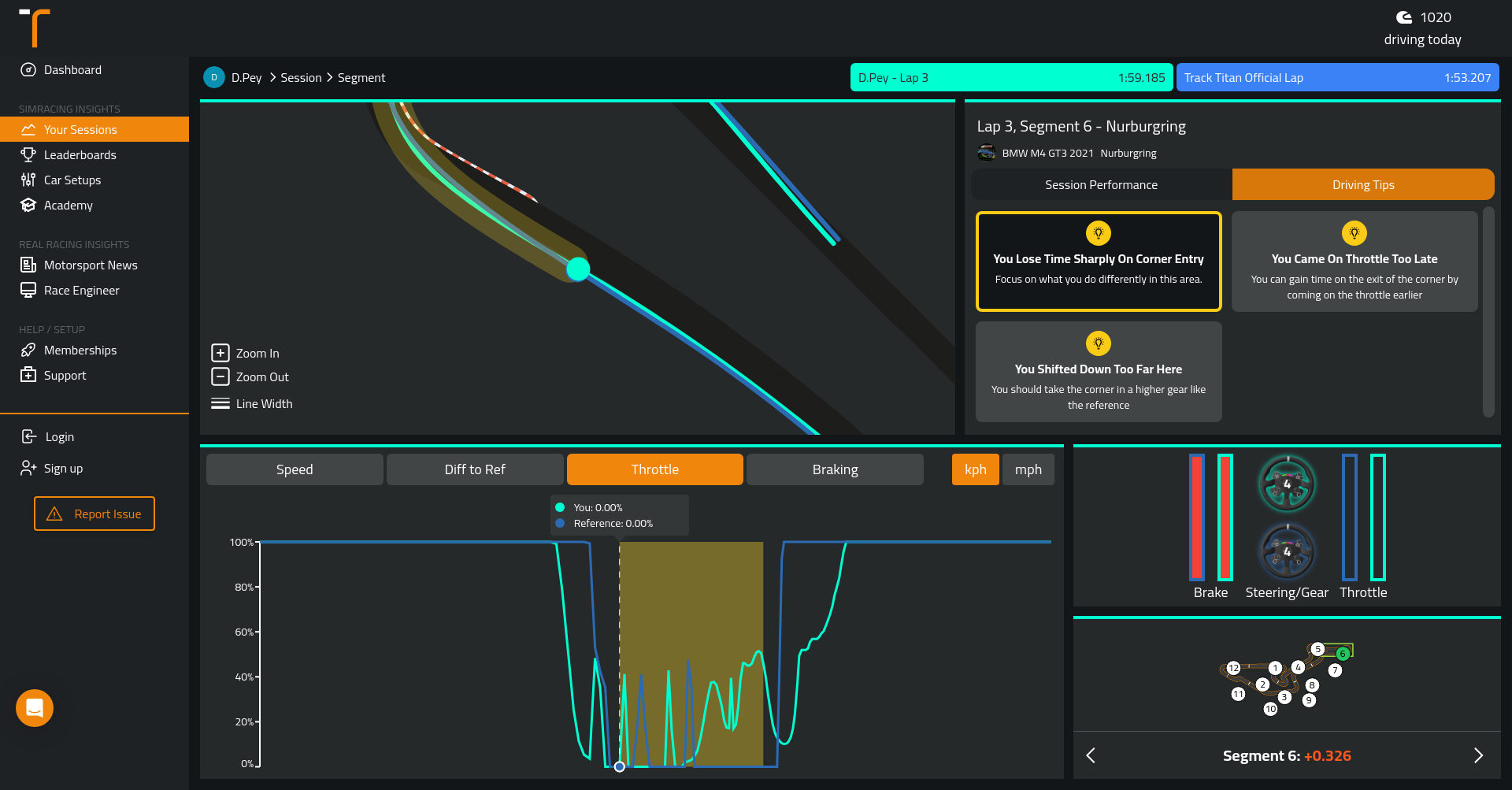
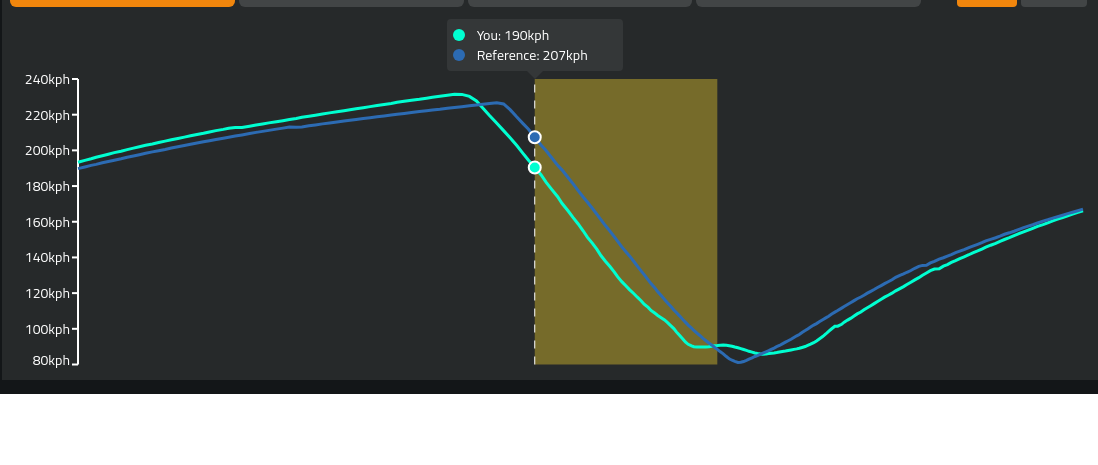
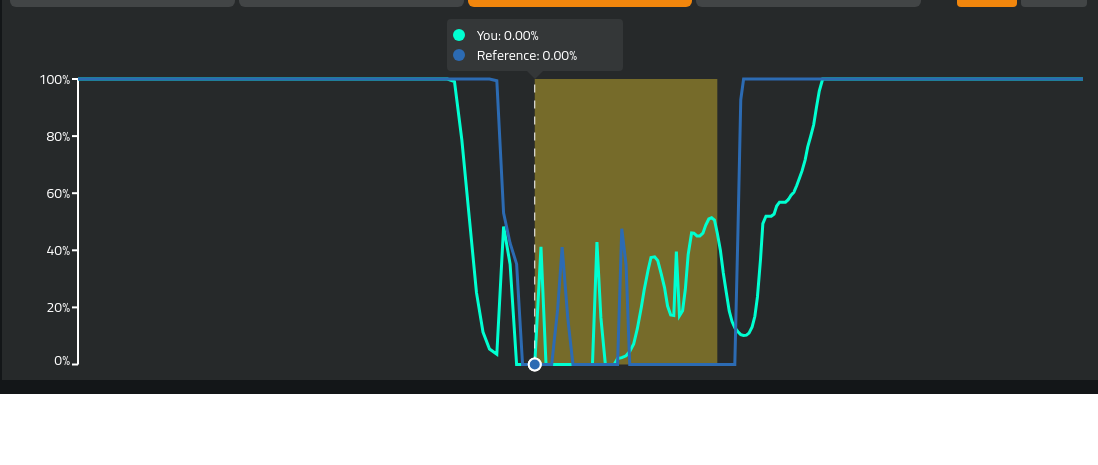
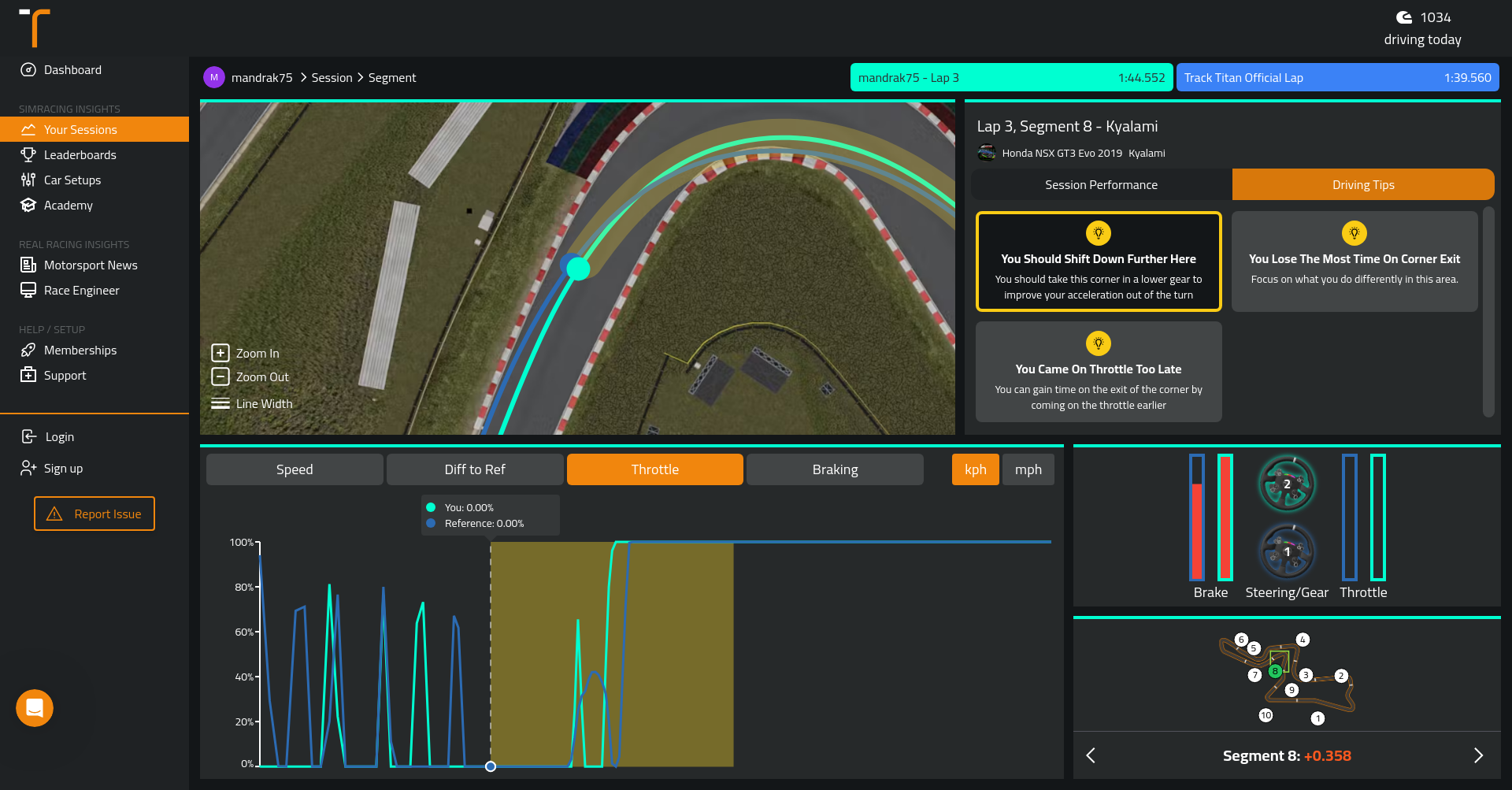
The speed chart analysis reveals that driverB enters the corner with less speed than driverA, due to carrying less momentum from the previous corner. This results in a lower minimum speed and a later throttle application for driverB, compromising their exit speed. DriverB also brakes more aggressively or earlier and selects a lower gear than driverA, leading to less momentum through the turn. To improve, driverB should maintain more speed from the previous corner, choose a higher gear for better momentum, and apply the throttle earlier to enhance acceleration out of the corner. In terms of throttle control, driverA is more cautious with a delayed and gradual increase in throttle exiting the corner, possibly due to managing wheelspin or grip issues. On the other hand, driverB applies throttle earlier and more sharply, indicating better traction control and skill in balancing the car at its limit. For better lap times, driverA should focus on applying throttle sooner after the apex while effectively controlling wheelspin to maximize exit speed.
Analyzing the speed chart, it's evident that driverB is entering the corner at a significantly lower speed compared to driverA. This discrepancy begins right at the start of the chart, indicating that driverB has carried less speed out of the previous corner. This initial speed deficit has a cascading effect throughout the corner, as driverB's minimum speed in the corner is also lower than that of driverA. Moreover, this minimum speed occurs later for driverB, suggesting a delayed throttle application which further compromises their exit speed. Additionally, the sharper decline in speed for driverB on corner entry implies a more aggressive or possibly earlier braking approach than driverA. Coupled with shifting down too far as indicated by a lower gear selection compared to driverA, this results in less momentum being carried through the turn. To optimize performance, driverB should focus on carrying more speed from the previous corner into the entry and select a higher gear to maintain better momentum and stability through the turn. Early throttle application is also crucial; by getting on the throttle sooner, even before reaching the apex, driverB can maximize acceleration out of the corner and improve overall lap time.

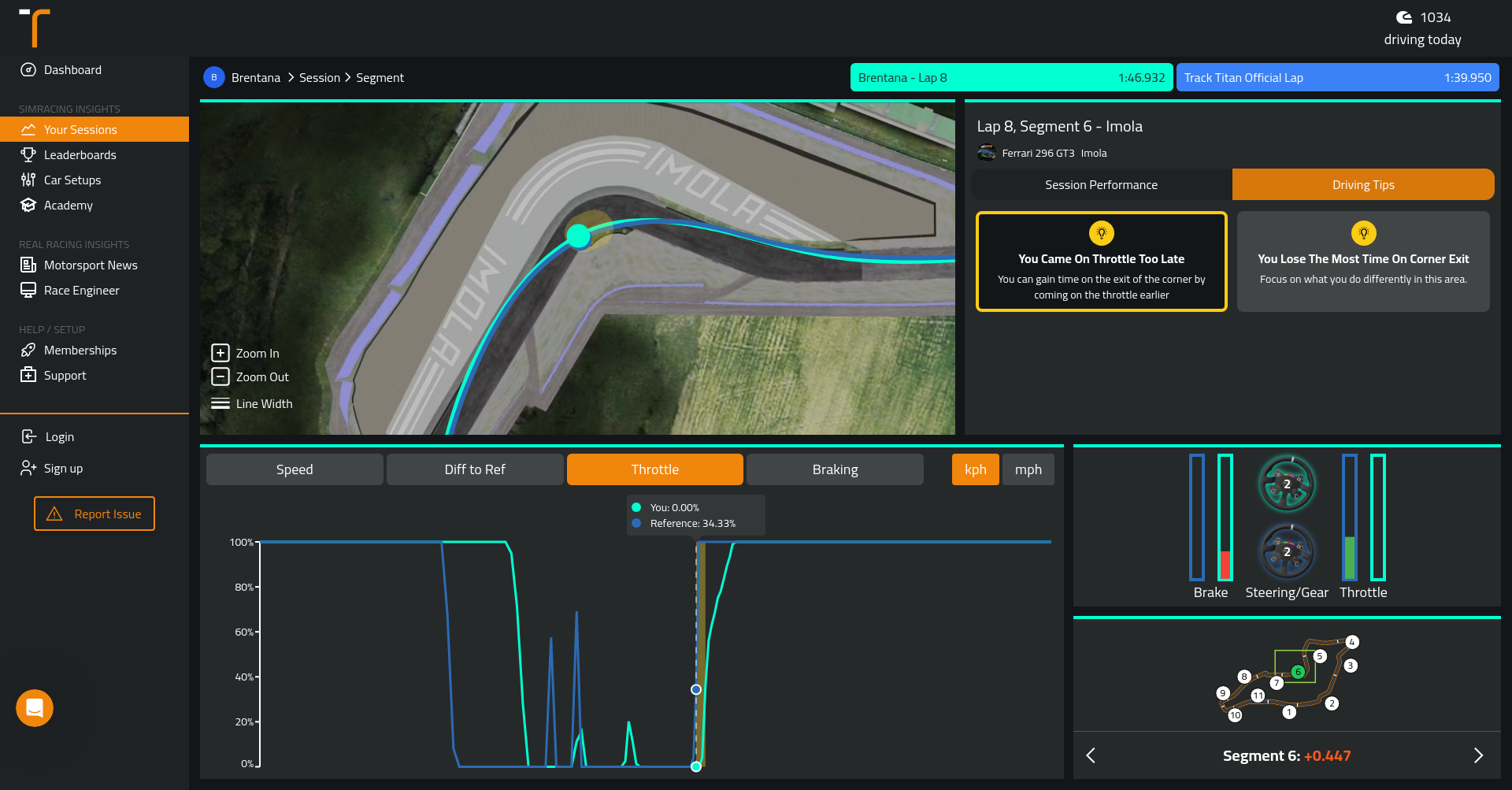
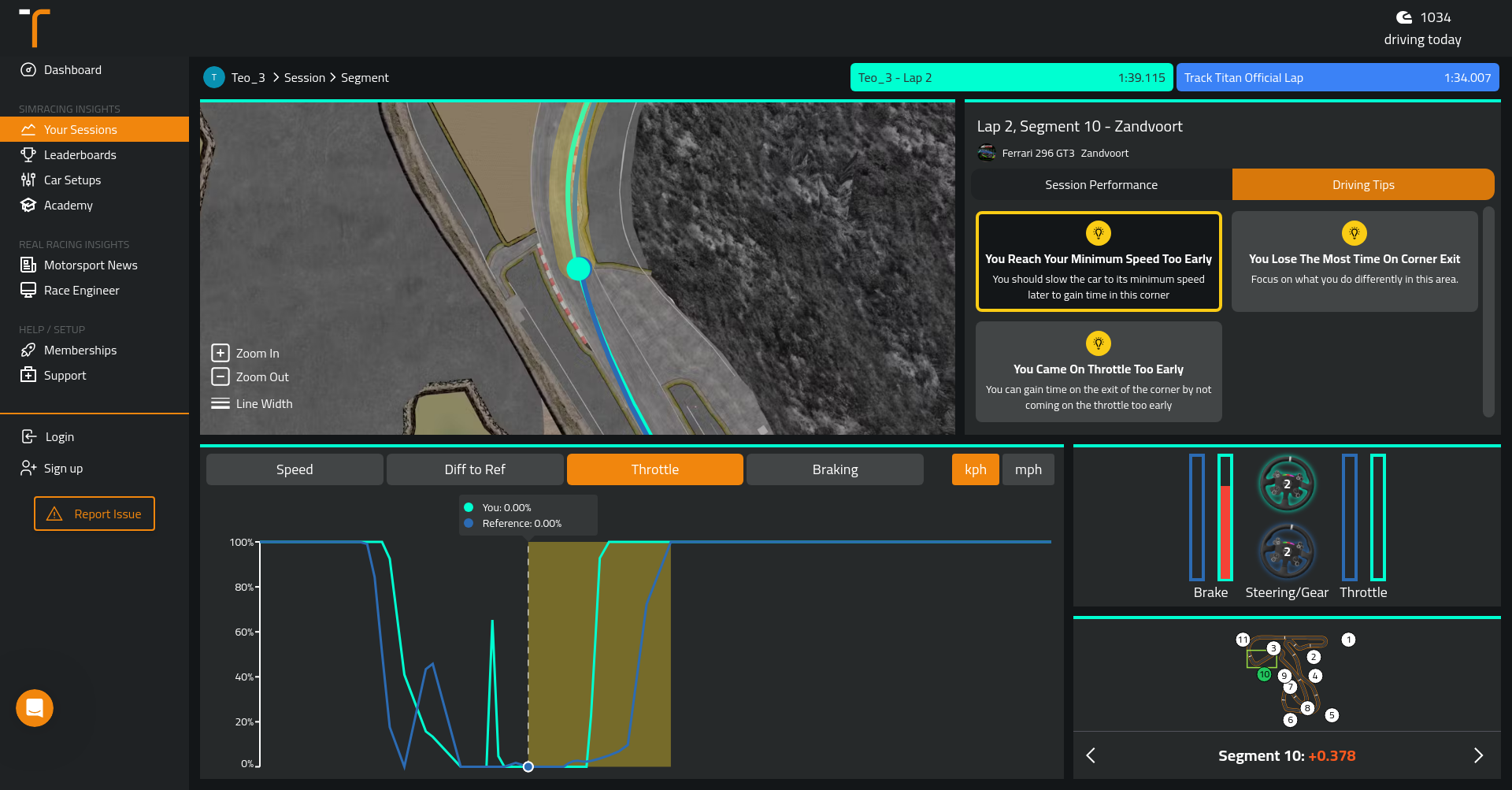
Analyzing the throttle control chart, it's evident that driverA and driverB have markedly different approaches to throttle application. DriverA's graph shows a delayed and gradual increase in throttle, indicating a later and more cautious power application exiting the corner. This hesitation can be seen as a loss of potential acceleration and, consequently, time. In contrast, driverB applies the throttle much earlier and with a sharper increase, demonstrating confidence and an eagerness to accelerate out of the corner sooner. Furthermore, driverA's cautious approach may also suggest difficulty managing wheelspin or a lack of confidence in the car's grip levels. The sharpness in driverB's throttle application implies not only better traction control but also a higher skill level in balancing the car at the limit. To improve lap times, driverA should focus on earlier throttle application post-apex to maximize exit speed while managing wheelspin effectively.