122,247
122K
Laps driven today

iRacing

Le Mans Ultimate

Assetto Corsa Competizione

Assetto Corsa

F1 25

Assetto Corsa EVO

Automobilista 2

Forza Motorsport

F1 24

F1 2021

F1 23

F1 2020


Lap 2
Segment 6
1:42.272
6th Feb 2024
Assetto Corsa Competizione
Oulton Park - BMW M4 GT3 2022

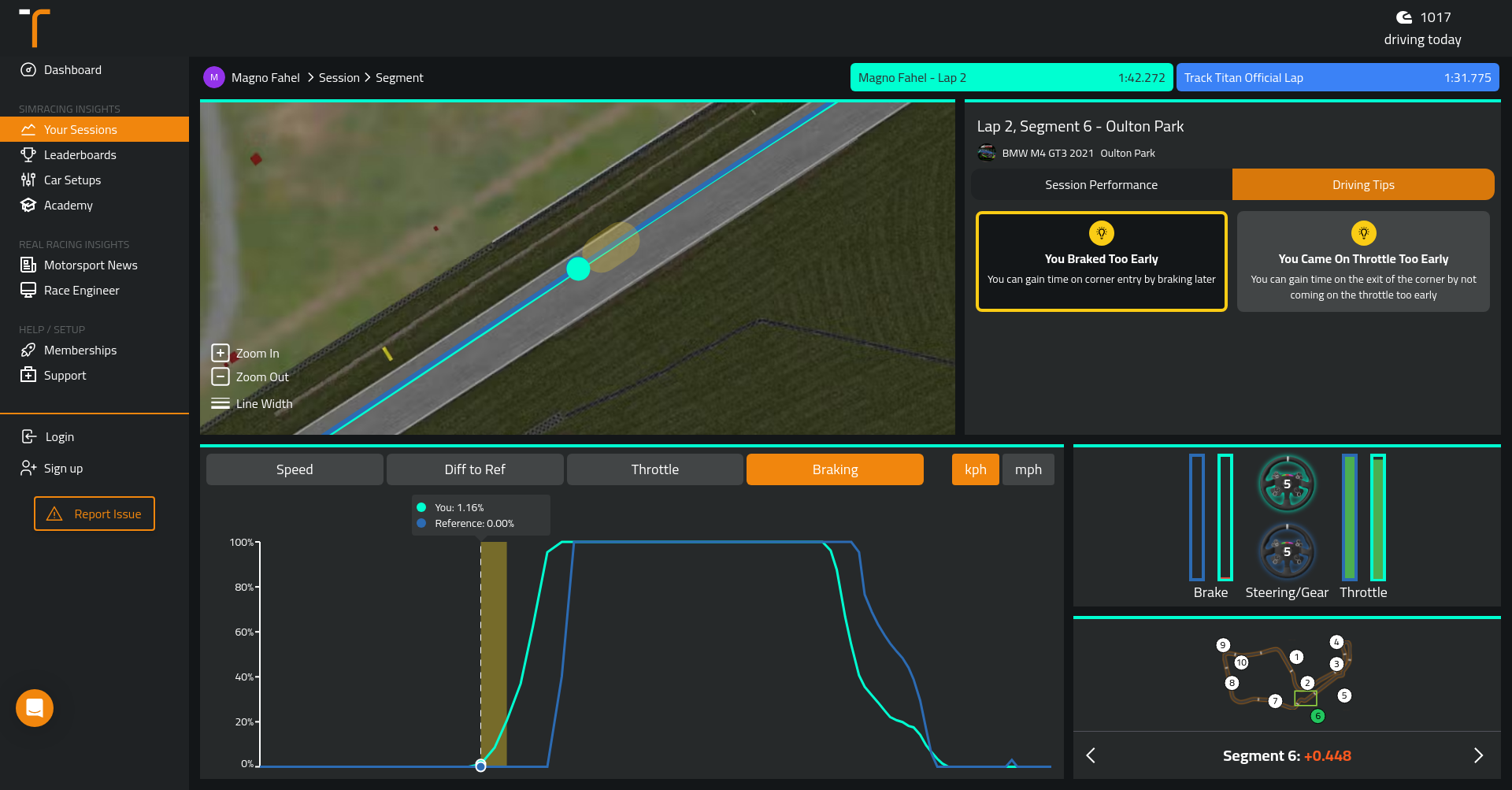
The speed chart analysis indicates that driverB is entering corners with less speed than driverA, due to a slower exit from the previous corner. This lower entry speed affects their entire cornering phase, causing them to lose time. DriverB should aim to brake later and avoid early throttle application for better acceleration and improved lap times. In terms of throttle control, driverA applies the throttle gradually, possibly to avoid wheelspin, while driverB has a sharper increase in throttle application, suggesting a more aggressive acceleration. DriverA could benefit from adopting a sharper throttle application like driverB to enhance their corner exit speed but must find a balance to avoid loss of traction. The braking chart shows that driverA brakes earlier and with less force than driverB, leading to a slower corner entry. In contrast, driverB's later and stronger braking allows for a more aggressive entry which can save time. DriverA should consider braking later and applying more initial brake pressure to match driverB's aggressive approach for better performance.
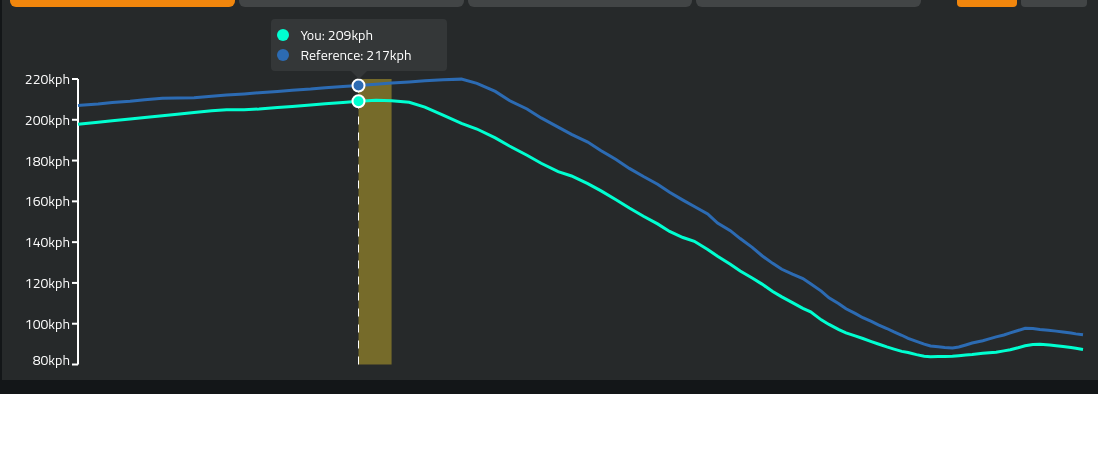
Analyzing the speed chart, it's evident that driverB is entering the corner with a lower speed compared to driverA. This suggests that driverB has exited the previous corner with less momentum, which is visible at the very start of the chart where their speed is already lower than that of driverA. This initial speed deficit will have a cascading effect on their entire cornering phase, resulting in time lost throughout. Furthermore, driverB's minimum speed in the corner occurs later than that of driverA, indicating a delay in throttle application. This delay leads to a slower acceleration phase for driverB, as seen by the less steep gradient of their speed increase compared to driverA's. To optimize performance, driverB should focus on braking later to maintain higher entry speed and avoid coming on throttle too early to allow for better acceleration out of the corner, thereby improving overall lap time.

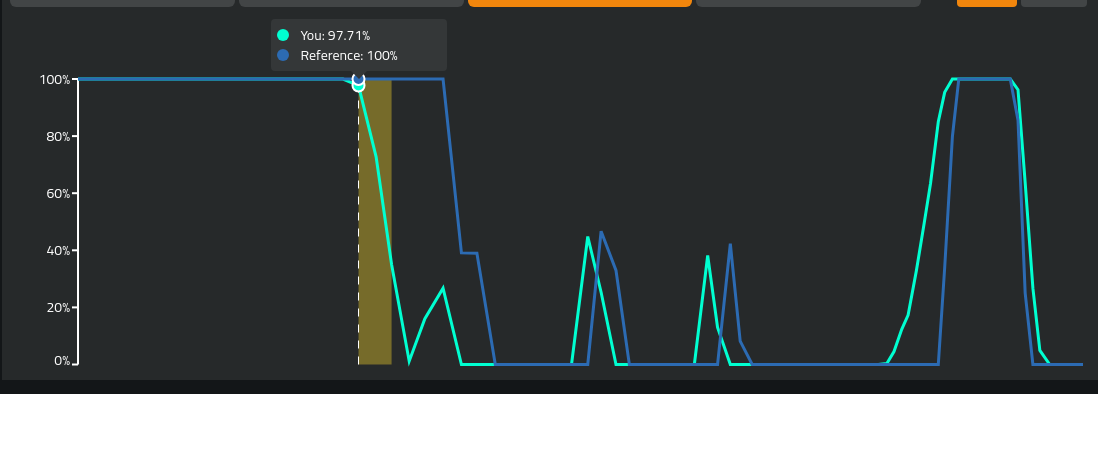
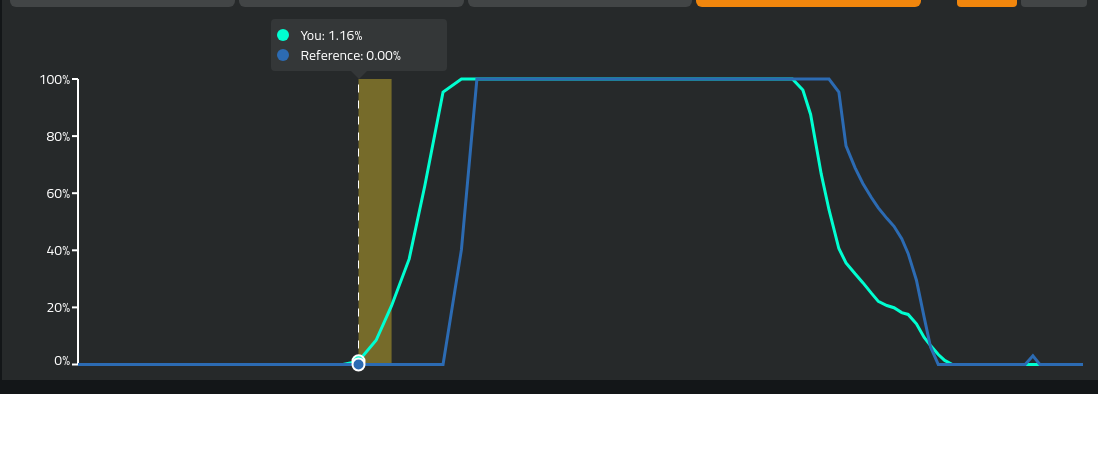
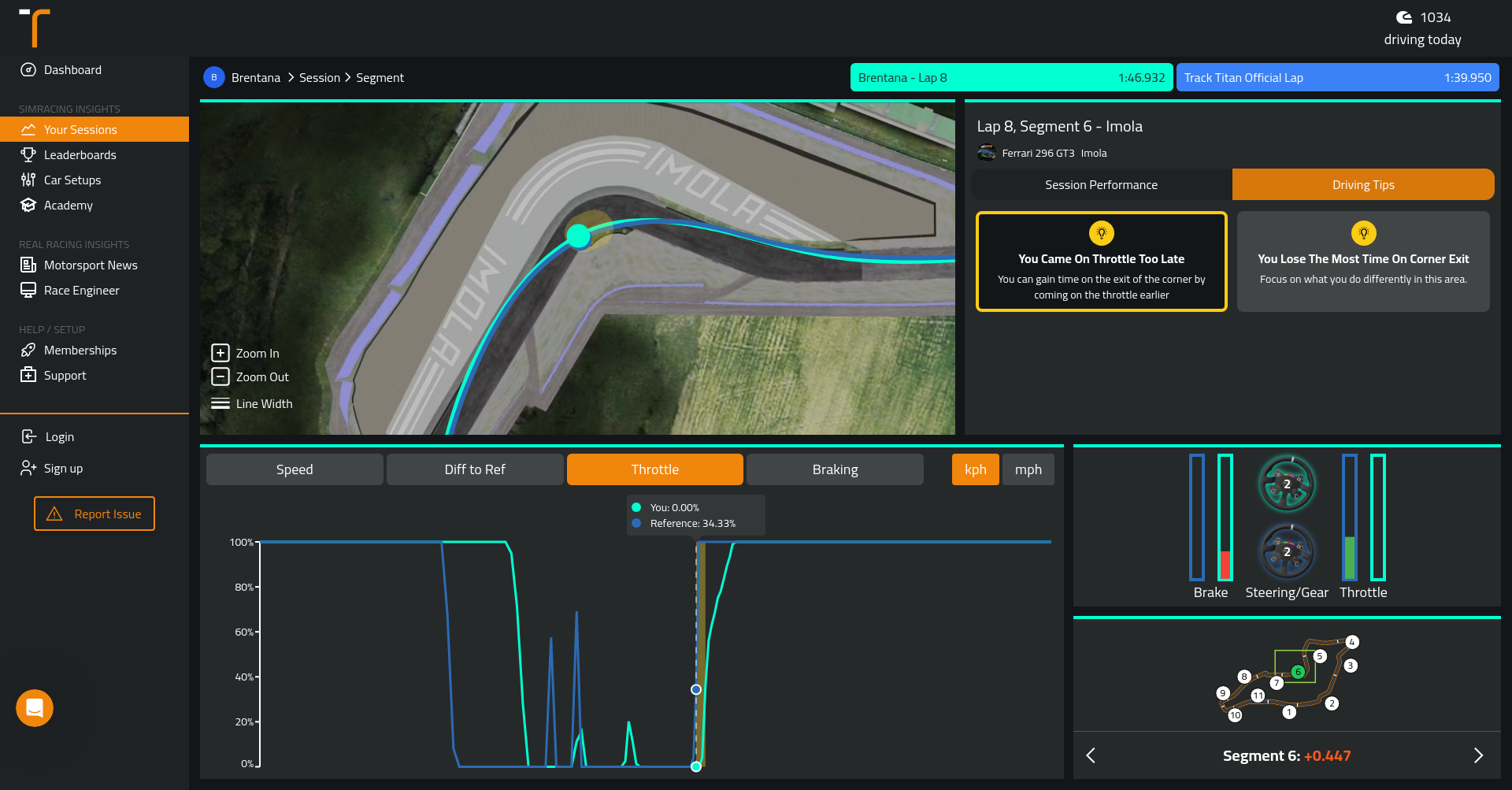
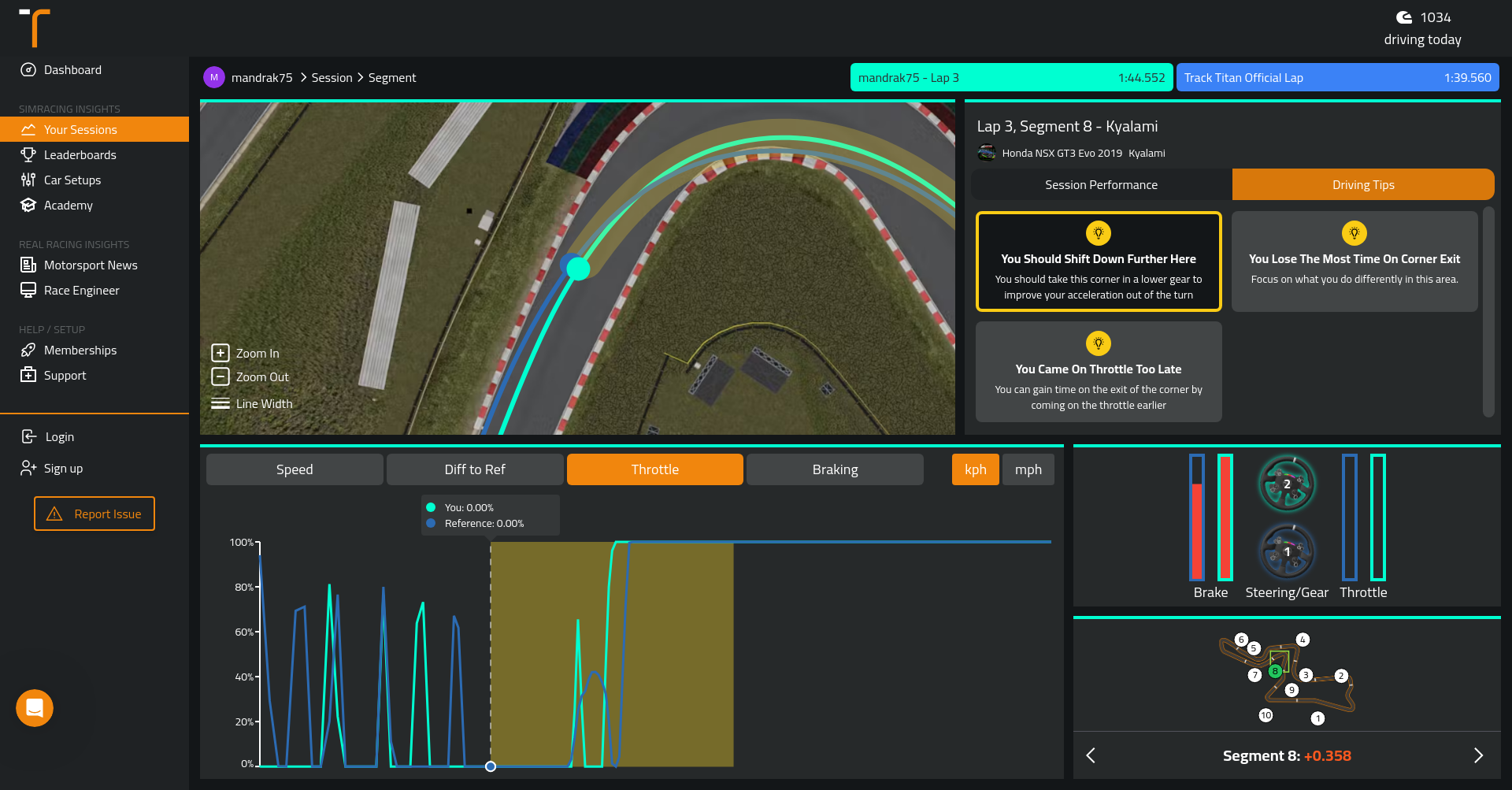
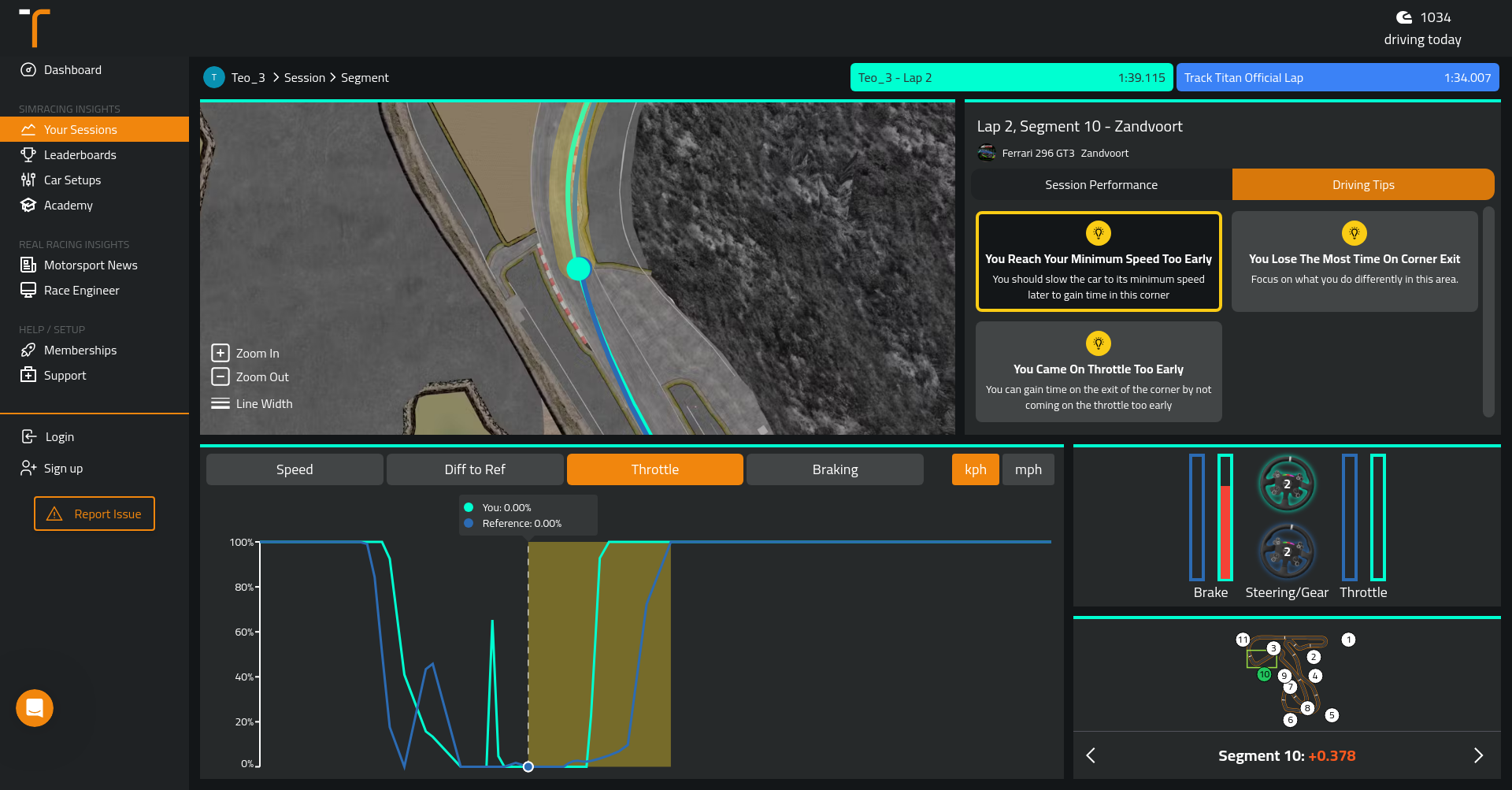
Analyzing the throttle control chart, it's evident that driverA and driverB have different approaches to throttle application. DriverA exhibits a more gradual increase in throttle, which suggests a cautious approach to acceleration, possibly to manage wheelspin. This is in contrast to driverB's sharper increase in throttle application, indicating a more aggressive and confident acceleration out of the corner. However, driverA's earlier and more gradual application of the throttle may be compromising their exit speed. By delaying the onset of full throttle and adopting a sharper application similar to driverB, driverA could potentially improve their corner exit speed. Conversely, driverB's technique seems to maximize the car's acceleration capabilities but could risk inducing wheelspin if not managed correctly. DriverA should aim for a balance between these two methods to optimize their corner exit strategy.

Analyzing the braking chart, it's evident that driverA initiates braking significantly earlier than driverB. This early brake application results in a longer duration of time spent decelerating, which could be contributing to a slower corner entry speed. DriverA's peak brake pressure is also less intense compared to driverB, indicating a more cautious approach to the corner. On the other hand, driverB applies the brakes later and with more force, suggesting a more aggressive entry into the corner. This allows for maintaining higher speeds upon approach and potentially gaining time on corner entry. The chart shows that driverB's brake pressure decreases more sharply as well, which could indicate a confident transition from braking to turning. To improve performance, driverA should focus on delaying their braking point and applying stronger initial brake pressure to match the aggressive entry demonstrated by driverB.