114,324
114K
Laps driven today

iRacing

Le Mans Ultimate

Assetto Corsa Competizione

Assetto Corsa

F1 25

Assetto Corsa EVO

Automobilista 2

Forza Motorsport

F1 24

F1 2021

F1 23

F1 2020


Lap 2
Segment 7
2:25.090
7th Feb 2024
Assetto Corsa Competizione
Spa-Francorchamps - BMW M4 GT3 2022

The speed chart analysis indicates that driverB enters corners with less speed than driverA, resulting in a slower pace and lower minimum speed within the corner. DriverB's later throttle application delays acceleration, suggesting the need to carry more speed through corner entry and engage the throttle earlier for improved exit velocity and lap times. DriverA, on the other hand, shows hesitancy in throttle control compared to driverB's decisive and intense application post-braking. DriverA's gradual and delayed throttle input leads to a loss of time. To enhance performance, driverA should apply the throttle earlier and with greater commitment to maintain momentum through corner exits. In terms of braking, driverA initiates braking earlier and with less intensity than driverB, leading to a slower corner entry. DriverA also releases the brakes more gradually, indicating less effective use of trail braking compared to driverB's quicker brake release that maintains higher speeds through corners. For improvement, driverA should delay braking while intensifying initial application and work on a quicker brake release for better momentum into and through corners.
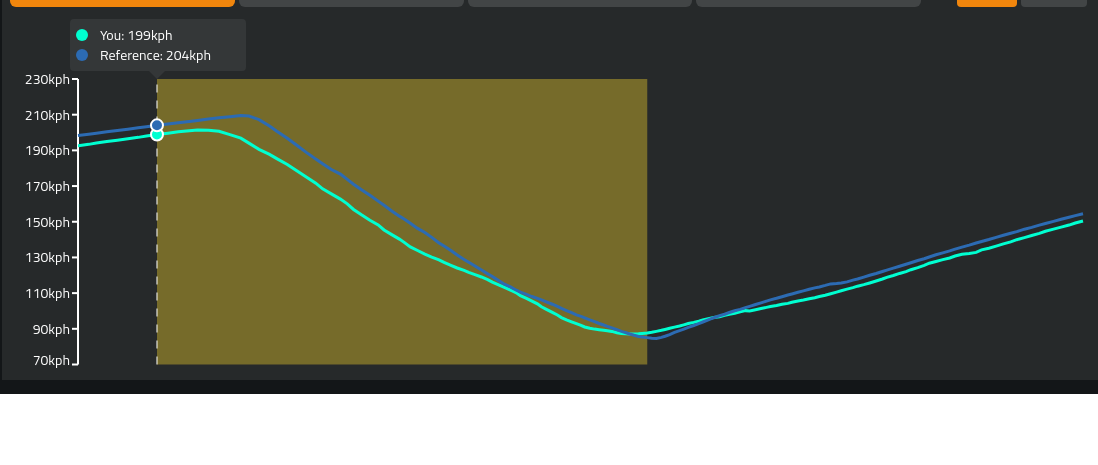
Analyzing the speed chart, it's evident that driverB is entering the corner at a lower speed compared to driverA. This is indicated by the initial speed difference at the very start of the chart on the left, suggesting that driverB exited the previous corner with less momentum. This deficit in entry speed sets a slower pace for driverB throughout the corner, culminating in a lower minimum speed within the corner itself. Furthermore, driverB's minimum speed occurs noticeably later than that of driverA, indicating a delayed throttle application. This results in a later acceleration phase for driverB, which is further evidenced by a less steep gradient in their speed chart compared to driverA after the corner's apex. To optimize performance, driverB should focus on carrying more speed through corner entry and engaging the throttle earlier to improve exit velocity and overall lap time.

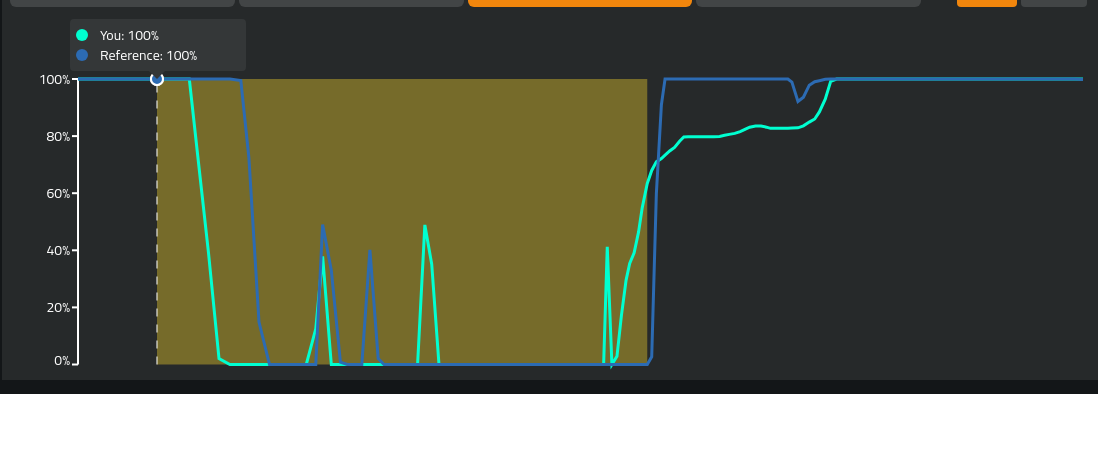
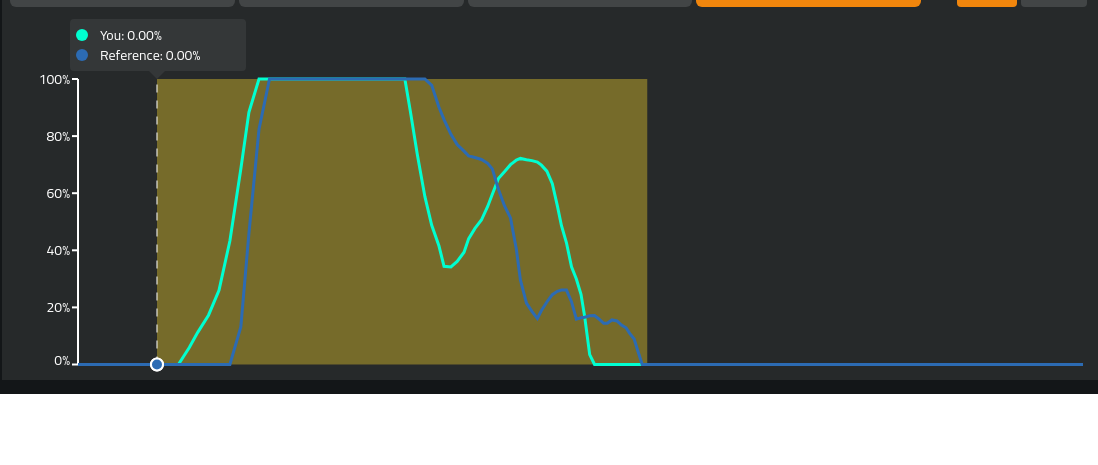
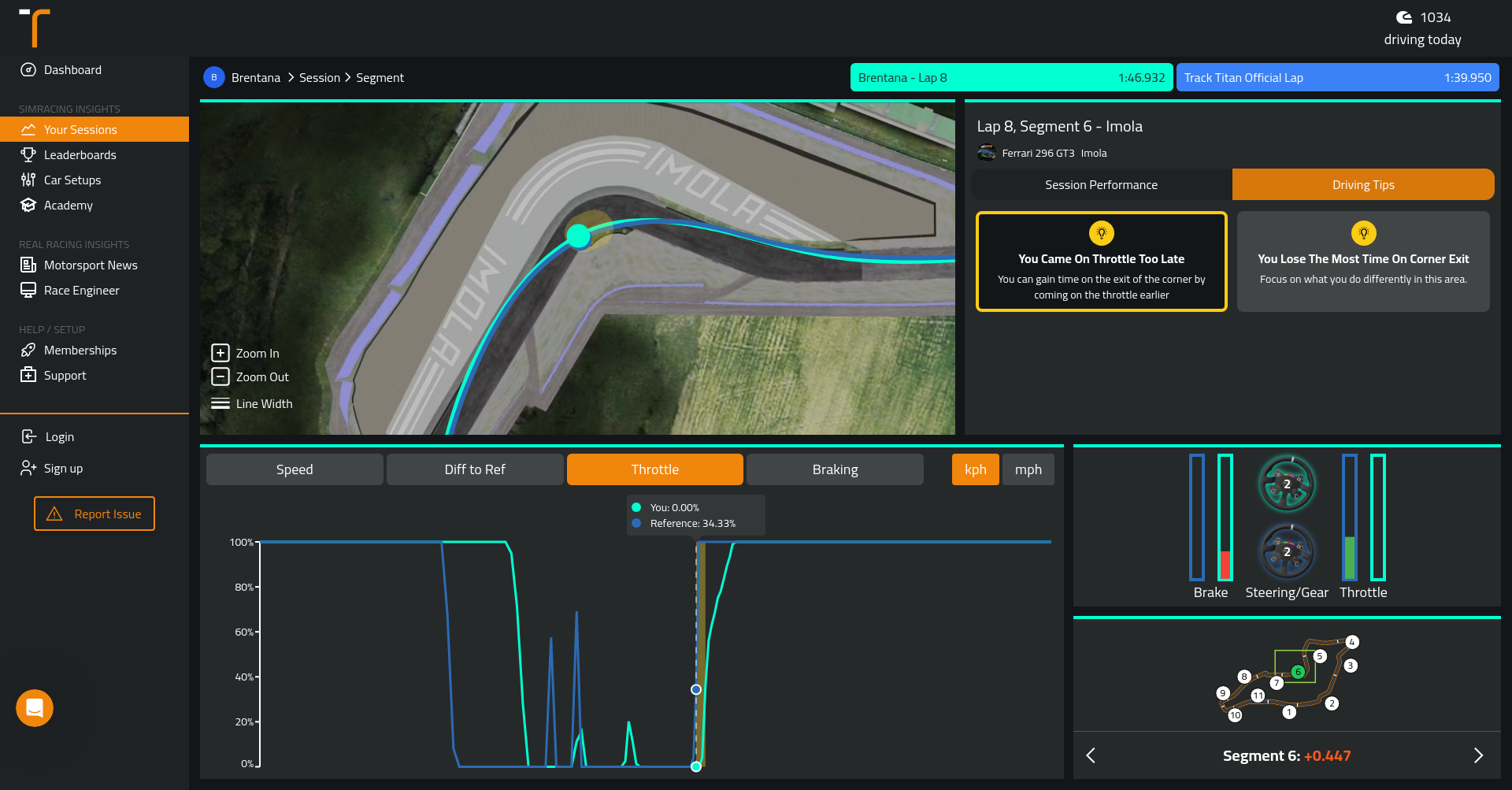
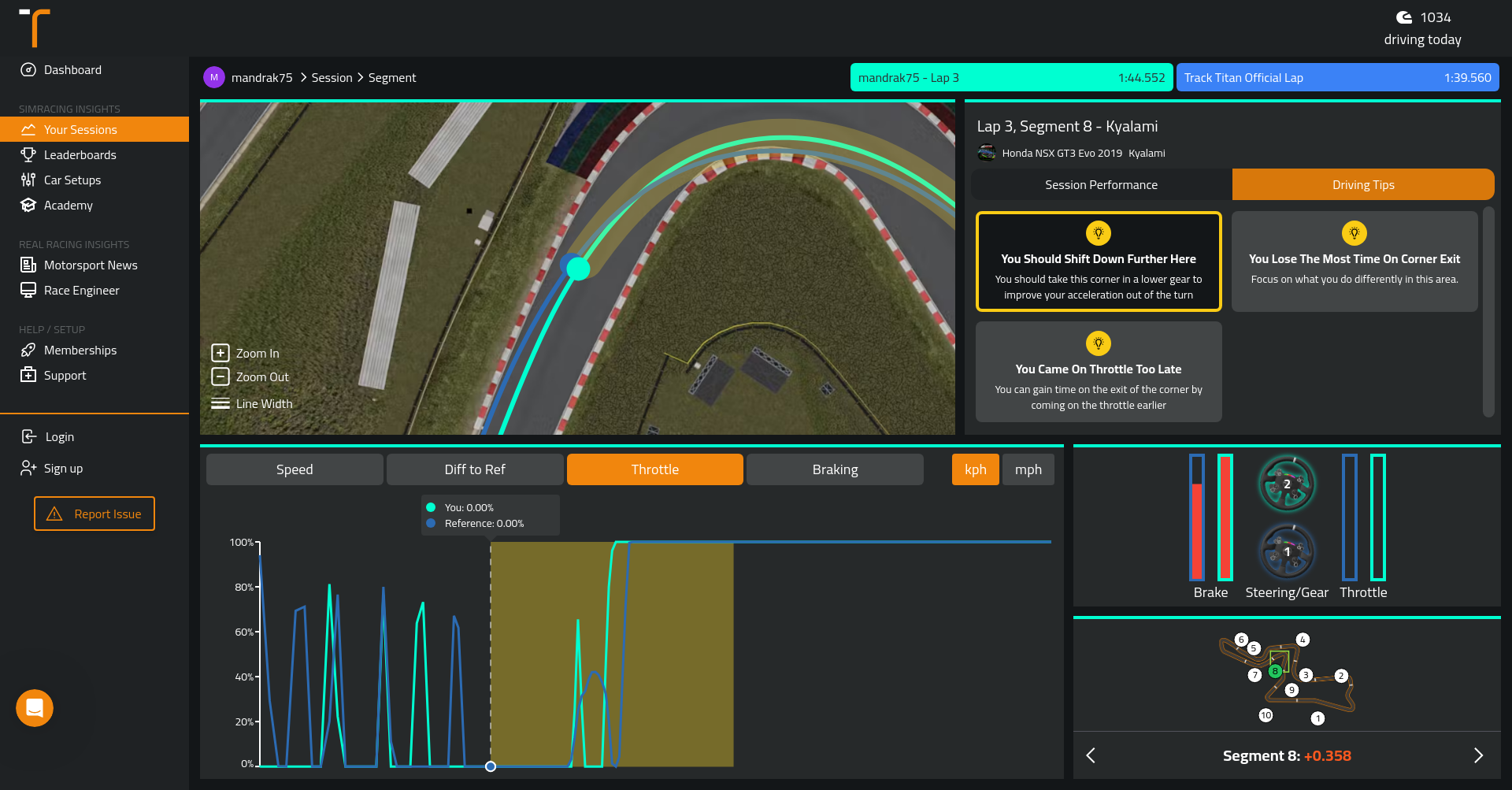
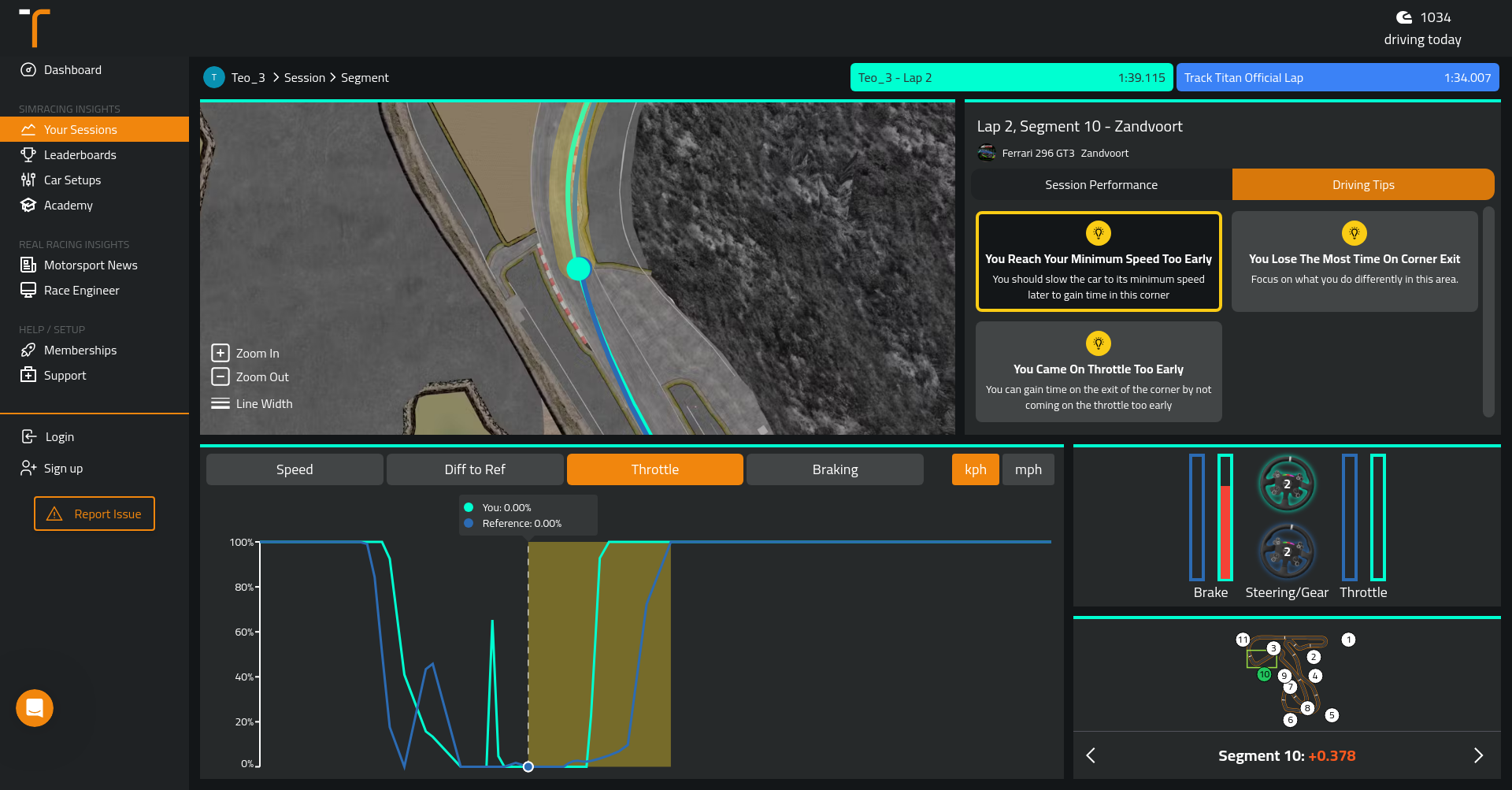
Analyzing the throttle control chart, it's evident that driverA is significantly more hesitant in throttle application compared to driverB. DriverB engages the throttle decisively and with greater intensity shortly after the braking phase, which suggests a confident and aggressive approach to corner exit. This early and strong application likely contributes to better drive out of the corner, which can reduce lap times. In contrast, driverA's gradual and delayed throttle input indicates a loss of time due to coming on power too late. The chart shows that driverA waits longer after braking before applying the throttle and does so with less conviction. To improve performance, driverA should focus on applying the throttle earlier and with more commitment, mirroring driverB's input pattern to maintain momentum and speed through the corner exit.

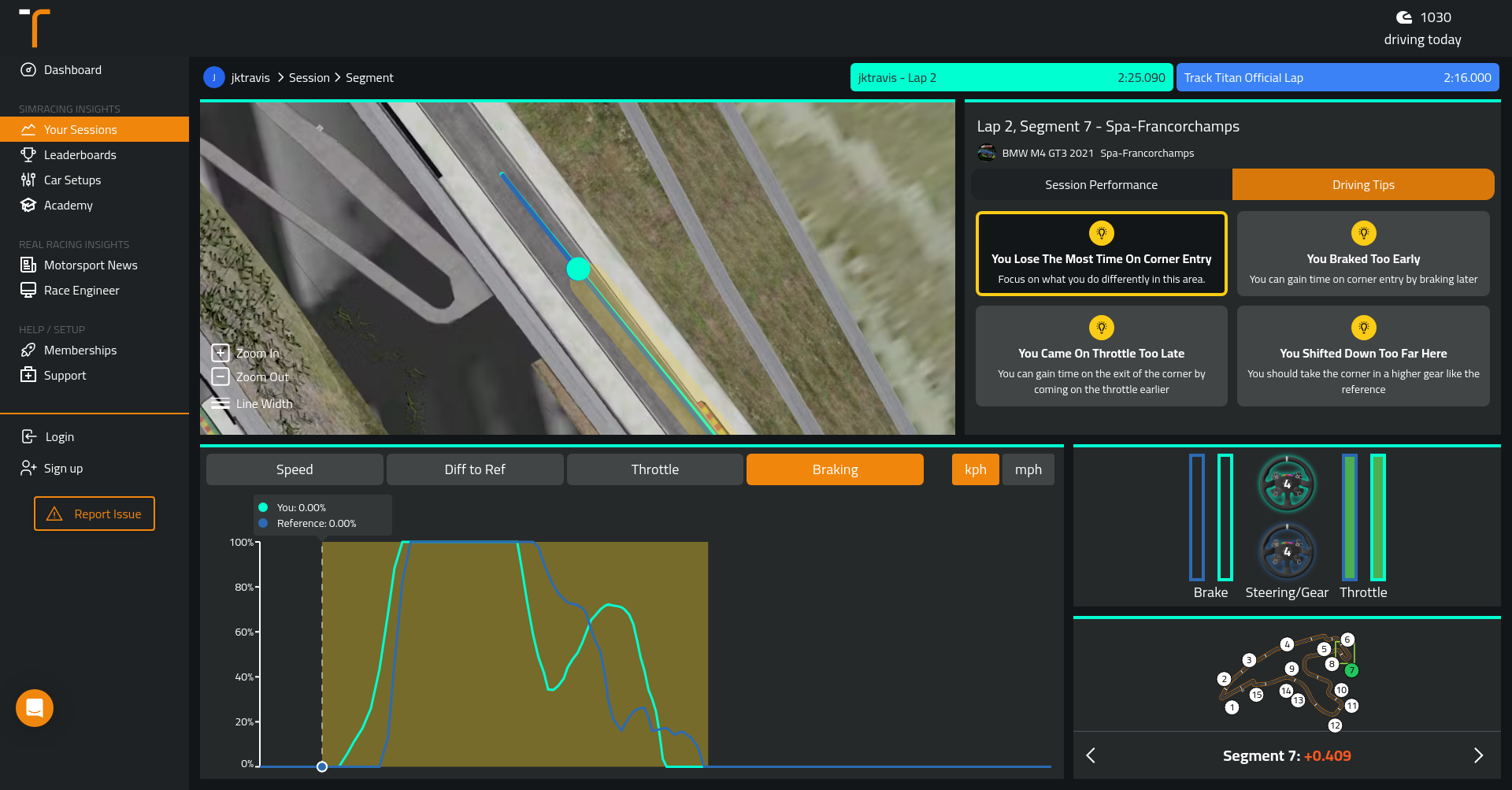
In the provided braking analysis chart, there is a clear discrepancy between driverA and driverB's braking inputs. DriverA initiates the braking phase significantly earlier than driverB, as indicated by the earlier rise in brake application percentage. This early braking results in driverA entering the corner at a lower speed compared to driverB, who brakes later and therefore carries more speed into the corner. The intensity of driverA's initial brake application is also less aggressive than that of driverB, suggesting a more cautious approach to corner entry. Furthermore, driverA's brake release is more gradual compared to driverB, who shows a quicker reduction in brake application. This suggests that driverB is utilizing trail braking more effectively, maintaining higher speeds through the corner by blending the transition from braking to turning smoothly. To improve performance, driverA should focus on delaying and intensifying initial brake application while also working on a quicker release of the brakes to better carry momentum into and through the corner.