117,904
117K
Laps driven today

iRacing

Le Mans Ultimate

Assetto Corsa Competizione

Assetto Corsa

F1 25

Assetto Corsa EVO

Automobilista 2

Forza Motorsport

F1 24

F1 2021

F1 23

F1 2020


Lap 18
Segment 1
1:48.162
6th Feb 2024
Assetto Corsa Competizione
Watkins Glen - BMW M4 GT3 2022

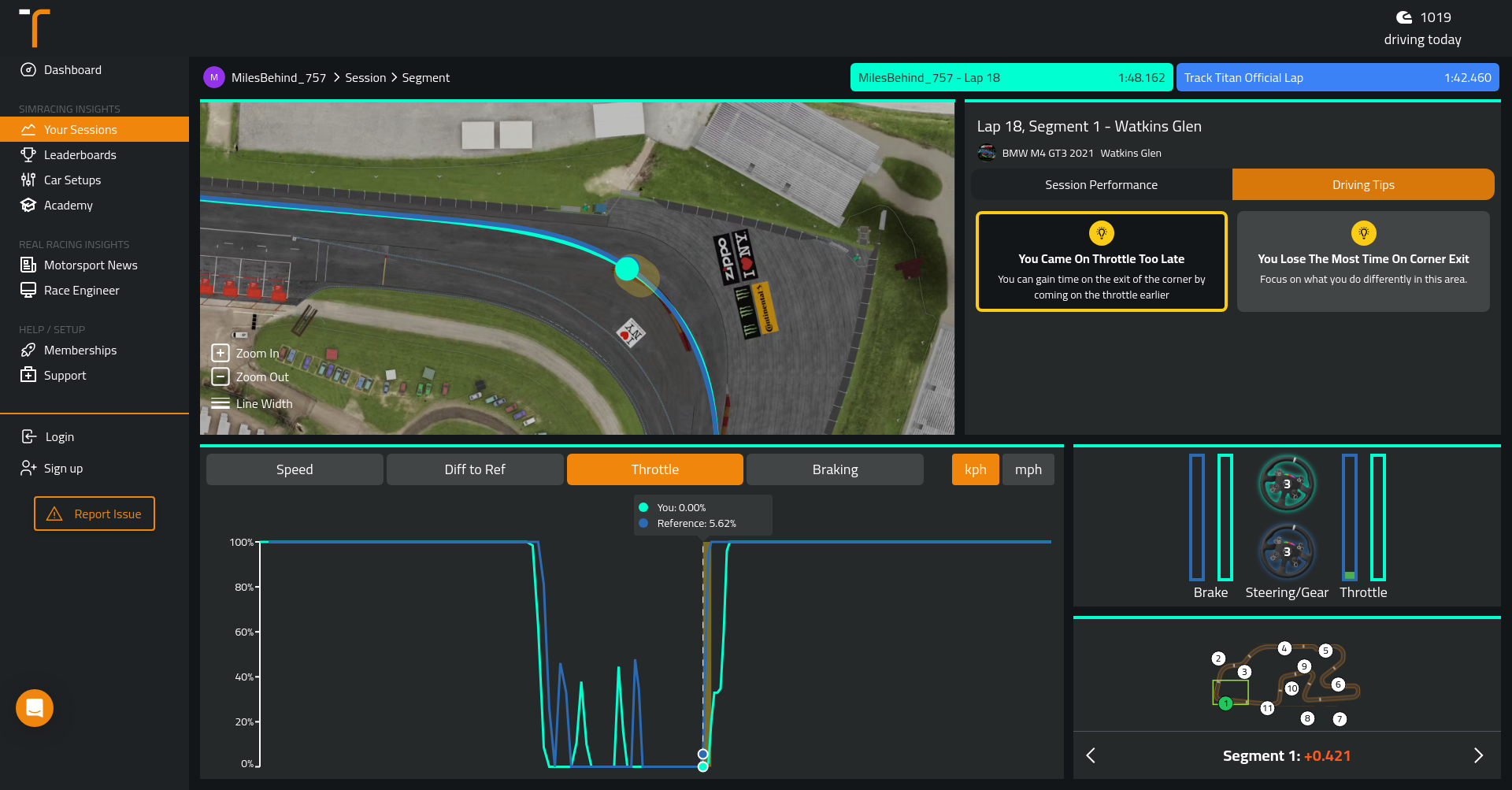
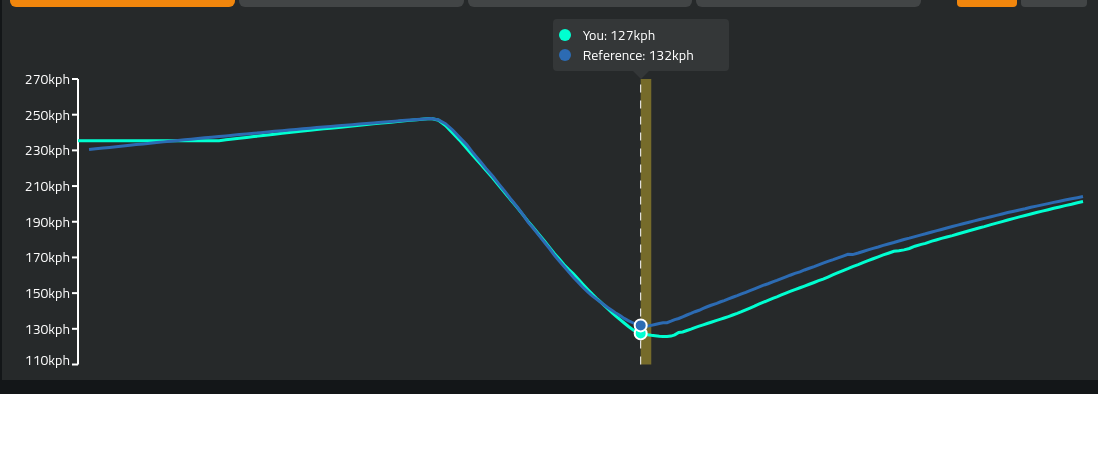
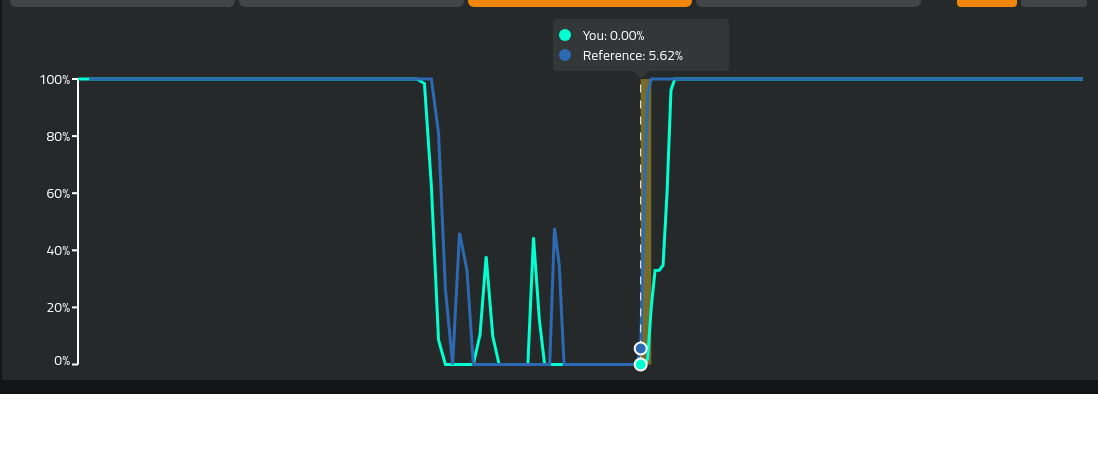
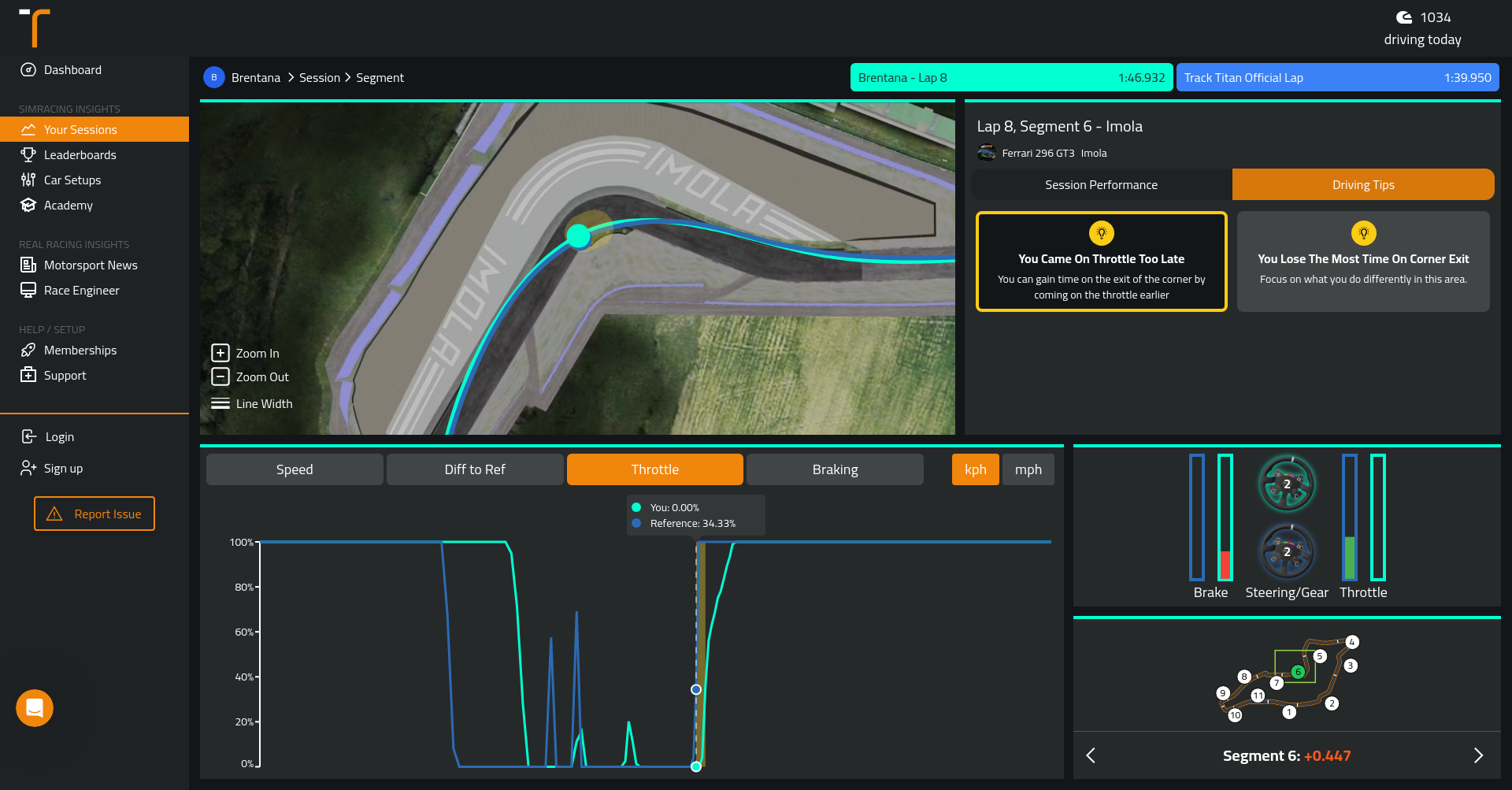
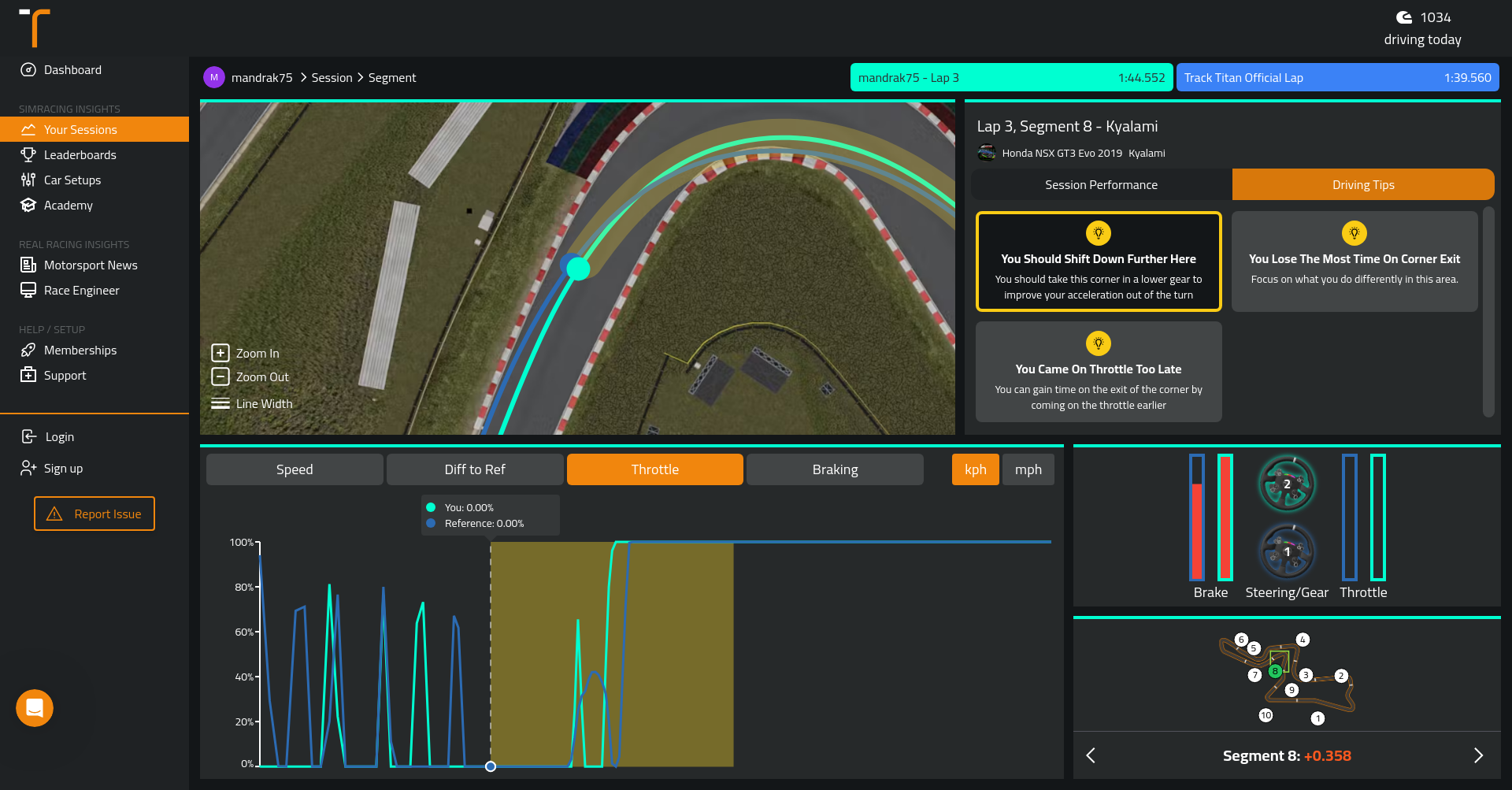
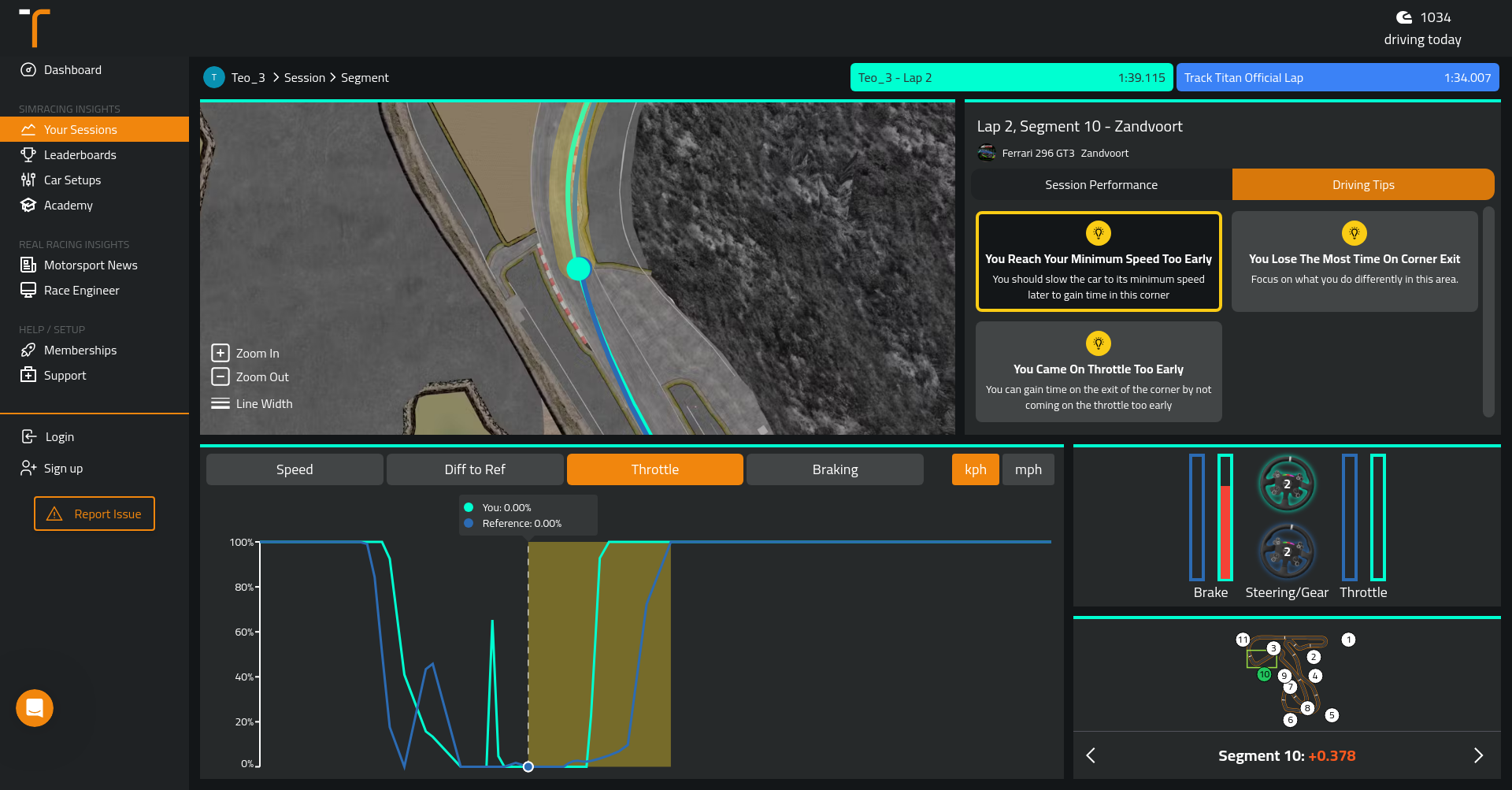
The speed chart analysis reveals that driverB enters the corner with less speed than driverA, highlighting a need for improvement in carrying momentum from the previous corner. DriverB's minimum speed occurs later than driverA's, suggesting a delay in throttle application. To enhance performance, driverB should apply the throttle earlier to increase acceleration out of the corner and carry more speed onto the straight. In contrast, throttle control analysis shows that driverB applies the throttle earlier and more aggressively than driverA, resulting in a steeper curve on the chart and likely contributing to higher exit speeds and better lap times. DriverA exhibits a hesitant and inconsistent throttle application, which may indicate a lack of confidence or traction issues. For improved results, driverA should focus on earlier and smoother throttle application to maintain momentum and maximize speed onto the subsequent straight.
Analyzing the speed chart, it's evident that driverB enters the corner with a lower speed compared to driverA. This is indicated by the initial left portion of the chart where driverB's speed line starts below that of driverA. This suggests that driverB carried less momentum from the previous corner into this one, which is a critical area for improvement as it sets up the entire cornering phase. Focusing on the corner exit, driverB's minimum speed occurs noticeably later than driverA's, indicating a delayed throttle application. The consequence of this is clear in the subsequent acceleration phase; driverB's speed line has a less steep gradient compared to driverA, reflecting slower acceleration out of the corner. To optimize performance, driverB should aim to get on the throttle earlier, mirroring closer to when driverA begins to accelerate. This will help carry more speed onto the straight and improve overall lap time.

In the provided throttle control analysis, driverA's throttle application is noticeably more hesitant and delayed compared to driverB. DriverB initiates throttle application at an earlier point, which is evident from the steeper curve on the chart. This indicates that driverB is accelerating out of the corner sooner than driverA, which likely contributes to a higher exit speed and potentially better lap times. Furthermore, driverA's curve shows a slower and less consistent increase in throttle application, suggesting a lack of confidence or traction issues on corner exit. In contrast, driverB's line is smoother and more aggressive, demonstrating a confident and controlled acceleration. To improve performance, driverA should focus on applying the throttle earlier and more smoothly to maintain momentum and maximize speed onto the following straight.