114,324
114K
Laps driven today

iRacing

Le Mans Ultimate

Assetto Corsa Competizione

Assetto Corsa

F1 25

Assetto Corsa EVO

Automobilista 2

Forza Motorsport

F1 24

F1 2021

F1 23

F1 2020


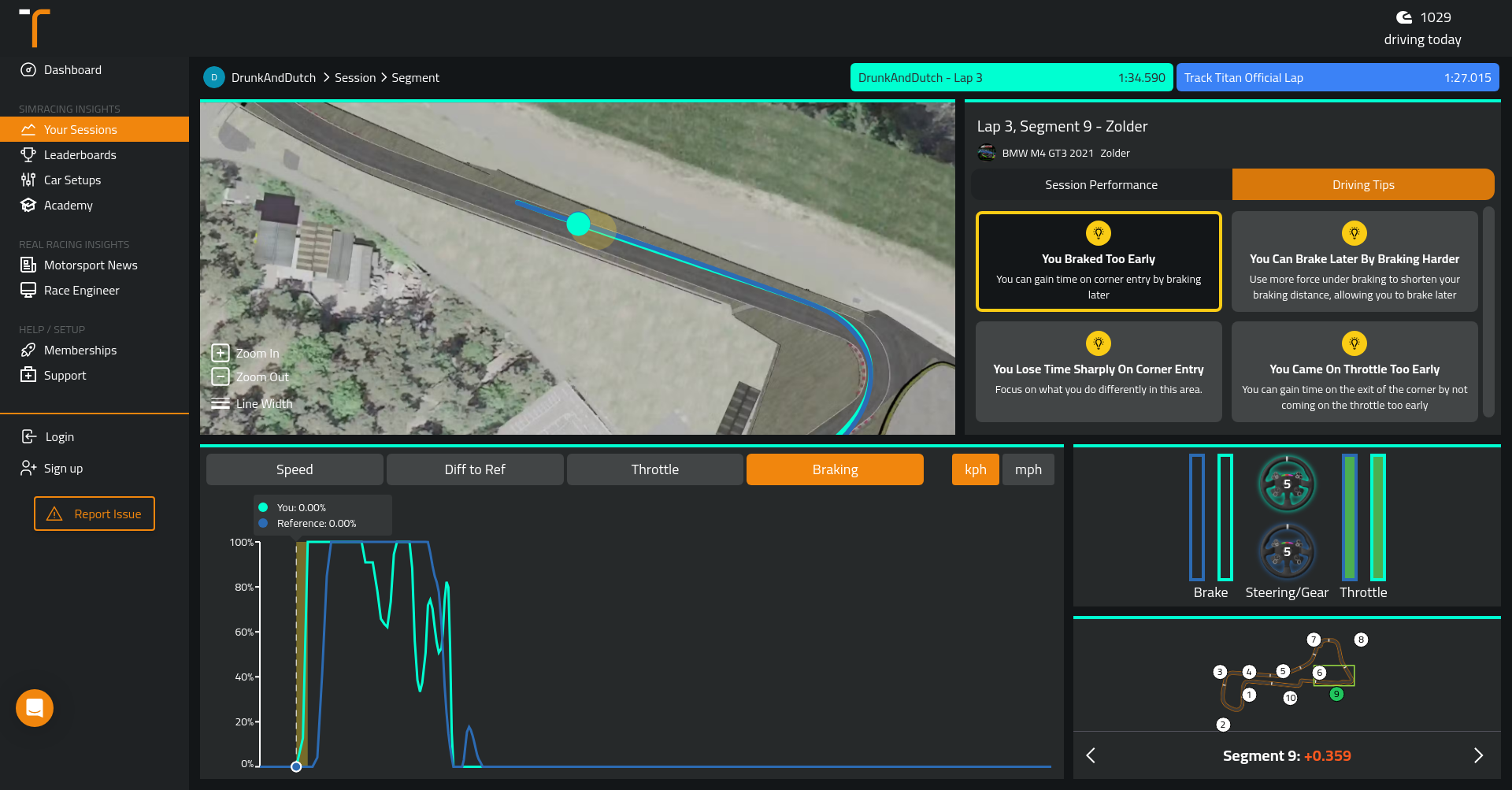
Lap 3
Segment 9
1:34.590
6th Feb 2024
Assetto Corsa Competizione
Zolder - BMW M4 GT3 2022

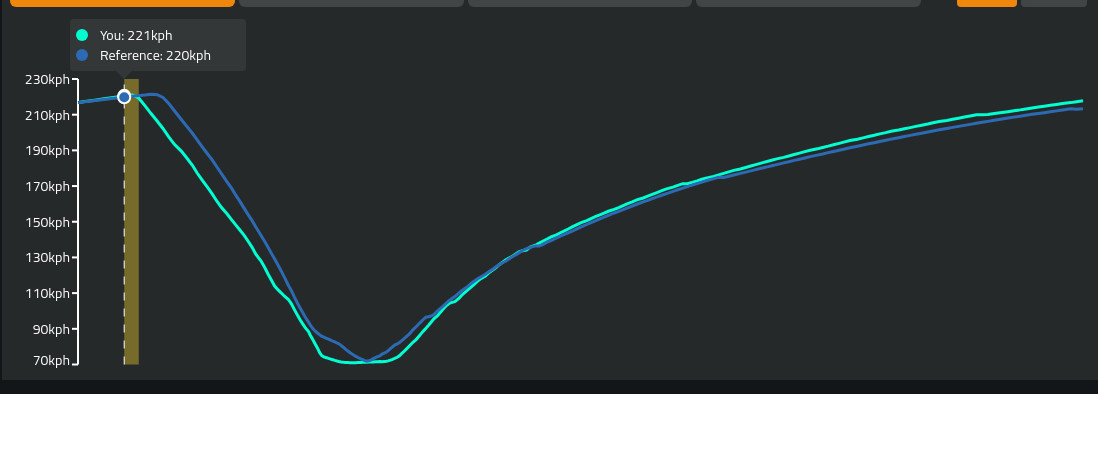
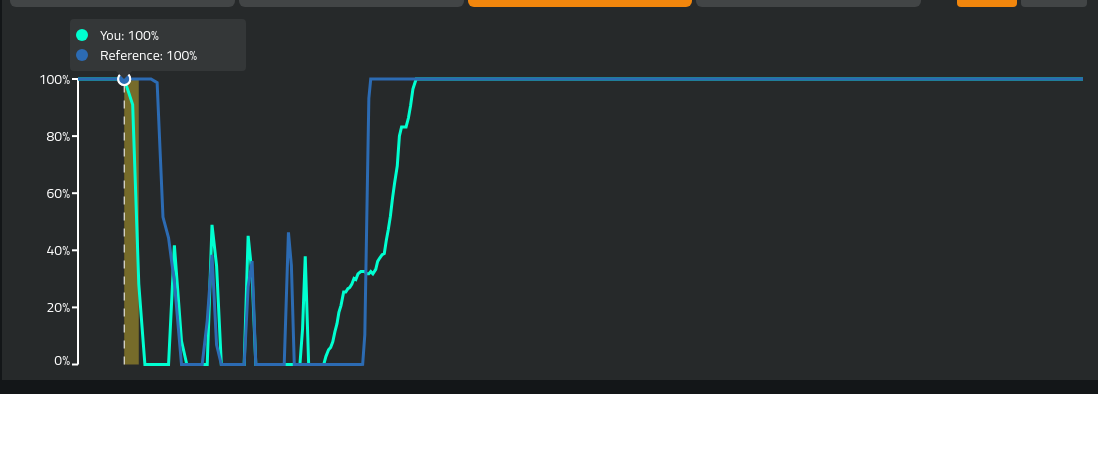
The speed chart analysis reveals that driverB enters the corner at a lower speed than driverA, due to less momentum from the previous corner. DriverB also has a delayed minimum speed point, leading to slower acceleration and exit speeds. To improve, driverB should brake later and harder to maintain a higher entry speed. In throttle control, driverA applies throttle too early, risking understeer or wheelspin. DriverB's gradual throttle increase suggests better traction management. DriverA should delay throttle input and apply power more smoothly for better exit speeds. The braking analysis shows driverA with an aggressive initial brake application but an early release, which may compromise control. DriverB uses sustained brake pressure for longer, indicating effective trail braking for stability and potentially faster exits. DriverA should modulate brake pressure progressively and maintain it into the turn to match driverB's trail braking technique.
Analyzing the speed chart, it's evident that driverB enters the corner with a lower speed compared to driverA. This suggests that driverB exited the previous corner with less momentum, which has a cascading effect on their entry speed into the current corner. Additionally, driverB's minimum speed occurs later than driverA's, indicating a delay in throttle application. This delay leads to a slower acceleration phase for driverB, resulting in time lost on corner exit as seen by the lower exit speed and shallower gradient of the speed increase compared to driverA. Furthermore, driverB's early braking is apparent in the initial part of the chart where their speed drops sooner and more sharply than driverA's. To optimize performance, driverB should focus on braking later and applying more force under braking to shorten the distance needed to slow down. This would allow for a higher entry speed and potentially a quicker lap time by maintaining closer proximity to driverA's speed profile throughout the corner.

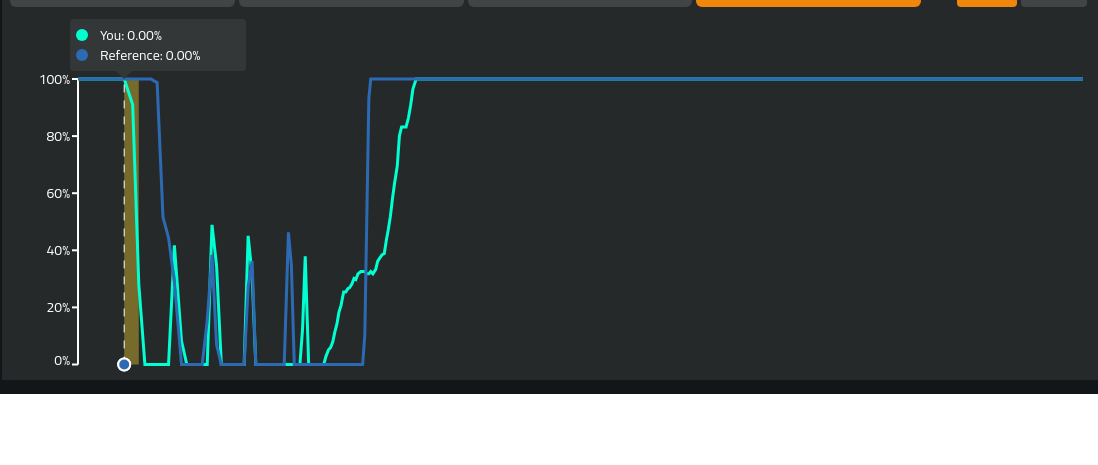
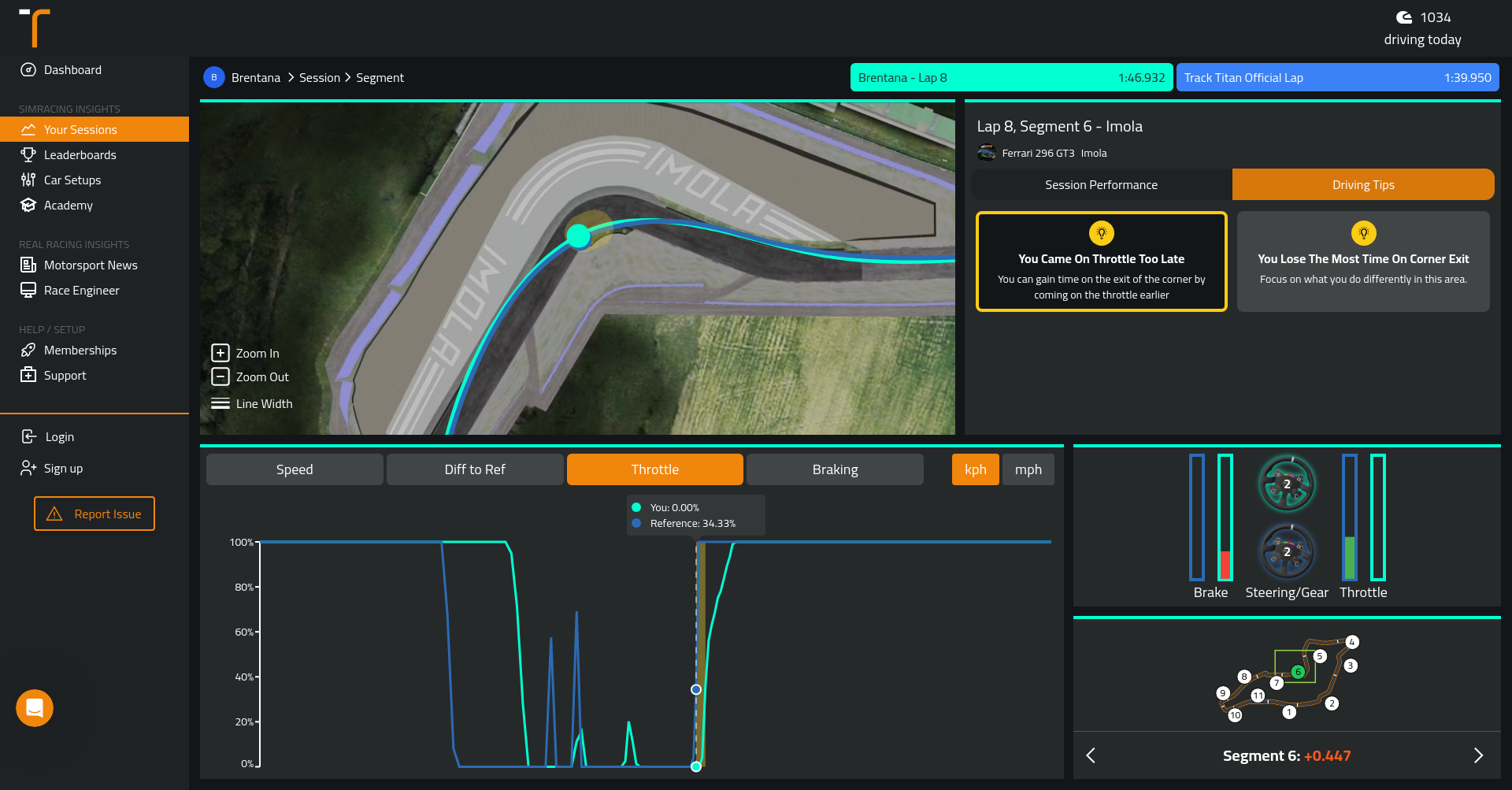
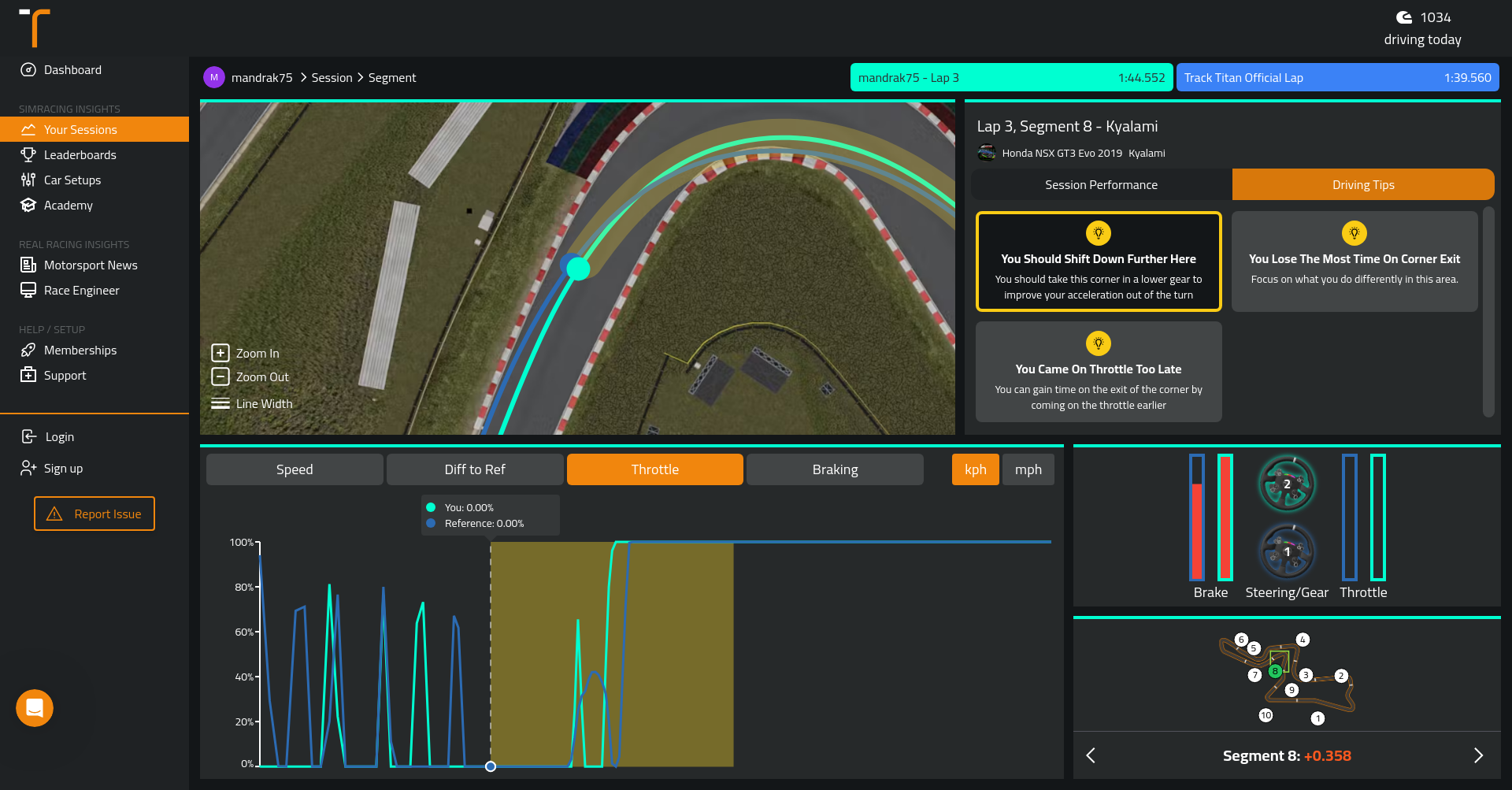
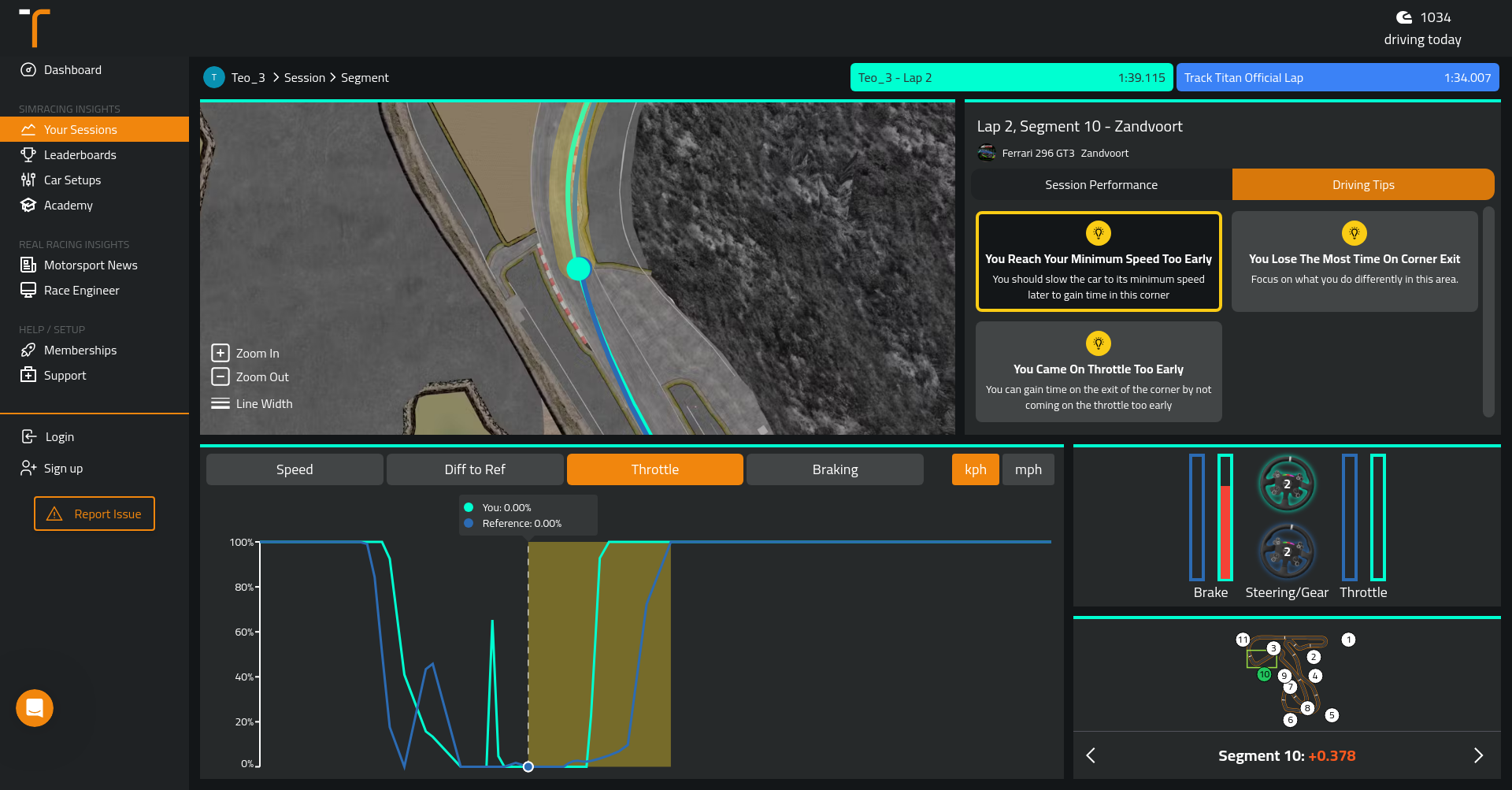
In the provided throttle control analysis, there is a distinct difference in the timing and intensity of throttle application between driverA and driverB. DriverA initiates throttle application significantly earlier than driverB, as indicated by the premature rise in their curve. This early application likely leads to a loss of potential exit speed, as coming on the throttle too soon can cause understeer or wheelspin, compromising the drive out of the corner. Furthermore, driverB's graph shows a more gradual and controlled increase in throttle application. This suggests that driverB is managing traction better, allowing for a smoother acceleration out of the corner. DriverA should aim to delay their initial throttle input and focus on modulating the power more smoothly to match the reference line shown by driverB. By doing so, they can improve their exit speed and overall lap time.

In the provided braking analysis chart, there is a clear distinction between the braking inputs of driverA and driverB. DriverA initiates braking with a sharp increase in brake application, reaching peak pressure swiftly. This indicates a more aggressive approach to the braking zone. However, driverA begins to release the brake earlier than driverB, suggesting a premature easing off which could lead to a higher speed upon corner entry but potentially less control. On the other hand, driverB applies the brakes with less initial force but maintains higher pressure for a longer duration before corner entry. This sustained brake pressure indicates that driverB is utilizing trail braking to manage speed and car balance deeper into the corner. DriverB's technique could provide better car stability and potentially allow for a later apex, which can lead to faster corner exit speeds. To improve lap times, driverA should consider modulating brake pressure more progressively and maintain it longer into the turn to emulate the trail braking effectiveness demonstrated by driverB.