120,898
120K
Laps driven today

iRacing

Le Mans Ultimate

Assetto Corsa Competizione

Assetto Corsa

F1 25

Assetto Corsa EVO

Automobilista 2

Forza Motorsport

F1 24

F1 2021

F1 23

F1 2020


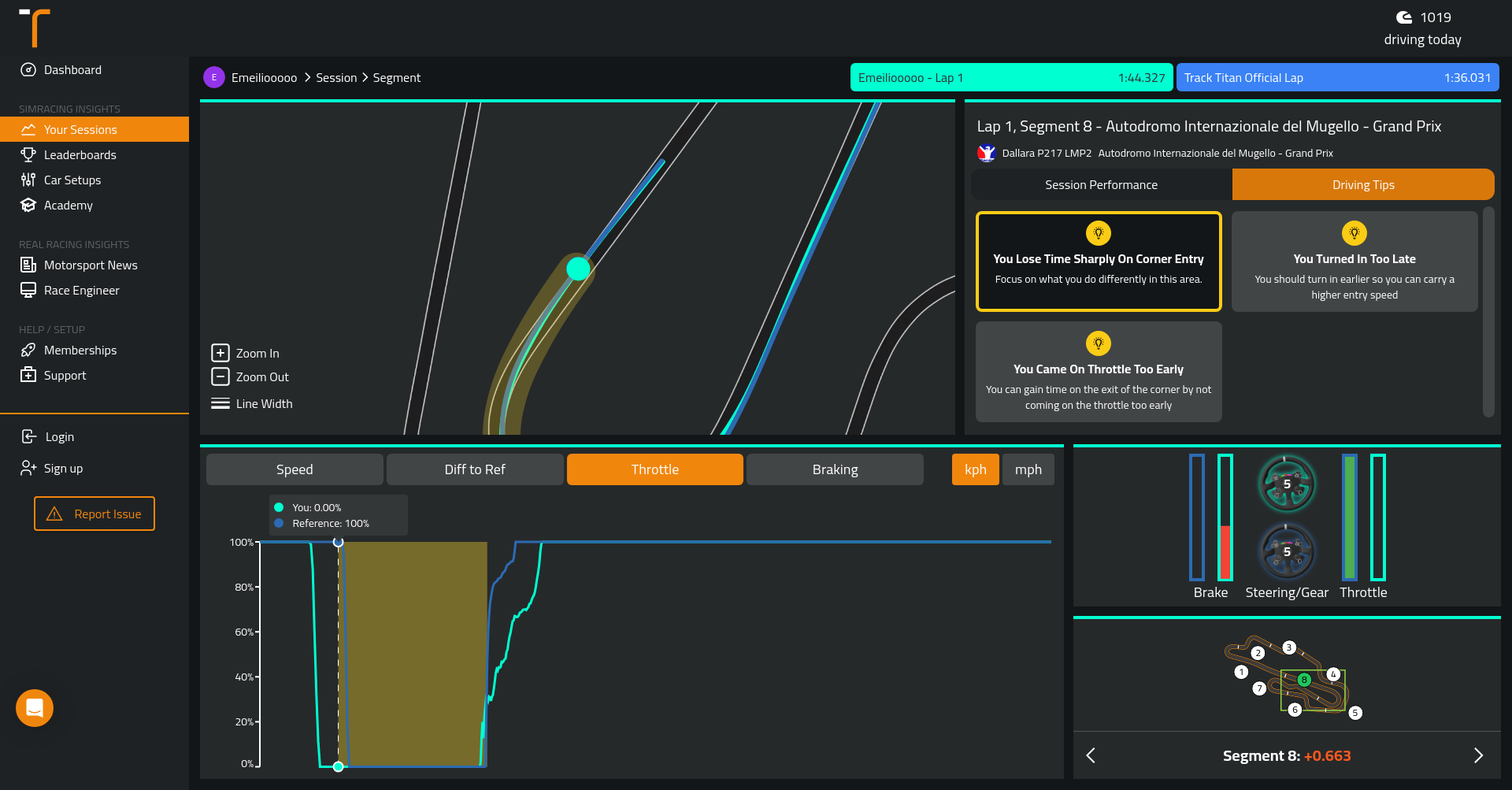
Lap 1
Segment 8
1:44.327
6th Feb 2024
iRacing
Autodromo Internazionale del Mugello - Grand Prix - Dallara P217 LMP2

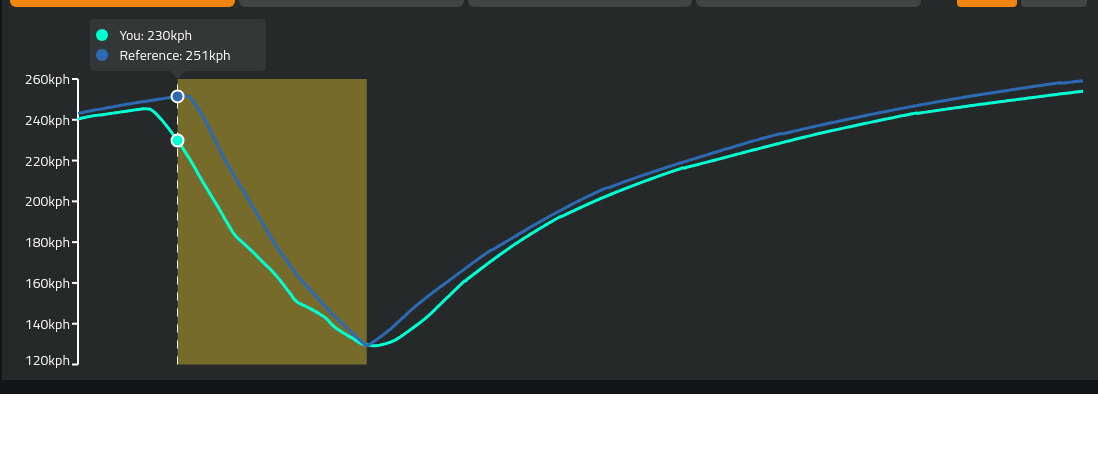
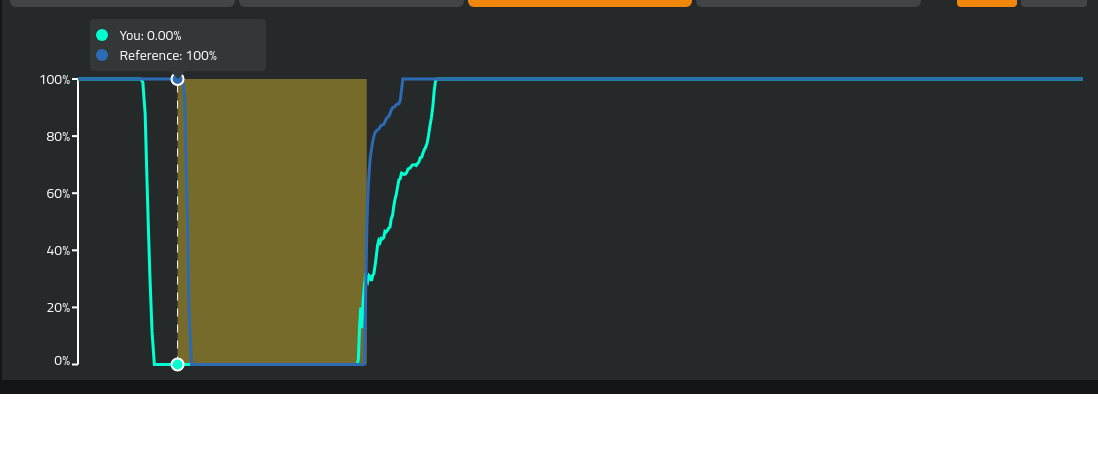
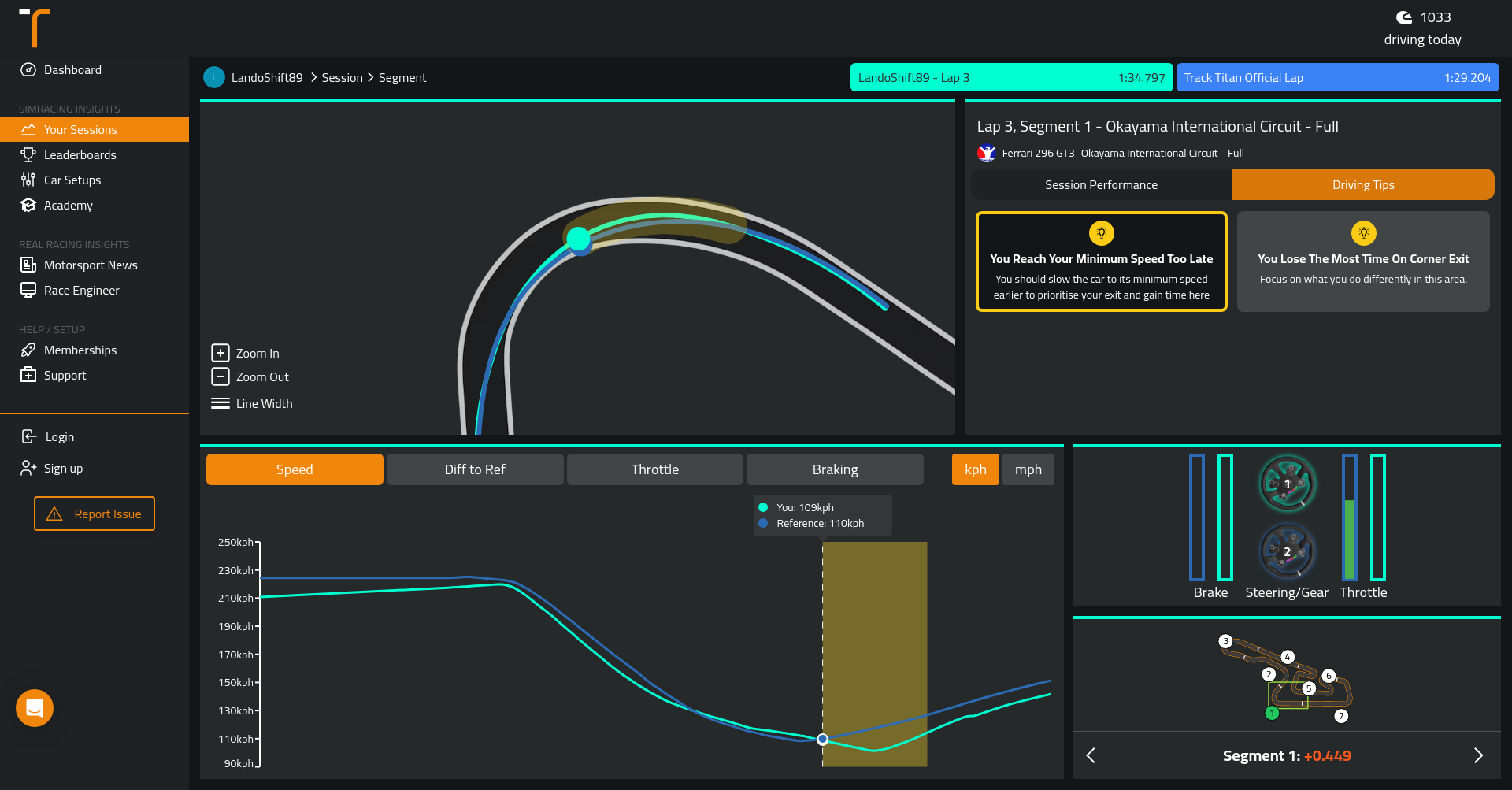
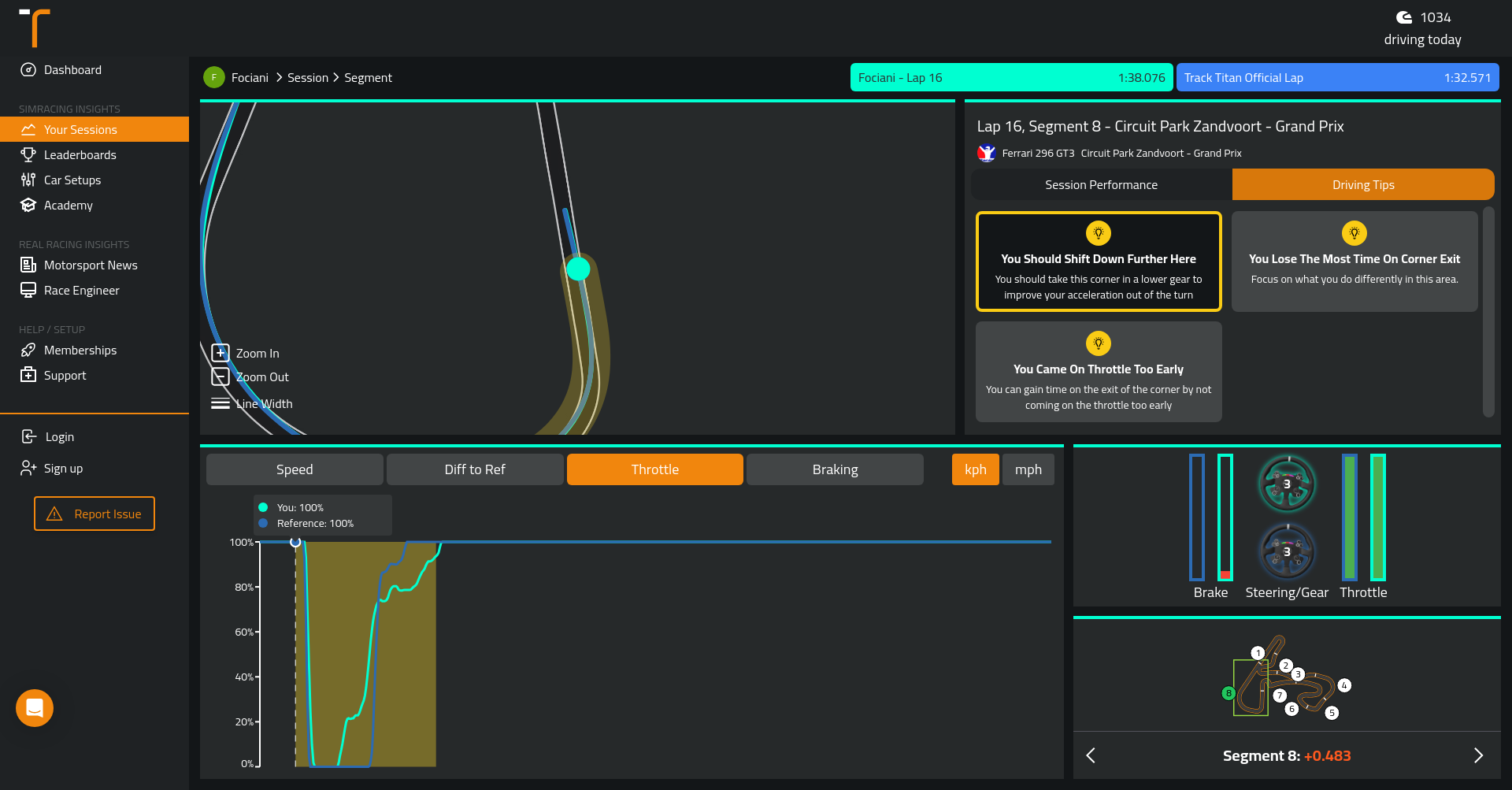
The speed chart analysis reveals that driverB is entering corners at a lower speed than driverA, due to carrying less momentum from the exit of the previous turn. This results in a slower approach and entry into the next corner, which is a key area for time improvement. DriverB's minimum corner speed also occurs later than driverA's, indicating a delay in throttle application and a slower acceleration phase. To enhance performance, driverB should aim for an earlier turn-in to maintain higher entry speed and ensure proper timing on throttle application for more effective acceleration out of the corner. In terms of throttle control, driverA takes a gradual approach to acceleration, likely to manage wheelspin, while driverB is more aggressive and confident with their throttle inputs. DriverA's cautious increase in throttle after braking suggests they are not fully exploiting the car's acceleration capabilities, leading to potential time loss. For better results, driverA should apply the throttle more decisively during corner exit to maximize speed onto subsequent track sections. Overall, both drivers have opportunities to refine their cornering techniques—driverB by carrying more speed through corners and timing their acceleration correctly, and driverA by being more assertive with their throttle application for improved exit speeds.
Analyzing the speed chart, it's evident that driverB is entering the corner at a significantly lower speed compared to driverA. This discrepancy starts right at the beginning of the chart, indicating that driverB exited the previous corner with less momentum. The impact of this is a slower approach and consequently, a reduced entry speed into the current corner, which is a critical loss in time that could be improved upon by carrying more speed from the exit of the previous turn. Furthermore, driverB's minimum speed in the corner occurs later than that of driverA, suggesting a delayed throttle application. This delay leads to a slower acceleration phase for driverB, as seen by a less steep gradient in their speed chart compared to driverA's. To optimize performance, driverB should focus on turning in earlier to maintain higher entry speed and avoid coming on throttle too prematurely, which will enable them to accelerate out of the corner more effectively and gain time on exit.

Analyzing the throttle control chart, it's evident that driverA and driverB have markedly different approaches to throttle application. DriverA displays a gradual increase in throttle, which suggests a cautious approach to acceleration, potentially to manage wheelspin. In contrast, driverB applies the throttle more aggressively and with greater confidence, as indicated by the steeper curve on the chart. This implies that driverB is willing to push the car closer to its limits, which can result in faster exit speeds if managed correctly. Specifically, at the point where both drivers begin to apply throttle after braking, driverA's curve shows a slower and more hesitant increase compared to driverB's rapid application. This hesitation from driverA could be causing a loss of time as they are not utilizing the car's full acceleration potential. To improve, driverA should focus on applying the throttle more decisively at this stage of corner exit to maximize speed onto the following straight or section of track.