117,319
117K
Laps driven today

iRacing

Le Mans Ultimate

Assetto Corsa Competizione

Assetto Corsa

F1 25

Assetto Corsa EVO

Automobilista 2

Forza Motorsport

F1 24

F1 2021

F1 23

F1 2020


Lap 7
Segment 2
2:05.505
6th Feb 2024
Assetto Corsa Competizione
Bathurst (Mount Panorama) - Ferrari 296 GT3

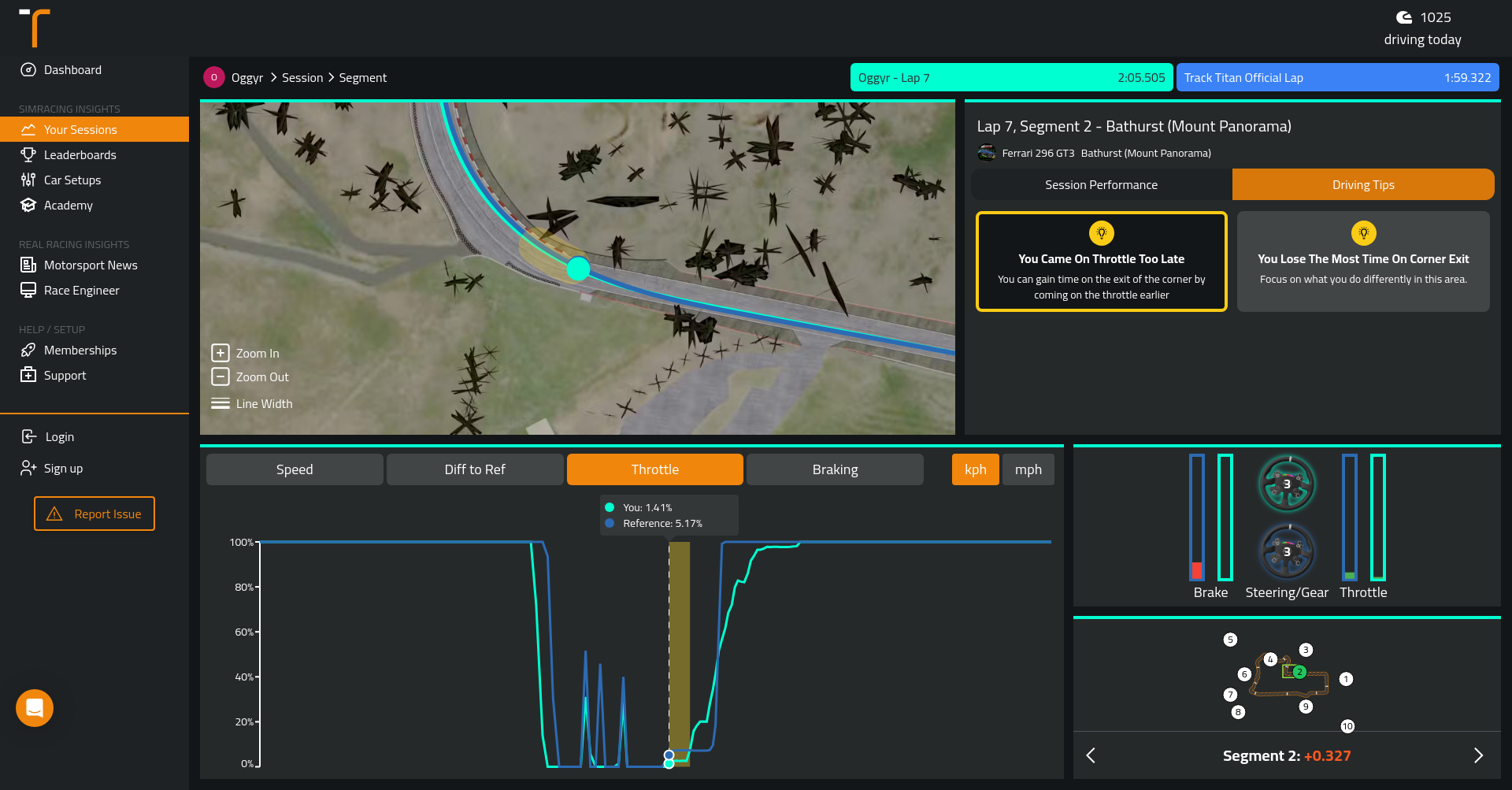
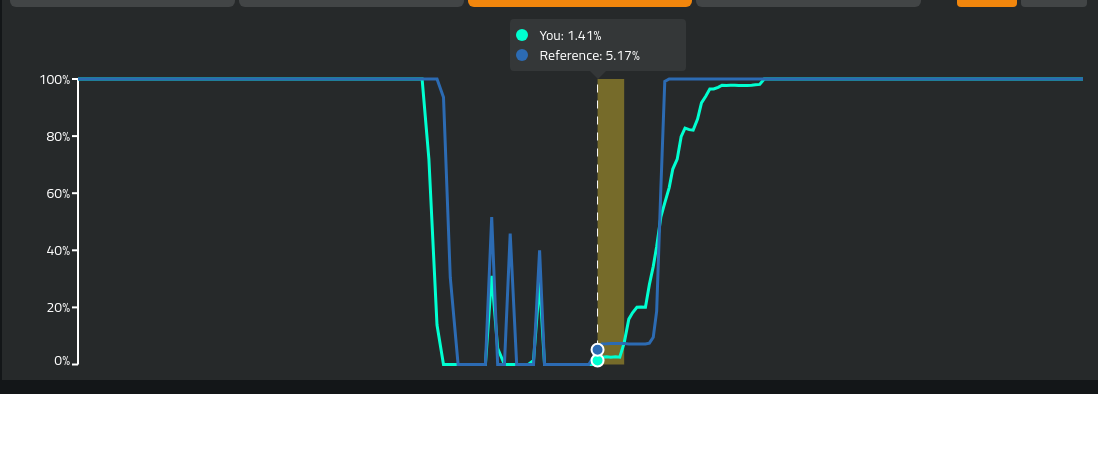
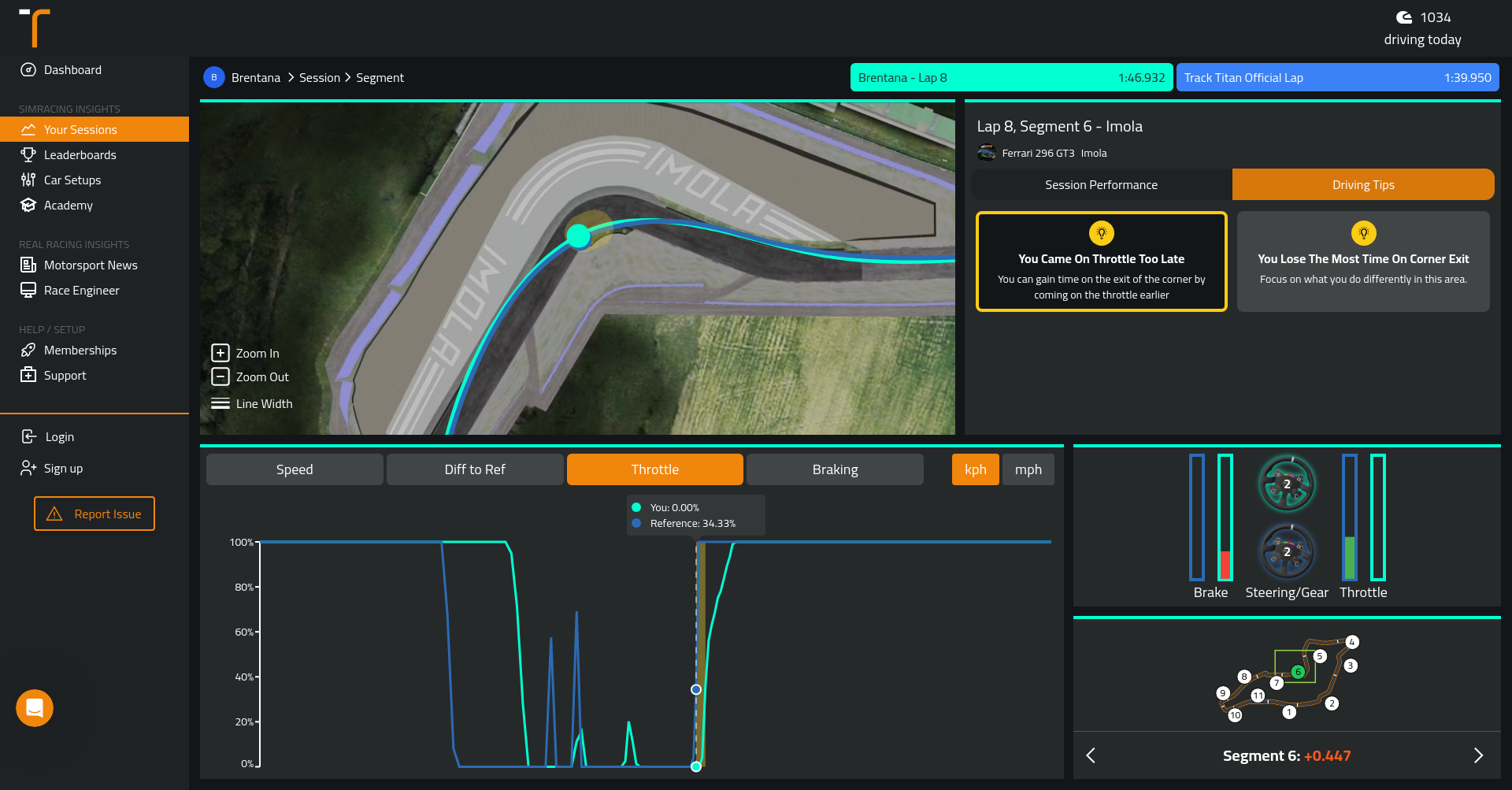
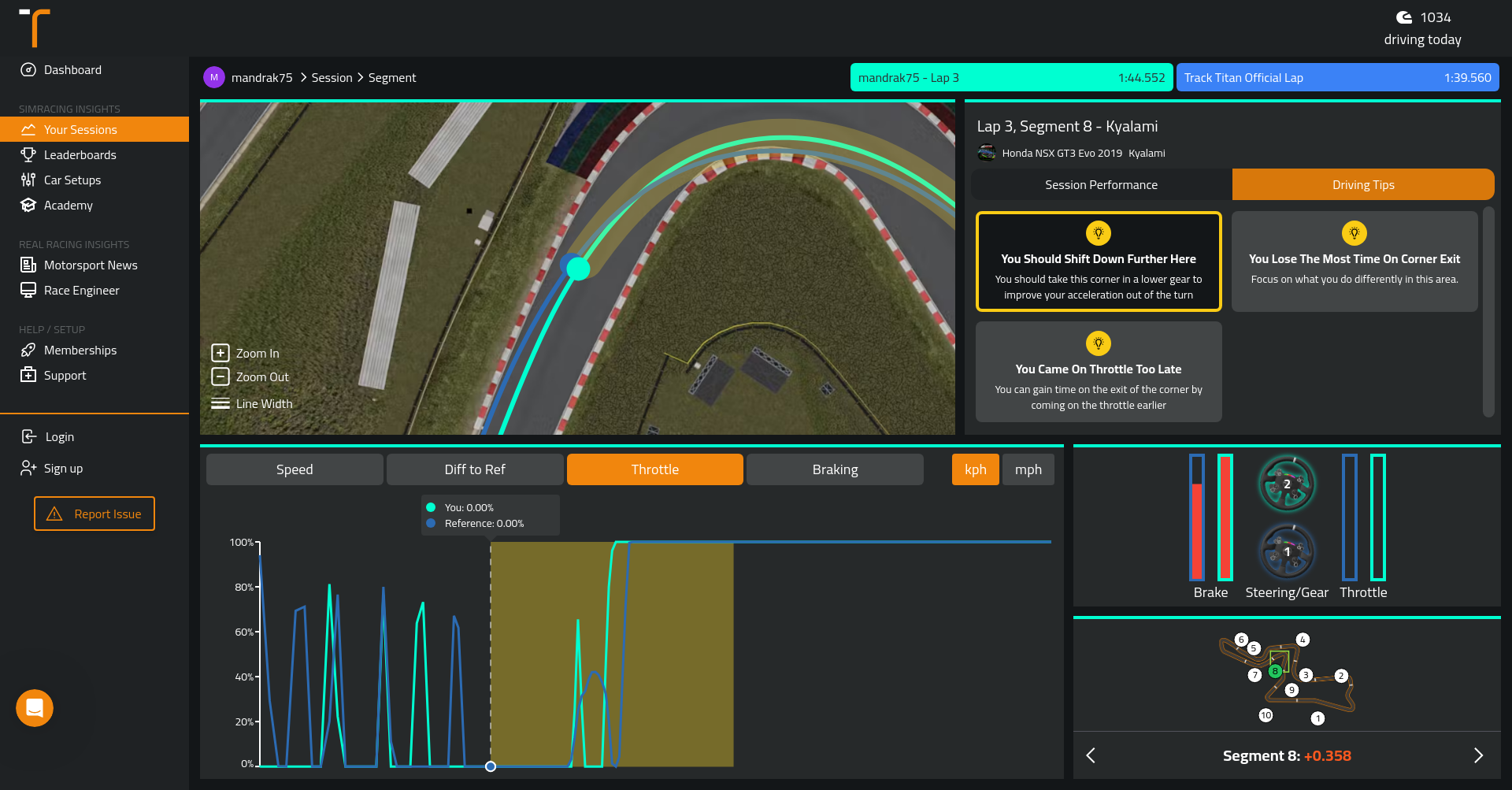
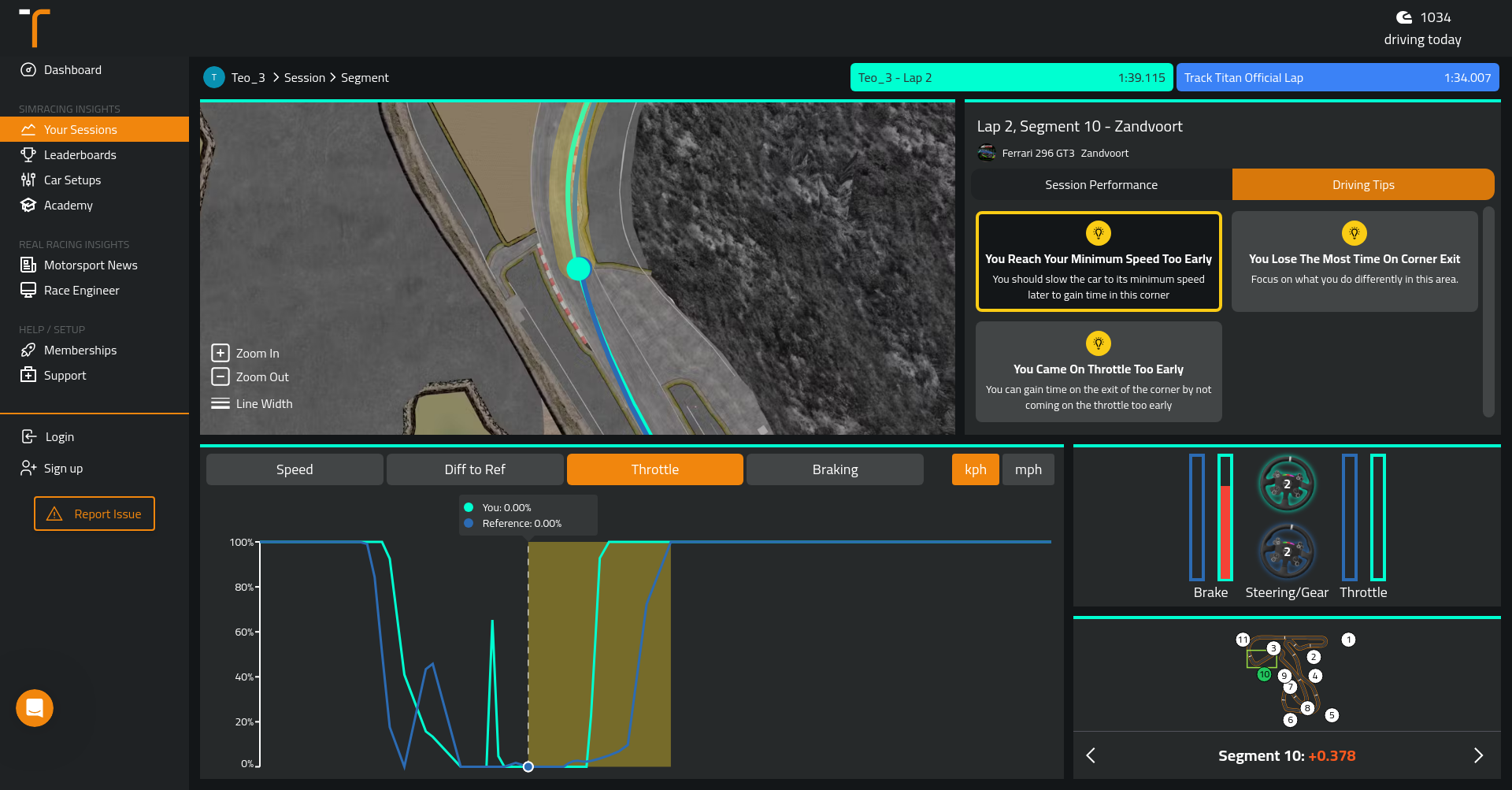
The throttle control chart comparison between driverA and driverB reveals that driverA is slower in applying the throttle in corners, leading to a lower exit speed and potentially slower lap times. DriverB, on the other hand, applies the throttle much earlier and with a steeper incline on their curve, indicating a quicker transition to full-throttle. This early application allows for a higher exit speed and better acceleration down the straights. To enhance performance, driverA should aim to apply the throttle sooner and more assertively in corners, mirroring driverB's approach for a more effective corner exit strategy. This change in driving technique could result in improved lap times for driverA by maximizing speed at the corner exit and optimizing acceleration onto the straights.
Analyzing the throttle control chart, it's evident that driverA delays throttle application significantly compared to driverB. DriverB begins to apply the throttle much earlier in the corner, as indicated by the steeper initial incline on their curve. This early application suggests that driverB is able to get on the power sooner, likely resulting in a higher exit speed and better drive down the following straight. Furthermore, driverA's throttle application is not only delayed but also more gradual. The slope of their curve is less steep, indicating a slower transition from off-throttle to full-throttle. This tentativeness could be causing a loss of time due to lower speeds at corner exit. To improve lap times, driverA should focus on applying the throttle earlier and more decisively, emulating the sharper incline seen in driverB's graph for a more efficient corner exit.