117,904
117K
Laps driven today

iRacing

Le Mans Ultimate

Assetto Corsa Competizione

Assetto Corsa

F1 25

Assetto Corsa EVO

Automobilista 2

Forza Motorsport

F1 24

F1 2021

F1 23

F1 2020


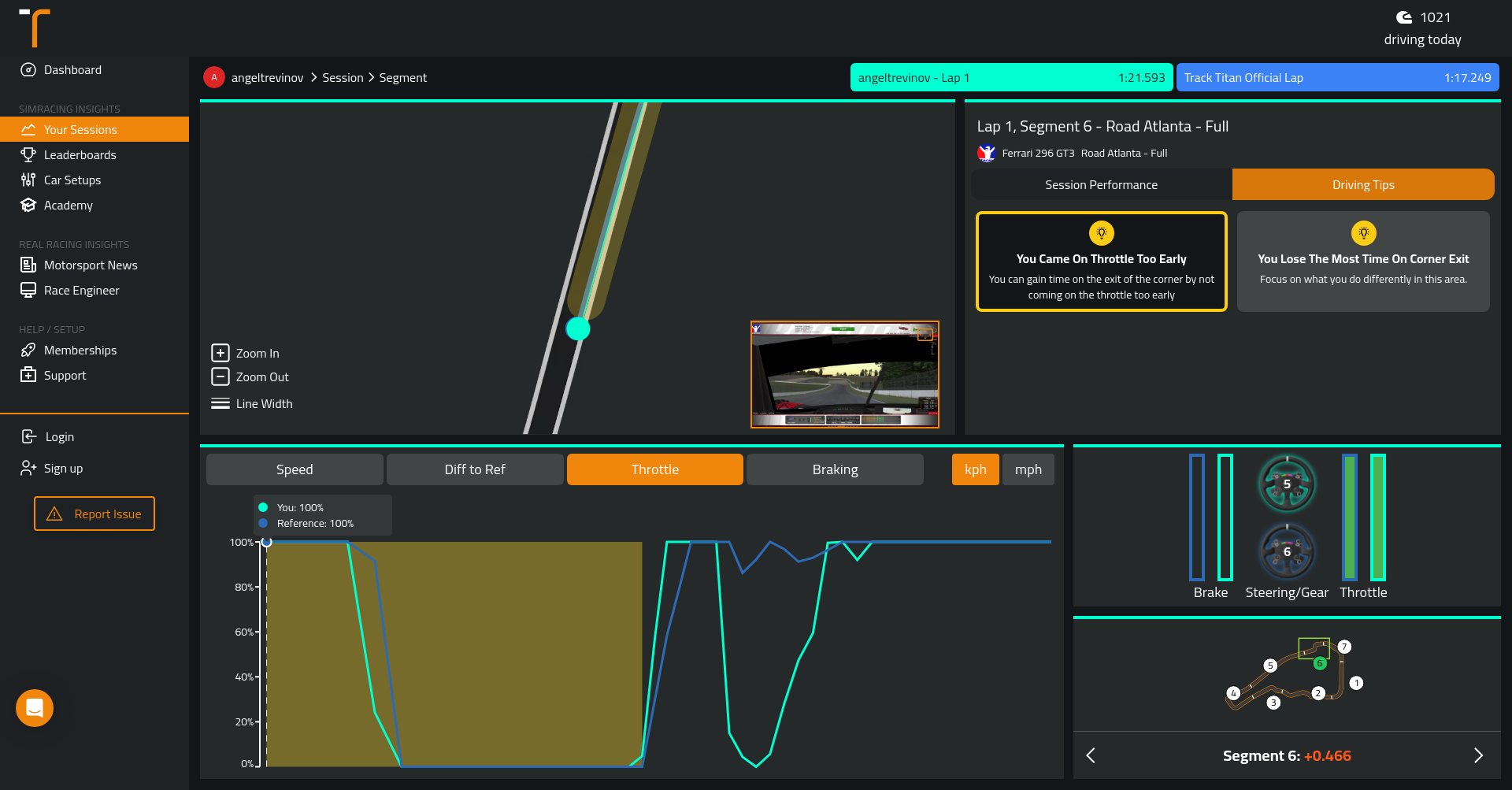
Lap 1
Segment 6
1:21.593
7th Feb 2024
iRacing
Road Atlanta - Full - Ferrari 296 GT3

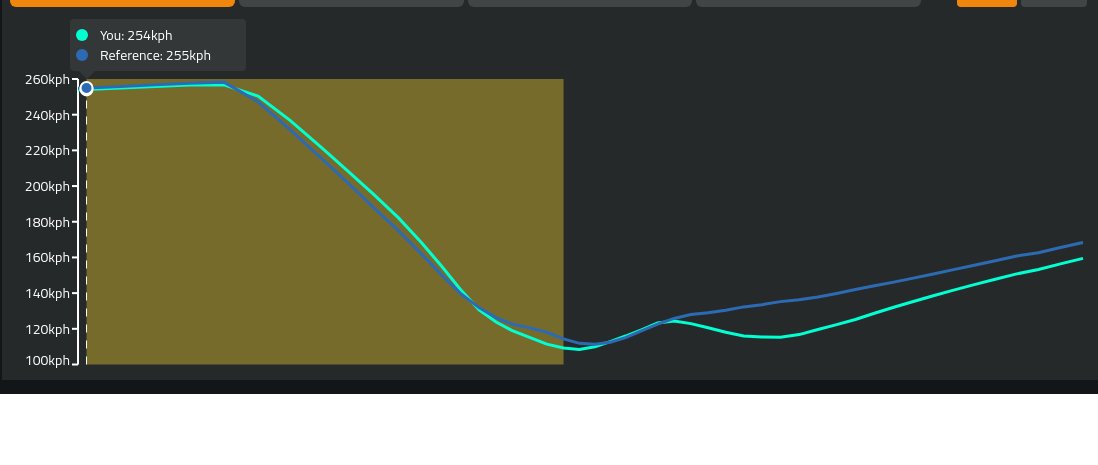
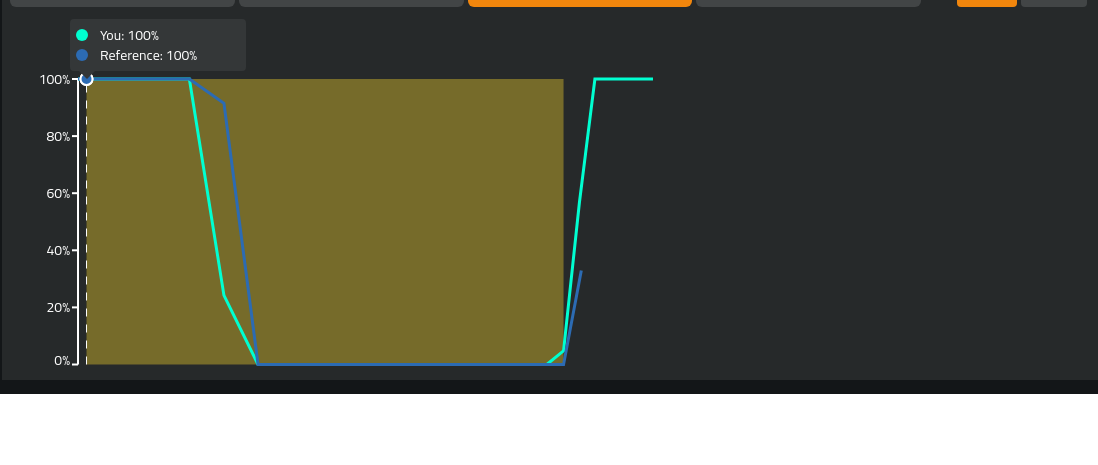
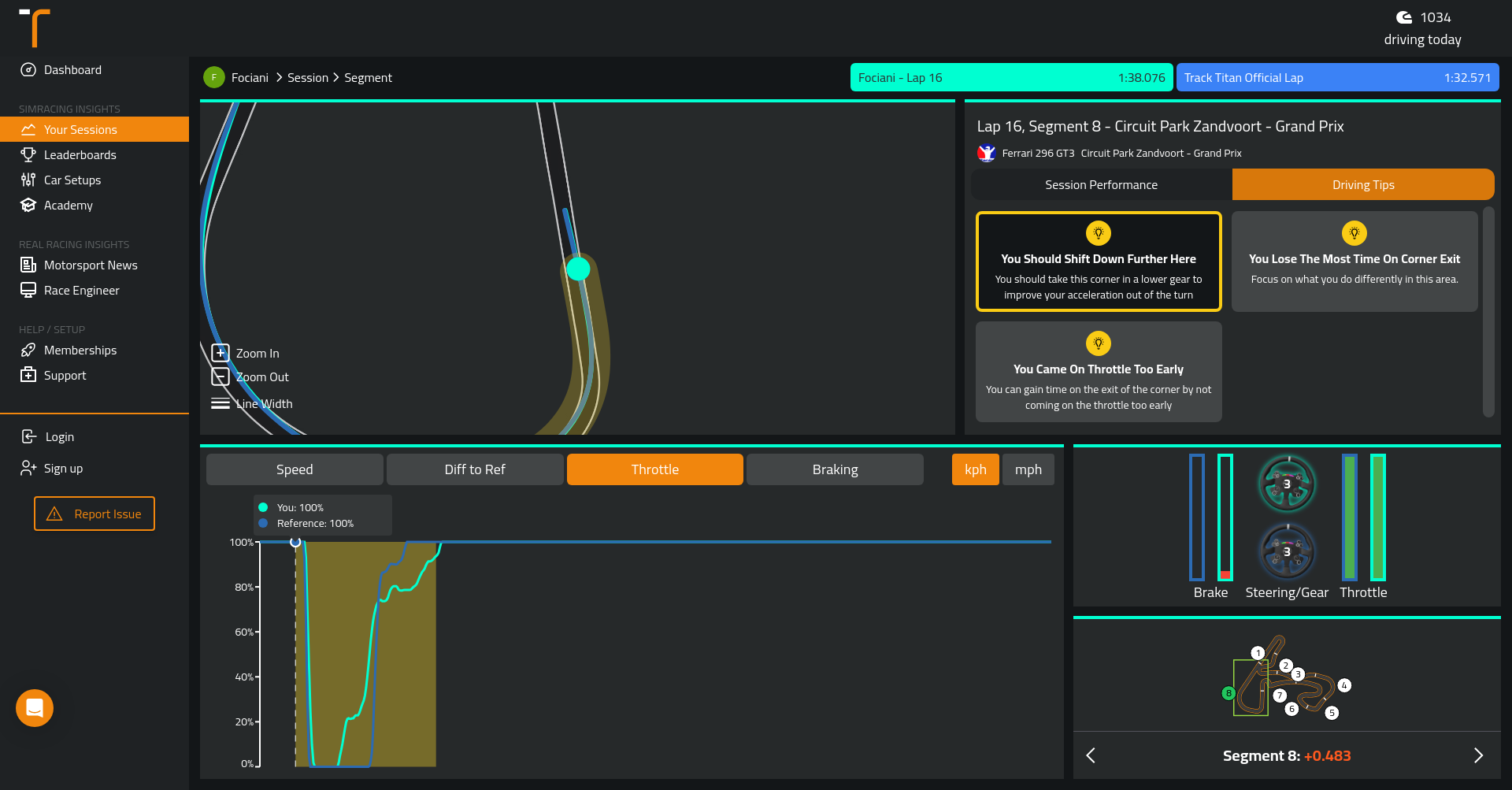
The speed chart analysis reveals that driverB enters the corner at a lower speed than driverA, suggesting a lack of momentum from the previous corner. DriverB's minimum speed occurs later and increases more gradually, indicating a delayed throttle application and less effective acceleration. To improve, driverB should focus on better-timed acceleration and carrying more exit speed. In contrast, driverA applies the throttle earlier but with a less smooth curve, hinting at potential wheelspin or traction issues. DriverB's later but smoother throttle increase suggests better traction and control. The key difference is observed at the apex and exit of the corner, where driverA's eagerness to accelerate results in a jagged increase in throttle application, likely compromising exit speed. Meanwhile, driverB's measured approach leads to a steadier build-up of speed. For enhanced lap times, driverA should delay their throttle input slightly and aim for a smoother application to maximize exit speed and maintain momentum onto subsequent straights. This would help in achieving better overall lap time performance by ensuring more efficient corner exits.
Analyzing the speed chart, it's evident that driverB enters the corner with a lower speed compared to driverA. This is indicated by the initial leftmost part of the chart where driverB's speed is already trailing. This suggests that driverB did not carry as much momentum from the previous corner into this one, which sets them up at a disadvantage right from the start. Furthermore, focusing on the corner exit, we see that driverB's minimum speed occurs later than driverA's and is followed by a more gradual increase in speed. This indicates that driverB got on the throttle later than driverA, resulting in lost time during corner exit. The slope of driverB's speed increase is less steep compared to driverA's, highlighting a less effective acceleration phase. To improve lap times, driverB should refine their throttle application to avoid coming on too early and work on carrying more exit speed through a better-timed acceleration.

Analyzing the throttle control chart, it's evident that driverA initiates throttle application significantly earlier than driverB. This premature application results in a less smooth curve, indicating potential wheelspin or lack of traction as driverA tries to accelerate out of the corner. DriverB, on the other hand, applies the throttle later but achieves a smoother and more progressive increase in application. This suggests better traction and control, leading to a more efficient corner exit. The impact of these differences is most pronounced at the point where driverA's throttle application should be at its smoothest – right at the corner's apex and exit. Instead, driverA's graph shows a jagged increase, suggesting overeagerness to accelerate which likely compromises exit speed. In contrast, driverB's measured approach results in a steadier build-up of speed, which is crucial for maintaining momentum onto the following straight. DriverA should delay throttle input slightly and focus on a smoother application to maximize exit speed and overall lap time performance.