117,319
117K
Laps driven today

iRacing

Le Mans Ultimate

Assetto Corsa Competizione

Assetto Corsa

F1 25

Assetto Corsa EVO

Automobilista 2

Forza Motorsport

F1 24

F1 2021

F1 23

F1 2020


Lap 4
Segment 1
1:31.767
6th Feb 2024
Assetto Corsa Competizione
Zolder - Ferrari 296 GT3

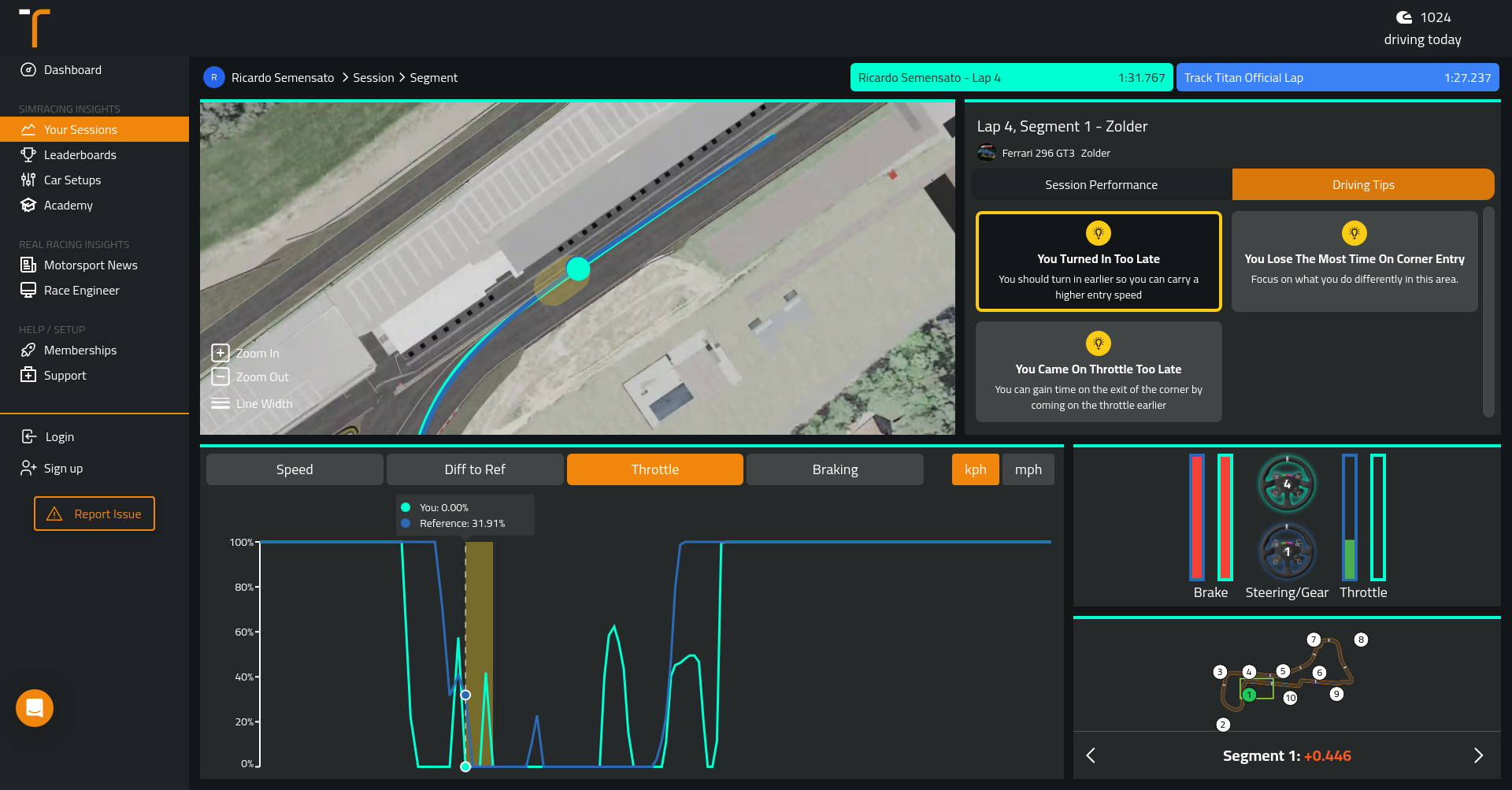
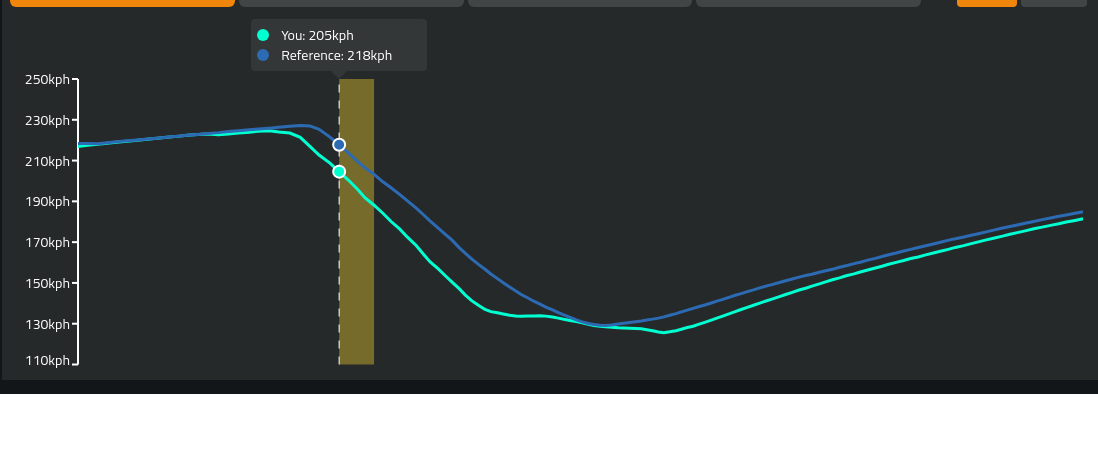
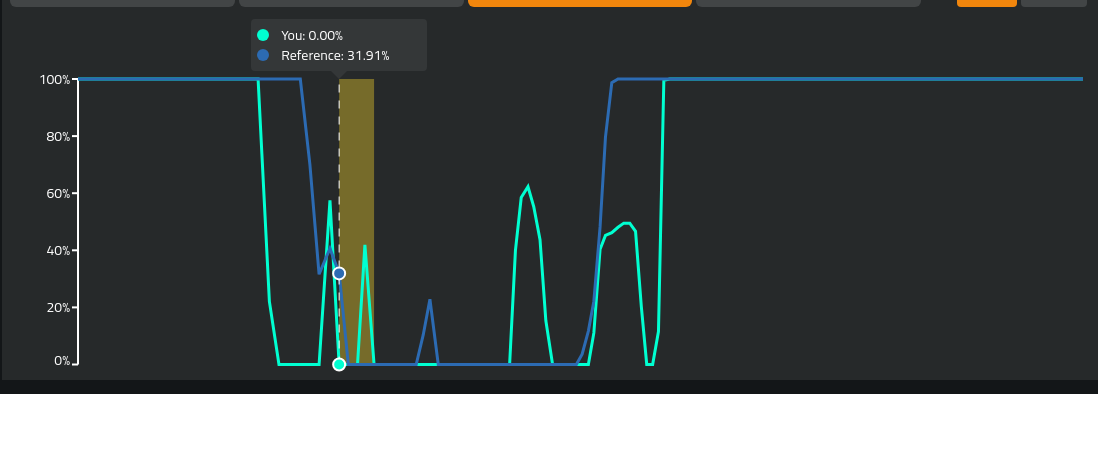
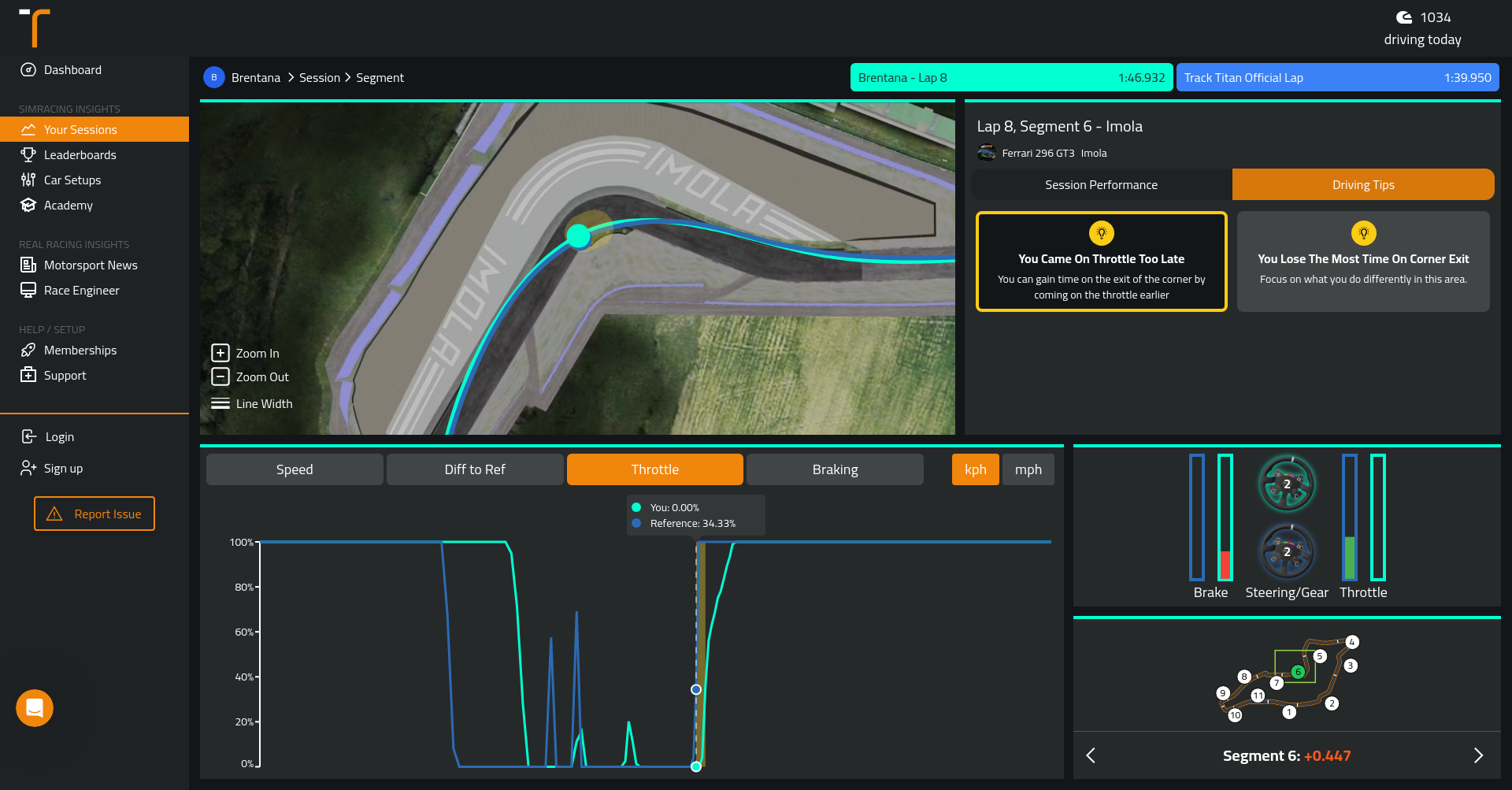
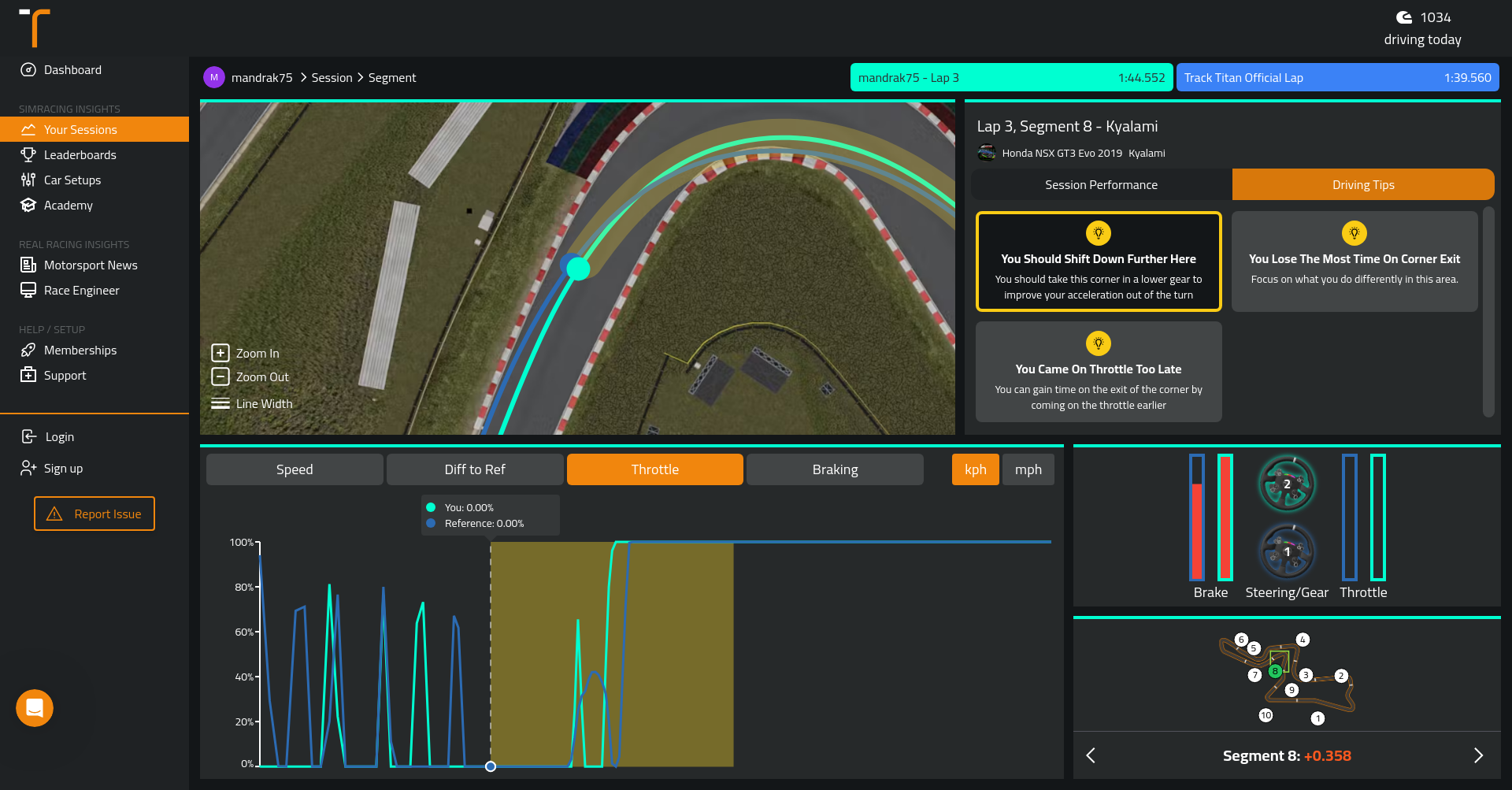
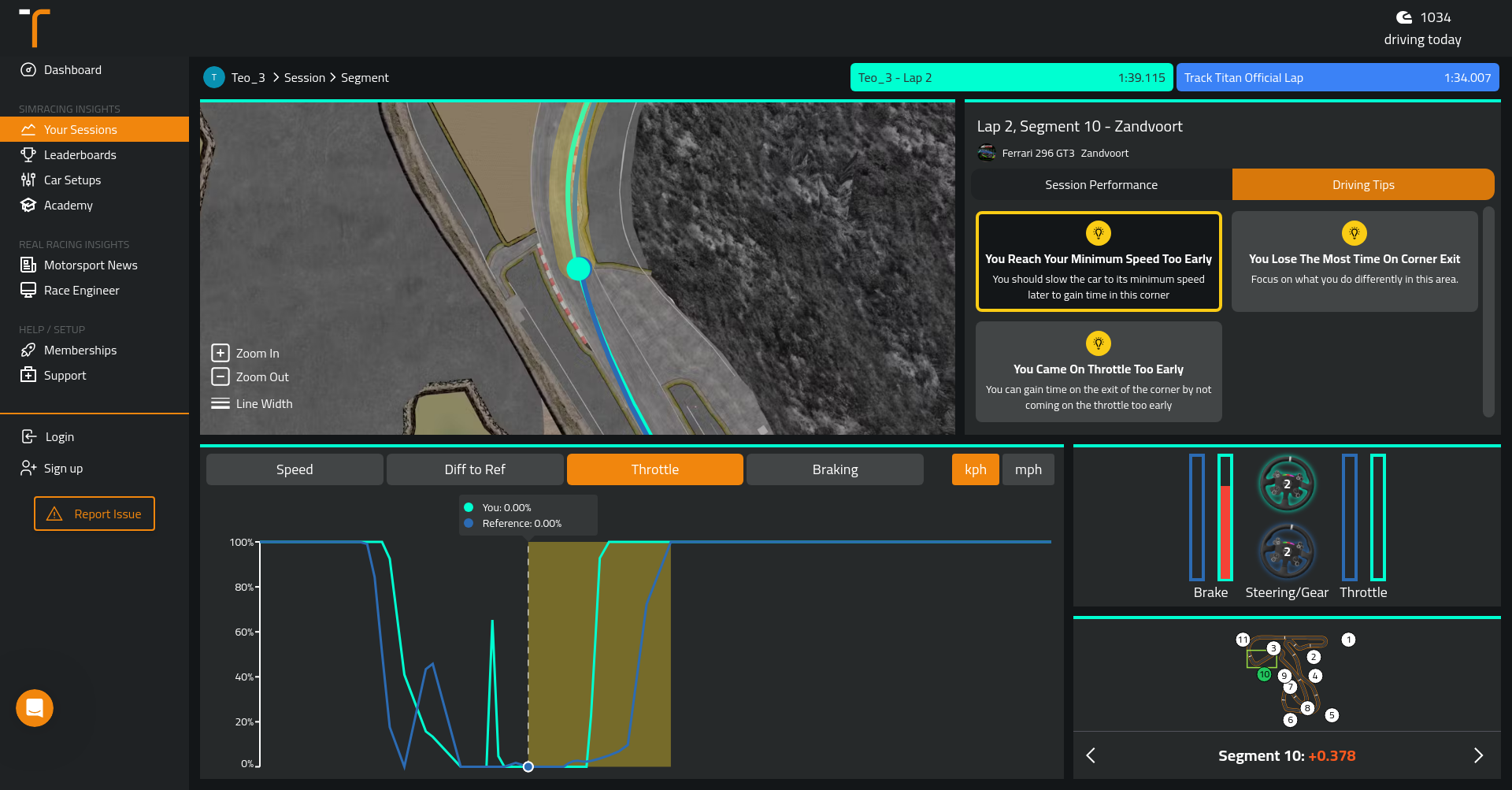
The speed chart analysis reveals that driverB enters the corner at a lower speed than driverA, indicating a loss of time at the corner entry due to possibly a later turn-in. This slower entry is compounded by a later and lower minimum speed for driverB, suggesting a delay in throttle application and resulting in a slower exit from the corner. The acceleration phase for driverB is also less steep, highlighting an opportunity to gain time by adjusting the turn-in point and timing of throttle application. The throttle control chart comparison shows that driverA applies throttle later and more gradually, which suggests cautiousness and results in lost time due to slower acceleration out of the turn. DriverB, on the other hand, applies throttle earlier and more sharply, indicating confidence and leading to an earlier exit speed with better traction management. To improve lap times, driverA should aim to apply throttle earlier and with more conviction to maintain higher speeds onto the straights.
Analyzing the speed chart, it's evident that driverB enters the corner at a significantly lower speed compared to driverA. This is indicated by the initial left portion of the chart where driverB's speed line is below that of driverA. This suggests that driverB is losing time right at the corner entry, possibly due to a later turn-in, which correlates with the inability to carry as much entry speed as driverA. Furthermore, as we progress through the corner, we observe that driverB's minimum speed occurs later than that of driverA and is also lower. This delayed and reduced minimum speed indicates a later throttle application by driverB, resulting in a loss of valuable time during corner exit. The subsequent acceleration phase for driverB is less steep compared to driverA's, confirming a slower exit speed and highlighting an area where significant time can be gained by adjusting the turn-in point and throttle application timing.

Analyzing the throttle control chart, it is evident that driverA and driverB have markedly different approaches to throttle application. DriverA's graph shows a delayed and gradual increase in throttle, indicating a later and more cautious power application exiting the corner. This hesitation to apply full throttle can be linked to a loss of time as the car is not being accelerated as quickly as possible out of the turn. In contrast, driverB's graph displays an earlier and sharper increase in throttle application. This suggests that driverB is more confident in applying power, which allows for an earlier exit speed and potentially better lap times. The smoother curve of driverB's graph also indicates less wheelspin, implying better traction management. To improve performance, driverA should focus on applying the throttle earlier and more decisively to carry more speed onto the straights.