120,898
120K
Laps driven today

iRacing

Le Mans Ultimate

Assetto Corsa Competizione

Assetto Corsa

F1 25

Assetto Corsa EVO

Automobilista 2

Forza Motorsport

F1 24

F1 2021

F1 23

F1 2020


Lap 2
Segment 6
1:42.780
6th Feb 2024
Assetto Corsa Competizione
Misano - Ferrari 488 GT3 2018

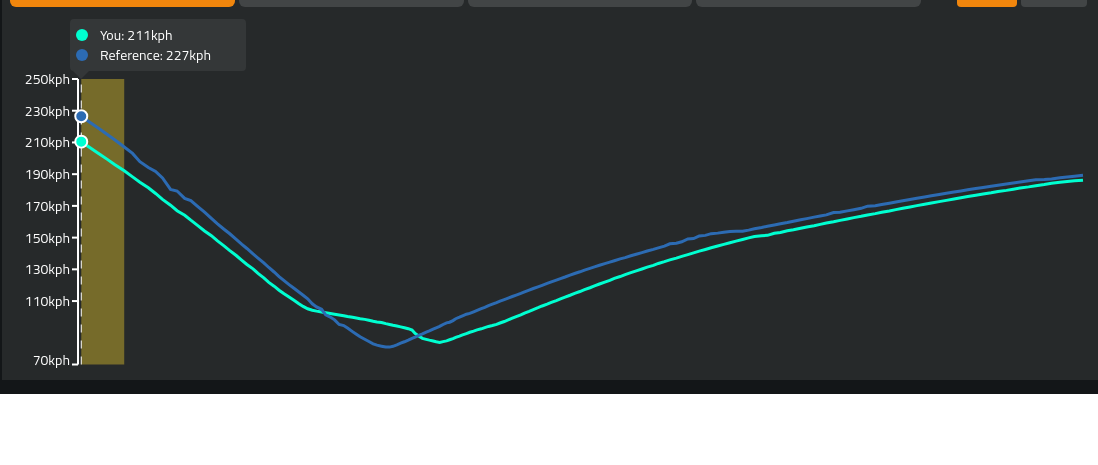
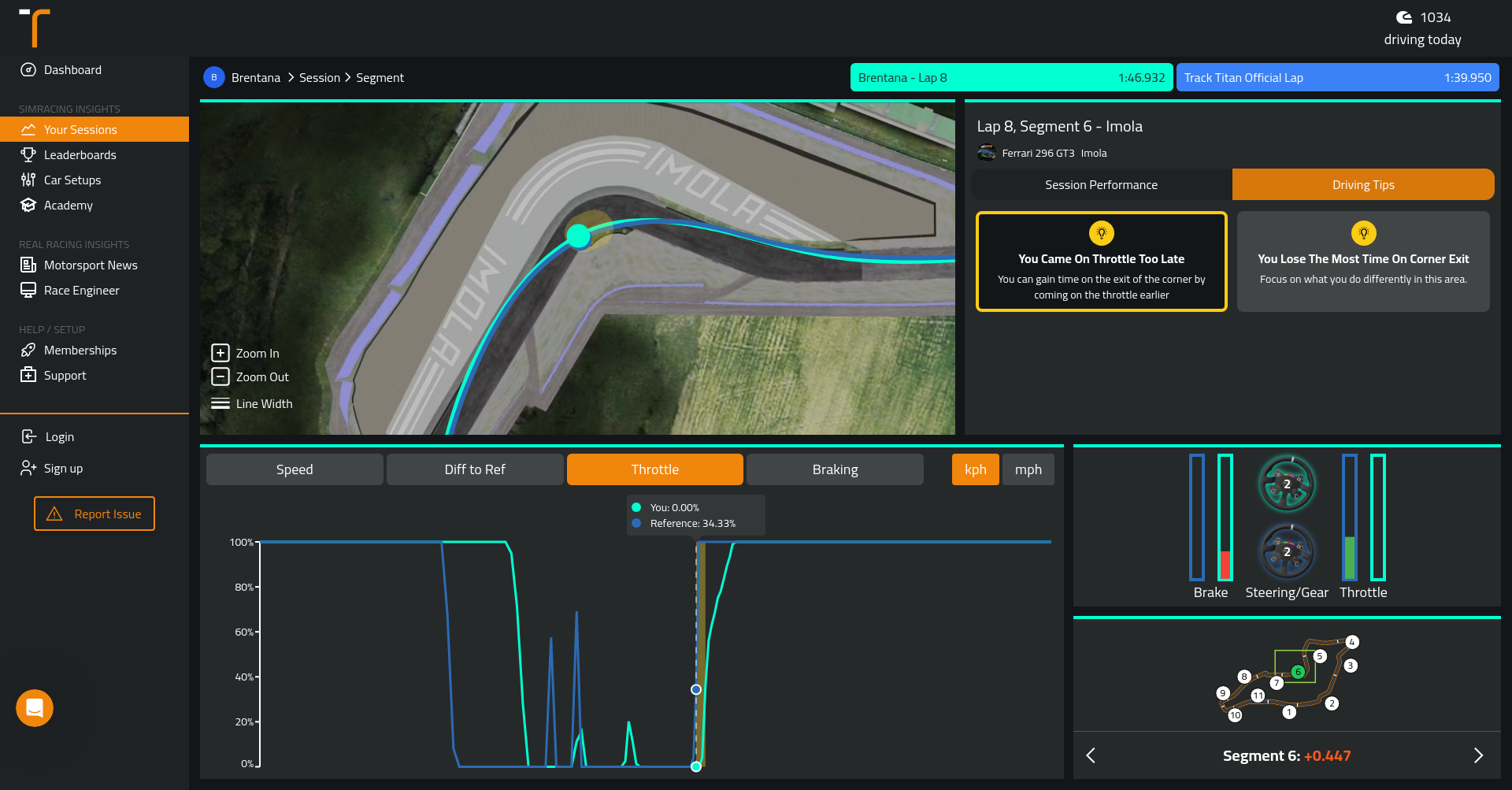
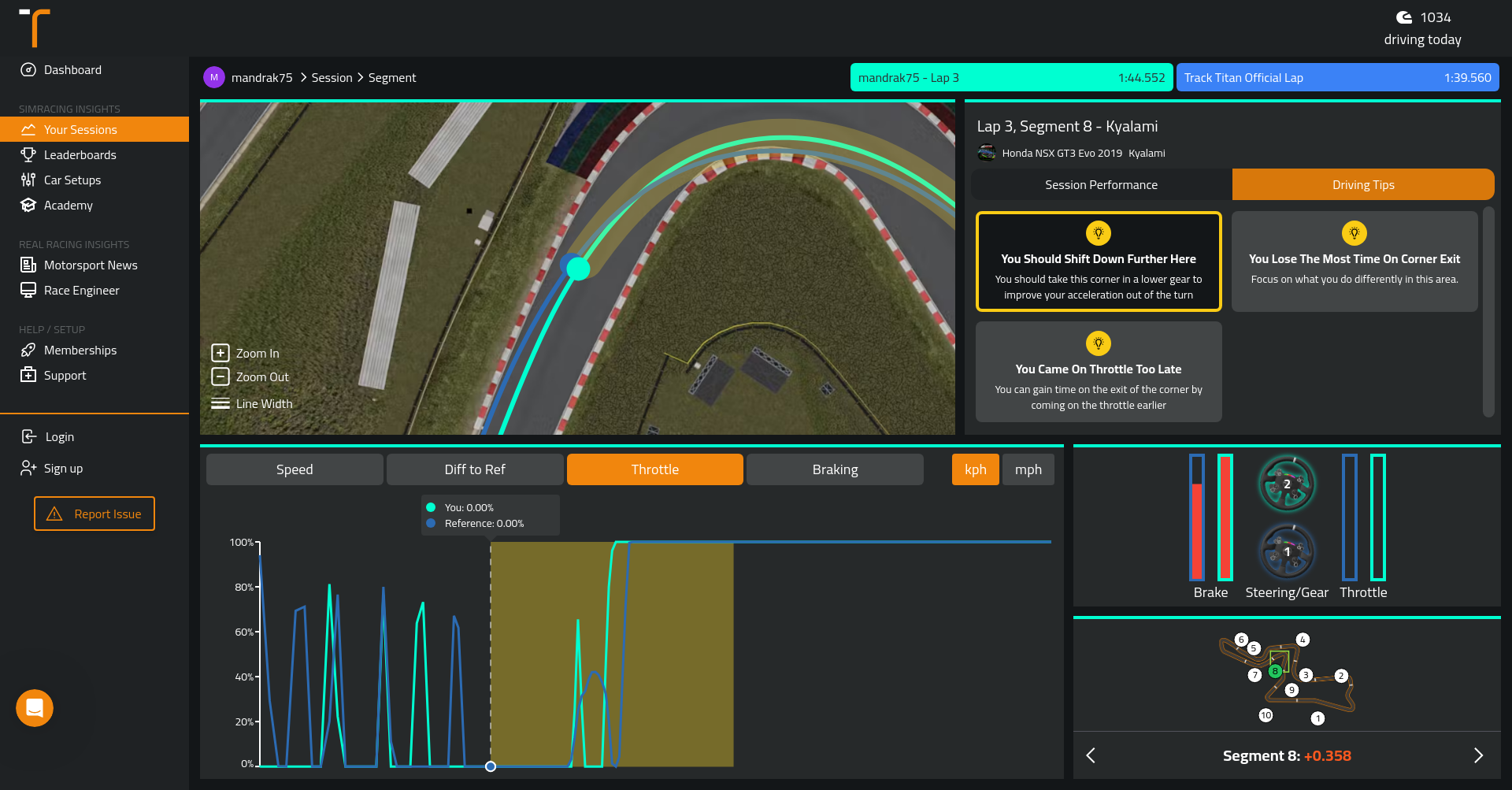
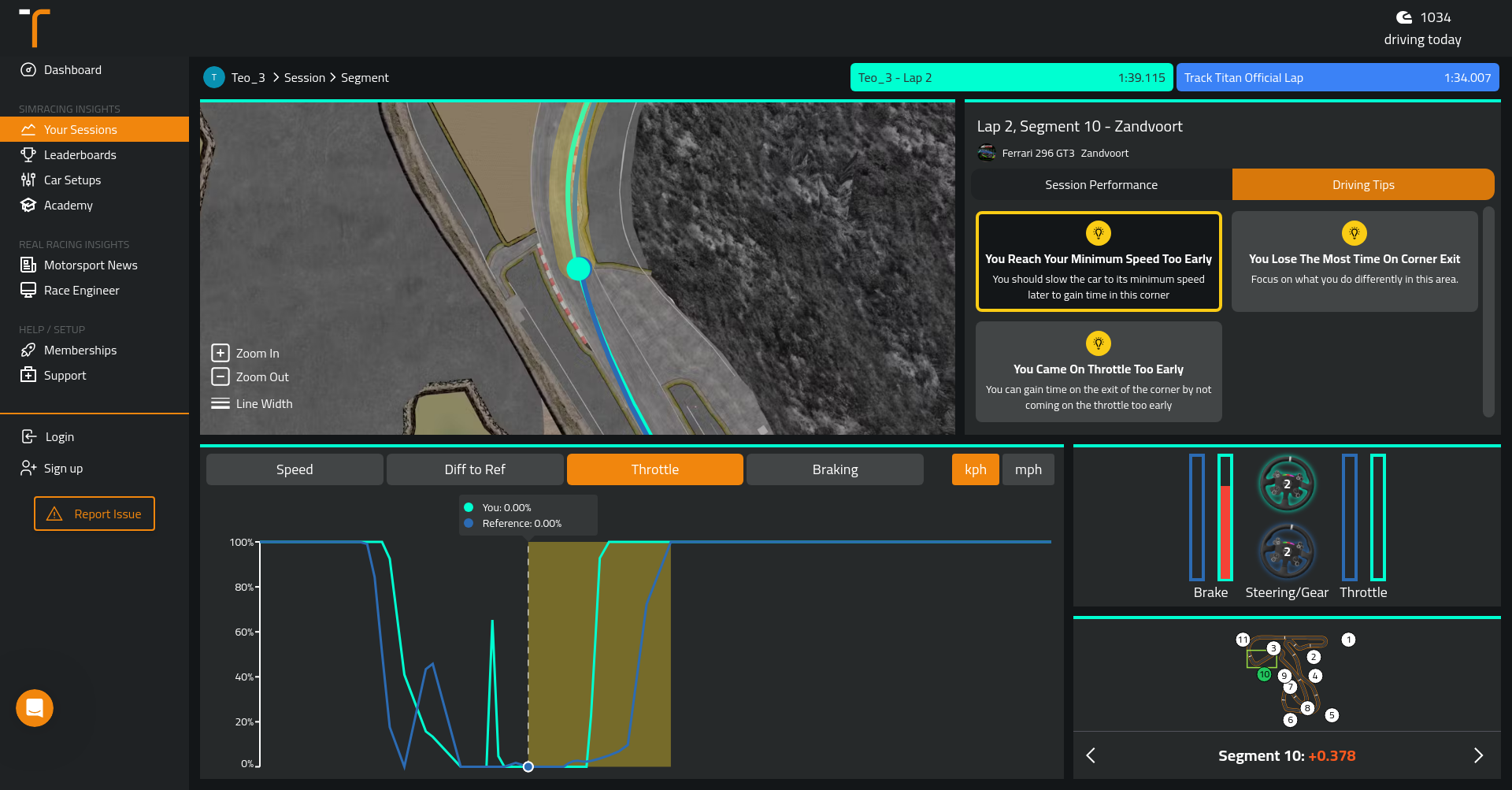
The speed chart analysis reveals that driverB enters the corner with a lower speed than driverA, suggesting a loss of momentum from the previous corner. DriverB's minimum speed is also lower and occurs later in the corner, indicating a delayed throttle application and a subsequent slower acceleration phase. To enhance lap times, driverB should focus on carrying higher exit speeds from preceding corners and optimizing throttle application timing. In terms of throttle control, driverA applies the throttle earlier but with less smoothness, possibly causing wheelspin or control issues. DriverB's gradual and controlled throttle increase suggests better traction and stability. DriverA's aggressive throttle input leads to a jagged increase which could result in oversteer or wheelspin, compromising exit speed. For improved performance on corner exit, driverA should aim for a smoother and more progressive throttle application similar to that of driverB.
Analyzing the speed chart, it's evident that driverB is entering the corner with a lower speed compared to driverA. This is indicated by the initial left part of the chart where driverB's speed graph starts below that of driverA. This suggests that driverB did not carry as much speed out of the previous corner, which is a critical area to maintain momentum and minimize time loss. Furthermore, as we progress through the corner, there's a noticeable difference in minimum speeds. DriverB's minimum speed dips lower than that of driverA and occurs later in the corner. This delayed minimum speed indicates that driverB got on the throttle later than driverA, which has a compounding effect on corner exit. The subsequent acceleration phase for driverB is also less steep compared to driverA, confirming a loss of time due to later throttle application. To improve lap times, focusing on maintaining higher exit speeds from the preceding corner and delaying throttle application until an optimal point will be crucial for driverB.

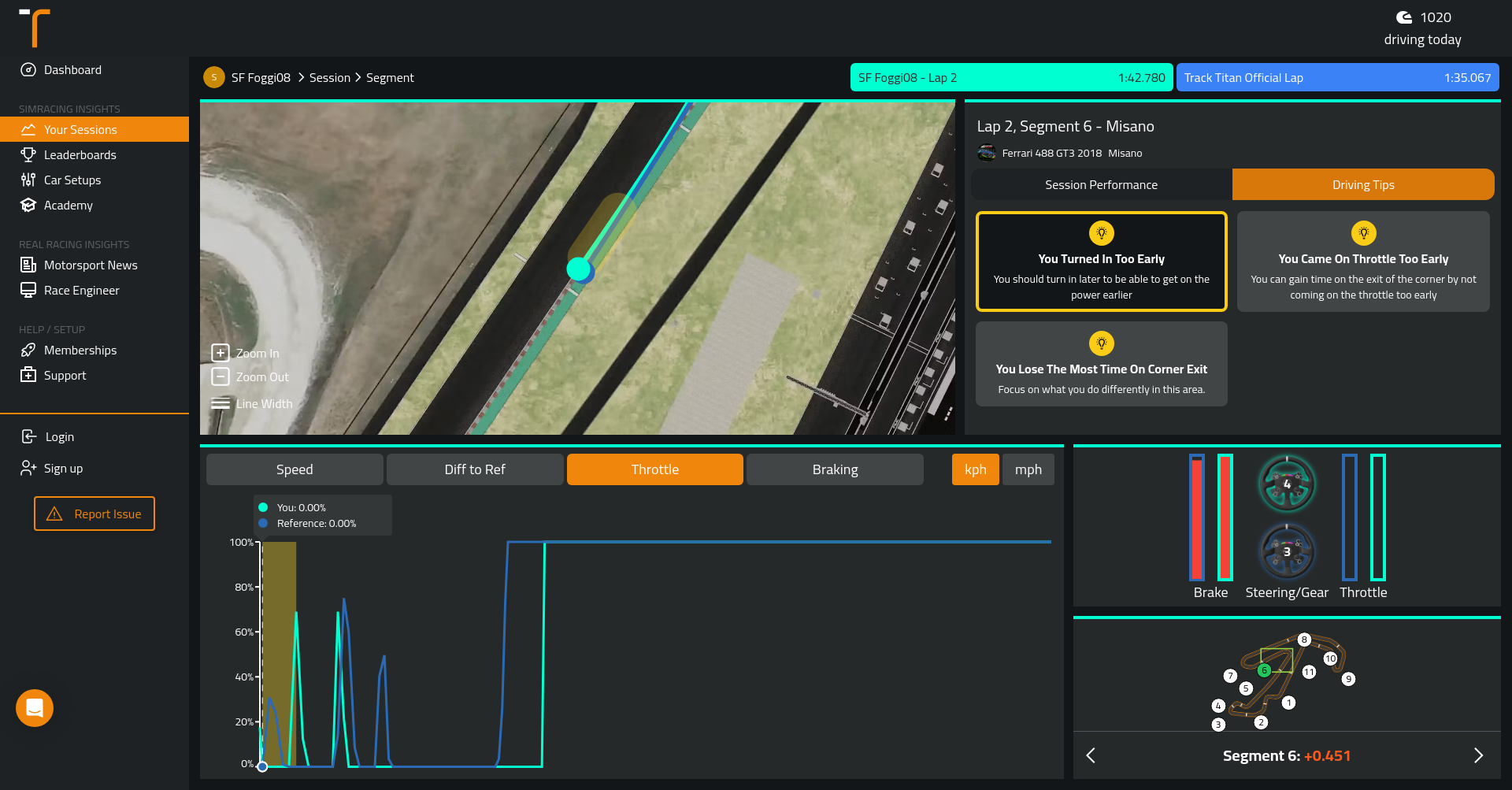
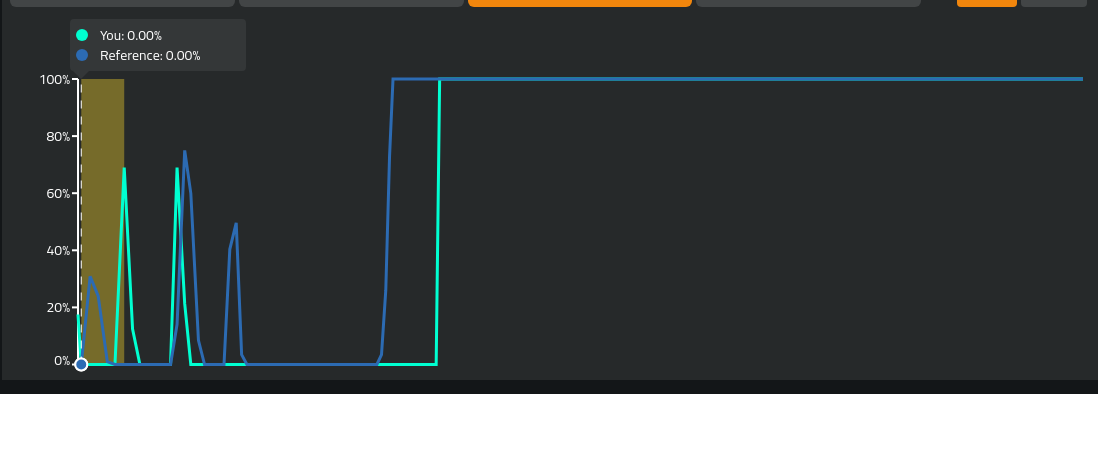
Analyzing the throttle control chart, it's evident that driverA and driverB have distinct differences in their throttle application. DriverA applies the throttle significantly earlier than driverB, as indicated by the steeper initial incline in their graph. This premature application leads to a less smooth curve, suggesting a potential struggle with wheelspin or vehicle control. Conversely, driverB's graph shows a more gradual and controlled increase in throttle application, indicating better traction and stability. The intensity of throttle application also differs markedly between the two drivers. DriverA's aggressive and early throttle input results in a jagged increase which can compromise exit speed due to potential oversteer or wheelspin. On the other hand, driverB maintains a smoother and more progressive application, which likely contributes to better corner exit speed and overall lap time improvement. DriverA should aim to replicate this smoother curve by delaying and moderating their throttle input for improved performance on corner exit.