117,319
117K
Laps driven today

iRacing

Le Mans Ultimate

Assetto Corsa Competizione

Assetto Corsa

F1 25

Assetto Corsa EVO

Automobilista 2

Forza Motorsport

F1 24

F1 2021

F1 23

F1 2020


Lap 4
Segment 2
1:30.222
6th Feb 2024
Assetto Corsa Competizione
Laguna Seca - Ferrari 488 GT3 Evo 2020

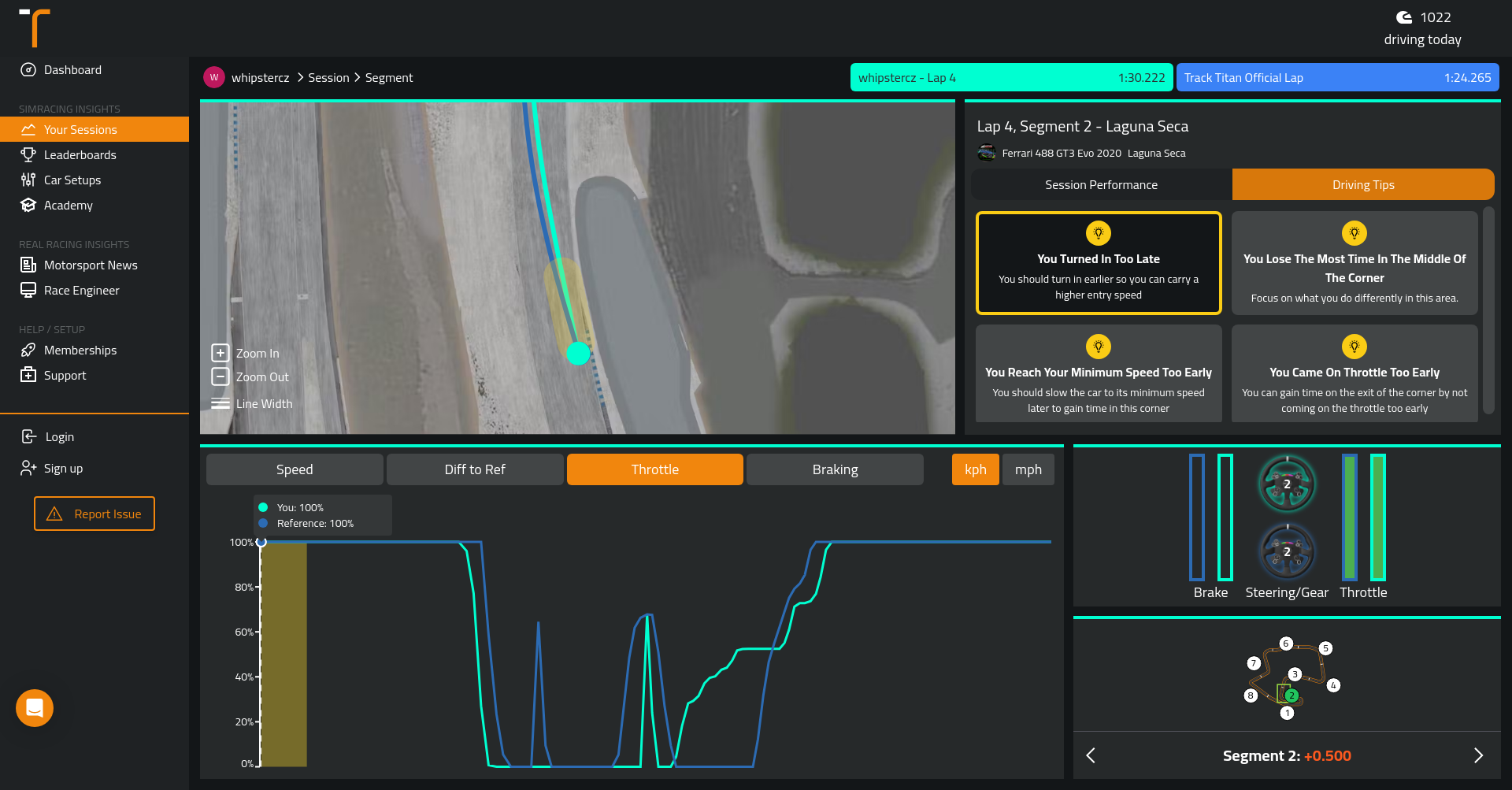
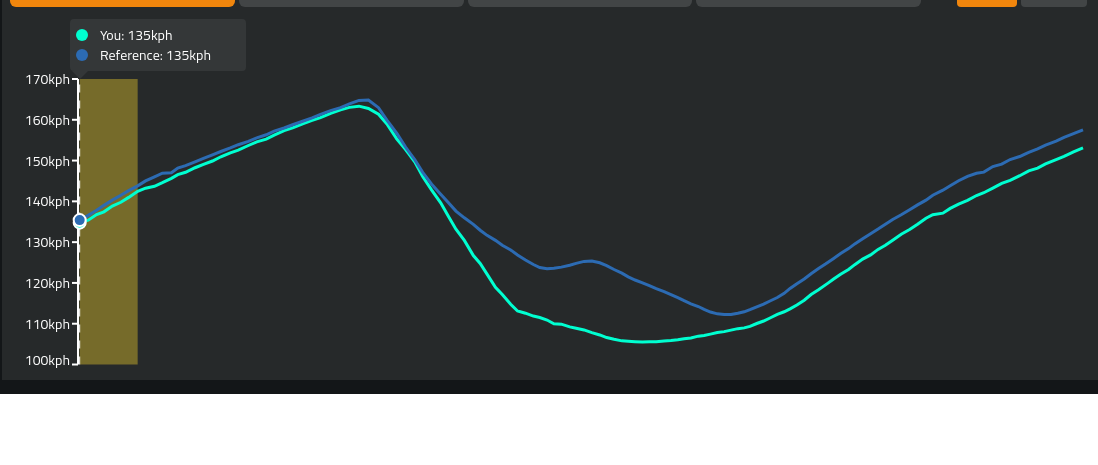
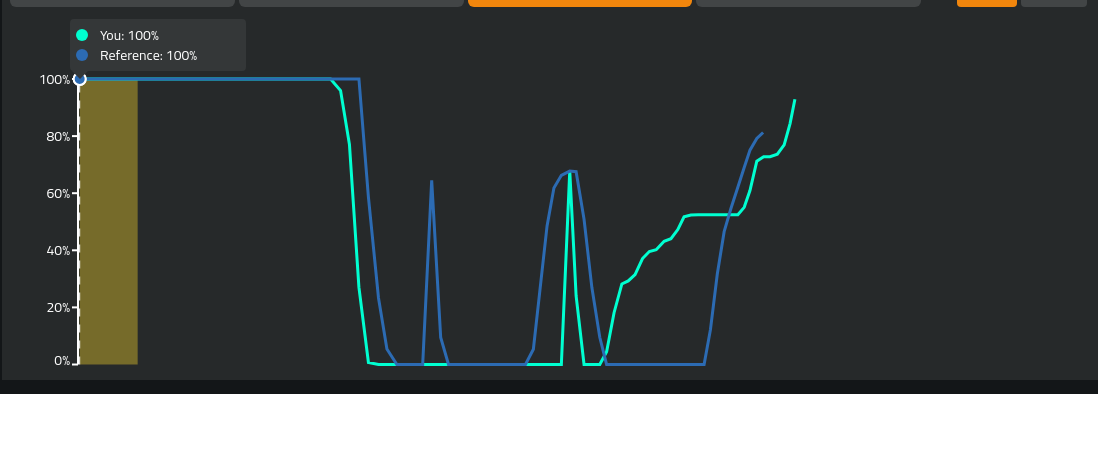
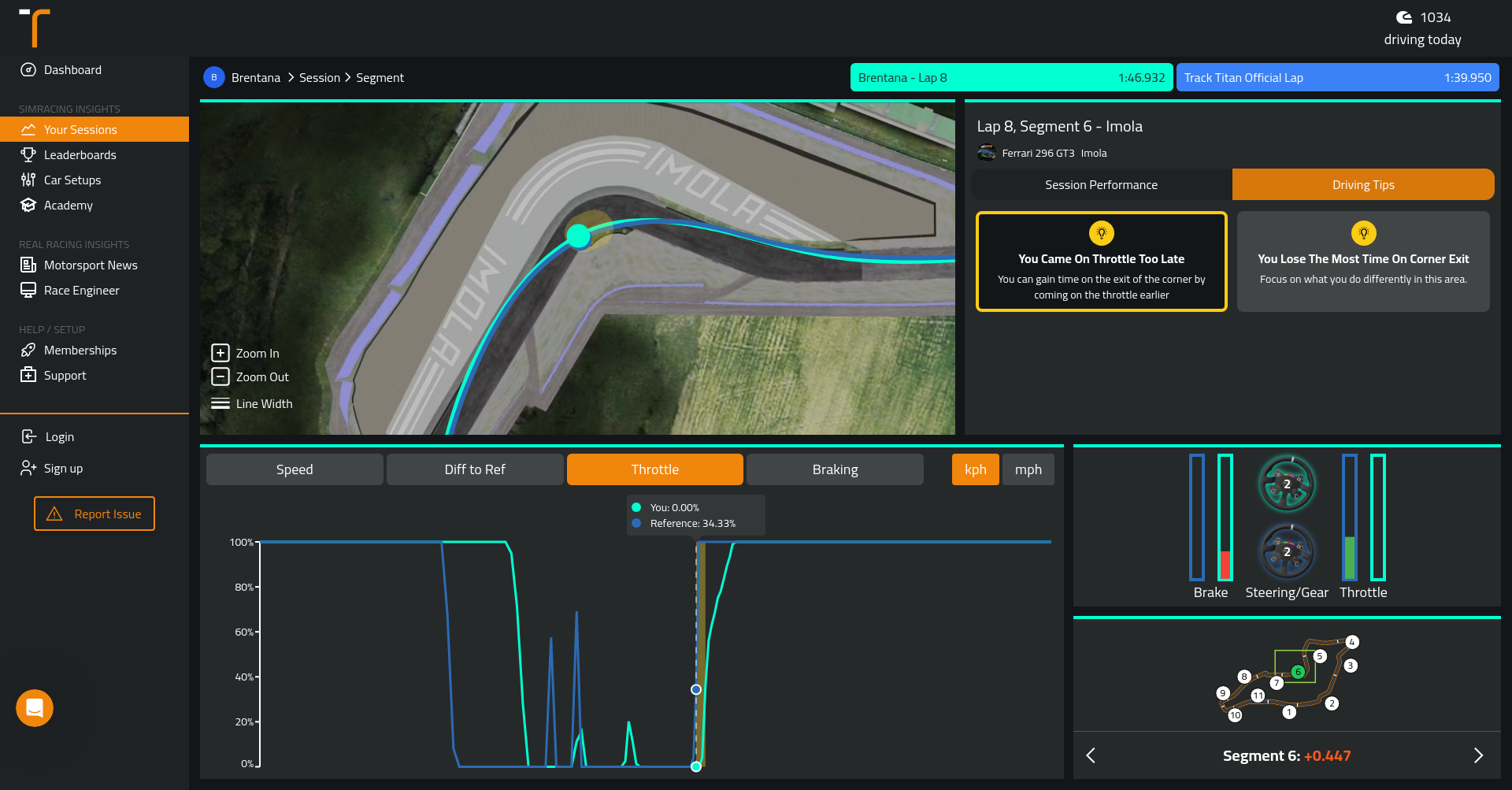
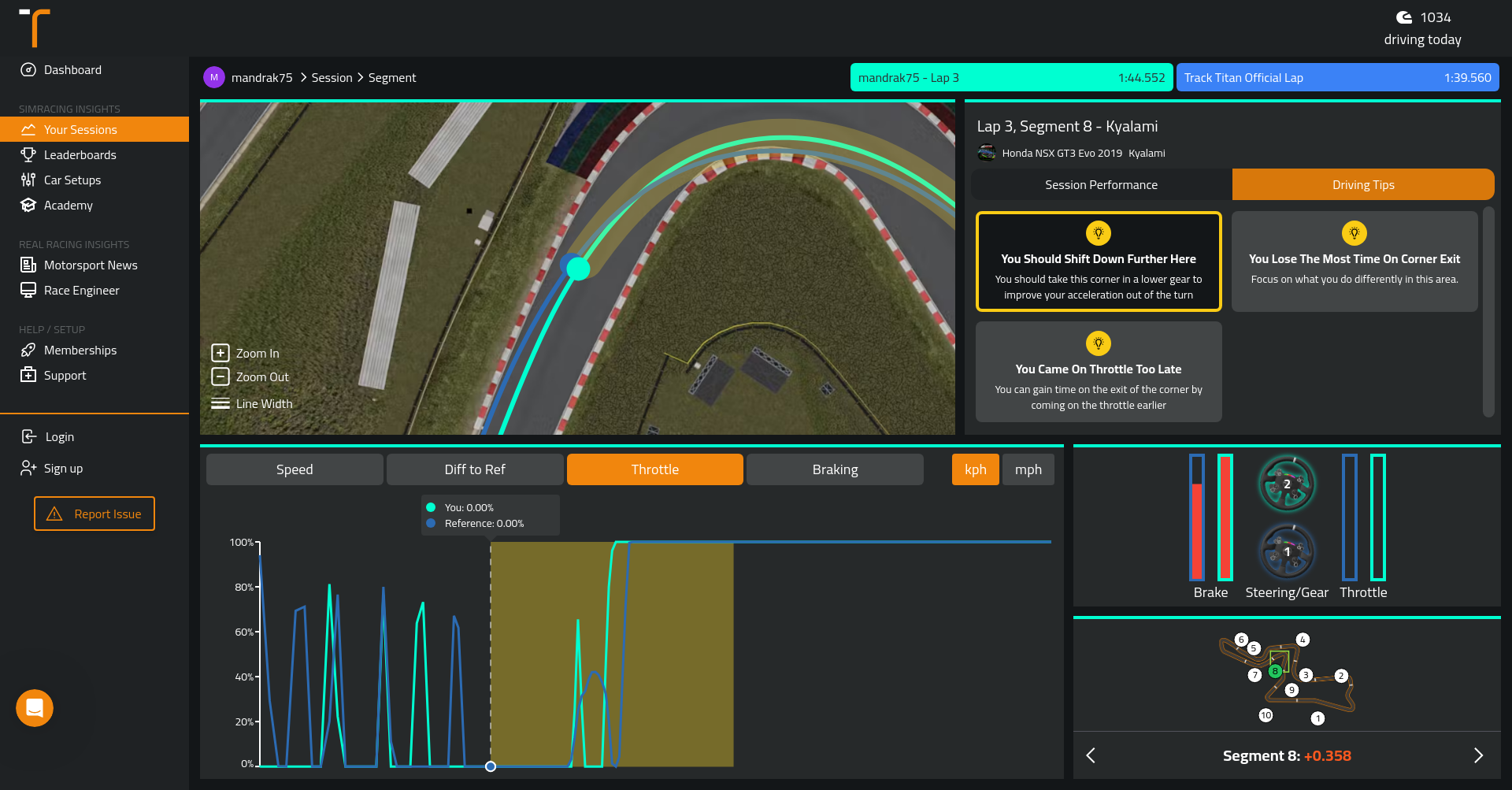
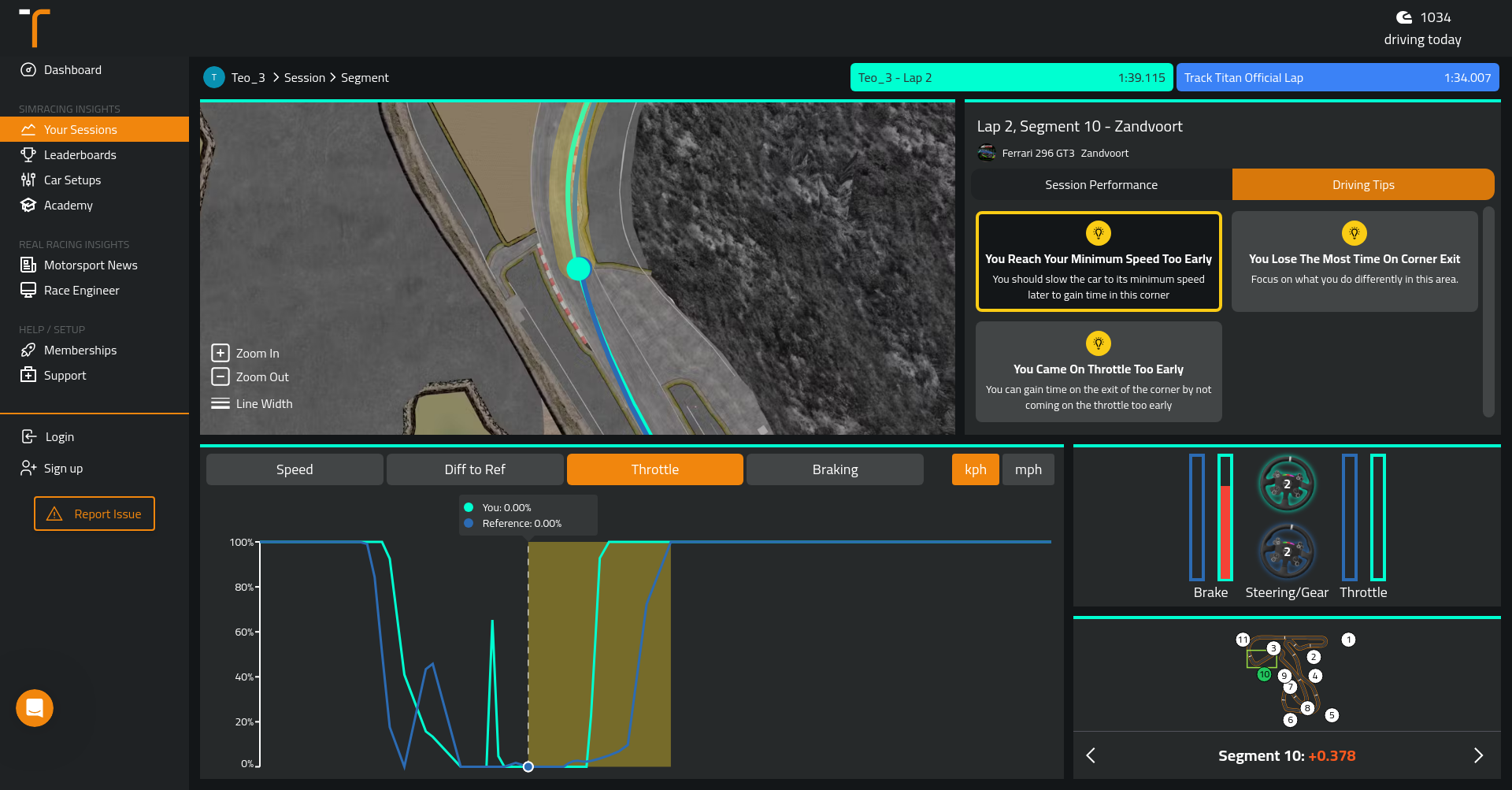
The speed chart analysis reveals that driverB enters the corner with less speed than driverA, indicating a lack of momentum from the previous corner. DriverB decelerates too early and applies throttle before driverA, yet fails to achieve a faster exit speed. To improve, driverB should enter at a higher speed and delay deceleration and acceleration to optimize their minimum speed point and exit velocity. The throttle control chart shows that driverA applies throttle prematurely and sharply, risking vehicle balance or wheelspin, while driverB's gradual increase in throttle suggests better traction and a stronger corner exit. DriverA's aggressive initial throttle application may cause time loss due to decreased stability. For better performance, driverA should adopt a more progressive throttle engagement like driverB to maximize grip before fully accelerating out of the corner.
Analyzing the speed chart, it's evident that driverB is entering the corner with a lower speed compared to driverA. This is noticeable at the very start of the chart on the left, indicating that driverB exited the previous corner with less momentum. This initial speed deficit carries through into the corner, impacting their overall time. As we progress through the corner, driverB reaches their minimum speed earlier than driverA. This premature deceleration suggests a suboptimal approach to managing speed through this section. Additionally, driverB's earlier application of throttle is apparent in the chart where their speed begins to increase before that of driverA. However, this early throttle application does not translate into a faster exit speed, which implies that it may be compromising their ability to carry more speed out of the corner. To improve performance in this section, driverB should focus on entering at a higher speed and delaying both deceleration and acceleration to optimize their minimum speed point and exit velocity.

Analyzing the throttle control chart, it's evident that driverA and driverB have distinctly different approaches to throttle application. DriverA exhibits a premature and sharp increase in throttle, which is indicative of an early application. This aligns with the observation that driverA comes on the throttle too early, potentially compromising the exit speed due to unsettled vehicle balance or wheelspin. In contrast, driverB's gradual and smoother increase in throttle suggests a more controlled and later application, allowing for better traction and a stronger exit from the corner. Furthermore, the intensity of driverA's initial throttle application is significantly higher than that of driverB. This aggressive approach can lead to a loss of time due to decreased stability at corner exit. DriverB's measured input not only maintains better car control but also indicates an optimized corner exit strategy by maximizing grip before fully accelerating. To improve performance, driverA should emulate driverB's progressive throttle engagement to enhance speed on corner exit.