117,319
117K
Laps driven today

iRacing

Le Mans Ultimate

Assetto Corsa Competizione

Assetto Corsa

F1 25

Assetto Corsa EVO

Automobilista 2

Forza Motorsport

F1 24

F1 2021

F1 23

F1 2020


Lap 2
Segment 1
1:56.335
6th Feb 2024
Assetto Corsa Competizione
Hungaroring - Honda NSX GT3 2017

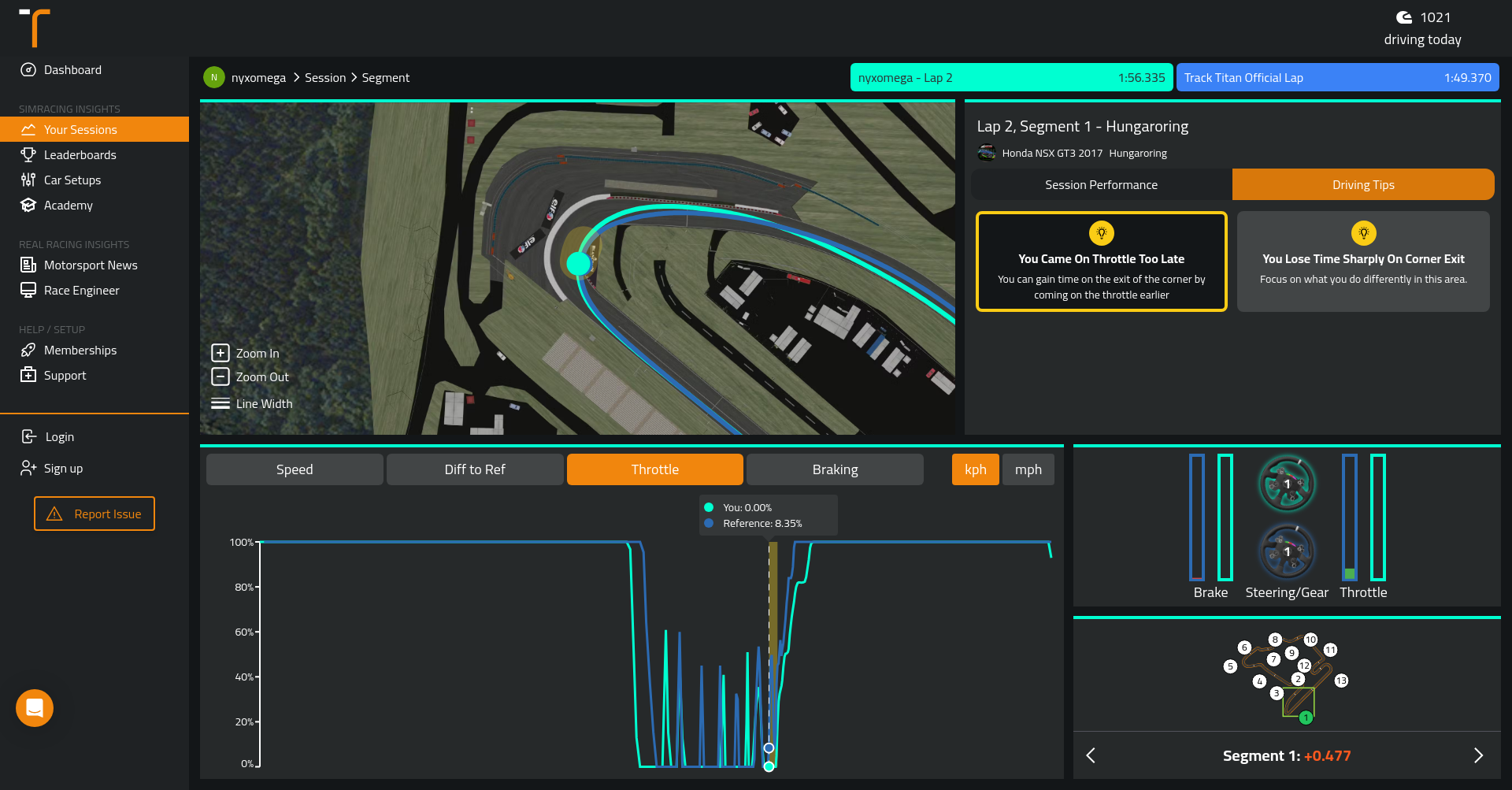
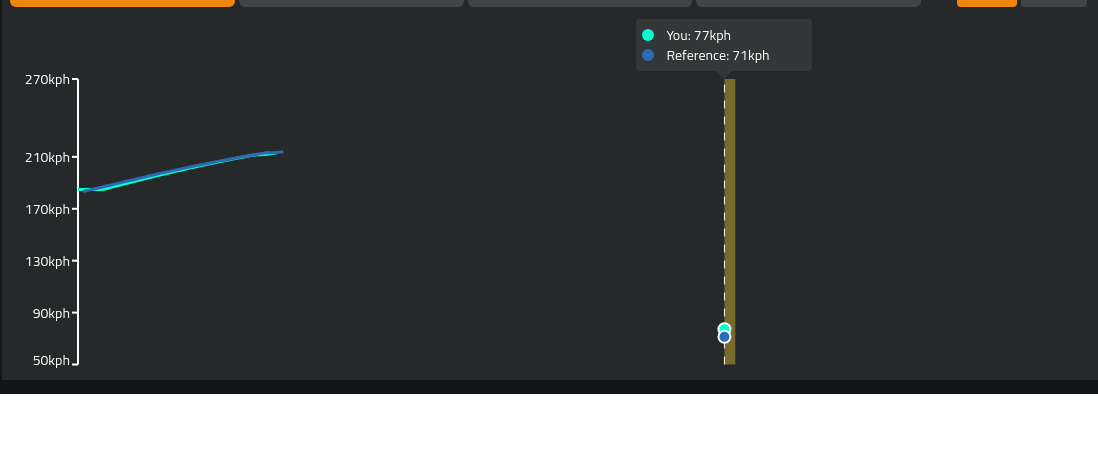
The speed chart analysis reveals that driverB enters the corner at a lower speed than driverA, suggesting less momentum from the previous corner. As they progress, driverB's speed drops significantly, particularly on corner exit where their speed sharply decreases compared to driverA. This is due to a later application of throttle by driverB, leading to a loss of time as they can't accelerate as quickly out of the corner. In contrast, the throttle control chart shows that driverA actually delays throttle application compared to driverB, who initiates it much earlier. This early throttle input allows driverB to build speed sooner for a faster corner exit. DriverA's gradual and later onset of throttle suggests potential acceleration and time are lost. To improve lap times, it is recommended that driverA focuses on applying the throttle earlier and with more conviction to match the intensity demonstrated by driverB. This will help in building speed sooner during the critical phase of corner exit and minimize time loss throughout the lap.
Analyzing the speed chart, it's evident that driverB enters the corner with a lower speed compared to driverA. This is immediately apparent at the start of the chart where driverB's speed is already trailing behind. This suggests that driverB exited the previous corner with less momentum, which sets them up at a disadvantage even before addressing the corner in question. As we progress through the corner, there's a significant drop in speed for driverB, especially on corner exit where their speed sharply decreases compared to driverA. The minimum speed for driverB occurs later than that of driverA, indicating that they got on the throttle later. This delay in throttle application results in a loss of time as driverB is unable to accelerate as quickly out of the corner. The gradient of their speed increase is also less steep than that of driverA, confirming that they are losing time during this critical phase of corner exit where earlier acceleration could have been beneficial.

Analyzing the throttle control chart, it's evident that driverA delays throttle application significantly compared to driverB. DriverB initiates throttle input much earlier, as indicated by the steeper initial incline in their graph line. This early application allows driverB to build speed sooner, which is crucial for a faster corner exit. In contrast, driverA's gradual and later onset of throttle suggests a loss of potential acceleration and time. Furthermore, driverA's throttle application is not only delayed but also exhibits a less aggressive increase. The slope of driverA's graph line is less steep compared to driverB's, indicating a more cautious acceleration. This hesitation results in a sharper time loss on corner exit for driverA. To improve lap times, driverA should focus on applying the throttle earlier and with more conviction to match the intensity demonstrated by driverB.