114,324
114K
Laps driven today

iRacing

Le Mans Ultimate

Assetto Corsa Competizione

Assetto Corsa

F1 25

Assetto Corsa EVO

Automobilista 2

Forza Motorsport

F1 24

F1 2021

F1 23

F1 2020


Lap 2
Segment 6
1:48.082
6th Feb 2024
Assetto Corsa Competizione
Barcelona - Honda NSX GT3 Evo 2019

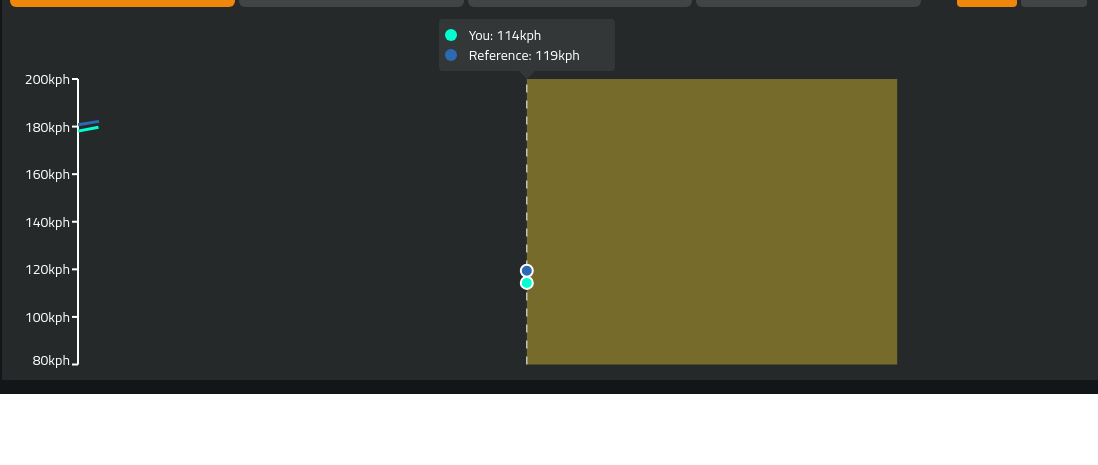
The speed chart analysis reveals that driverB is at a disadvantage due to entering the corner with less speed than driverA, resulting from poor momentum from the previous corner. This leads to a slower entry and overall speed through the turn. DriverB's minimum speed is also lower and occurs later than driverA's, indicating longer braking and delayed throttle application, which costs time during the crucial mid-corner phase. To enhance performance, driverB should focus on carrying more speed from the previous corner and applying the throttle earlier to accelerate out of the turn more effectively. On the other hand, driverA shows hesitancy in throttle control compared to driverB's smooth and consistent application. DriverA's slower and more erratic increase in throttle suggests issues with wheelspin or vehicle handling confidence. Notably, driverA applies full throttle much later than driverB, negatively affecting exit speed and lap time. For improvement, driverA should aim for earlier and smoother throttle application to achieve better acceleration upon corner exit, thereby matching driverB's reference pace for improved overall performance.
Analyzing the speed chart, it's evident that driverB enters the corner with a lower speed compared to driverA. This indicates that driverB exited the previous corner with less momentum, which is immediately putting them at a disadvantage as they approach the current turn. The impact of this is a slower entry speed, which cascades into a lower overall speed through the corner. Furthermore, focusing on the mid-corner phase, driverB's minimum speed is significantly lower than that of driverA and occurs later in the corner. This delay in reaching minimum speed suggests that driverB is on the brakes for longer and therefore gets on the throttle later than driverA. Consequently, this results in a loss of time during this critical phase of cornering. To improve performance, driverB should work on carrying more speed through the previous corner exit to enhance entry momentum and focus on earlier throttle application to maximize acceleration out of the turn.

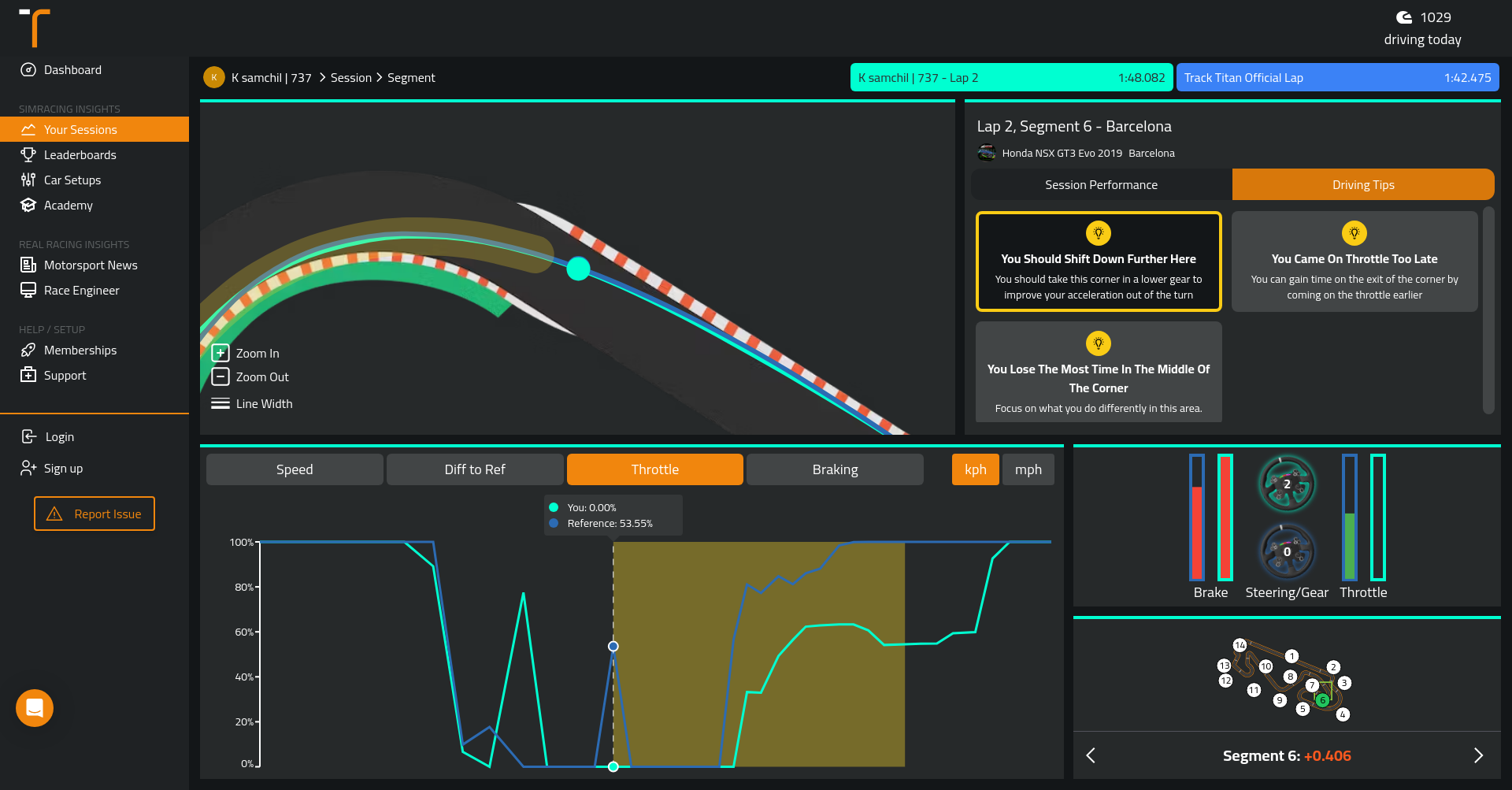
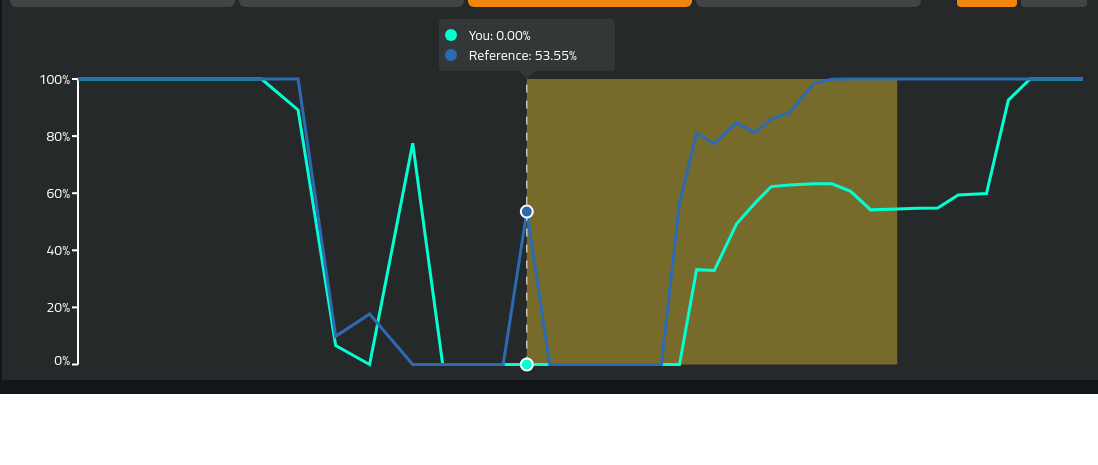
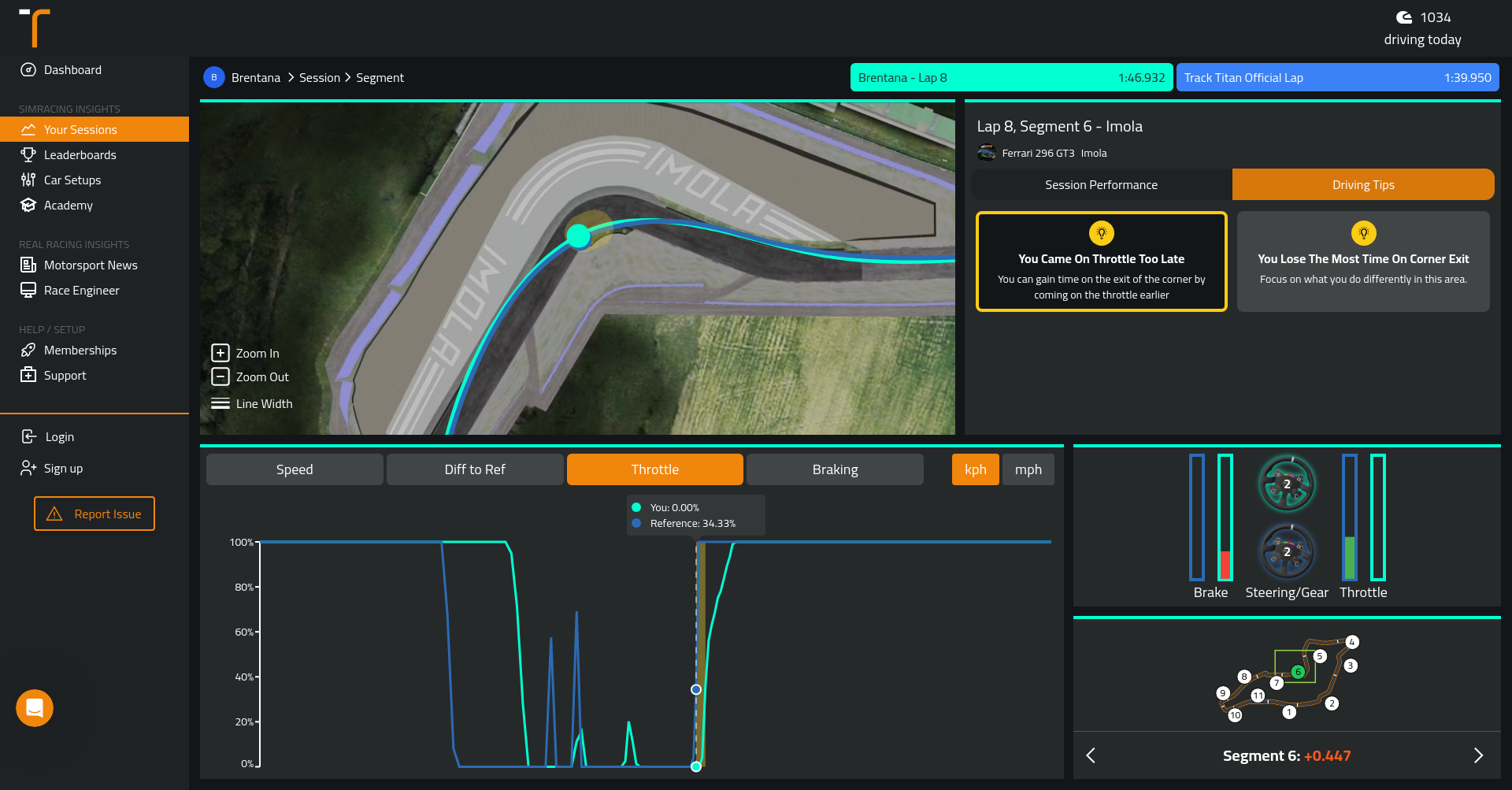
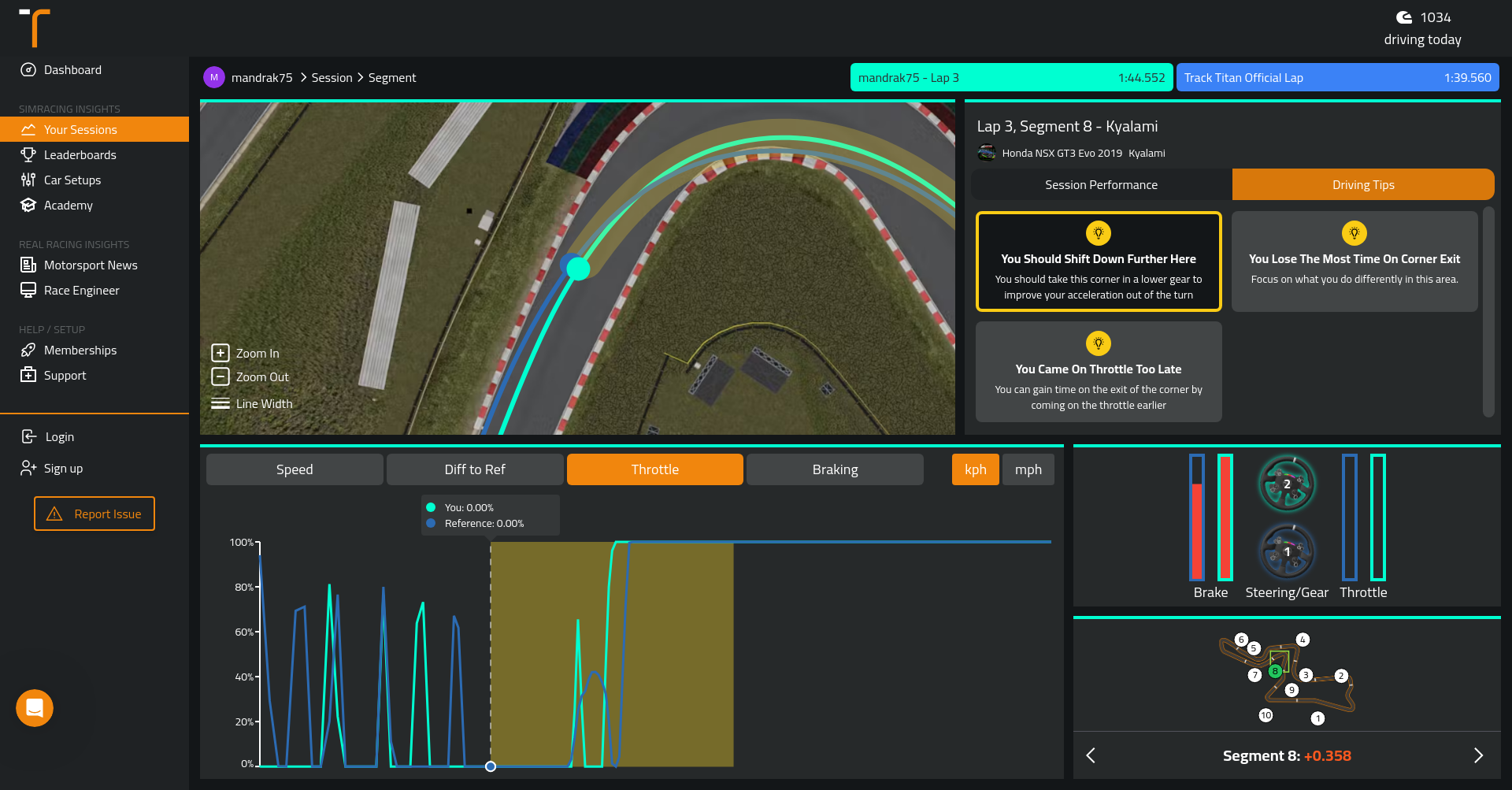
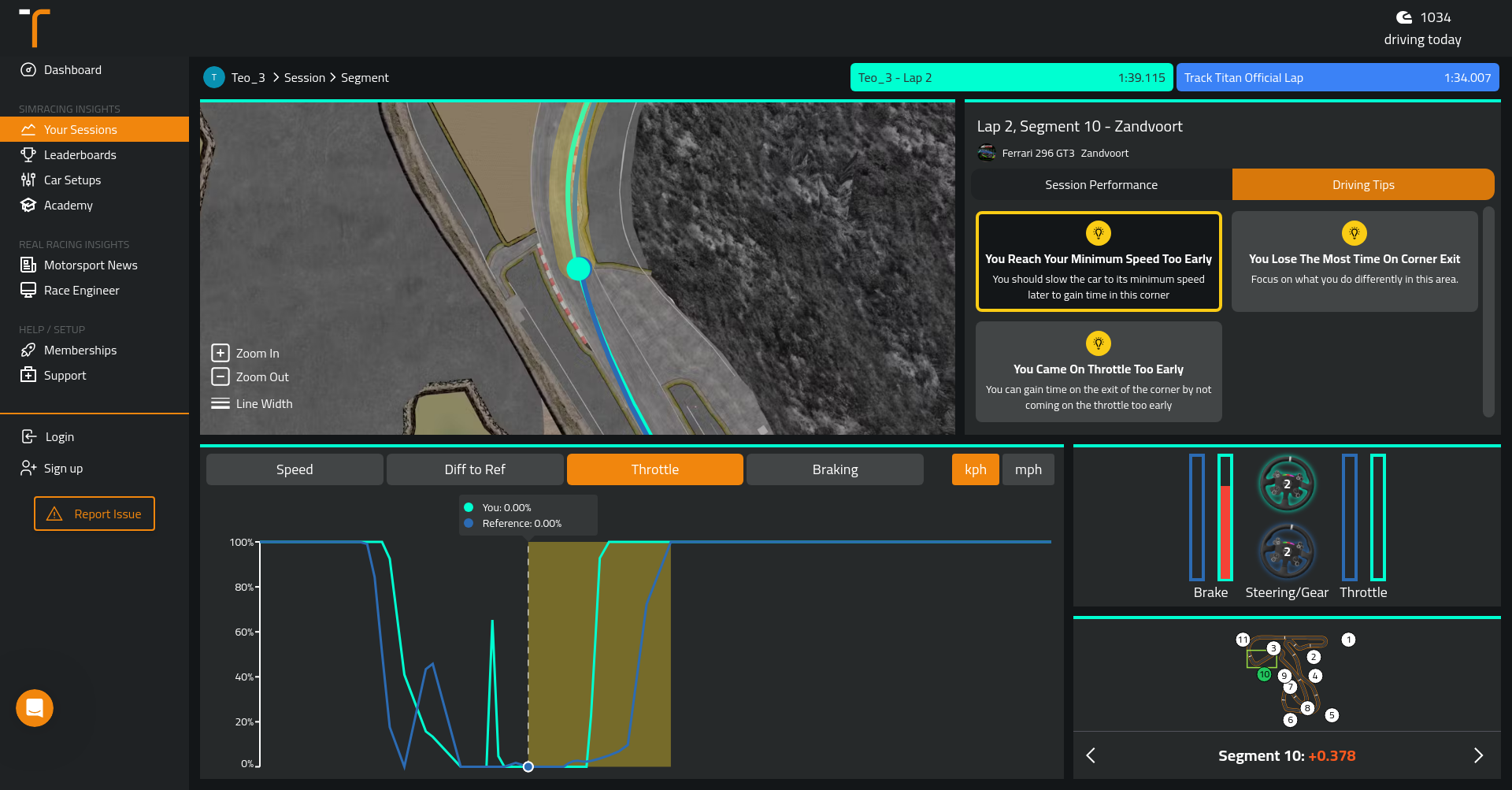
Upon analyzing the throttle control chart, it's evident that driverA is significantly more hesitant in throttle application compared to driverB. DriverB applies the throttle in a smooth, consistent manner, which is indicative of confidence and control over the vehicle's traction. In contrast, driverA exhibits a slower and more jagged increase in throttle application, suggesting difficulty with wheelspin or uncertainty in vehicle handling at this point of the track. Specifically, driverA delays full throttle application until much later in the time frame compared to driverB. This delay compromises exit speed and subsequently lap time. To improve performance, driverA should focus on applying the throttle earlier and more smoothly to match the reference pace set by driverB. This will aid in better acceleration out of the turn and improve overall corner exit speed.