122,247
122K
Laps driven today

iRacing

Le Mans Ultimate

Assetto Corsa Competizione

Assetto Corsa

F1 25

Assetto Corsa EVO

Automobilista 2

Forza Motorsport

F1 24

F1 2021

F1 23

F1 2020


Lap 4
Segment 8
1:34.480
6th Feb 2024
Assetto Corsa Competizione
Red Bull Ring - KTM X-Bow GT2

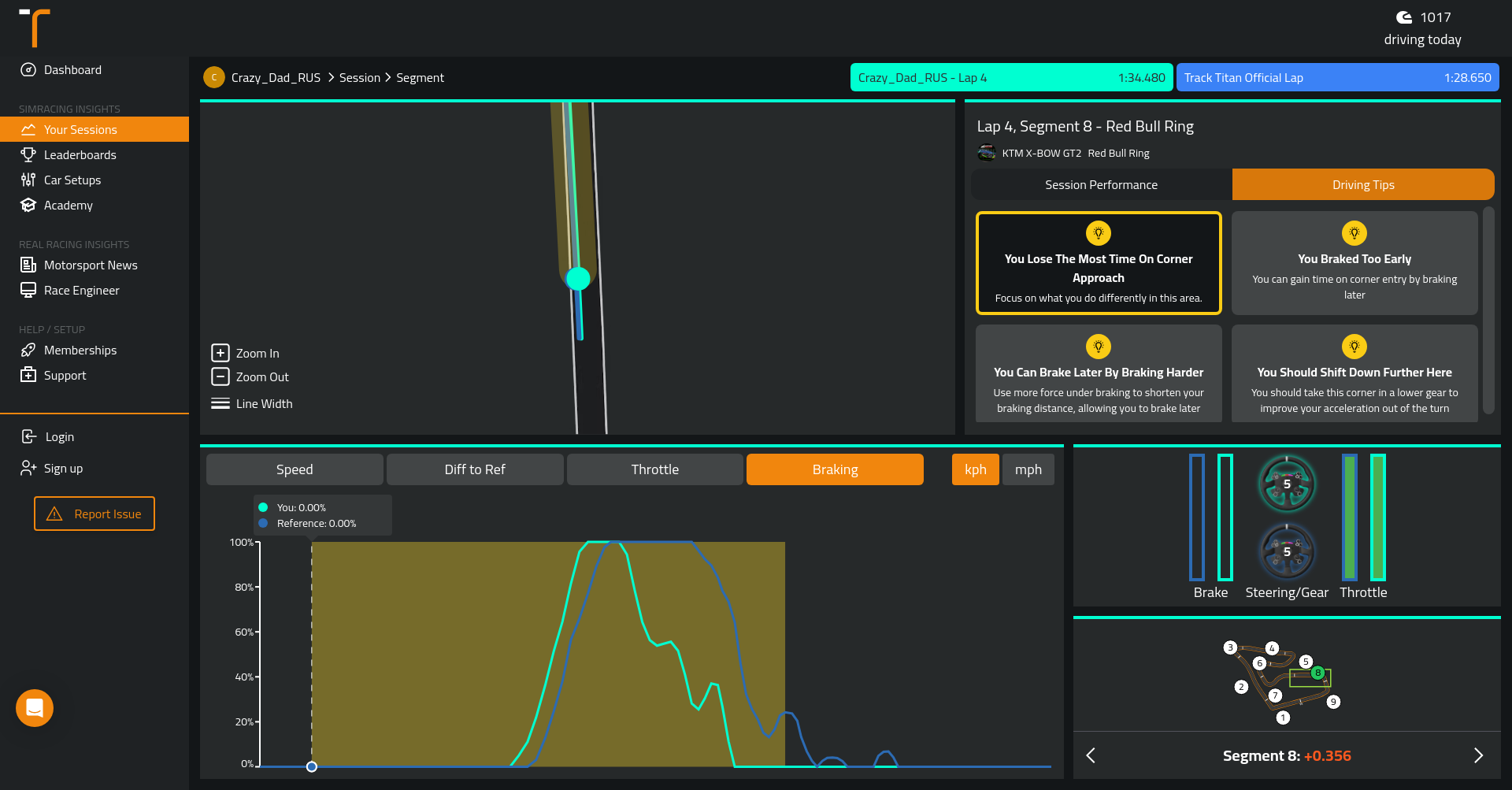
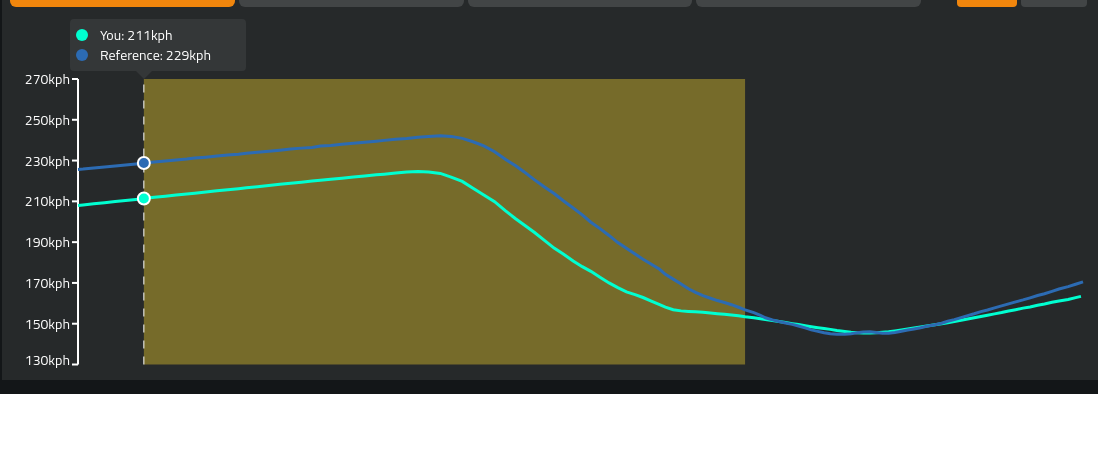
The speed chart analysis reveals that driverB is entering corners at a lower speed than driverA, indicating a cautious approach and less momentum from the previous corner. This results in significant time loss during the corner approach due to early braking. DriverB's minimum speed occurs later in the corner, suggesting a delayed throttle application and slower exit. Gear selection also implies that driverB could benefit from downshifting further to optimize acceleration. To enhance performance, driverB should enter with more speed, brake later and harder, and use a lower gear. Comparing braking control, driverA brakes earlier with a gradual increase in brake application, peaking and tapering off slowly—a conservative strategy. In contrast, driverB applies brakes sharply to full pressure then releases quickly, indicating an aggressive technique and confidence in their vehicle's braking capabilities. DriverA should aim to increase brake force to shorten braking distance and delay initial brake application to align closer with driverB's timing for improved corner performance.
Analyzing the speed chart, it's evident that driverB is entering the corner at a significantly lower speed compared to driverA. This discrepancy begins right at the start of the chart, indicating that driverB exited the previous corner with less momentum. This initial speed deficit continues into the corner approach, where driverB loses the most time. The early reduction in speed suggests an overly cautious entry, which is further supported by a premature braking point compared to driverA. The minimum speed of driverB occurs later in the corner than that of driverA, suggesting a delayed throttle application and consequently a slower exit. This is critical as it leads to lost time on corner exit due to later acceleration. Additionally, if we look at the gear selection implied by these speeds, it appears that driverB should consider downshifting further to optimize acceleration out of the turn. By addressing these issues—entering with more speed, braking later and harder, and using a lower gear—driverB could improve their overall corner performance significantly.

Analyzing the braking control chart, it's evident that driverA initiates braking significantly earlier than driverB. This early braking is characterized by a gradual increase in brake application, which peaks and then tapers off slowly, indicating a conservative approach to the corner. In contrast, driverB's brake application shows a sharper increase to full braking followed by a quicker release. This suggests that driverB is utilizing a more aggressive braking technique, allowing for later braking and potentially carrying more speed into the corner. The intensity of brake application also differs markedly between the two drivers. DriverA never fully maximizes brake pressure, hovering around the mid-range before easing off. Meanwhile, driverB hits the maximum brake pressure swiftly and maintains it briefly before reducing pressure rapidly, indicating confidence in their vehicle's braking capabilities and their ability to handle higher entry speeds. To improve performance, driverA should focus on increasing brake force to shorten the braking distance and delay their initial brake application to match closer to driverB's timing.