117,319
117K
Laps driven today

iRacing

Le Mans Ultimate

Assetto Corsa Competizione

Assetto Corsa

F1 25

Assetto Corsa EVO

Automobilista 2

Forza Motorsport

F1 24

F1 2021

F1 23

F1 2020


Lap 23
Segment 7
1:25.867
6th Feb 2024
Assetto Corsa Competizione
Brands Hatch - Lamborghini Huracan GT3 EVO2

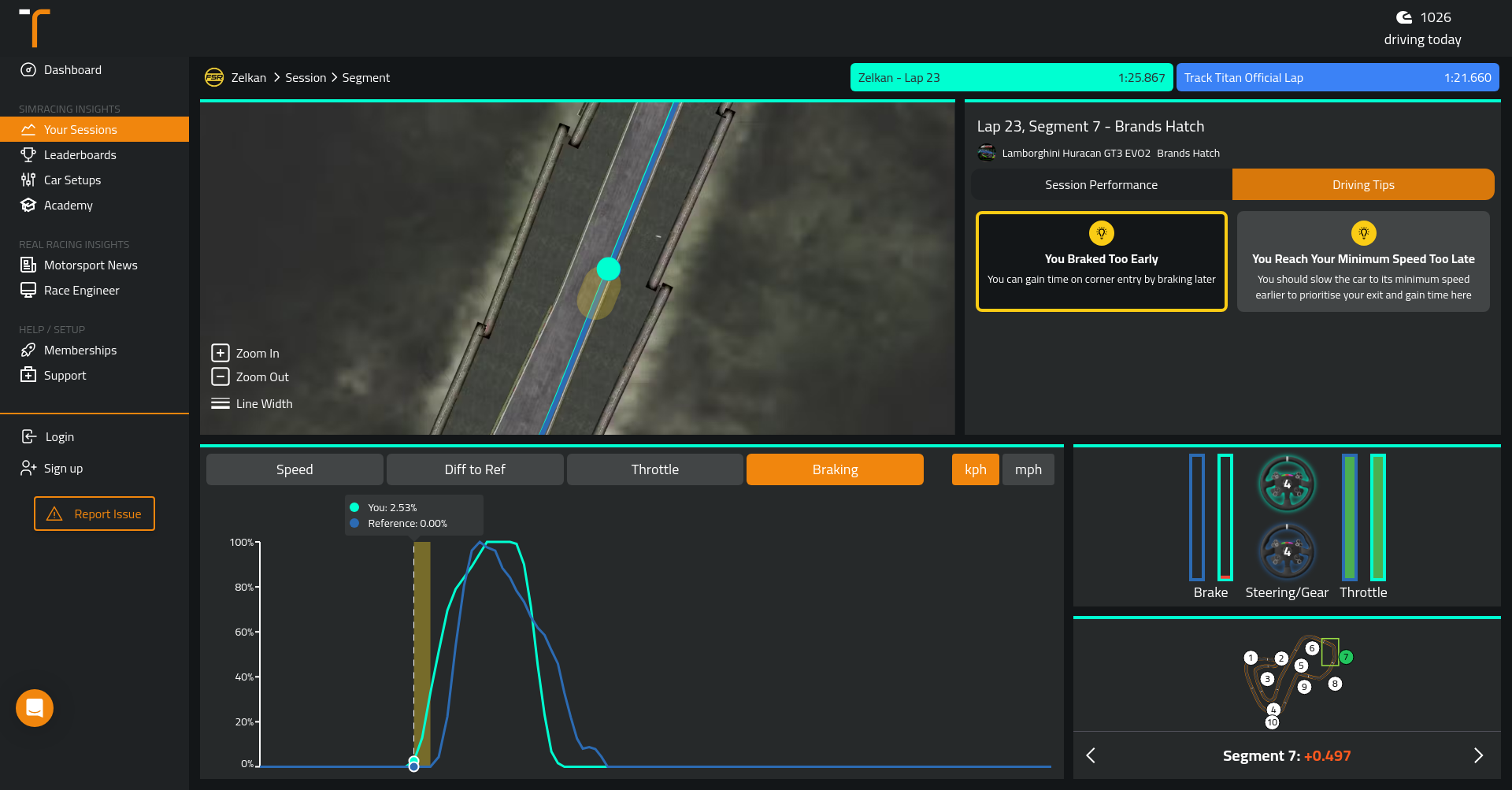
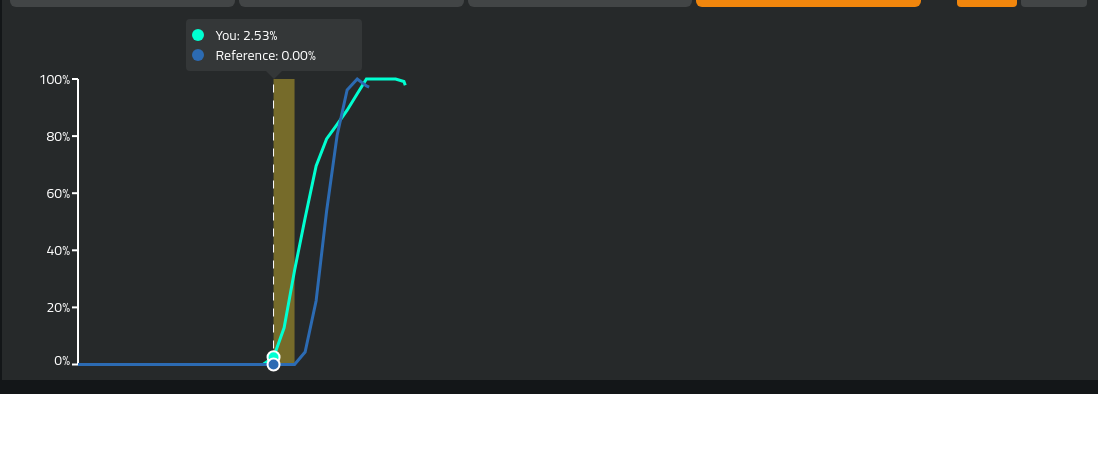
The speed chart analysis reveals that driverB enters the corner with a lower speed than driverA, which stems from a slower exit from the previous corner. This affects their pace throughout the section, as they reach their minimum speed later and accelerate later than driverA, resulting in a lower exit speed. To improve, driverB should carry more speed from the previous corner and aim for an earlier minimum cornering speed to enable earlier acceleration and a higher exit velocity. The braking control chart shows that driverA starts braking earlier and gradually increases brake pressure, indicating a cautious approach. On the other hand, driverB brakes later with a sharper increase in pressure, allowing them to carry more speed into the corner. DriverA reaches peak brake pressure sooner and begins reducing it earlier than driverB, suggesting they are not optimizing their exit speed by reaching minimum cornering speed too early. To enhance performance, driverA should consider braking later and harder to maintain higher speeds into the corner for better lap times.
Analyzing the speed chart, it's evident that driverB is entering the corner at a significantly lower speed compared to driverA. This discrepancy begins right at the start of the chart, indicating that driverB has exited the previous corner with less momentum. This initial speed deficit carries through into the corner, affecting their overall pace through this section. Furthermore, driverB reaches their minimum speed later than driverA, which suggests a delayed throttle application and consequently a later acceleration phase. This is detrimental as it leads to a lower exit speed and a shallower speed increase gradient compared to driverA. To optimize performance, driverB should focus on carrying more speed from the previous corner and aim to reach minimum cornering speed earlier, allowing for an earlier return to throttle and a more robust exit velocity.

Upon analyzing the braking control chart, it's evident that driverA initiates braking significantly earlier than driverB. This early braking leads to a gradual increase in brake application, suggesting a cautious approach to the corner. In contrast, driverB exhibits a sharper increase in brake application, indicating a later but more aggressive braking point. This approach allows driverB to carry more speed into the corner, potentially gaining time on entry. Furthermore, driverA reaches their peak brake pressure earlier and starts to reduce pressure sooner than driverB. This indicates that driverA is reaching their minimum cornering speed too early and thus not optimizing their exit speed. DriverB maintains higher brake pressure for longer before tapering off, which aligns with slowing the car down later and prioritizing exit speed for better lap time gains. DriverA should aim to replicate this by braking later and harder, maintaining higher speeds into the corner for improved performance.