114,324
114K
Laps driven today

iRacing

Le Mans Ultimate

Assetto Corsa Competizione

Assetto Corsa

F1 25

Assetto Corsa EVO

Automobilista 2

Forza Motorsport

F1 24

F1 2021

F1 23

F1 2020


Lap 3
Segment 9
1:31.597
6th Feb 2024
Assetto Corsa Competizione
Zolder - Lamborghini Huracan GT3 EVO2

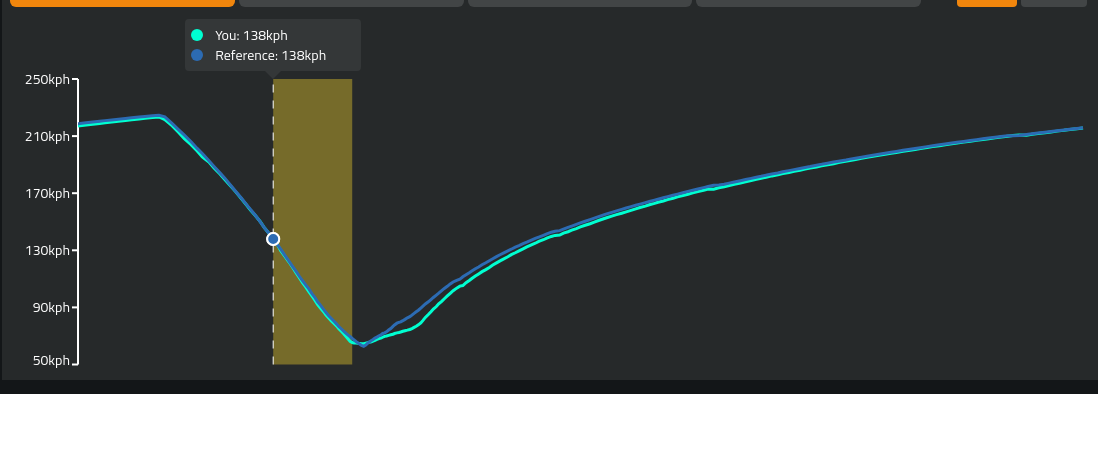
The speed chart analysis reveals that driverB is at a disadvantage from the onset, entering the corner with a lower speed than driverA, likely due to a slower exit from the previous corner. This initial deficit continues into the braking zone of the current corner. A key area for improvement for driverB is in the corner exit, where their minimum speed occurs later than driverA's, indicating a delay in throttle application. DriverB's acceleration out of the corner is also less aggressive, resulting in a compounded time loss on straights or into subsequent corners. To enhance lap times, driverB should focus on maintaining momentum through preceding turns and applying throttle earlier upon exiting corners. The throttle control analysis chart shows that driverA applies throttle later and more gradually compared to driverB's earlier and sharper increase. This suggests that driverB is accelerating out of corners more aggressively, which could lead to faster exit speeds and improved lap times. DriverA's later throttle application results in lost time during corner exits. For better performance, driverA should aim to apply throttle sooner and with more conviction during corner exits, mirroring driverB's aggressive approach while avoiding wheelspin or loss of control.
Analyzing the speed chart, it's evident that driverB is entering the corner with a speed deficit compared to driverA. This is noticeable at the very start of the chart on the left, where driverB's speed is already lower, indicating a slower exit from the previous corner. This initial speed difference sets up driverB at a disadvantage even before approaching the braking zone for the current corner. Furthermore, focusing on the corner exit, driverB's minimum speed occurs later than that of driverA, suggesting a delayed throttle application. This delay is further emphasized by a gentler gradient in driverB's speed increase compared to driverA's more aggressive acceleration out of the corner. The impact here is significant; not only does driverB lose time due to later acceleration but also exits the corner at a lower speed, which will compound time loss down the following straight or into the next corner sequence. To improve lap times, driverB should work on carrying more momentum through the previous turn and focus on earlier throttle application exiting this particular corner.

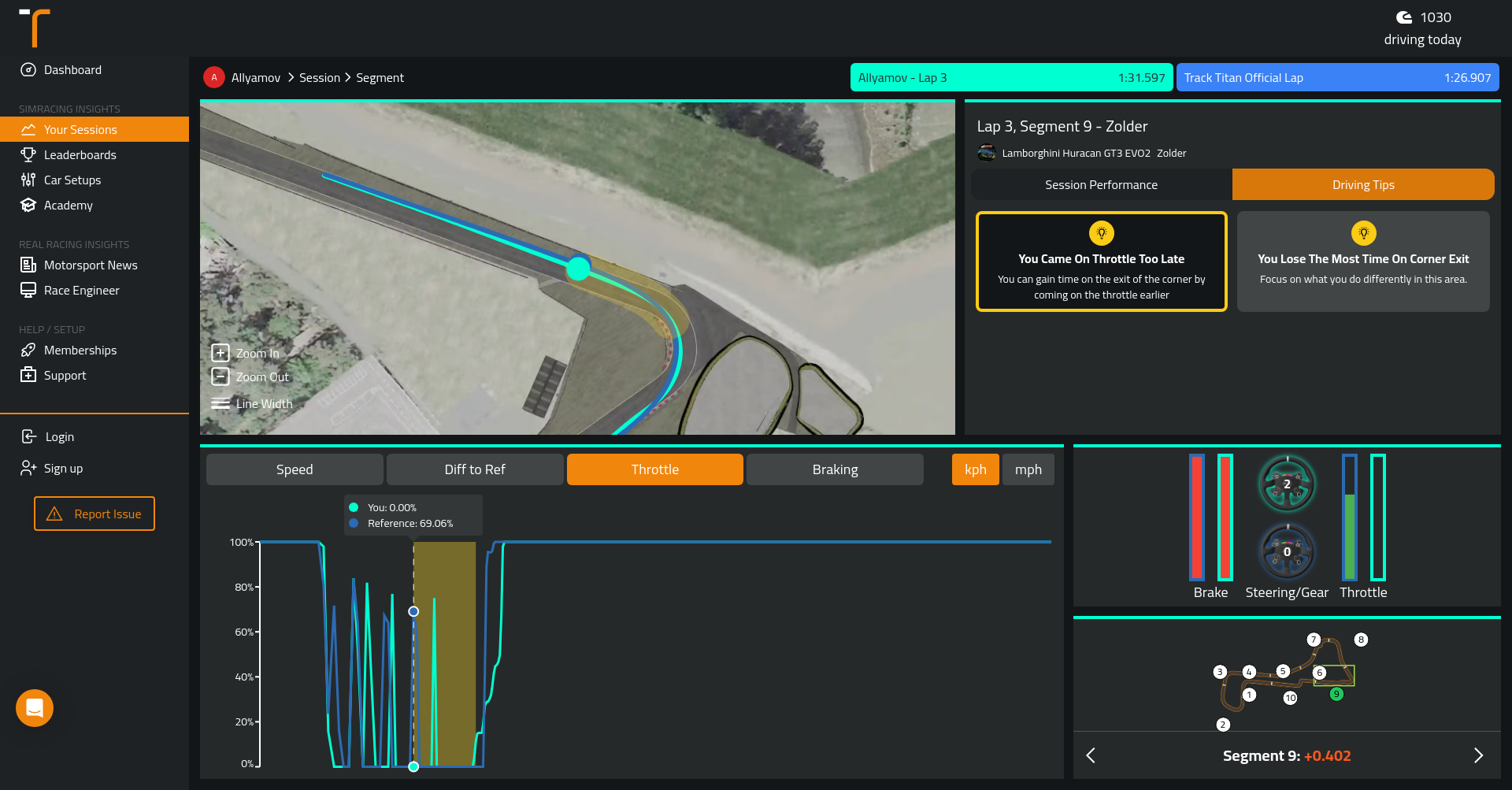
In the provided throttle control analysis chart, there is a distinct difference in the timing and intensity of throttle application between driverA and driverB. DriverA's throttle application is delayed and more gradual compared to driverB, who applies the throttle earlier and with a sharper increase. This indicates that driverB is accelerating out of the corner more aggressively, which can lead to a faster exit speed and potentially better lap times. The impact of this difference is most evident at the point where driverB's line on the chart begins to steepen significantly before that of driverA. This suggests that driverA is losing time on corner exit due to later throttle application. To improve performance, driverA should focus on applying the throttle earlier and more decisively during corner exits, emulating the more aggressive approach of driverB without inducing wheelspin or loss of control.