120,898
120K
Laps driven today

iRacing

Le Mans Ultimate

Assetto Corsa Competizione

Assetto Corsa

F1 25

Assetto Corsa EVO

Automobilista 2

Forza Motorsport

F1 24

F1 2021

F1 23

F1 2020


Lap 2
Segment 5
1:52.175
6th Feb 2024
Assetto Corsa Competizione
Monza - McLaren 720S GT3 2019

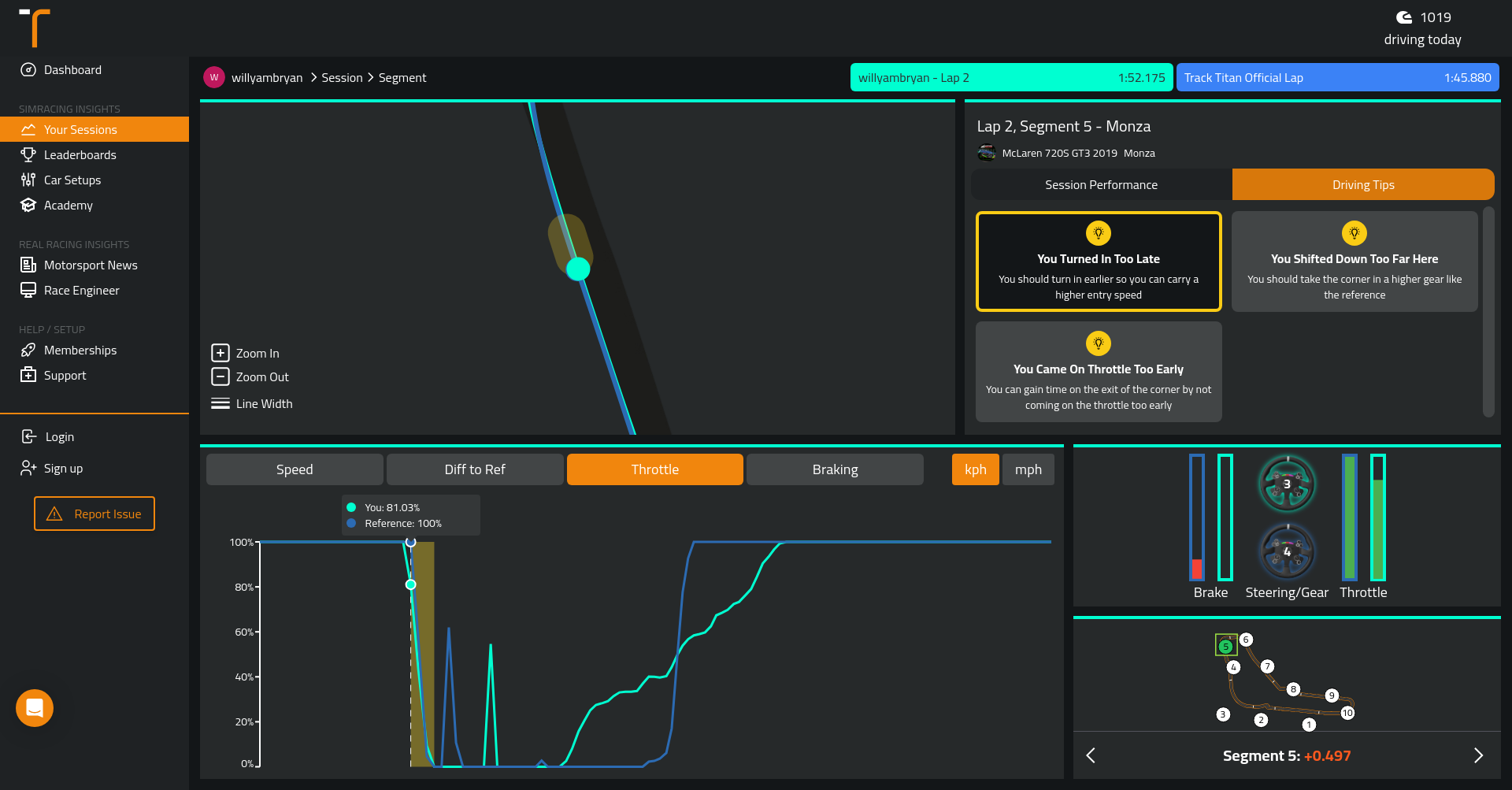
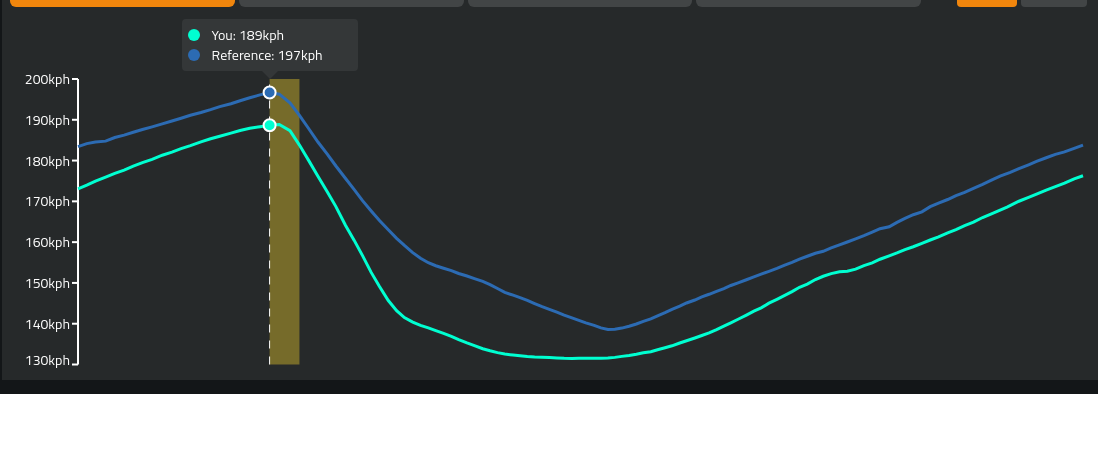
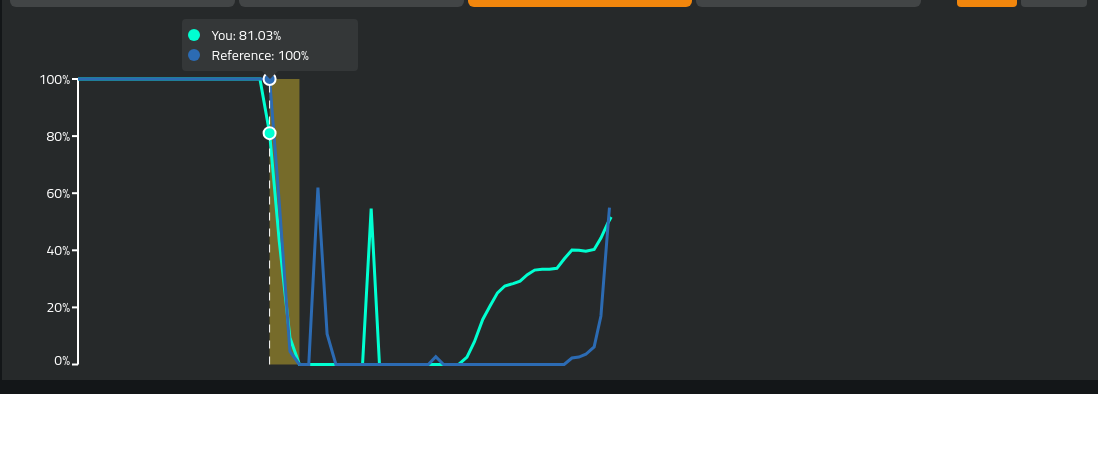
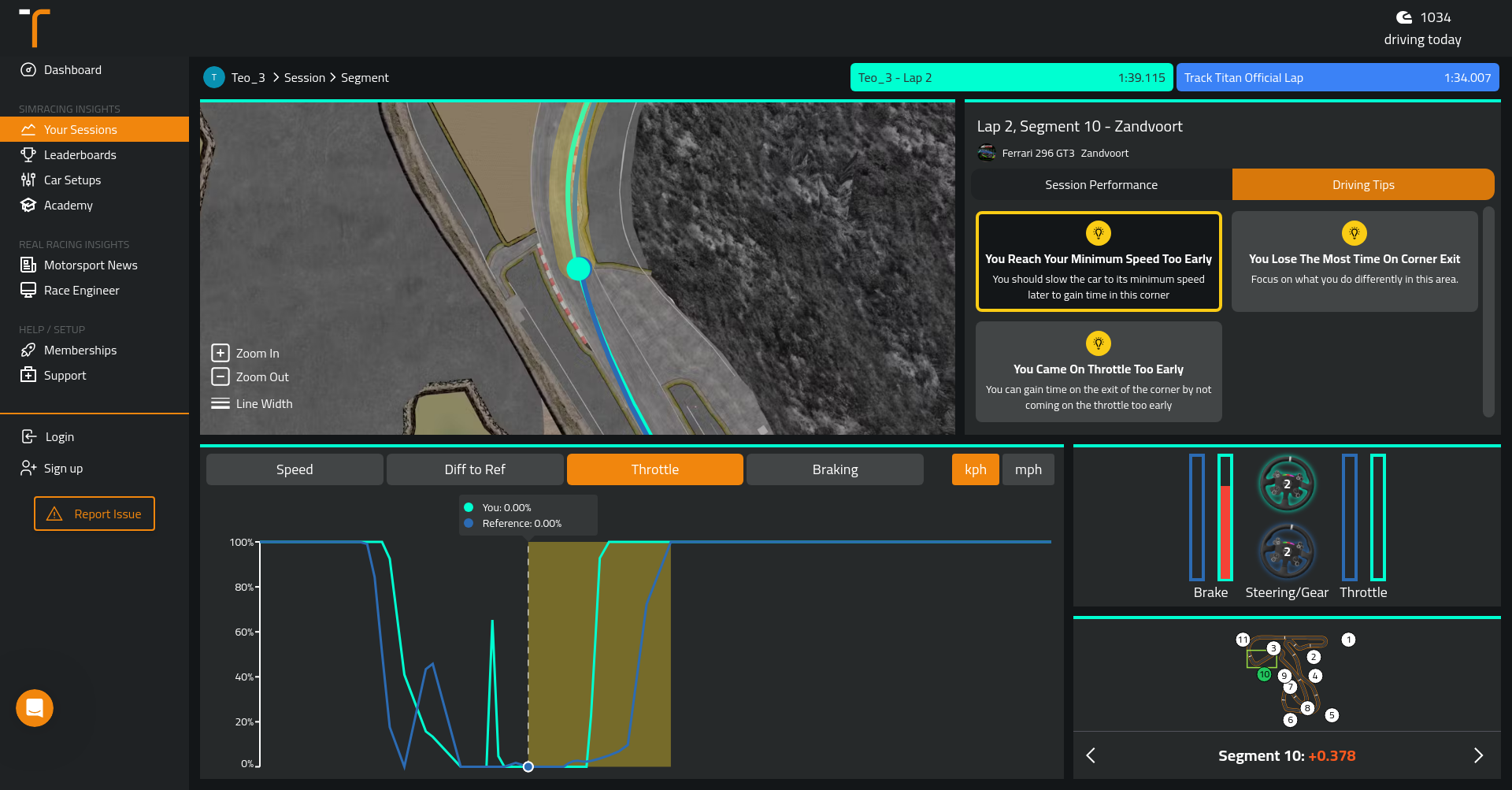
The speed chart analysis reveals that driverB enters the corner at a lower speed than driverA, which sets them at a disadvantage from the outset. DriverB also reaches their minimum corner speed later than driverA, resulting in a delayed throttle application and slower acceleration. This not only affects their exit speed from the current corner but also impacts their entry into the next track section, leading to a continuous loss of time. To improve, driverB should focus on carrying more entry speed and timing their throttle application correctly. In terms of throttle control, driverA applies the throttle earlier and more aggressively than driverB, which could lead to wheelspin or loss of traction. This premature and forceful power application results in a lower exit speed compared to driverB's more gradual throttle engagement that allows for better traction and higher speed upon exiting the corner. DriverA should aim for smoother throttle application to enhance their corner exit performance.
Analyzing the speed chart, it's evident that driverB is entering the corner with a lower speed compared to driverA. This can be seen at the very start of the chart, where driverB's speed line is already below that of driverA, indicating a slower exit from the previous corner. This initial speed deficit is crucial as it sets up driverB at a disadvantage even before addressing the corner in question. As we progress through the corner, there's a noticeable dip in driverB's speed graph compared to driverA, which suggests that driverB is reaching their minimum corner speed later than driverA. This delay in reaching minimum speed results in a later application of throttle, which is reflected in the subsequent slower acceleration phase for driverB. The impact here is twofold: not only does this affect their exit speed out of this particular corner, but it also compromises their entry into the next section of track, perpetuating the cycle of time loss. To optimize performance, focusing on carrying more entry speed and timing throttle application correctly will be key for driverB.

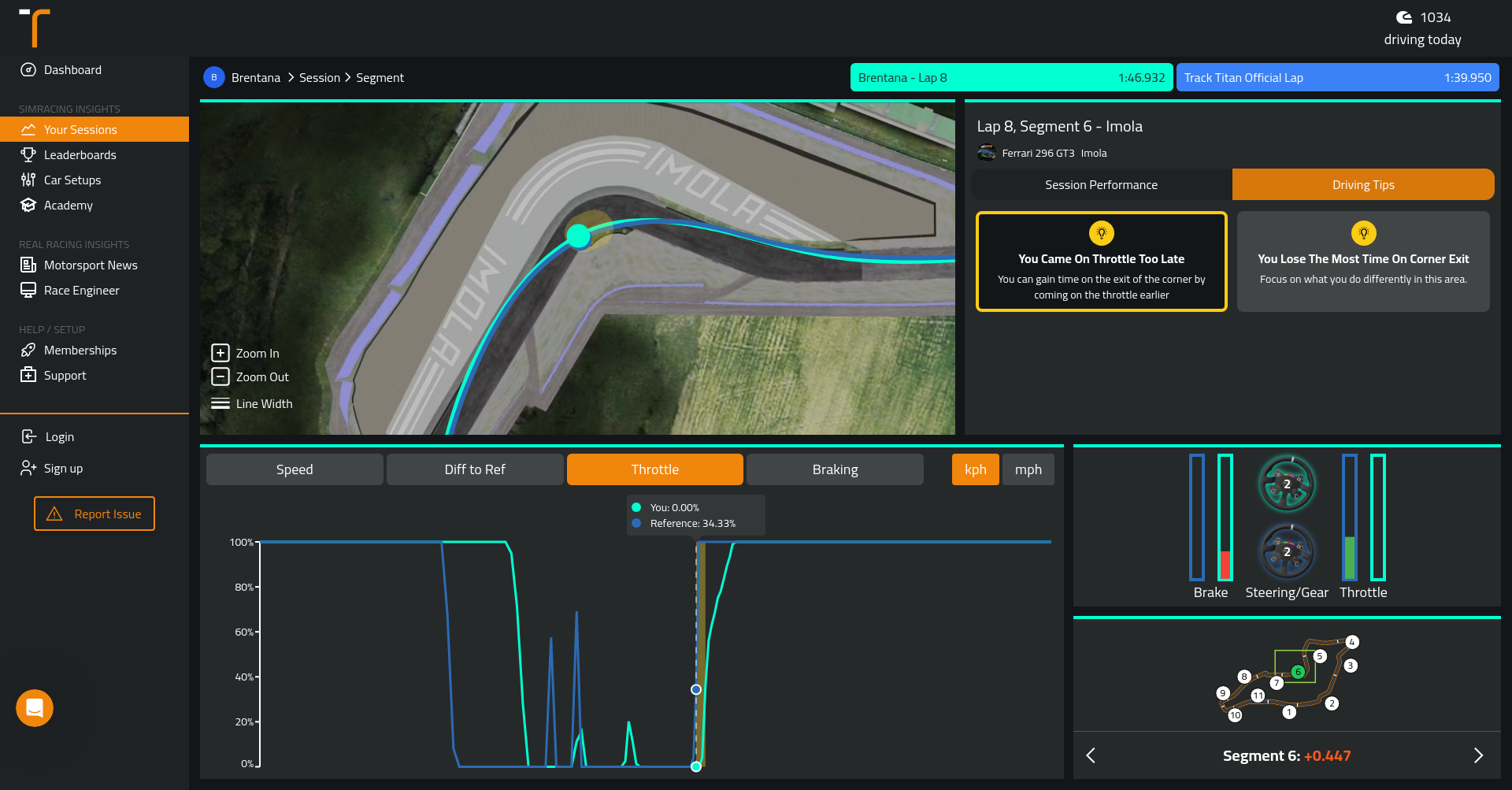
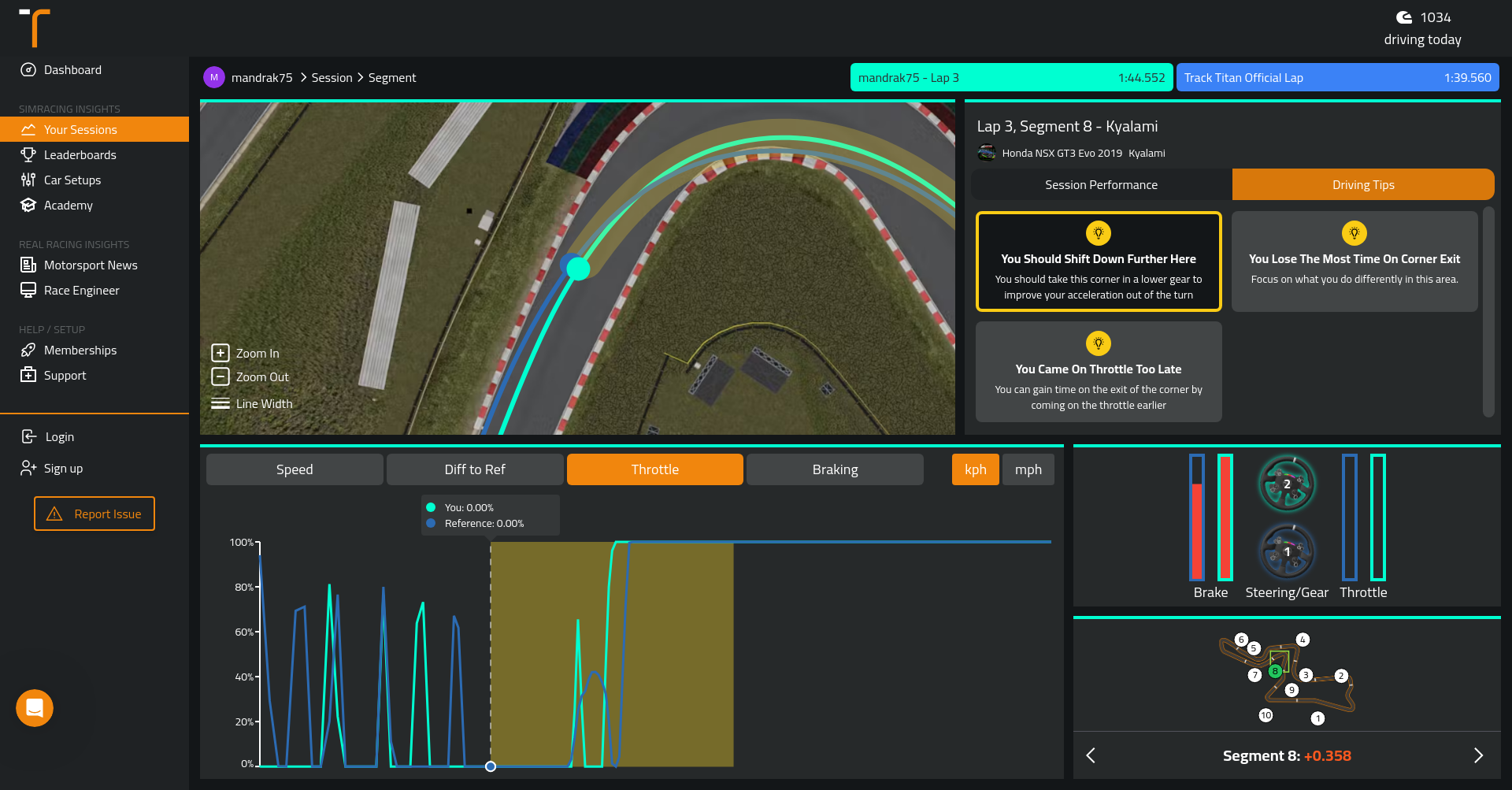
In the provided throttle control analysis, there is a clear discrepancy between driverA and driverB's throttle application. DriverA engages the throttle significantly earlier than driverB, as indicated by the premature rise in their graph. This early application leads to a lower exit speed compared to driverB, who delays their throttle input, allowing for a more controlled and faster exit from the corner. Furthermore, driverA's throttle input is not only premature but also more aggressive, as seen by the steeper slope of their graph. This suggests that driverA may be experiencing wheelspin or loss of traction due to the early and forceful application of power. In contrast, driverB applies the throttle in a more gradual manner, which likely contributes to better traction and higher speed upon corner exit. DriverA should aim to replicate this smoother application to improve corner exit speed.