114,324
114K
Laps driven today

iRacing

Le Mans Ultimate

Assetto Corsa Competizione

Assetto Corsa

F1 25

Assetto Corsa EVO

Automobilista 2

Forza Motorsport

F1 24

F1 2021

F1 23

F1 2020


Lap 4
Segment 9
1:26.667
6th Feb 2024
Assetto Corsa Competizione
Brands Hatch - McLaren 720S GT3 Evo 2023

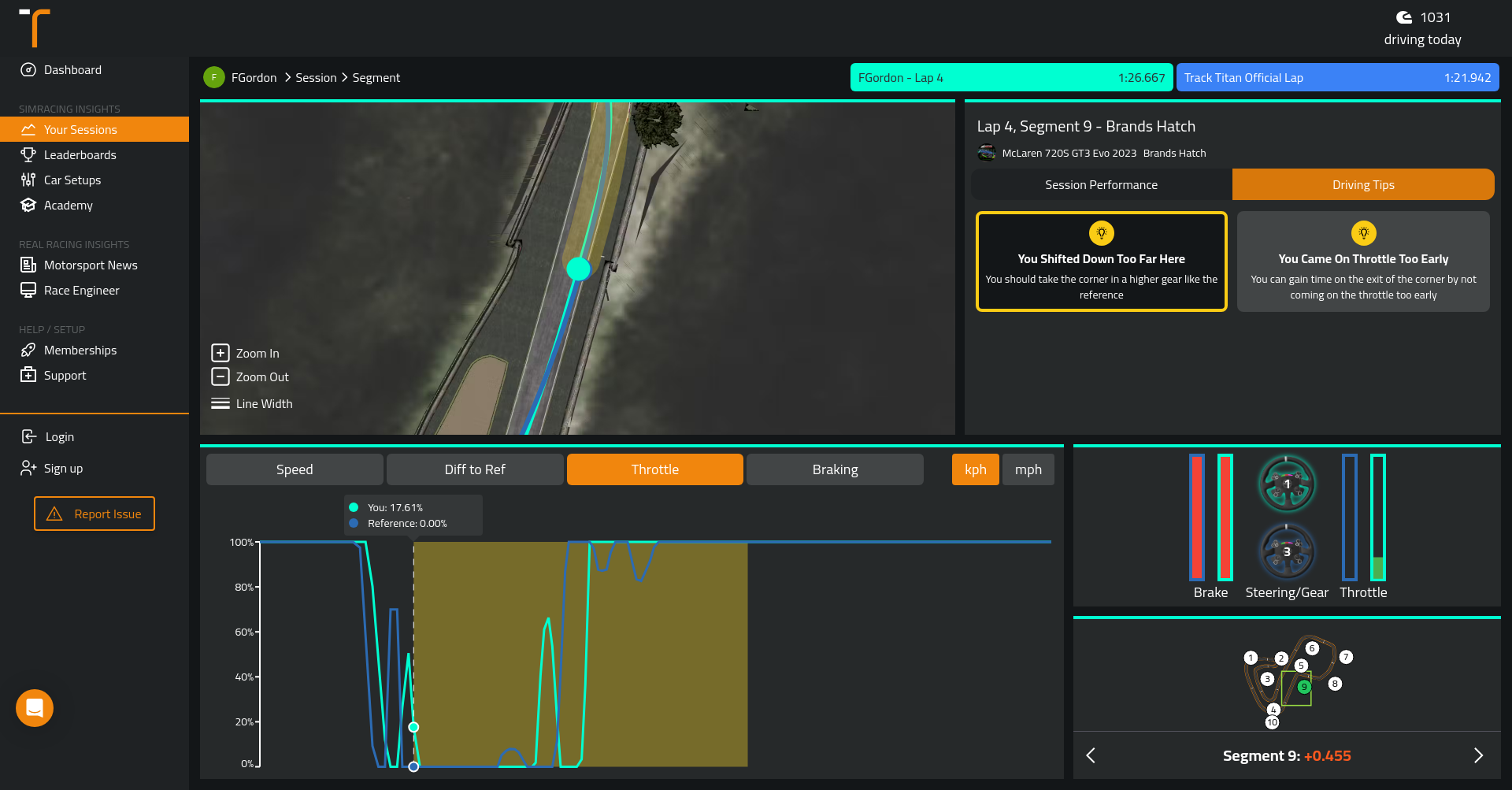
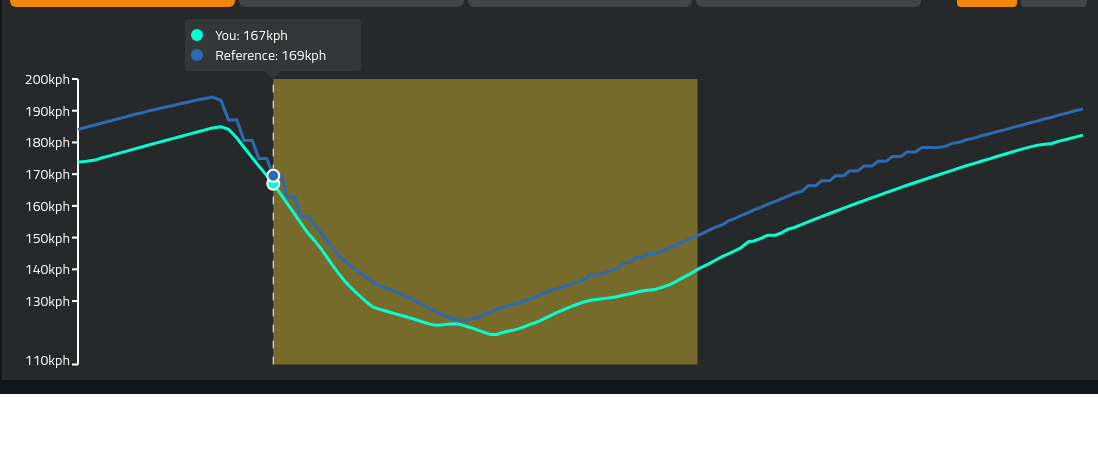
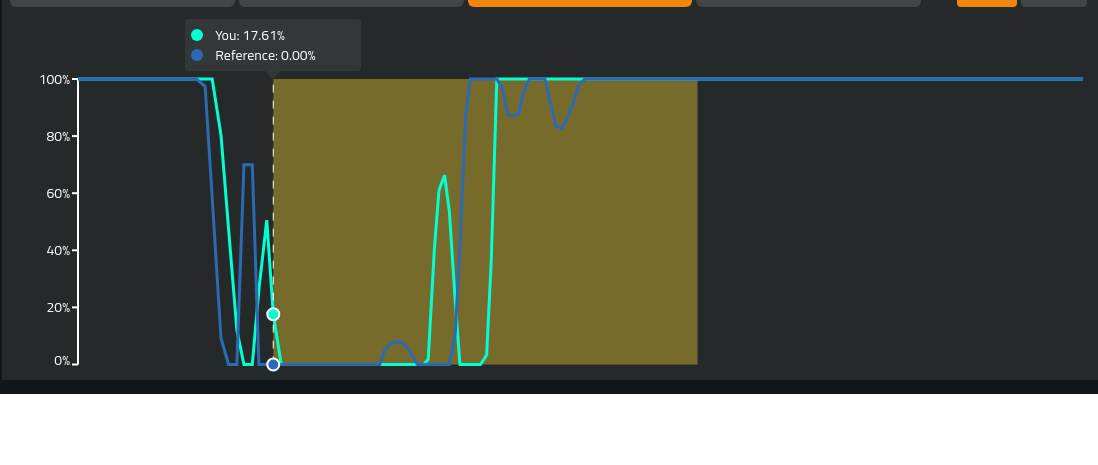
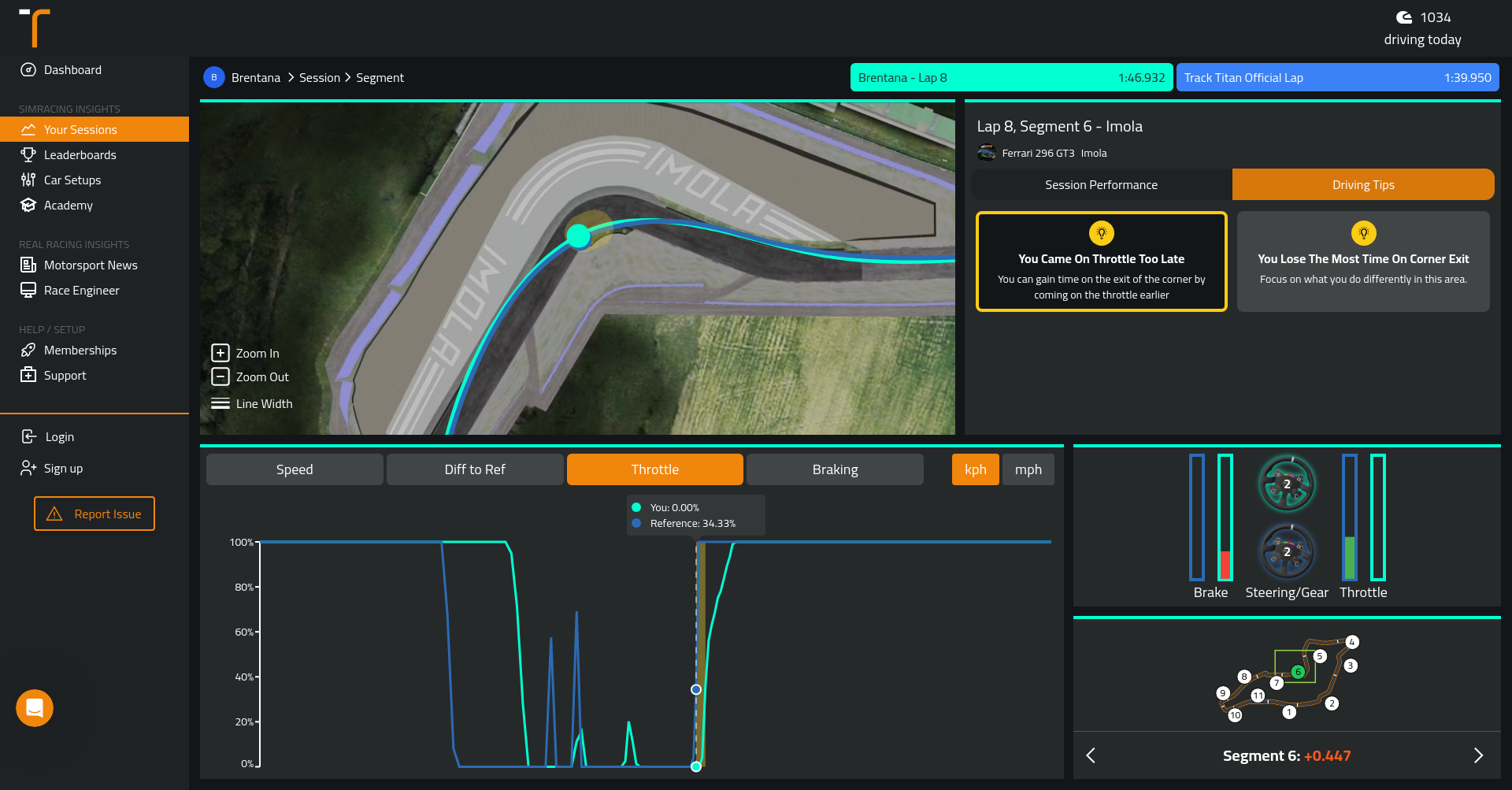
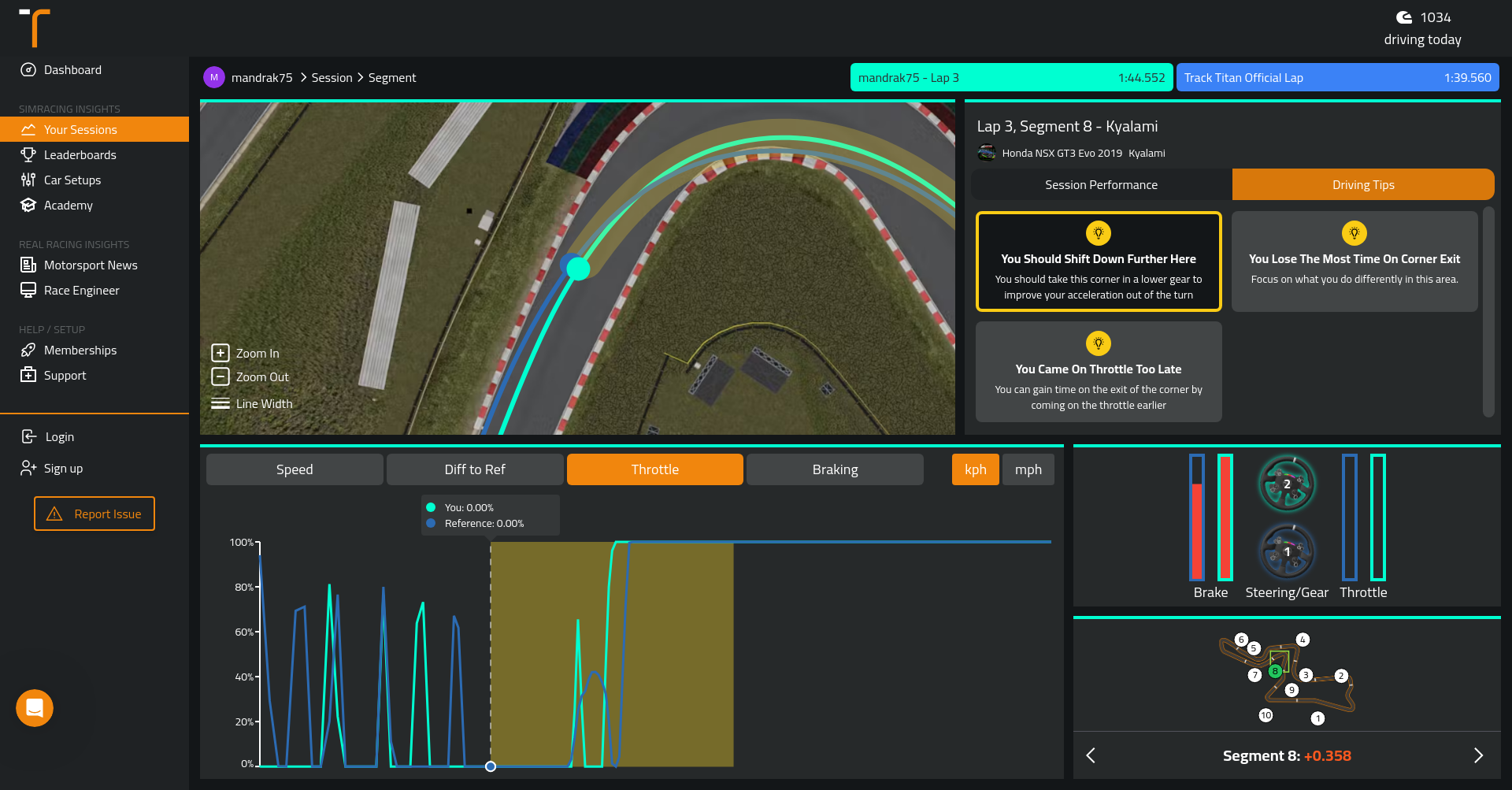
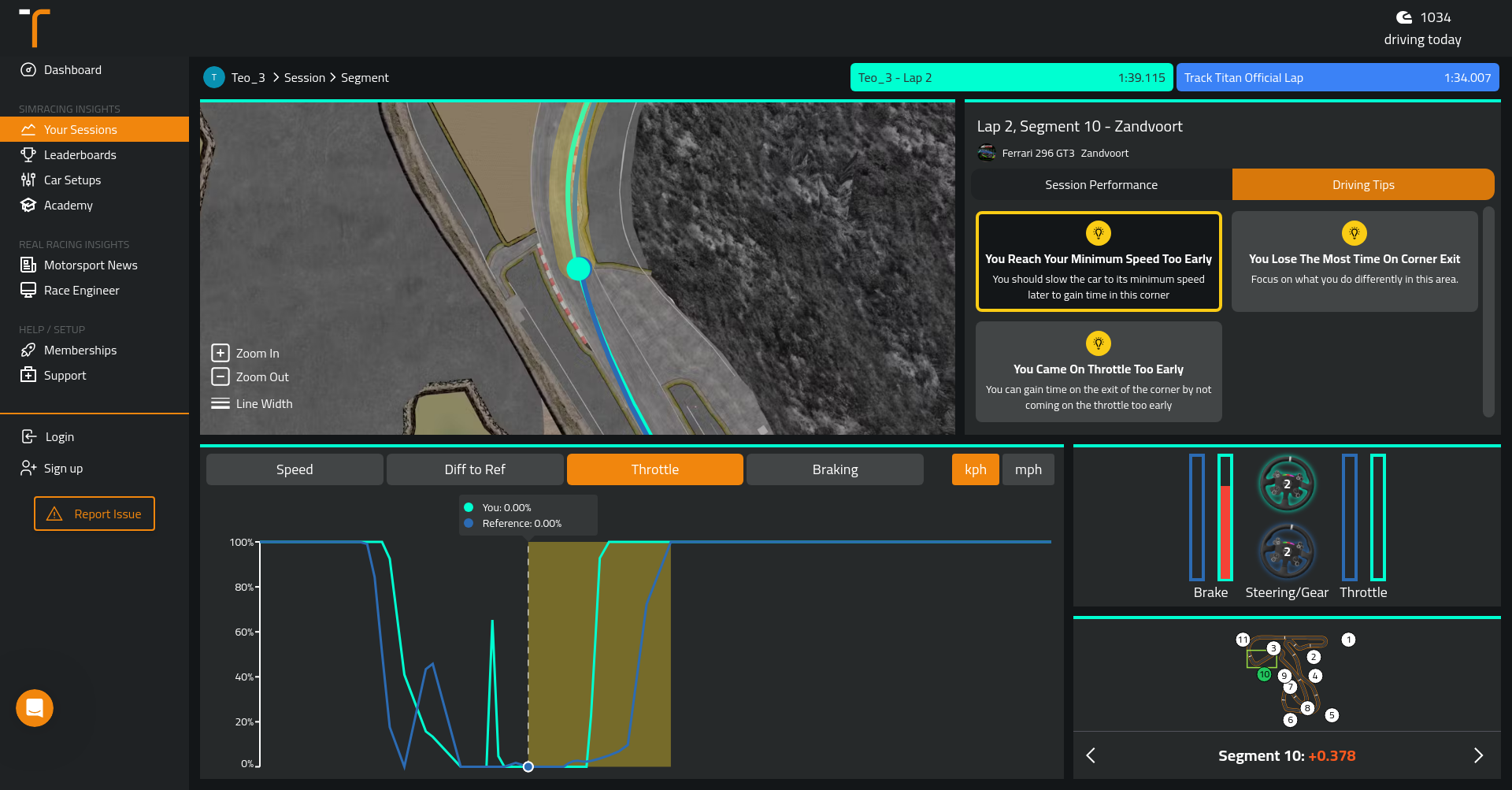
The speed chart analysis reveals that driverB is slower into the corner than driverA, indicating a loss of momentum from the previous corner and room for improvement. DriverB also reaches their minimum speed too early and at a lower value, suggesting an overly cautious approach to corner entry. This leads to a less optimal exit, as shown by the flatter speed increase compared to driverA's steeper ascent. To enhance performance, driverB should carry more speed through the corner and delay throttle application for a stronger exit. On the throttle control chart, driverA applies throttle earlier but less smoothly than driverB, possibly causing wheelspin and vehicle instability. DriverB's later and more gradual application results in smoother acceleration and better traction management. For improved lap times, driverA should delay throttle input slightly and apply power more progressively to achieve better traction and faster corner exit speeds.
Analyzing the speed chart, it's evident that driverB enters the corner with a lower speed compared to driverA. This suggests that driverB possibly exited the previous corner with less momentum, which is a critical area for improvement. Specifically, at the very start of the chart on the left, driverB's speed is already trailing behind that of driverA, indicating a loss of time even before addressing the corner in question. Furthermore, during the cornering phase, driverB reaches their minimum speed earlier than driverA and at a lower value. This premature reduction in speed suggests an overly cautious approach to corner entry and indicates potential time gains if carried out more efficiently. Additionally, this early throttle application by driverB leads to a less optimal exit as seen by the flatter gradient of their speed increase compared to driverA's steeper ascent. To optimize performance, focusing on carrying more speed through the corner and delaying throttle application for a stronger exit would be beneficial for driverB.

Upon examining the throttle control chart, it's evident that driverA initiates throttle application significantly earlier than driverB. This premature application results in a less smooth increase in throttle, which could indicate a struggle with wheelspin as driverA tries to gain traction. In contrast, driverB's later and more gradual application leads to a smoother acceleration curve, suggesting better traction management and potentially a faster exit speed from the corner. Furthermore, the intensity of driverA's initial throttle application is much sharper compared to driverB's. This sharp increase may contribute to instability in the vehicle's handling at this critical phase of corner exit. To improve lap times, driverA should consider delaying throttle input slightly and applying power more progressively, mirroring the smoother curve demonstrated by driverB. This would likely result in improved traction and ultimately faster corner exit speeds.