117,319
117K
Laps driven today

iRacing

Le Mans Ultimate

Assetto Corsa Competizione

Assetto Corsa

F1 25

Assetto Corsa EVO

Automobilista 2

Forza Motorsport

F1 24

F1 2021

F1 23

F1 2020


Lap 18
Segment 8
2:12.392
7th Feb 2024
Assetto Corsa Competizione
COTA - McLaren 720S GT3 Evo 2023

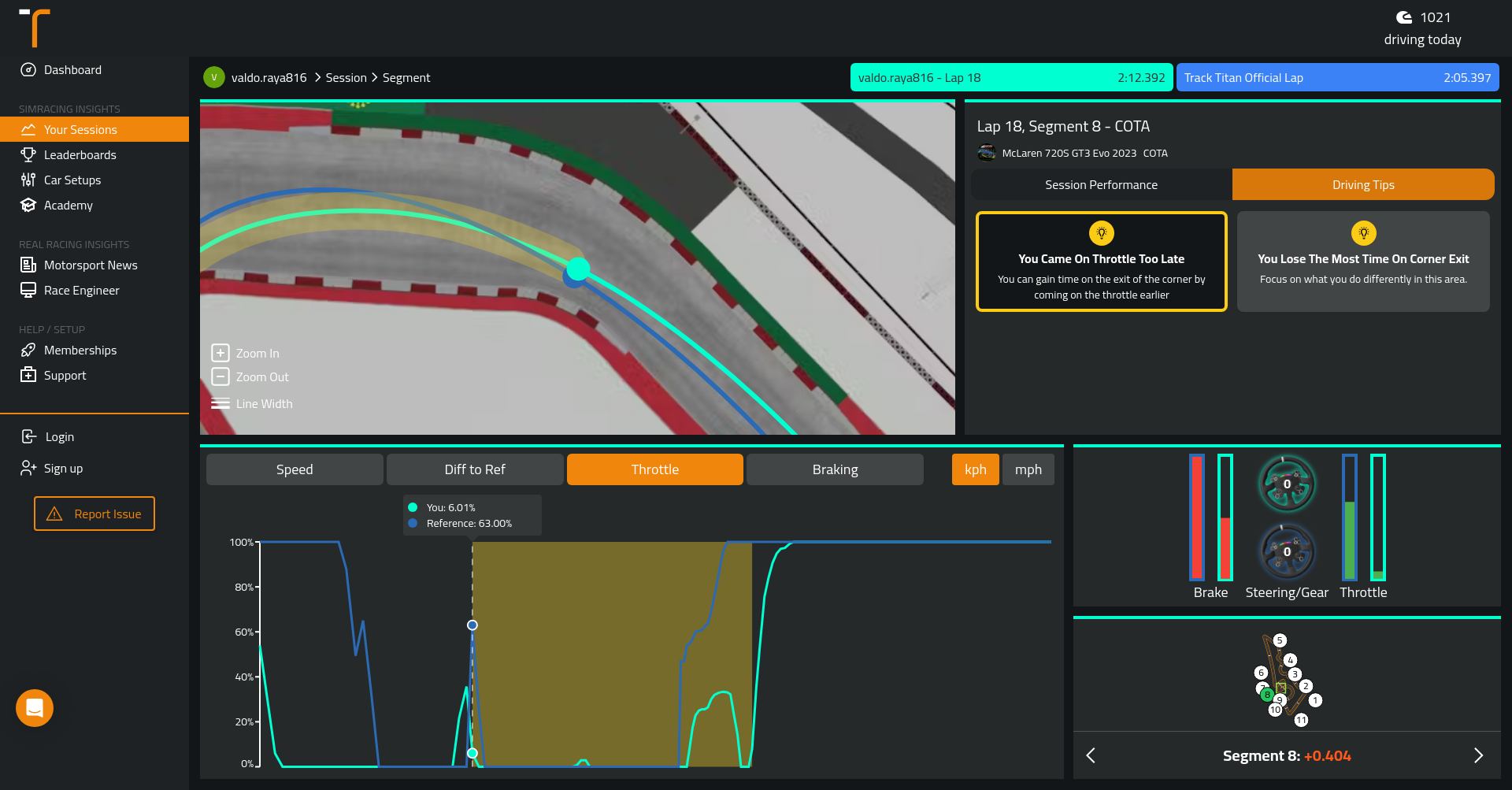
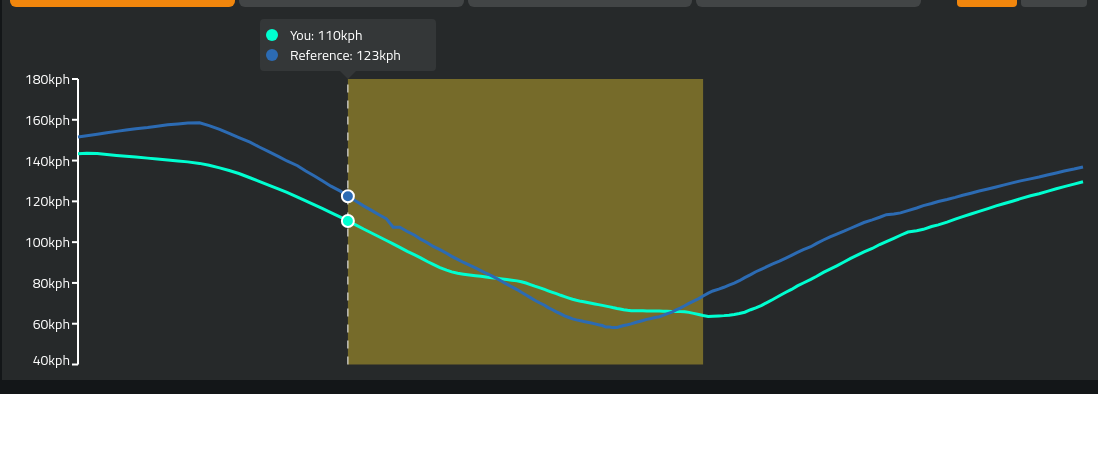
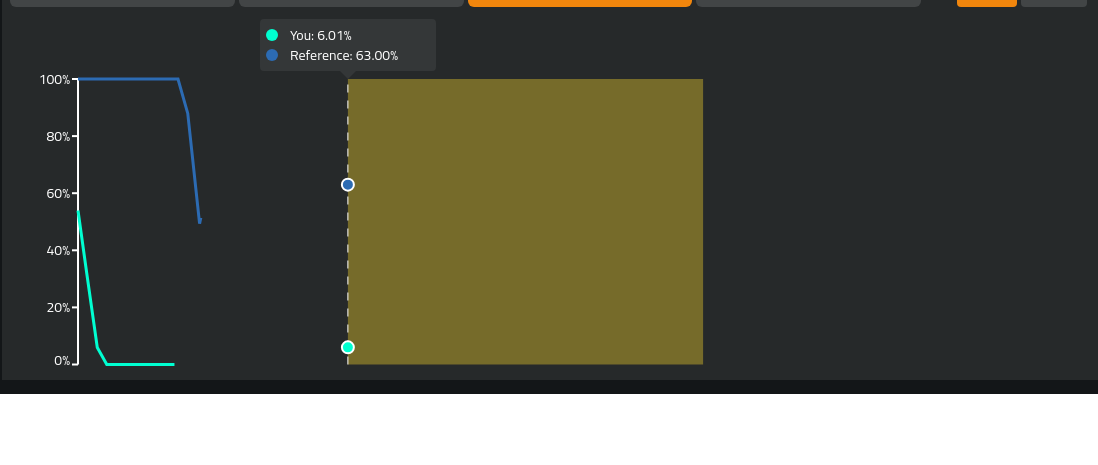
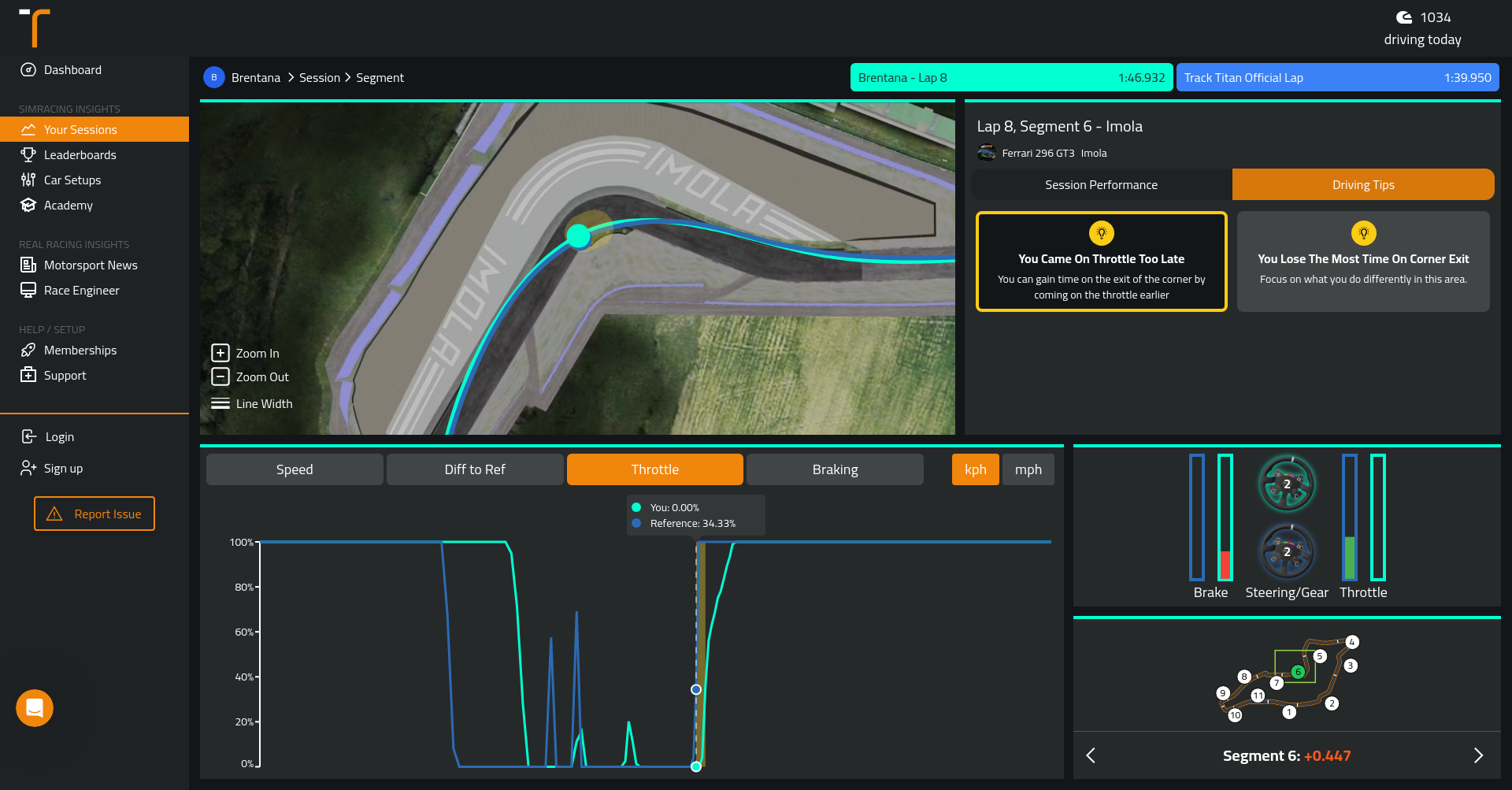
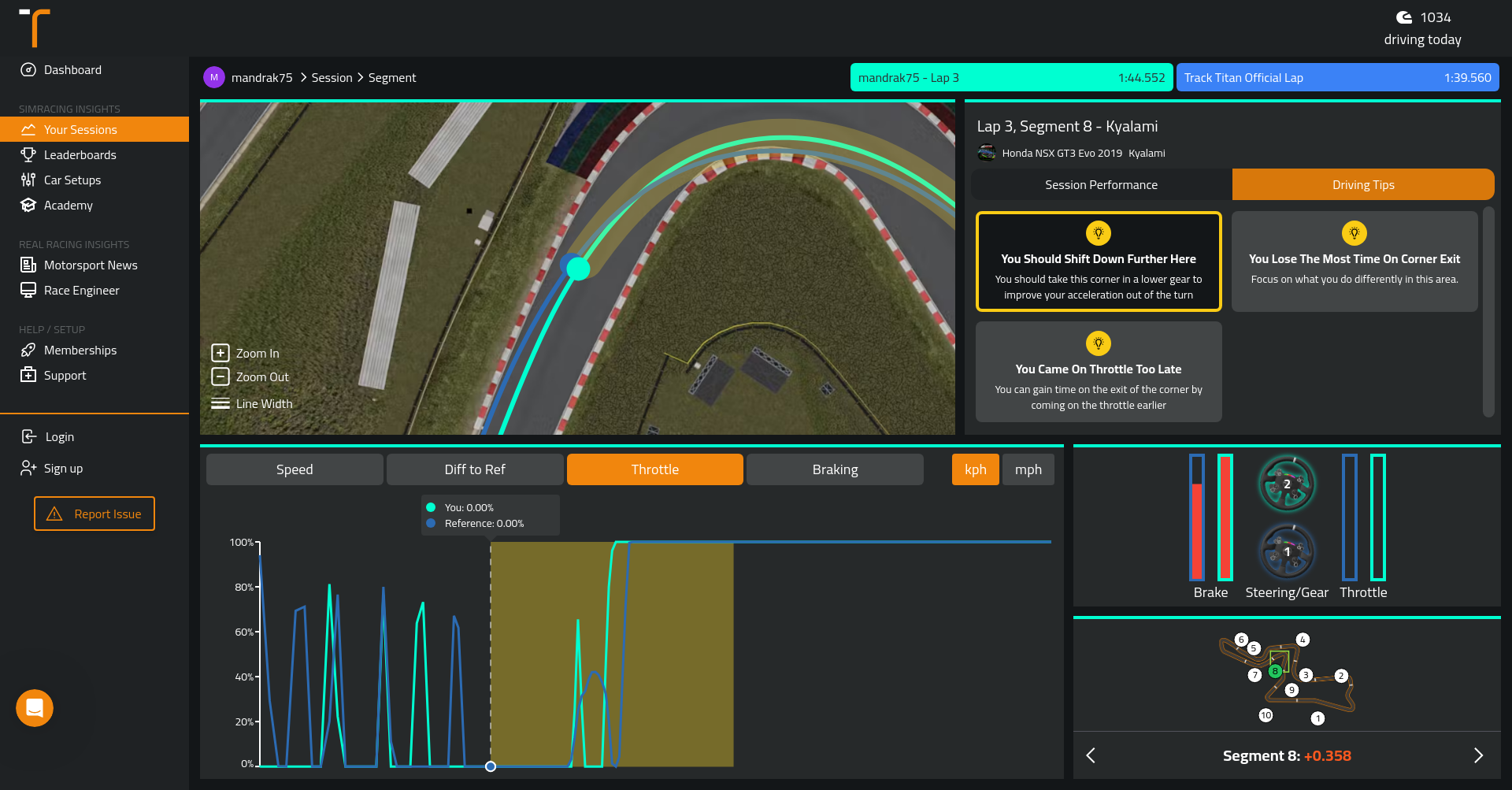
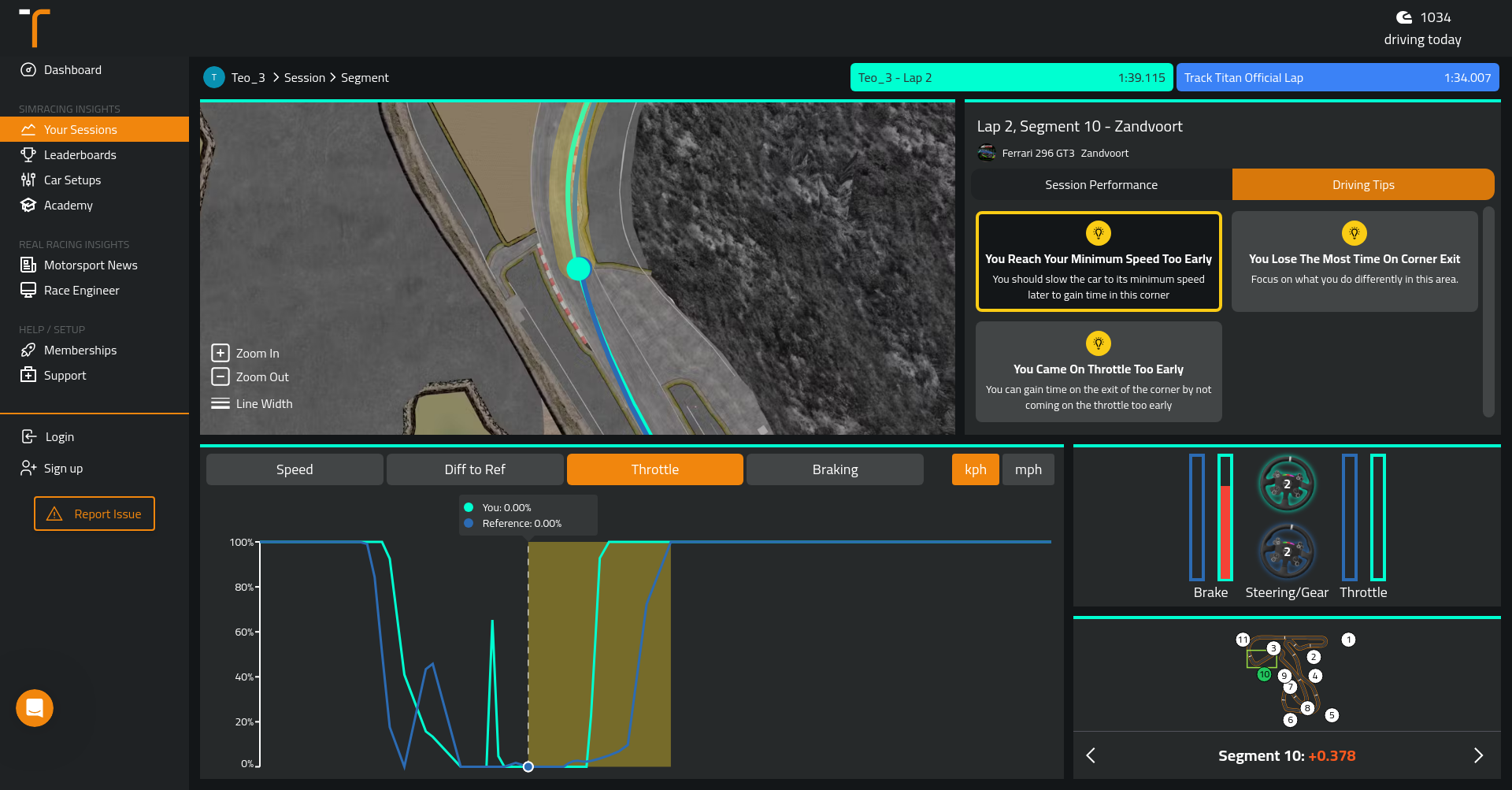
The speed chart analysis reveals that driverB (You) is losing time on corner exit due to a slower exit from the previous corner, resulting in less momentum entering the current corner. This leads to a lower and later minimum speed, indicating a delayed throttle application compared to driverA (Reference). To improve lap times, driverB should focus on carrying more speed from the previous corner and applying throttle earlier to maximize exit speed. On the other hand, the throttle control chart shows that driverA applies full throttle later than driverB, suggesting that driverB can settle the car and accelerate out of the corner more efficiently. DriverA's gradual throttle application implies a lack of confidence or grip at corner exit. To gain time, driverA needs to work on achieving a stable car balance through the corner for an earlier and firmer throttle application. This will help minimize time lost on corner exit where they are currently falling behind driverB.
Analyzing the speed chart, it's evident that driverB (You) is losing significant time on corner exit compared to driverA (Reference). At the very start of the chart, driverB is already at a lower speed than driverA, indicating a slower exit from the previous corner which cascades into the following section. This initial speed deficit means that driverB is entering the current corner with less momentum, which can compromise their entire cornering sequence. As we progress through the corner, we see that driverB's minimum speed is lower and occurs later than that of driverA. This delay in reaching minimum speed suggests a later throttle application by driverB, corroborating with your coach's observation that you came on throttle too late. Consequently, this results in a later acceleration phase for driverB and thus a slower exit speed. The gradient of driverB's speed increase post-corner is also less steep compared to driverA's, confirming a loss of time due to delayed throttle application. To improve lap times, focus on carrying more speed from the previous corner and initiating throttle earlier to maximize exit speed.

Analyzing the throttle control chart, it's evident that driverA is significantly later in applying full throttle compared to driverB. DriverB reaches full throttle much earlier, which suggests they are able to get the car settled and accelerate out of the corner more efficiently. This early application of throttle by driverB correlates with a better exit speed, which will compound into a higher overall speed down the following straight. Furthermore, driverA's throttle application is not only delayed but also more gradual. This indicates a lack of confidence or grip at corner exit, preventing them from accelerating as hard as driverB. To improve lap times, driverA should focus on achieving a stable car balance through the corner to enable an earlier and more decisive application of throttle. By doing so, they can minimize time lost on corner exit where they currently lose the most time compared to driverB.